 Anacortes Siding
 Fiber Cement Siding Built for Flounder Bay's Waterfront Exposure
Flounder Bay sits on the water side of Fidalgo Island, a marina neighborhood within Anacortes where homes face a tougher exterior environment than most of inland Skagit County ever sees. Being this close to open water means a near-constant supply of salt-laden air settling on siding and trim, storms that push rain sideways into wall assemblies rather than straight down, and shaded, damp wall sections that stay wet long enough each year to grow a serious moss problem. Flounder Bay's homes range from modest older places near the water to newer construction closer to the marina, and each brings its own mix of trim detail, wall orientation, and sun versus shade exposure into the equation. Siding here isn't just a finish material — it's the first line of defense against a climate that will find every weak point in a system that wasn't built for sustained moisture and salt exposure. We install James Hardie fiber cement siding exclusively, and a neighborhood like Flounder Bay is a clear illustration of why we hold that line.
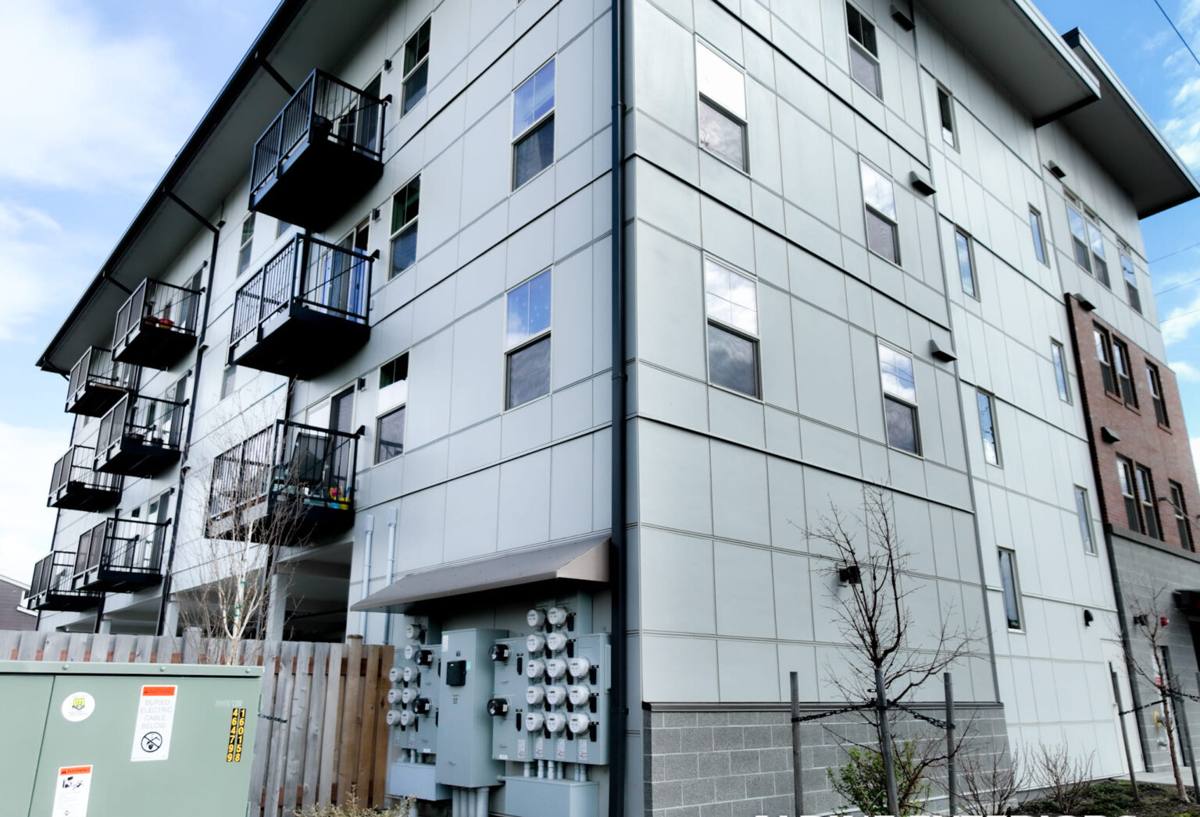
What This Climate Actually Does to Siding
Salt Air and Daily Surface Exposure
Homes around Flounder Bay pick up salt off the water even on ordinary days, not just during storms. That steady exposure speeds up corrosion on fasteners and exposed metal trim, and it accelerates dirt buildup and finish breakdown on any siding material that isn't engineered to resist it. Over a decade or two, a lower-grade product typically shows chalking, uneven fading, or corrosion streaking well before a comparable inland home would.
Wind-Driven Rain
Waterfront exposure also brings more wind, and wind pushes rain sideways into seams, laps, and trim joints that would stay dry in a calmer, more sheltered setting. A siding system that depends on gravity alone to shed water — instead of correct lapping, flashing, and a drainage plane behind the panels — eventually lets moisture in. It's rarely a dramatic leak. More often it's water working its way behind a panel edge or an unsealed joint, sitting against the sheathing, and doing real damage well before anyone notices from the outside.
A Long Moss and Algae Season
Shaded and north-facing walls near the bay stay damp for long stretches between fall and spring, which is exactly the condition moss and algae need to establish. Siding that holds surface moisture, or that has a texture prone to trapping organic growth, discolors here noticeably faster than it would on a drier, sun-exposed lot even a short distance inland.
Why We Install Only James Hardie Fiber Cement
We used to install a wider range of siding products. We don't anymore, and the reason traces directly back to what we've seen on tear-offs and service calls in waterfront neighborhoods like this one.
- Climate-engineered HZ5 formulation: Hardie builds specific product lines for different climate zones, and HZ5 is engineered for regions with heavy moisture exposure and freeze-thaw cycling — a good match for a marine neighborhood like Flounder Bay.
- Factory-applied ColorPlus finish: The color is baked on under controlled factory conditions rather than brushed on at the jobsite, which holds up longer against the fading, chalking, and salt-driven wear that waterfront siding takes on.
- Non-combustible, dimensionally stable core: Fiber cement doesn't have an organic core to swell, warp, or feed a fire, and it doesn't expand and contract the way vinyl does under the temperature swings a west-facing waterfront wall sees.
- A warranty that actually transfers: Hardie backs its fiber cement with a long-term, transferable warranty when the installation follows their published specifications — useful for anyone who may not own the home for the next thirty years.
We won't install LP SmartSide, vinyl siding, Cemplank, Allura, primed spruce, or cedar. Each has a place in the market, and each has homeowners elsewhere who are satisfied with the result. On a site with this much daily salt and moisture exposure, though, we've made a professional call that we'd rather install one system exceptionally well than spread our attention across several products with different weak points.
What a Correct Fiber Cement Installation Involves
The Water-Resistive Barrier and Flashing Come First
Fiber cement performs exactly as well as the assembly underneath it. Before any siding goes up, that means a continuous water-resistive barrier, correctly lapped so water sheds downward and outward at every seam, and flashing integrated at every window, door, and penetration. On a wind-exposed lot, we also look closely at whether a drainage gap behind the siding is warranted so any moisture that does get past the cladding has somewhere to go besides the sheathing.
Fastening and Clearance
Hardie's installation manual specifies fastener type, spacing, and penetration depth, and it specifies minimum clearance from grade, roof lines, and decks. Skipping these details doesn't show up on day one — it shows up years later as trapped moisture at the bottom course or premature wear where the siding sits too close to a roof or deck surface that holds water and debris against it.
Joints, Corners, and Caulking
Butt joints, corners, and trim transitions are where a lot of avoidable siding failures start. On a marine site like Flounder Bay, we pay particular attention to how those joints are sealed and back-flashed, because a joint that's only caulked and not properly flashed behind the caulk line will eventually fail under repeated wetting and drying.
Matching the Right Hardie Profile to the Home
Hardie makes several distinct siding profiles, including lap siding in more than one exposure width, vertical panel siding, and a shingle-style product. The right profile depends on the home's existing architecture and trim detail rather than a single default answer, and getting that match right also affects how cleanly water sheds off the wall in a wind-driven-rain climate like this one.
How We Approach a Siding Project on the Bay
- Walk the exterior with the homeowner and assess how the current siding, flashing, and trim have actually held up against the site's specific wind and moisture exposure.
- Remove existing siding and inspect the sheathing and framing underneath for any moisture damage that needs to be addressed before new siding goes on.
- Install or repair the water-resistive barrier and flashing at every window, door, and penetration before a single piece of Hardie siding is hung.
- Install the fiber cement to manufacturer specification — correct fastening, clearance, and joint detailing — rather than a generic, one-size-fits-all approach.
- Walk the finished exterior with the homeowner and go over what maintenance, if any, the specific installation will need going forward.
Why Hiring a Crew That Already Works This Neighborhood Matters
Flounder Bay is a small, specific pocket of Anacortes, and it doesn't get the volume of contractor attention that busier parts of the city or county see. That can mean a homeowner here ends up with a crew that's used to installing siding on a sheltered inland lot and applies the same approach without adjusting for what this particular exposure demands. A crew that already works this waterfront stretch regularly knows which walls on a typical Flounder Bay lot take the worst of the wind and salt, what an early-failure joint or fastener actually looks like on a nearby house, and where extra flashing or drainage detailing is worth the added step. That familiarity doesn't show up in a brochure or a bid sheet — it shows up in how the siding performs five, ten, and twenty years after installation. A crew that keeps coming back to the same stretch of waterfront also makes warranty and service work simpler down the road, since there's continuity between whoever installed the siding and whoever you'd call if a question comes up years later.
Fiber Cement Compared to Other Siding Options Homeowners Consider Here
| Factor | Vinyl | LP SmartSide / Engineered Wood | Cedar / Primed Wood | James Hardie Fiber Cement |
|---|---|---|---|---|
| Moisture behavior in salt air | Doesn't absorb, but seams are a weak point | Vulnerable at cut edges and fastener holes | Absorbs and releases moisture readily | Dimensionally stable, resists swelling |
| Finish durability near water | Fades and chalks under salt and UV | Field-applied coatings wear faster here | Needs frequent recoating | Factory ColorPlus finish resists fading |
| Moss/algae resistance | Prone to discoloration on shaded walls | Moderate; depends on upkeep | Low; needs regular treatment | Holds finish well; still needs periodic washing |
| Typical longevity on this site | Shorter in high-wind, salt-heavy spots | Depends heavily on installation and upkeep | Shorter without consistent maintenance | 30+ years with correct installation |
What to Ask Before Hiring for Siding Work Near the Water
- Have you installed siding specifically in this neighborhood or a comparably exposed waterfront site, not just Skagit County generally?
- What fastener grade and hardware do you use given the salt exposure here?
- How do you flash and back-seal joints, corners, and penetrations on a wind-exposed wall?
- Is the manufacturer's warranty full-value and transferable, and is your own workmanship separately warrantied?
- Will you provide a clear, written scope of work before any contract is signed?
- Are you licensed, bonded, and insured to perform exterior work in Washington?
What Maintenance Looks Like After Installation
A correctly installed Hardie system on a Flounder Bay home is genuinely low-maintenance compared to the alternatives, but "low-maintenance" isn't "no-maintenance." Expect to rinse salt film and surface dirt off the siding periodically, check caulking at joints and trim every year or two, and keep an eye on shaded, moss-prone wall sections the same way you would a roof. None of that compares to the repainting, recoating, or panel-replacement cycle that vinyl, engineered wood, or cedar siding eventually demands in this same location.
If you're planning a siding project on a Flounder Bay home, we're glad to walk the exterior with you, point out what this specific site's exposure is doing to the current siding, and put together a straightforward, no-pressure estimate for a correctly installed James Hardie system.