 Anacortes Siding
 Roofing in Flounder Bay: A Different Set of Conditions
Flounder Bay sits close enough to the water that homes here take a different kind of weathering than roofs a few miles inland. Salt-laden air off Fidalgo Bay and the Guemes Channel works on metal fasteners and flashing year-round. Winter and spring bring driving rain that comes in sideways more often than straight down, testing every seam, valley, and penetration on a roof. And because this part of Skagit County stays cool and damp for long stretches of the year, moss and algae get a real foothold on any roof that isn't designed to shed moisture fast and dry out between storms.
None of this means a Flounder Bay roof needs to be exotic or overbuilt. It means the installation has to be done correctly, with materials and details chosen for a marine climate rather than a generic install pulled from a catalog. That's the difference between a roof that looks fine for two years and one that actually performs for its full rated life out here.
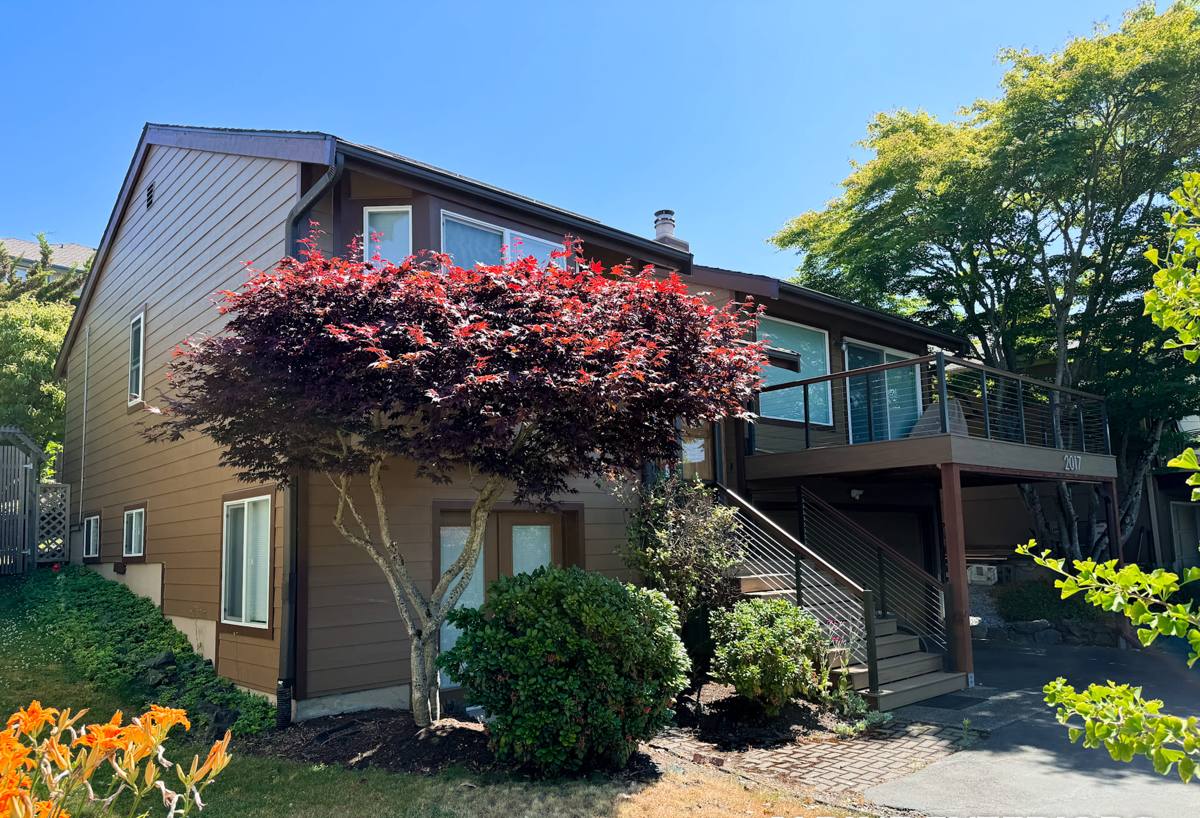
What "Correct" Actually Means for a New Roof Installation
A new roof is more than shingles nailed to plywood. On a full replacement, every layer matters, and skipping or shortcutting any one of them shows up as a problem within a few winters — usually right when you're not looking for it.
Tear-off and deck inspection
We remove the old roofing down to the deck rather than layering over it. That's the only way to actually see what's underneath — soft or delaminated plywood, old leaks that never got addressed, undersized rafters, or ventilation gaps that have been hidden for years. Any rot or damaged sheathing gets replaced before anything new goes down. Installing new roofing over a compromised deck just buries the problem.
Underlayment built for wet climates
In a region that gets sustained rain rather than occasional showers, underlayment isn't a formality. We use synthetic underlayment across the field of the roof for its tear resistance and water-shedding performance, with self-adhering ice-and-water shield at eaves, valleys, and any low-slope transitions — the places where wind-driven rain and standing water are most likely to find a way in.
Flashing at every penetration
Chimneys, vents, skylights, and wall-to-roof transitions are where the vast majority of roof leaks actually start — not in the open field of shingles. Proper step flashing, counter-flashing, and pipe boots, installed correctly rather than just caulked and hoped for, are what keep water out at these details for the life of the roof.
Ventilation that matches the climate
A roof deck that can't breathe traps moisture, and trapped moisture is what accelerates rot, encourages moss growth on the underside of sheathing, and shortens shingle life from below. Balanced intake and exhaust ventilation — sized correctly for the attic space, not just whatever vents were there before — is part of every installation we do.
Choosing Materials for a Salt-Air, High-Moss Environment
There's no single "best" roofing material for every home — the right choice depends on your roof's pitch, your budget, and how much long-term maintenance you're willing to do. What matters is understanding the real trade-offs for a Flounder Bay property specifically.
| Material | Performance in Marine Climate | Moss/Algae Resistance | Maintenance | Relative Cost |
|---|---|---|---|---|
| Architectural asphalt shingle (algae-resistant) | Solid, proven performer when installed with proper ventilation and flashing | Good — copper- or zinc-infused granules resist algae staining | Periodic moss removal recommended | Lower to mid |
| Standard 3-tab asphalt shingle | Shorter effective lifespan in constant damp/wind exposure | Fair — more prone to algae staining without treated granules | More frequent moss/algae treatment | Lowest |
| Standing seam metal | Excellent water shedding, handles wind-driven rain well | Very good — moss struggles to hold on smooth metal | Low; occasional fastener/sealant check | Higher |
| Composite/synthetic shake | Good, consistent performance without the moisture uptake of real wood | Good with proper coating | Low to moderate | Mid to higher |
We steer most Flounder Bay homeowners away from untreated wood shake and low-end 3-tab shingle for anything but a very tight budget — both hold moisture and feed moss growth in this climate, which means more maintenance and earlier replacement. That's not a knock on either product category; it's just a maintenance-burden trade-off worth knowing before you commit, since the lowest sticker price up front isn't always the lowest cost over the life of the roof.
Our Installation Process
- On-site inspection and measurement. We walk the roof, check the attic, and assess pitch, penetrations, and existing ventilation before quoting anything.
- Written estimate with material options. You get a clear scope of work and pricing for the materials that make sense for your roof — not a one-size-fits-all package.
- Scheduling around the weather window. We plan tear-off and dry-in around forecasted dry stretches whenever possible, and we protect an open roof deck if weather shifts mid-job.
- Tear-off and deck repair. Old roofing comes off, the deck gets inspected, and any damaged sheathing is replaced.
- Underlayment and flashing installation. Ice-and-water shield, synthetic underlayment, and new flashing go in at every valley, penetration, and edge.
- Roofing material installation. Shingles, metal panels, or composite roofing installed to manufacturer specification, not shortcuts.
- Ventilation check and adjustment. Intake and exhaust ventilation confirmed or upgraded to match the finished roof system.
- Final walkthrough and cleanup. Site cleared of debris and nails, and we walk the finished roof with you before calling the job done.
Ventilation and Moisture Control: Worth Its Own Section
We call this out separately because it's the piece most often skipped on lower-bid roof replacements, and it's the piece that matters most in a climate like this one. A roof that's properly flashed and shingled but poorly ventilated will still trap heat and moisture in the attic. Over a few seasons, that moisture condenses on the underside of the deck, feeds rot and mold, and can void material warranties that require adequate ventilation as a condition of coverage. On a Flounder Bay home, where damp air is the norm rather than the exception, getting intake (usually at the soffits) and exhaust (ridge or roof vents) properly balanced is not optional — it's part of doing the job right the first time.
Signs Your Flounder Bay Home May Need a New Roof
- Shingles that are cupping, curling at the edges, or losing granules in the gutters
- Dark streaking or heavy moss growth across shingle faces, especially on north-facing slopes
- Soft spots or noticeable sagging when walking the roof or viewing the roofline from the ground
- Daylight visible through the roof deck from inside the attic
- Water stains on interior ceilings or attic sheathing after heavy rain
- Flashing that's rusted, lifted, or separating from the roof surface around chimneys and vents
- A roof that's approaching or past the manufacturer's rated lifespan for its material
One or two of these on their own might mean a repair is enough. Several at once, or any sign of active water intrusion, usually means it's time to talk about full replacement before the damage spreads to the deck or the framing underneath.
Why Local Experience in Flounder Bay Matters
A roofing crew that regularly works this specific stretch of Anacortes knows things a general contractor coming from out of the area won't: which slopes on Flounder Bay lots take the worst of the prevailing wind and rain, how fast moss actually comes back on a shaded, water-adjacent roof, and what fastener and flashing choices hold up against salt air over the long run rather than just at installation. That local pattern recognition shapes real decisions — where to add extra ice-and-water shield, which vent style resists wind-driven rain intrusion, and how to sequence a job so an open roof deck isn't left exposed if weather rolls in off the water.
It also means straightforward answers on permitting and code requirements specific to Skagit County and the City of Anacortes, since those requirements are what your roof actually has to meet — not generic assumptions carried over from a different jurisdiction.
Warranty and What to Expect Afterward
Material warranties vary by manufacturer and product line, and workmanship warranties vary by contractor — both should be spelled out in writing before work starts, not promised verbally and forgotten. Proper ventilation and installation practices, covered above, are usually a condition of keeping manufacturer warranties valid, which is one more reason those details aren't optional extras. After installation, a new roof in this climate still benefits from periodic checks — clearing debris from valleys and gutters, keeping an eye on moss regrowth, and having flashing and seals inspected every few years rather than waiting for a leak to show up inside the house.
Get a Straightforward Estimate
If your Flounder Bay roof is showing its age, or you just want an honest read on where it stands, we're glad to take a look. The estimate is free, there's no pressure to commit on the spot, and you'll get a clear explanation of what your roof actually needs — not a generic sales pitch. Fill out the form below to get started.