 Anacortes Siding
 Flounder Bay's Waterfront Exposure Is a Different Siding Problem
Flounder Bay sits close enough to the water that homes here take on a different kind of weather than siding just a few miles inland on Fidalgo Island. Salt-laden air moves off the bay and settles on every exterior surface, wind-driven rain gets pushed sideways into wall assemblies during winter storms, and the shaded, damp pockets around mature trees and north-facing walls stay wet long enough to grow moss for months at a time. Siding installed without that combination in mind — salt, driving rain, and a long moss season — tends to show its age early: chalking finishes, swelling edges, and green streaking that keeps coming back no matter how often it's washed.
We install siding on Flounder Bay properties as part of our regular Anacortes and Skagit County work, and the failures we get called out to look at almost always trace back to the same root causes: the wrong material for a marine microclimate, or a correct material installed without the water management details this location actually requires.
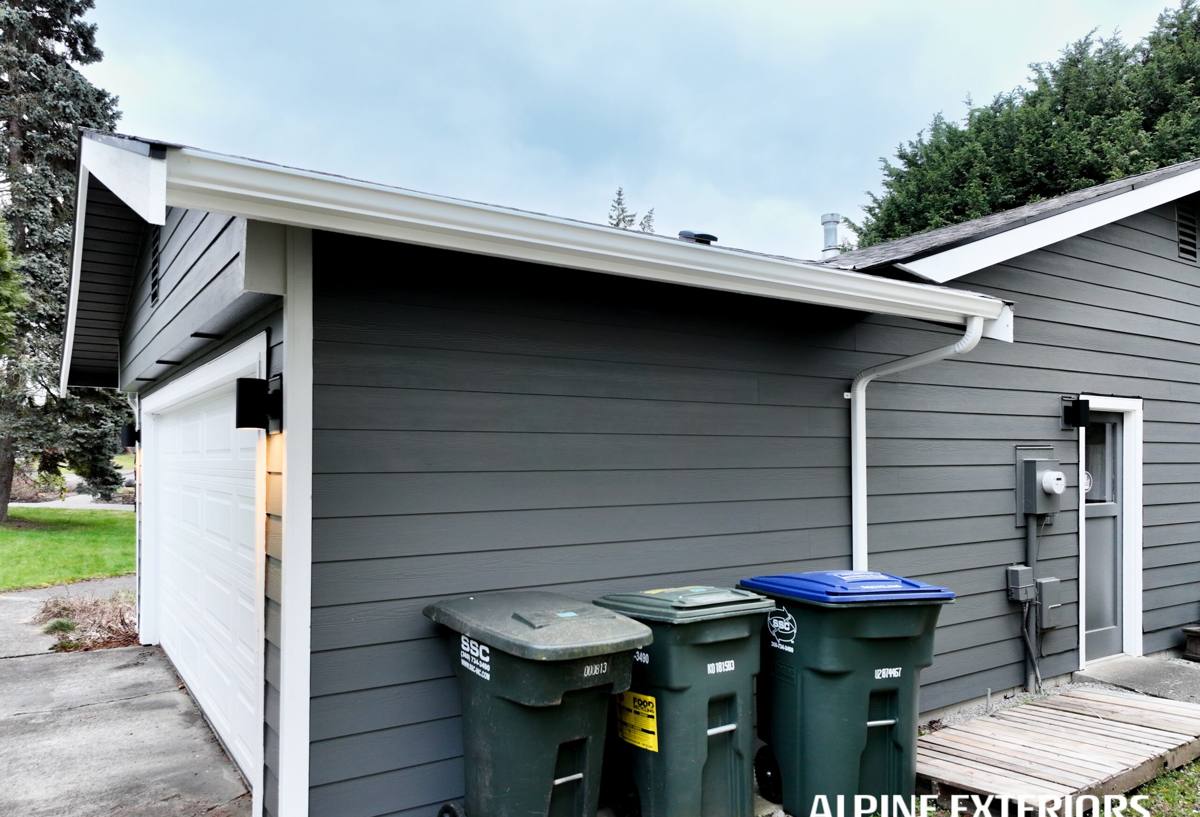
What Salt Air, Rain, and Moss Season Do to Siding Over Time
Salt Air
Airborne salt is corrosive to exposed metal fasteners, trim flashings, and hardware, and it accelerates the breakdown of lower-grade paint films and coatings. On products that rely on a surface-applied finish rather than a factory-cured one, salt exposure shows up as early fading, chalking, and adhesion failure — the paint stops bonding to the substrate and starts peeling in sheets.
Driving Rain
Anacortes gets plenty of straight-down rain, but it's the sideways, wind-driven rain off the water that causes real damage. It gets forced under laps, into unsealed joints, and behind trim that isn't flashed correctly. Any siding product that swells, delaminates, or wicks moisture when it gets wet — and stays wet — is a poor match for this exposure.
Moss Season
Shade, moisture, and mild temperatures give moss a long growing window here — often most of the year on north and west elevations. Moss and the organic debris it holds against the wall keep siding surfaces damp far longer than they'd otherwise stay wet, which is exactly the condition that rots wood-based products and degrades weak coatings.
What a Correct Installation Looks Like on a Flounder Bay Home
The siding material matters, but installation quality is what actually determines whether a home stays dry for the next 30-plus years. On every Flounder Bay project, our installation addresses:
- A continuous water-resistive barrier behind the siding, lapped correctly at every seam and penetration
- Properly flashed and sealed window and door openings, with head flashing that actually sheds water away from the wall
- Correct fastener type and spacing per the manufacturer's engineering specs — not generic nailing patterns
- Minimum clearance between the bottom of the siding and grade, decks, and roof lines, so splashback and standing water can't wick into the board
- Rain-screen or drainage gap detailing where the wall assembly calls for it, so moisture that does get behind the cladding can drain and dry
- Factory-cut or properly sealed field cuts and joints, since an unsealed cut edge is one of the most common points of moisture entry
Skip any one of these details and the siding material itself almost stops mattering — water will find its way in regardless of what's on the outside.
Our Process for a Flounder Bay Siding Installation
1. On-Site Assessment
We walk the exterior, check the existing wall assembly and any current siding for moisture damage, and look specifically at exposure — which elevations take the worst wind-driven rain, where moss has already established, and where salt exposure is heaviest given the home's position relative to the water.
2. Tear-Off and Wall Inspection
Once the old siding is off, we inspect the sheathing and framing underneath for rot or hidden moisture damage before anything new goes up. This is often the first time a homeowner sees what's actually been happening behind their walls.
3. Water Management Layer
We install or verify a continuous water-resistive barrier and correct flashing details at every window, door, and penetration before a single piece of siding goes on.
4. Siding Installation to Manufacturer Spec
Fastening, clearances, and joint treatment follow James Hardie's published installation requirements — not shortcuts. This is also where correct installation protects the product warranty, which requires installation to spec.
5. Trim, Caulking, and Final Detailing
Trim and caulking are the last line of defense against wind-driven rain, so we treat these as functional water-management components, not just cosmetic finishing touches.
Why We Install Only James Hardie Fiber Cement Siding
We standardized on James Hardie for every siding installation we do, including Flounder Bay, for reasons specific to this climate. Hardie's fiber cement is non-combustible and dimensionally stable — it doesn't swell, cup, or delaminate the way wood-based or wood-composite products can when they take on repeated moisture exposure. That matters directly in a moss-season environment where siding stays damp for extended stretches.
James Hardie's HZ10 product line is engineered specifically for climates with sustained moisture exposure, which fits the Anacortes waterfront profile well. The ColorPlus factory finish is baked on and warranted against fading and peeling under UV and weather exposure — a meaningful advantage over field-applied paint, which is the finish type most vulnerable to salt air's effect on adhesion and color retention. James Hardie also backs the product with a strong transferable warranty, which matters if the home changes hands, as many waterfront properties eventually do.
We don't install LP SmartSide, vinyl, Cemplank, Allura, primed spruce, or cedar. Each of those has legitimate uses elsewhere, but none of them is the product we're willing to put our name behind in a marine, high-moisture, moss-heavy exposure like Flounder Bay's.
How Common Siding Materials Hold Up to This Exposure
| Material | Salt Air Resistance | Moisture/Rain Behavior | Moss & Organic Growth Resistance | Finish Longevity |
|---|---|---|---|---|
| James Hardie Fiber Cement | Strong — non-combustible, stable | Doesn't swell or rot; engineered HZ lines for wet climates | Doesn't feed organic growth like wood substrates | Factory ColorPlus finish, warranted |
| Cedar | Moderate, needs upkeep | Absorbs moisture, prone to rot without diligent maintenance | Organic material — susceptible to moss and mildew | Field-applied stain/paint, shorter cycle |
| Vinyl | Fair, can become brittle | Doesn't rot but can trap moisture behind panels if not vented | Surface growth possible in shaded, damp spots | Color molded in, but fades and chalks over time |
| Primed Spruce / Wood Composite | Weak in marine air | Higher risk of swelling and edge failure when wet | Wood substrate is vulnerable | Relies on field coatings, shorter lifespan |
Signs a Flounder Bay Home Needs Siding Replacement
- Persistent moss or dark streaking that returns within weeks of cleaning
- Soft spots, bubbling, or visible swelling along seams and bottom edges
- Paint that's chalking, peeling in sheets, or fading unevenly by elevation
- Gaps opening up at trim joints, corners, or around window and door casings
- A musty smell or visible staining on interior walls that back up to exterior siding
- Fasteners showing rust bleed or corrosion streaks below the head
Any one of these on its own might just need a repair. Several together, especially on the elevations facing the water or prevailing wind, usually point to a wall assembly that's been taking on moisture for a while.
Why a Crew That Already Works Flounder Bay Matters
Siding installation isn't a one-size-fits-all job, and a crew that's worked this specific stretch of the Anacortes waterfront already knows which elevations take the worst of the driving rain, how aggressive the moss growth gets on the shaded sides of these lots, and how much salt exposure to plan flashing and fastener choices around. That local pattern recognition shows up in the details — where we add extra flashing attention, how we sequence a tear-off around a wet Skagit County forecast, and what clearance and drainage detailing we default to on a bay-facing wall versus a sheltered one.
It also means straightforward logistics: material staging, scheduling around marine-layer weather windows, and a crew that isn't learning this microclimate for the first time on your project.
Get a Free, No-Pressure Estimate
If your Flounder Bay home is showing early signs of siding wear, or you're planning ahead before the next wet season sets in, we're happy to take a look and walk you through what correct installation looks like for your specific exposure. There's no obligation — just a straightforward assessment and an honest recommendation. Fill out the form below to get started.