 Anacortes Siding
 Siding Replacement for Flounder Bay Homes
Flounder Bay sits on the water side of Anacortes, close enough to the marina and the shoreline that homes here take a different kind of weather beating than houses further inland in Skagit County. Salt-laden air, wind-driven rain off Rosario Strait and the Guemes Channel, and long stretches of gray, damp months all work on exterior siding year-round. If you own a home in this part of Anacortes and you're noticing paint failure, soft spots, or siding that just looks tired sooner than it should, the cause is usually the environment, not bad luck.
This page covers what siding replacement actually involves for a Flounder Bay property, what the local climate demands from the material and the installation, and how we approach the job from first look to final walkthrough.
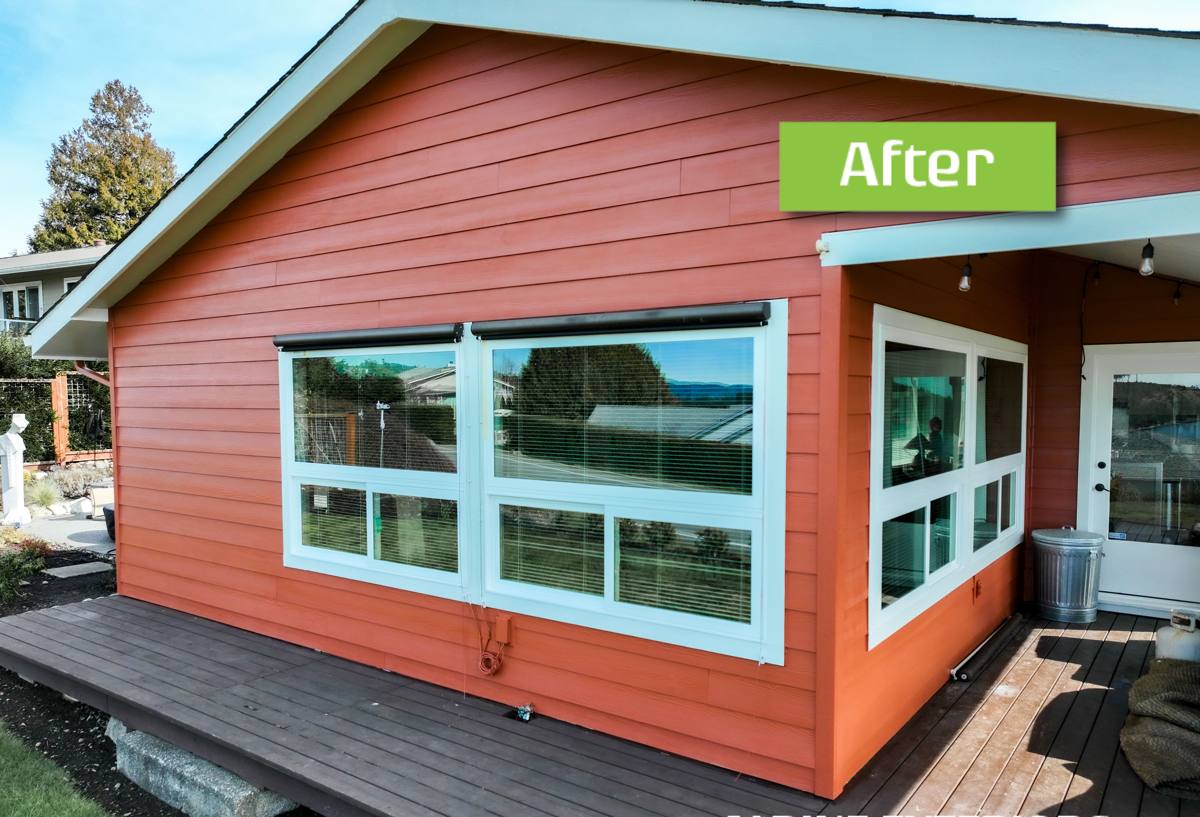
Why Flounder Bay Is Tougher on Siding Than It Looks
Salt Air
Homes within a mile or so of saltwater deal with airborne salt that settles on exterior surfaces and accelerates the breakdown of paint films, caulking, and fasteners. Salt is hygroscopic — it pulls moisture out of the air and holds it against the surface it's sitting on. On wood-based siding products, that means more time spent damp, which is exactly the condition that invites rot and coating failure.
Driving Rain
Anacortes gets weather off the water that doesn't just fall straight down — it comes in sideways during winter storms. Wind-driven rain finds every gap, lap joint, and fastener penetration that isn't detailed correctly. On a home exposed to open water or a clear wind corridor, the water-management details behind the siding matter as much as the siding itself.
Moss and Sustained Dampness
Skagit County's siding season for growth runs long — mild, wet winters and cool, damp shoulder seasons give moss, algae, and mildew months to establish themselves on north-facing and shaded walls. Once organic growth gets a foothold on a porous or absorbent siding surface, it holds moisture against the wall long after the rain has stopped, which compounds every other problem.
Signs a Flounder Bay Home Needs Siding Replacement
- Paint that's peeling, bubbling, or chalking noticeably faster than a normal repaint cycle would explain
- Soft, spongy, or crumbling siding when pressed, especially near the bottom courses and around windows
- Visible moss or algae staining that keeps returning within a season or two of cleaning
- Warped, cupped, or delaminating boards, particularly on wood or engineered wood products
- Gaps opening up at seams, corners, or trim where caulking has failed
- Interior signs — musty smell, staining, or soft drywall near exterior walls — that point to moisture getting behind the siding
- Visible rust streaking from failing fasteners
Any one of these on its own might just need a repair. Several at once, especially on the weather-facing side of the house, usually means the siding system as a whole has reached the end of its useful life.
Why We Only Install James Hardie Fiber Cement
We standardized on James Hardie fiber cement siding for every job we take on, including Flounder Bay homes, and we don't install vinyl, LP SmartSide, primed spruce, cedar, or other fiber cement alternatives like Cemplank or Allura. That's a deliberate call based on what holds up in this specific climate, not a sales position.
Fiber cement is made from cement, sand, and cellulose fibers — it doesn't have the wood content that gives salt-laden moisture and sustained dampness something to feed on. It's also non-combustible, which matters to some homeowners independent of the coastal exposure. James Hardie's ColorPlus factory-applied finish is baked on and backed by its own coating warranty, so you're not relying on a field-applied paint job to hold up against salt air and UV — a real weak point for site-painted or primed-only siding products in this environment.
We're not going to tell you every other product is worthless — vinyl is cheap and low-maintenance in mild climates, cedar has a look some homeowners genuinely love, and engineered wood has come a long way. But installed on a home exposed to Flounder Bay's combination of salt air, driving rain, and a long moss season, those products ask for a level of maintenance vigilance — recaulking, repainting, moisture monitoring — that most homeowners don't sign up for and don't keep up with. Hardie's fiber cement is simply the product we're willing to stand behind here.
James Hardie Product Lines We Work With
| Product | Best Use | Why It Fits This Area |
|---|---|---|
| HardiePlank lap siding | Most common wall application | Traditional look, available in HZ5 formulation engineered for the Pacific Northwest's wet-freeze climate |
| HardiePanel vertical siding | Accent walls, modern facades, shop/garage exteriors | Clean lines, works well paired with lap siding on mixed-material homes |
| HardieTrim | Corners, window and door trim, fascia | Matches the siding's moisture resistance so trim doesn't become the weak point |
| HardieSoffit | Eaves and overhangs | Vented options help manage attic moisture, relevant given regional humidity |
What Correct Installation Involves
Fiber cement siding is only as good as the water-management system behind it. This is where a lot of siding failures actually start, regardless of what material was used — the visible siding gets blamed, but the real problem is what's underneath it.
The Water-Resistive Barrier
Every job starts with a properly lapped weather-resistive barrier over the sheathing, with all penetrations, seams, and transitions sealed and shingled correctly so water is directed out and down, never trapped behind the cladding.
Flashing at Every Opening
Windows, doors, and any other wall penetration need flashing that integrates with the barrier, not siding butted up against an opening and caulked as an afterthought. On a house exposed to driving rain, flashing details are what actually keep water out — the siding is the second line of defense, not the first.
Proper Fastening and Clearances
James Hardie specifies fastener type, spacing, and placement for a reason — get it wrong and you create stress points where the board can crack or the fastener can back out over time. We also hold the manufacturer's minimum clearances from grade, roof lines, and decks so the bottom edge of the siding isn't sitting in a moisture trap.
Caulking and Sealant
Used correctly at trim and penetrations, not as a substitute for flashing. Over-reliance on caulk is a common shortcut that fails first in a climate like this one, because caulk is a maintenance item — it degrades faster in salt air and UV than the flashing details it's sometimes used to paper over.
Our Process for a Flounder Bay Job
- On-site assessment. We look at the existing siding, sheathing condition where accessible, and the specific exposure of your home — how much direct salt air and wind-driven rain each elevation actually takes.
- Scope and estimate. A clear breakdown of what's being removed, what the wall assembly needs, and which Hardie products fit the home, with an honest cost range.
- Tear-off and inspection. Old siding comes off and we check the sheathing and framing underneath for rot or moisture damage before anything new goes up — this is often where hidden problems surface.
- Repair and prep. Any compromised sheathing gets addressed, and a new water-resistive barrier and flashing system goes on correctly the first time.
- Installation. HardiePlank, panel, trim, and soffit installed to manufacturer spec — fastening, clearances, and joint treatment done right, not rushed.
- Final walkthrough. We go over the finished work with you before we consider the job done.
Cost Factors for Flounder Bay Siding Replacement
| Factor | Why It Matters |
|---|---|
| Home size and wall complexity | More corners, dormers, and cutouts mean more labor and trim work |
| Extent of sheathing damage found at tear-off | Rot repair is often not visible until old siding is off |
| Product selection | Lap width, panel vs. lap, and trim details affect material cost |
| Height and access | Multi-story or steep-site homes near the water require more staging |
| Existing moisture or mold remediation | Homes with a history of hidden leaks may need extra prep before new siding goes on |
We won't quote a number without seeing the house, but we'll always walk you through what's driving the cost on your specific project.
Why Hire a Crew That Already Works This Area
A contractor who works Anacortes and the surrounding Skagit County waterfront regularly knows what a marine-exposed wall actually needs versus what a spec sheet says in general terms. We've seen how salt air and driving rain treat different details on real houses in this area, and we build our flashing and fastening decisions around that, not around a generic install for a drier climate. That local pattern recognition is worth more than it sounds like — it's the difference between siding that looks right on install day and siding that's still performing correctly in ten years.
If your Flounder Bay home is showing signs of siding wear, or you're just planning ahead, we'll come take a look and give you a straightforward, no-pressure estimate — no invented urgency, just an honest read on where your siding actually stands.