 Anacortes Siding
 Roofing on Guemes Island Is Its Own Job
Guemes Island sits just across the ferry channel from Anacortes, but roofing out there isn't the same job as roofing in town. Every load of materials, every dumpster, every crew truck has to cross on the ferry, which means scheduling has to be tighter and more deliberate. Add in the fact that island homes catch more direct salt air off the water, more wind-driven rain, and often more shade from surrounding fir and cedar canopy than a typical in-town lot, and you've got a roofing environment that punishes shortcuts faster than most.
We're an Anacortes-based crew, and Guemes Island is part of our regular service area, not an occasional trip. That matters for a job like a full roof replacement, where logistics, timing, and material choices all have to be planned around getting a crew and a full trailer of materials on and off an island on a ferry schedule.
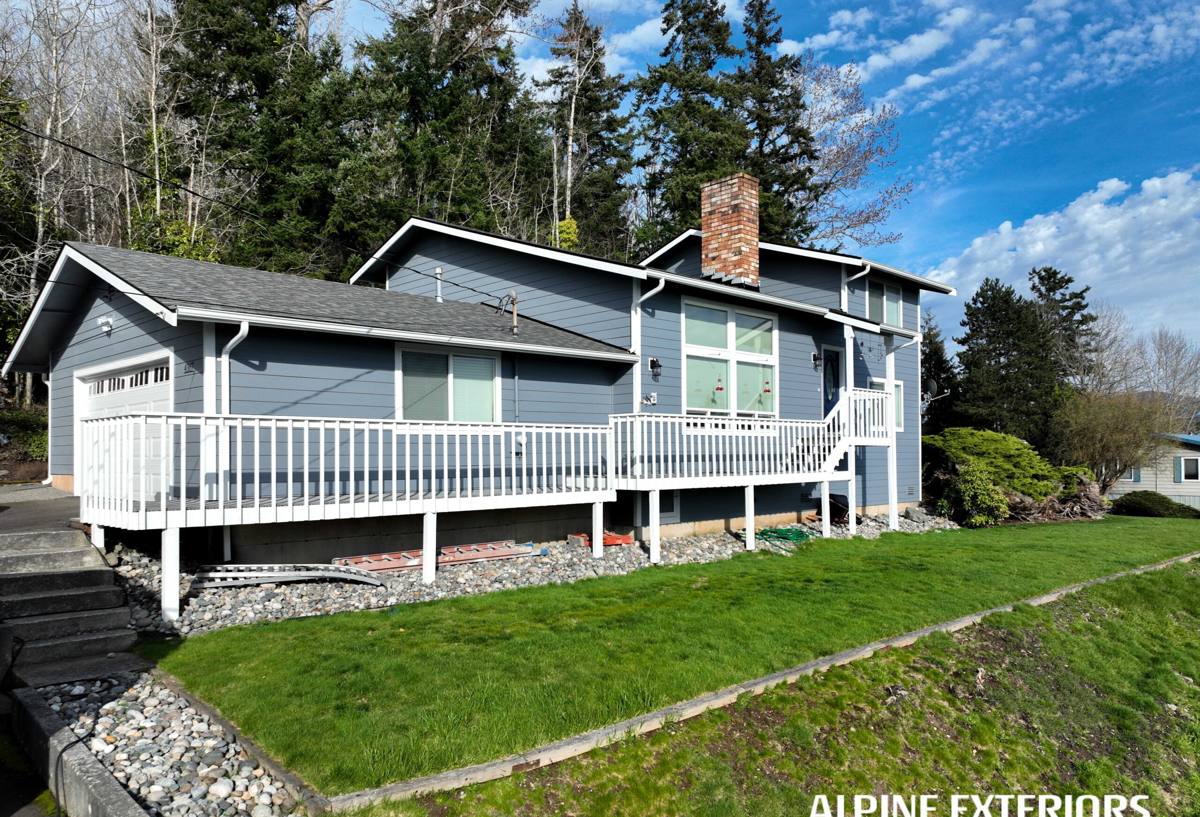
What Skagit County's Marine Climate Does to a Roof
Guemes Island roofs deal with three climate pressures at once, and they compound each other over the life of a roof.
Salt Air and Metal Fasteners
Homes closer to the shoreline take on airborne salt that accelerates corrosion on exposed metal — nails, flashing, vent caps, and drip edge. Standard electro-galvanized fasteners hold up fine inland but can start showing rust streaks and weakening well ahead of schedule this close to saltwater. We spec corrosion-resistant fasteners and flashing metals for island jobs as a default, not an upsell.
Driving Rain and Wind-Driven Water
Open water exposure means wind doesn't just push rain down, it pushes it sideways and up under laps, edges, and penetrations. A roof detailed for a sheltered in-town lot can leak on an exposed island lot even with the same shingle and the same slope, because the water is attacking from angles the standard install assumes it won't. Underlayment coverage, ice-and-water membrane placement at eaves and valleys, and fastener patterns all need to account for that.
Moss, Shade, and a Long Wet Season
Skagit County's wet season runs long, and a lot of Guemes Island lots sit under mature conifer canopy that keeps roof surfaces damp and shaded for extended stretches. That's ideal moss and moisture-retention weather. Moss holds water against the roof surface, works into shingle laps, and — left unmanaged — lifts and degrades shingles from underneath over several seasons, long before the shingle itself would otherwise wear out.
Signs an Island Roof Needs Full Replacement, Not Another Patch
- Granule loss heavy enough that you can see bare, shiny patches on multiple slopes, not just one weathered section
- Moss established in the shingle laps rather than just sitting on the surface — that's a sign it's already working into the material
- Soft spots or sag visible from the ground, which usually means deck-level moisture damage under the shingles
- Rust staining or visibly deteriorated metal at flashing, valleys, or vent boots
- Interior water stains, especially ones that show up or worsen during wind-driven rain rather than just steady rain
- A roof at or past its expected service life where repair costs are starting to stack up faster than they used to
A roof with isolated damage — one bad valley, a handful of storm-lifted shingles — is usually a repair. A roof showing several of the signs above across multiple areas is telling you the whole system, not just the surface, is wearing out.
What a Correct Install Looks Like on This Site
A new roof is really a stack of systems working together — deck, underlayment, flashing, ventilation, and the shingle or metal surface on top. On an island property exposed to salt air and driving rain, each layer needs to be treated as load-bearing for the whole system's performance, not just the visible shingle.
Deck Inspection and Repair
Once the old roofing is off, we inspect the full deck for soft spots, delamination, and rot — this is where hidden moisture damage from a failing old roof actually shows up. Any compromised sheathing gets replaced before anything new goes down. Skipping this step is the single most common shortcut in this trade, and it's the one that causes the most expensive failures later.
Underlayment and Water Barrier
Given the wind-driven rain exposure common on the island, we don't treat underlayment as a formality. Ice-and-water shield goes at eaves, valleys, and around penetrations at minimum, with broader coverage on more exposed roof faces where wind-driven water is a real factor.
Flashing and Penetrations
Valleys, chimneys, vent stacks, and wall transitions are where roofs actually leak — the field of the roof rarely fails first. We use corrosion-resistant metal appropriate for the salt exposure and detail these areas to shed water even when it's coming in sideways.
Ventilation
Balanced intake and exhaust ventilation keeps the deck dry from underneath and helps prevent the moisture buildup that feeds both rot and moss growth. On shaded, damp island lots, ventilation is doing real work, not just meeting code minimums.
Surface Material
Most island homes we work on use architectural asphalt shingle, chosen for a reasonable balance of cost, durability, and appearance in this climate. Where a home's design or budget calls for metal roofing, we install it with the same attention to fastener corrosion resistance and flashing detail. We'll walk through the honest trade-offs of each for your specific roof rather than push one system across every job.
Material Comparison for Island Conditions
| Factor | Architectural Asphalt Shingle | Standing Seam Metal |
|---|---|---|
| Upfront cost | Lower | Higher |
| Salt air / corrosion handling | Good with proper fastener and flashing spec | Excellent with marine-grade fasteners and coatings |
| Moss resistance | Moderate — benefits from algae-resistant granules and periodic cleaning | High — smoother surface sheds moss more easily |
| Wind-driven rain performance | Good when underlayment and laps are properly detailed | Very good due to fewer seams and interlocking panels |
| Typical service life | 20-30 years depending on exposure | 40-60+ years |
| Maintenance sensitivity | Moderate — moss and debris removal matter more under canopy | Low — but panel and fastener quality matters at install |
Neither material is the "wrong" choice — the right one depends on your budget, how long you plan to own the home, and how much shade and moss pressure your specific lot has. We'll give you a straight read on which fits your situation rather than steering you toward the higher-margin option.
How Ferry Logistics Shape the Project Timeline
Because Guemes Island is only reachable by ferry, we plan island roof jobs differently than in-town ones. Material deliveries, dumpster placement and pickup, and crew scheduling all get coordinated around ferry sailings and capacity, and we build that into the estimate and timeline up front rather than discovering it mid-project. A crew that already works the island regularly has this logistics pattern worked out; a crew coming over for a one-off job is often figuring it out — and eating the delays — as they go.
We also plan weather windows carefully. A tear-off exposes the deck, and on an exposed island roof that's not a spot to get caught by a wind-driven rain event. We sequence tear-off and dry-in to minimize how long any section of deck sits uncovered.
Our Process, Start to Finish
- On-site assessment — we walk the roof (weather permitting) and the attic space to evaluate deck condition, ventilation, and the real cause of any existing damage, not just the surface symptoms.
- Written estimate — a clear scope covering tear-off, deck repair allowance, underlayment, flashing, ventilation, and the surface material, with island logistics factored into the timeline.
- Material and logistics scheduling — deliveries and dumpster service coordinated around ferry availability so the job isn't waiting on materials mid-week.
- Tear-off and deck inspection — old roofing removed, deck inspected and repaired as needed before anything new goes down.
- Underlayment, flashing, and ventilation install — the systems that do the actual work of keeping water out, detailed for this site's wind and rain exposure.
- Surface installation — shingle or metal installed to manufacturer specification and this climate's demands.
- Final walkthrough and cleanup — site cleared, debris and old materials hauled off the island, and the finished roof reviewed with you.
Protecting the Investment After Installation
A new roof's performance depends partly on what happens after installation. On a shaded, moss-prone island lot, periodic moss removal and gutter clearing go a long way toward getting full service life out of the roof. We're happy to talk through a maintenance rhythm that fits your specific lot's shade and exposure when we finish the install.
Why an Anacortes Crew That Already Works Guemes Island Matters
Anyone can quote a roof from a photo. What's harder to fake is knowing, before the crew ever steps off the ferry, how a specific island lot's shade, wind exposure, and salt proximity are going to affect fastener choice, underlayment coverage, and moss pressure — because you've already done a dozen roofs like it a few hundred yards away. That's the difference between a crew passing through and one that treats Guemes Island as part of its regular territory.
If your roof is showing its age or you're planning ahead for a replacement, we'd be glad to take a look and give you a straightforward, no-pressure estimate — fill out the form below and we'll get you scheduled.