 Anacortes Siding
 Why Guemes Island Siding Takes a Harder Hit
Guemes Island sits out in the Salish Sea, reachable only by a short ferry ride from Anacortes, and that exposure is exactly what makes siding repair here different from a typical Skagit County job. Homes on the island face salt-laden air coming off the water almost constantly, driving rain with no downtown buildings or dense tree cover to break the wind, and a moss season that runs longer than most homeowners expect in the Pacific Northwest. None of these forces are dramatic on their own, but stacked together over years, they wear siding down faster than the same product would age twenty miles inland.
Salt air is corrosive to metal fasteners and trim, and it also breaks down cheaper paint films faster than fresh water alone would. Driving rain finds every gap in flashing, caulk, and lap joints, and on a wind-exposed island lot that rain often comes in sideways rather than straight down. Add in shaded, damp areas around mature trees and north-facing walls, and you get the kind of moss and algae growth that holds moisture against the siding surface for weeks at a time. A repair that ignores any one of these factors tends to fail again within a season or two.
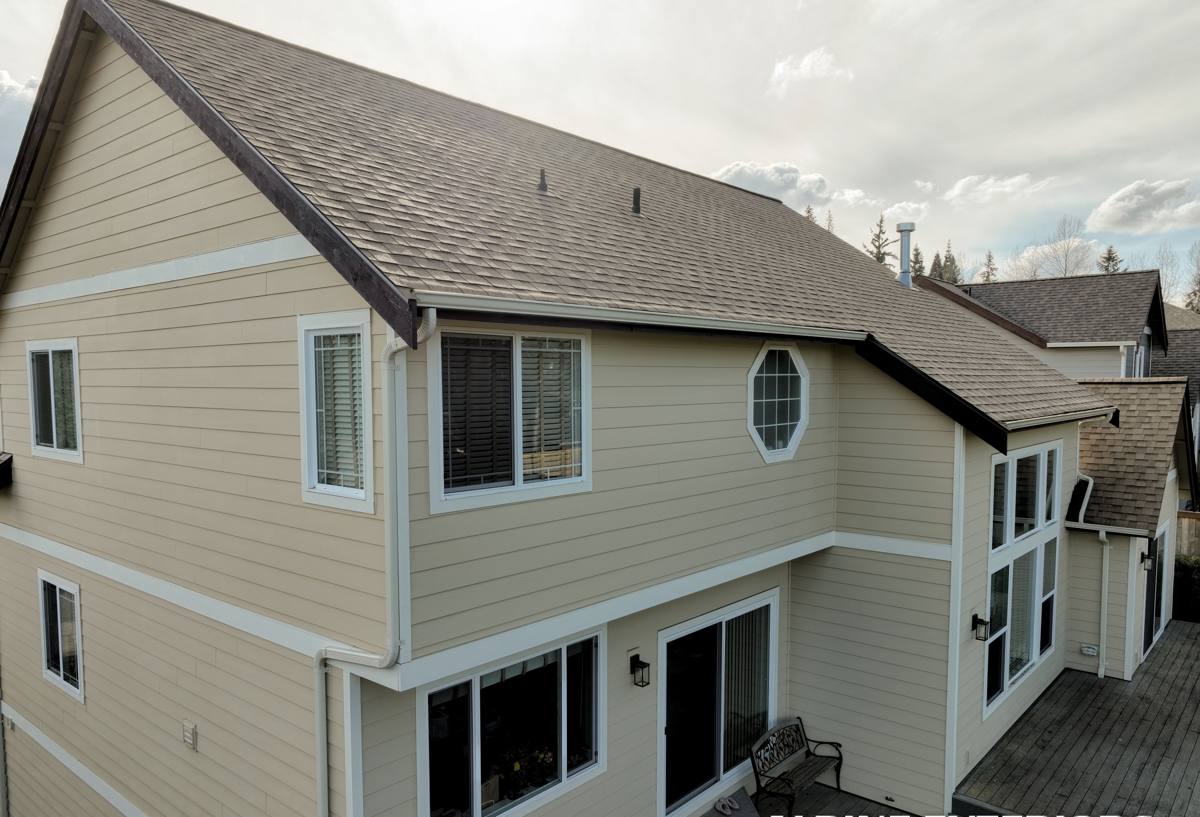
Common Siding Repair Issues We See on Guemes Island
Moss and Algae Staining
Green and black staining shows up first in shaded corners, under roof overhangs with poor drip lines, and on north-facing walls that never fully dry out. On its own, surface growth is often just cosmetic. Left untreated, though, it holds moisture against the siding and the trim beneath it, which is where real damage starts.
Caulk and Trim Failure
Caulk joints around windows, corner boards, and trim are usually the first thing to give out in a salt-air, high-wind environment. Once a joint cracks or pulls away, wind-driven rain gets behind the siding at exactly the spots designed to keep it out.
Board and Panel Damage from Trapped Moisture
Where water has been getting behind siding for a while, we see soft spots, swelling, or visible rot in the substrate and sheathing behind the cladding — not always the siding material itself. This is the category of damage that separates a straightforward repair from a bigger job.
Fastener Corrosion and Streaking
Rusting nails or staples show up as small orange streaks bleeding down the siding face. It's a small cosmetic issue at first, but it's also a sign that whatever fastener was used wasn't rated for a marine-exposure environment like Guemes Island.
Repair or Replace? How We Make That Call
Not every damaged section needs full replacement, and we don't default to recommending a bigger job than the house actually needs. The honest answer depends on how far the moisture has traveled and how much of the wall system is affected.
| What We Find | Usually a Repair | Usually Points to Replacement |
|---|---|---|
| Moss/algae staining, surface only | Yes — clean, treat, reseal | No |
| Cracked caulk, loose trim, isolated fastener rust | Yes — reseal and refasten | No |
| One or two damaged boards, sound sheathing beneath | Yes — spot replacement with matched material | No |
| Soft or rotted sheathing found once siding is opened up | Sometimes, if localized | Often — the wall needs to be opened and dried out first |
| Damage spread across multiple elevations or the whole west/water side | No | Yes — patchwork won't hold up long-term |
We won't know for certain until we get eyes on the actual siding and, in many cases, pull a section to see what's happening underneath. That inspection is the honest starting point for any repair estimate on the island.
What a Correct Siding Repair Actually Involves
A siding repair that's done right starts with finding the moisture source, not just patching the symptom. Recaulking a joint without figuring out why it failed in the first place just buys a homeowner another year or two before the same spot fails again.
- Identify the actual entry point — this is often not directly above the visible damage, since water travels down and sideways behind siding before it shows up
- Remove and inspect the affected section, including trim, flashing, and house wrap, not just the visible board
- Confirm the sheathing and framing underneath are sound and dry before closing the wall back up
- Replace flashing and house wrap where it's damaged or was installed incorrectly the first time
- Match the replacement siding material, profile, and factory finish as closely as possible so the repair doesn't stand out
- Reseal with a caulk and sealant rated for marine/coastal exposure, not a generic interior-grade product
Skipping any one of these steps is how a "repair" turns into a callback a year later. On an island where every trip requires a ferry crossing, getting it right the first time matters more than it does on a typical mainland job.
Why We Repair — and Recommend — James Hardie Fiber Cement
We install James Hardie fiber cement exclusively, and that standard applies to repair work too. When we're patching or extending existing Hardie siding, the ColorPlus factory finish system lets us match color far more closely than a job-site paint match ever could, so a repaired section blends in rather than becoming a visible patch. Hardie's HZ5 product line is engineered specifically for climates like ours — the freeze-thaw cycles, sustained moisture, and wind-driven rain of the Pacific Northwest — which is part of why it holds up to island conditions better than wood-based or vinyl products we regularly see failing in the same environment.
Fiber cement doesn't absorb water and swell the way wood or engineered wood siding can, and it's non-combustible, which matters to a lot of homeowners regardless of climate. It's not maintenance-free — nothing on a salt-air island is — but it resists the moisture-driven failures that cause most of the repair calls we get. When we're asked to patch a home currently sided in a different product, we're honest about what that repair can and can't accomplish, and we'll tell a homeowner plainly when a repair is a reasonable stopgap versus when the underlying material is going to keep causing the same problem no matter how well we patch it.
The Ferry Factor: Why Local Logistics Matter for Guemes Island Jobs
Working on Guemes Island isn't the same as working a job in downtown Anacortes. Every trip — for the initial inspection, for material delivery, for the repair crew, and for any follow-up — runs on the ferry schedule, not a contractor's preferred start time. A crew that hasn't planned around that loses hours standing at the dock, and on a repair job with a tight weather window between rain systems, those hours matter.
Material staging is its own challenge. Matched Hardie boards, trim, and fasteners need to be confirmed and loaded before the crossing, because there's no quick run back to a supply house mid-job the way there is on the mainland. A crew that already works the island knows to over-plan materials, watch the marine forecast closely, and sequence the work so exposed openings aren't left uncovered if a ferry gets delayed or weather turns. That's experience you can't fake on the first trip out.
Our Guemes Island Siding Repair Process
- Initial inspection and diagnosis, including checking behind visibly damaged sections when needed
- A clear, written explanation of what's causing the damage — not just what it will cost to fix
- An honest repair-vs-replace recommendation, with the reasoning behind it
- Material and crew staging planned around the ferry schedule and current marine weather
- Repair work: moisture source correction, flashing and house wrap repair, matched Hardie board or panel replacement, and coastal-rated sealant
- A final walkthrough so you know exactly what was repaired and why
We treat every Guemes Island call the same way we'd want a repair handled on our own home: fix what's actually wrong, use materials built for this environment, and don't leave a homeowner guessing about whether the problem will come back.
Maintenance That Extends Your Repair's Life
A good repair buys you years, not decades, if it's ignored afterward. A simple annual check goes a long way on an island with this much moss and salt exposure: rinse off moss and algae buildup before it spreads, keep gutters and downspouts clear so water isn't sheeting down the siding face, trim back vegetation that's shading and holding moisture against north-facing walls, and take a walk around the exterior each fall looking for cracked caulk or loose trim before winter storms find it for you. Catching a small issue early is almost always a fraction of the cost of catching it after it's spread behind the wall.
If you're seeing staining, soft spots, or failing caulk on your Guemes Island home, we're happy to take a look and give you a straight answer about what it needs — whether that's a targeted repair or something bigger. Reach out for a free, no-pressure estimate using the form below.