 Anacortes Siding
 Flounder Bay Sits Right at the Edge of What Siding Can Take
Flounder Bay is one of the more exposed pockets of Anacortes. Homes here sit close to open water, which means near-constant airborne salt, wind-driven rain that hits siding sideways instead of straight down, and long stretches of gray, damp weather that keep exterior walls wet for days at a time. Add in the shade and moisture that Skagit County's marine climate holds onto through fall, winter, and spring, and you have one of the toughest environments in the region for exterior materials to survive long-term.
Ordinary siding products are engineered for average conditions. Flounder Bay doesn't offer average conditions. Salt residue accelerates corrosion on fasteners and trim. Constant moisture feeds moss and algae growth on anything that stays damp. Wind-driven rain finds every gap in flashing and caulking that a calmer site would never expose. We've built our entire business around installing one product system that's actually engineered to handle this, and we want homeowners here to understand why that choice matters before they sign a contract with anyone.
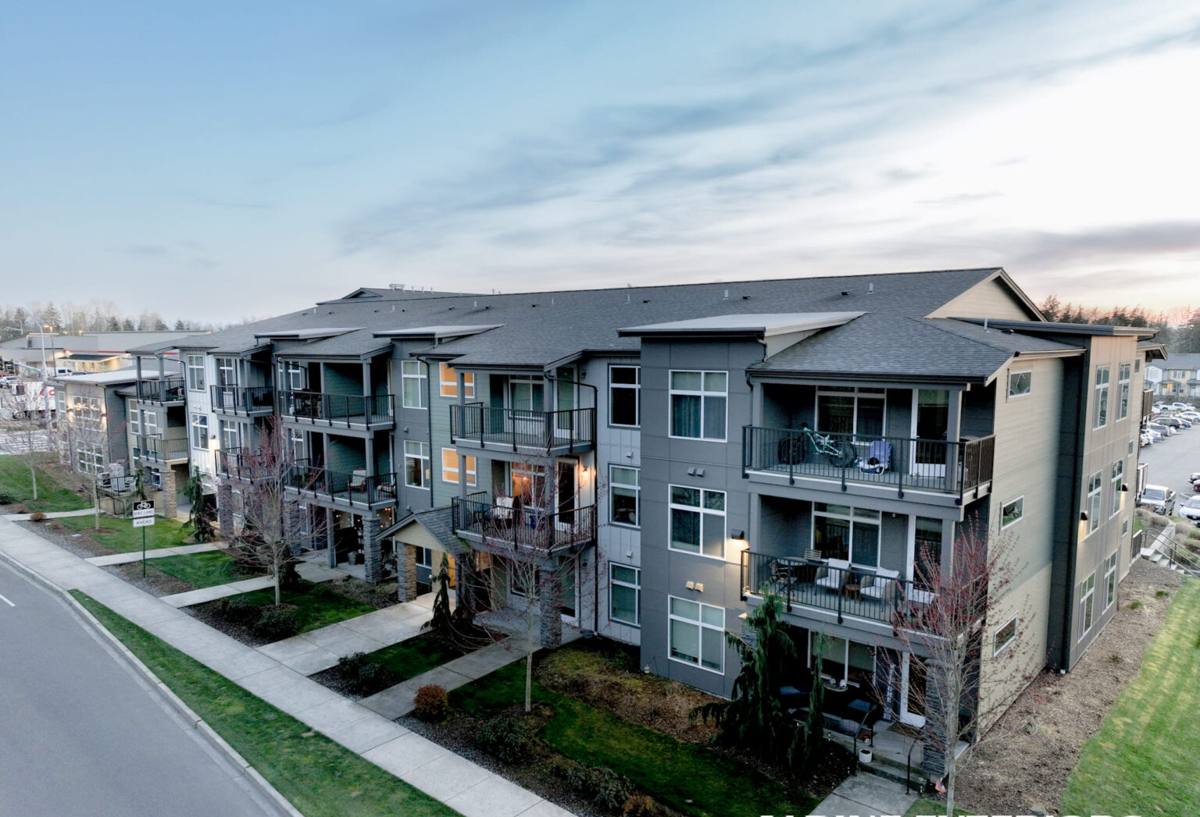
Why We Install Only James Hardie Fiber Cement
James Hardie fiber cement is a mix of cement, sand, and cellulose fibers, cured into a rigid, dimensionally stable board. Unlike wood-based products, it doesn't swell, delaminate, or feed rot when it stays wet for extended periods — which is exactly what happens to siding on a bay-front wall during a wet Pacific Northwest winter. It's also non-combustible, which matters more each year as wildfire smoke and dry spells become part of the regional weather pattern, even on the wet side of the Cascades.
Just as important for this specific location: Hardie's factory-applied ColorPlus finish is baked on under controlled conditions and backed by its own finish warranty, so it isn't relying on a field-applied coat of paint to resist the salt film and UV exposure that waterfront homes deal with every day. We don't install LP SmartSide, vinyl, Cemplank, Allura, primed spruce, or cedar. Each of those has legitimate uses elsewhere, but for a bay-front exposure like this one, we've seen enough of how ordinary siding ages here to know it isn't the product we're willing to put our name behind.
How Hardie Compares to What We Won't Install Here
| Material | How It Handles Salt Air & Driving Rain | Long-Term Concern in This Climate |
|---|---|---|
| James Hardie fiber cement | Non-combustible, dimensionally stable, factory ColorPlus finish resists salt film and moisture | Requires correct installation gaps and flashing to perform to spec |
| Vinyl siding | Doesn't rot, but expands and contracts more in temperature swings, and can warp or fade under UV/salt exposure | Seams and J-channels can trap moisture against the wall assembly |
| LP SmartSide (wood strand) | Engineered wood core is vulnerable if the factory seal is compromised at cuts or fastener points | Constant dampness raises risk of edge swelling over time |
| Cedar / primed spruce | Natural wood, attractive, but absorbs moisture directly | Needs ongoing refinishing and is prone to moss and rot in shaded, damp walls |
What Correct Installation Actually Requires in a Bay-Front Setting
Any siding product, including Hardie, will underperform if it's installed like it's going on a house in a dry inland climate. On a Flounder Bay property, the installation details matter as much as the product choice.
Water Management Behind the Siding
We install a drainable weather-resistive barrier with a rainscreen gap wherever the wall assembly allows it. That gap lets any water that does get past the siding drain and dry out instead of sitting against the sheathing. On a wall that takes direct wind-driven rain off the water, this is not optional — it's the difference between siding that sheds moisture and a wall cavity that stays wet.
Flashing at Every Penetration
Windows, doors, hose bibs, light fixtures, deck ledgers — every point where something interrupts the siding plane is a potential entry point for wind-driven rain. Correct step flashing, head flashing, and kick-out flashing at rooflines are what actually stop water intrusion, far more than the caulk bead that often gets relied on instead.
Fastening and Fastener Selection
Salt air corrodes standard fasteners faster than most homeowners expect. We use corrosion-resistant fasteners rated for the exposure and follow Hardie's fastening pattern exactly — proper spacing, correct embedment depth, and blind-nailing where the product allows it, so panels aren't stressed or left prone to splitting at the nail line.
Gaps, Caulking, and Paint Lines
Hardie panels need a small gap at trim, corners, and butt joints, sealed with a high-quality, paintable, flexible sealant rated for exterior use — not filled tight, which traps moisture and can cause buckling. Butt joints on longer runs get treated correctly rather than caulked over and hoped for the best.
Choosing the Right Hardie Product Line for This Exposure
James Hardie makes climate-engineered HZ product lines specifically because the same board doesn't perform identically in Phoenix and on Fidalgo Island. For a bay-front property in Anacortes, we specify products and installation practices suited to the wet, temperate Pacific Northwest climate zone, which is a different engineering target than the hot-dry zones Hardie also builds for.
| Consideration | Why It Matters at Flounder Bay |
|---|---|
| Climate-engineered HZ formulation | Matched to Pacific Northwest moisture exposure rather than a one-size-fits-all board |
| ColorPlus factory finish | Reduces reliance on field-applied paint holding up against salt residue and UV |
| Panel profile (lap, shingle, or panel) | Affects how much horizontal detailing and joint exposure the wall has to weather |
| Trim and fascia matching | Consistent moisture behavior across trim and field siding avoids differential wear |
Signs Your Current Siding Is Already Losing the Battle
Because Flounder Bay's exposure is more severe than most Anacortes lots, siding problems tend to show up here before they show up a few miles inland. Homeowners doing their own walk-around inspection should look for:
- Persistent green or black staining on north- and west-facing walls that pressure washing only removes temporarily
- Soft spots, or a slightly spongy feel, when you press on wood-based siding near the bottom courses
- Paint that's peeling, bubbling, or chalking heavily rather than just fading evenly
- Visible gaps opening at butt joints, corner boards, or trim where caulking has failed
- Rust streaking below fasteners or metal flashing
- Warping, cupping, or waviness when you sight down a wall in low light
- Interior signs — a musty smell, peeling interior paint, or soft drywall near exterior walls, which can point to moisture already working its way through
Any one of these on its own isn't necessarily an emergency, but two or three together on a bay-front wall usually means the siding is past the point where patching makes sense.
Our Process for a Flounder Bay Siding Replacement
- On-site assessment. We walk the exterior, check the worst-exposed walls first, and look at trim, flashing, and any signs of moisture behind the current siding.
- Honest scope and estimate. We explain what's failing, what's still sound, and give a written estimate — no pressure, no inflated urgency.
- Tear-off and sheathing check. Old siding comes off and we inspect the sheathing underneath for rot or soft spots before anything new goes up, since covering a compromised wall with new siding just hides the problem.
- Weather barrier and rainscreen installation. A drainable house wrap and rainscreen gap go on correctly before any Hardie product touches the wall.
- Flashing at every penetration. Windows, doors, and roof intersections get flashed to actually shed water, not just caulked.
- Hardie installation to manufacturer spec. Correct fastener type and pattern, proper gapping, and joint treatment suited to this exposure.
- Final detailing and cleanup. Caulk lines, touch-up paint at cut edges, and a full site cleanup before we call the job done.
What Drives Cost on a Job Like This
Every bay-front home is different, and we won't quote a number without seeing the walls, but a few factors consistently move the price on Flounder Bay jobs:
| Factor | Why It Affects Cost |
|---|---|
| Condition of the sheathing underneath | Rot repair or full sheathing replacement adds labor and material before siding even starts |
| Wall exposure and access | Waterfront-facing walls, steep grades, and limited equipment access take more time |
| Panel profile and trim complexity | Shingle-style or multi-profile designs take longer to install than plain lap siding |
| Amount of flashing and penetrations | More windows, dormers, and roof intersections mean more detail work |
| Existing moisture damage | Discovering damage during tear-off can extend scope once walls are open |
Living With Hardie Siding in a Salt Air, Moss-Prone Climate
Correctly installed Hardie siding is genuinely low-maintenance, but "low-maintenance" doesn't mean zero-maintenance on a bay-front lot. We tell every Flounder Bay customer the same short list:
- Rinse salt film and grime off the exterior once or twice a year with a garden hose or gentle wash — no need for high-pressure blasting, which can drive water behind trim
- Keep gutters clear so overflow doesn't run down the wall face and feed moss growth
- Trim back vegetation and branches that shade walls and keep them damp longer than the surrounding siding
- Recaulk trim and joints if you notice gaps opening up, rather than waiting for water to get behind the wall
- Repaint on the manufacturer's recommended cycle if you've chosen a field-painted trim color rather than factory ColorPlus everywhere
Why Hiring a Crew That Already Works Flounder Bay Matters
A crew that mostly works drier, more sheltered lots inland doesn't automatically know how to detail a wall that takes direct wind-driven rain off open water. Rainscreen design, flashing sequencing, and fastener choice all change when the exposure changes, and those are the details that separate siding that lasts decades from siding that starts failing in five years. We work this specific stretch of Skagit County regularly, which means we already know how aggressively the salt air and moss season here work against an ordinary installation — and we build every job to hold up against it, not just to pass a first inspection.
If you're weighing a siding replacement on a Flounder Bay property, we're happy to walk the exterior with you and give you a straight read on what's going on with your walls. Reach out for a free, no-pressure estimate using the form below.