 Anacortes Siding
 Similk Beach Sits in a Tough Spot for Siding
Homes near Similk Beach take a different kind of beating than houses ten miles inland. Being close to the water means near-constant exposure to salt-laden air, wind-driven rain that hits siding sideways instead of straight down, and a damp, shaded climate that keeps moss and algae growing for most of the year. None of that is unique to one house or one street — it's the baseline condition for anything built close to Skagit County's shoreline areas, and it's exactly the kind of environment that separates siding materials that hold up from siding materials that quietly fail from the inside out.
Salt air is corrosive to fasteners and hard on any coating that isn't formulated to resist it. Driving rain finds every gap in flashing, trim, and caulk that a calmer climate would never test. And moss doesn't just look bad — it holds moisture against the wall assembly, which is where real damage starts. A siding replacement in this area isn't just a cosmetic upgrade. It's a decision about how well your home's exterior will handle water for the next several decades.
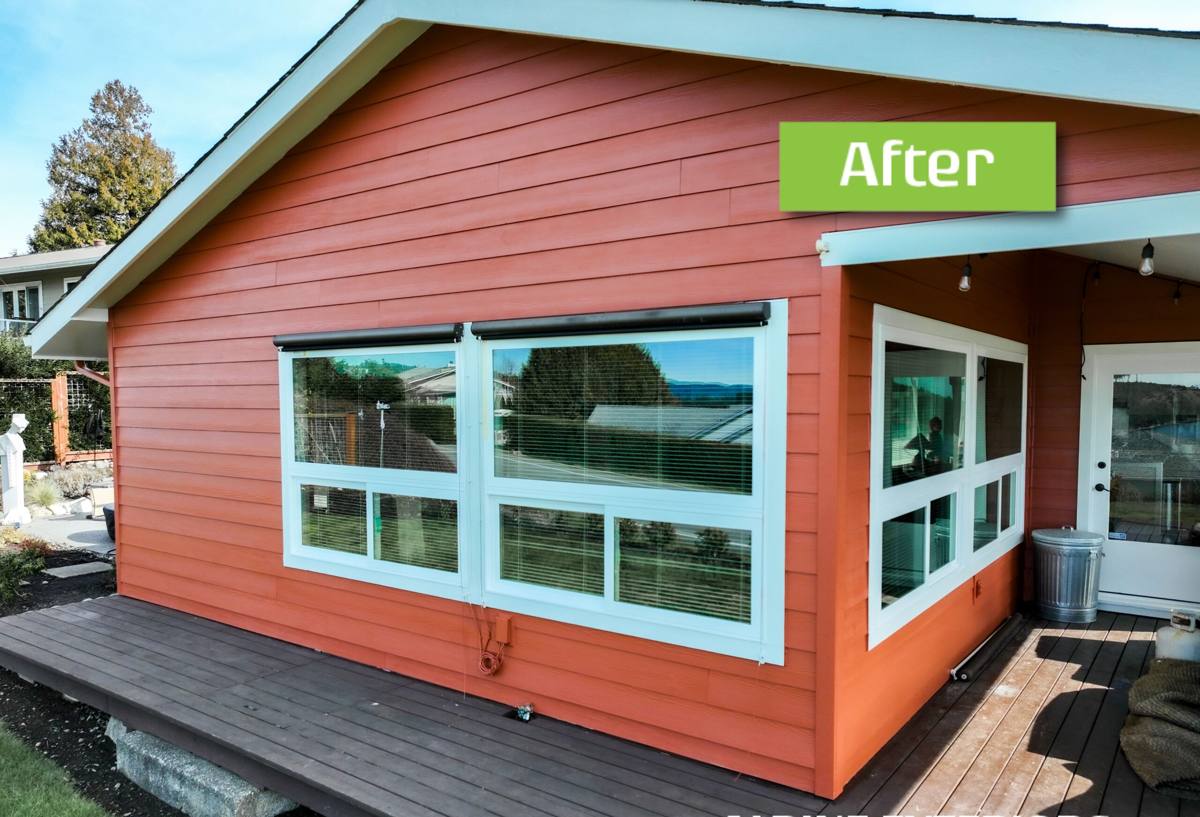
Why We Only Install James Hardie Here
We install James Hardie fiber cement siding exclusively — not as a sales preference, but because it's the product we trust to perform under these specific conditions. Fiber cement is made from cement, sand, and cellulose fibers, which means it doesn't rot, doesn't swell when it absorbs moisture, and doesn't feed the moss and mildew that thrive in a wet marine climate. That matters more in Similk Beach than it would in a dry inland town.
Moisture Behavior
Wood-based siding products absorb water at cut edges and fastener points, and once moisture gets in, it has to dry out before rot can be stopped. Hardie's fiber cement doesn't work that way. It sheds water at the surface and doesn't break down from repeated wetting and drying cycles — a cycle this stretch of the county sees constantly for most of the year.
Non-Combustible Core
Fiber cement is also non-combustible, which is a real consideration during Washington's dry summer wildfire season even in a coastal county. It's not the main reason we chose Hardie, but it's a genuine advantage over wood-based alternatives.
ColorPlus Factory Finish
Hardie's ColorPlus finish is baked on at the factory under controlled conditions, not brushed or sprayed on-site. In a salt-air environment, factory-cured finishes hold color and resist fading and chalking far longer than field-applied paint, which means fewer repaint cycles over the life of the siding.
HZ5 Engineering
James Hardie makes climate-specific product formulations, and the HZ5 line is engineered for regions with more freeze-thaw cycling and moisture exposure — the profile that fits the Pacific Northwest coast better than a generic, one-climate product.
What a Correct Installation Actually Involves
James Hardie siding is only as good as the installation behind it. In a high-moisture, high-wind coastal setting like Similk Beach, the details that get skipped on a rushed job are exactly the details that cause callbacks two or three years later.
Clearances and Drainage
Hardie's own installation instructions call for specific clearances above roof lines, decks, and grade, plus a rainscreen or drainage gap in high-exposure applications. Skipping these clearances is one of the most common ways an otherwise good product fails early, because trapped moisture behind the siding has nowhere to go.
Fastening for Wind and Weather
Homes exposed to open water and driving rain need fastening patterns that account for wind load, not just the minimum spacing. Corrosion-resistant fasteners matter here too — salt air degrades the wrong fastener type faster than most homeowners expect.
Flashing and Sealant Details
Window and door flashing, kick-out flashing at roof-to-wall intersections, and properly lapped house wrap are what actually keep water out — the siding panels themselves are the last line of defense, not the first. A beautiful Hardie install with poor flashing behind it will still leak.
Our Process, Start to Finish
- On-site assessment — we look at your home's specific exposure: how much direct weather it takes, existing moisture damage, and the condition of the sheathing underneath the current siding.
- Product and color selection — choosing the right Hardie plank, shingle, or panel profile and ColorPlus color for your home's style and exposure level.
- Tear-off and inspection — removing old siding gives us a direct look at sheathing and framing, which is often the first time hidden moisture damage becomes visible.
- Water-resistive barrier and flashing — house wrap, flashing, and drainage details are installed correctly before a single piece of siding goes up.
- Hardie installation — installed to manufacturer specification for fastening, clearances, and joint treatment.
- Final walkthrough — we review the completed job with you and answer questions about care and warranty registration.
Comparing Siding Materials in a Marine Climate
| Material | Moisture Resistance | Maintenance Burden | Typical Longevity |
|---|---|---|---|
| James Hardie Fiber Cement | High — does not rot or swell | Low — factory finish, occasional washing | Decades when installed to spec |
| Vinyl | Moderate — can warp, doesn't rot but seals poorly at seams | Low, but color fades and can't be refinished | Variable, shorter in high-wind exposure |
| Cedar / Wood | Low — absorbs water, prone to rot without vigilant upkeep | High — repainting, sealing, moss treatment | Shorter without consistent maintenance |
| LP SmartSide | Moderate — engineered wood, still moisture-sensitive at cut edges | Moderate — coating maintenance over time | Depends heavily on installation and upkeep |
This table reflects general material behavior, not a claim about any specific product failing — it's simply why fiber cement is the standard we hold to for homes exposed to constant salt air and rain.
Signs Your Current Siding Is Losing the Battle
- Soft or spongy spots when you press on the siding, especially near the bottom courses
- Persistent moss or algae streaking that returns quickly after cleaning
- Peeling or bubbling paint, particularly on wood or engineered wood siding
- Visible warping, cupping, or separation at seams and corners
- Rising energy bills that suggest the wall assembly isn't sealing the way it used to
- Interior staining or musty smells on exterior walls, a sign moisture is getting past the siding
Cost Factors for a Similk Beach Hardie Project
| Factor | Why It Matters |
|---|---|
| Home size and wall complexity | More corners, gables, and trim details mean more labor and cut waste |
| Existing damage found at tear-off | Rotted sheathing or framing found underneath old siding needs repair before Hardie goes on |
| Product line and profile | Lap siding, shingle-style panels, and trim boards vary in material cost |
| Color | Standard ColorPlus colors versus custom or premium finishes |
| Site access and exposure | Waterfront or steep-lot access can affect staging and labor time |
We won't quote a number without seeing the house — anyone who does hasn't accounted for what's actually behind your current siding.
Why Local Experience in Similk Beach Matters
A crew that regularly works Similk Beach and the surrounding Anacortes area already understands the exposure patterns specific to homes near the water — which walls take the worst of the wind-driven rain, how quickly moss returns in the shaded, damp pockets common here, and how salt air accelerates wear on fasteners and trim compared to more sheltered inland lots. That local pattern recognition shapes decisions on the job: where to add extra flashing attention, which fastener spec to insist on, and where drainage details deserve a second look. A contractor unfamiliar with this specific coastal exposure is more likely to build to a generic standard instead of the standard this location actually demands.
Maintaining Hardie Siding After Installation
Correctly installed James Hardie siding is low-maintenance, not no-maintenance. A rinse with a garden hose once or twice a year keeps salt residue and organic buildup from accumulating, especially on north-facing or shaded walls where moss takes hold fastest. Caulking at trim joints should be checked periodically, since sealant — not the siding itself — is usually the first thing to age in a coastal environment. Because ColorPlus finish is factory-cured, you're not signing up for a repainting cycle the way you would with wood siding, which is one of the clearest long-term savings this material offers in a climate this wet.
If your siding is showing its age or you're planning ahead for a replacement, we're happy to take a look and give you a straightforward, no-pressure estimate for a James Hardie installation built for what Similk Beach actually throws at a house. Fill out the form below to get started.