 Anacortes Siding
 Roofing Built for La Conner's Marine Climate
La Conner sits along the Swinomish Channel in Skagit County, close enough to Puget Sound and the Anacortes shoreline that salt-laden air is a daily fact of life, not an occasional nuisance. Add in the wind-driven rain that comes through the channel during winter storms and the shaded, damp conditions that let moss take hold on north-facing slopes, and you have a roofing environment that is genuinely tougher on asphalt shingles than most inland parts of Washington. A roof that would hold up fine in a drier part of the state can show granule loss, algae streaking, and edge deterioration years ahead of schedule here if it wasn't installed with this climate in mind.
This page is about one thing: doing asphalt shingle roofing correctly for homes in and around La Conner. Not a generic overview of shingles in general, but what actually matters when the roof has to deal with salt air, sustained rain events, and a long moss season every single year.
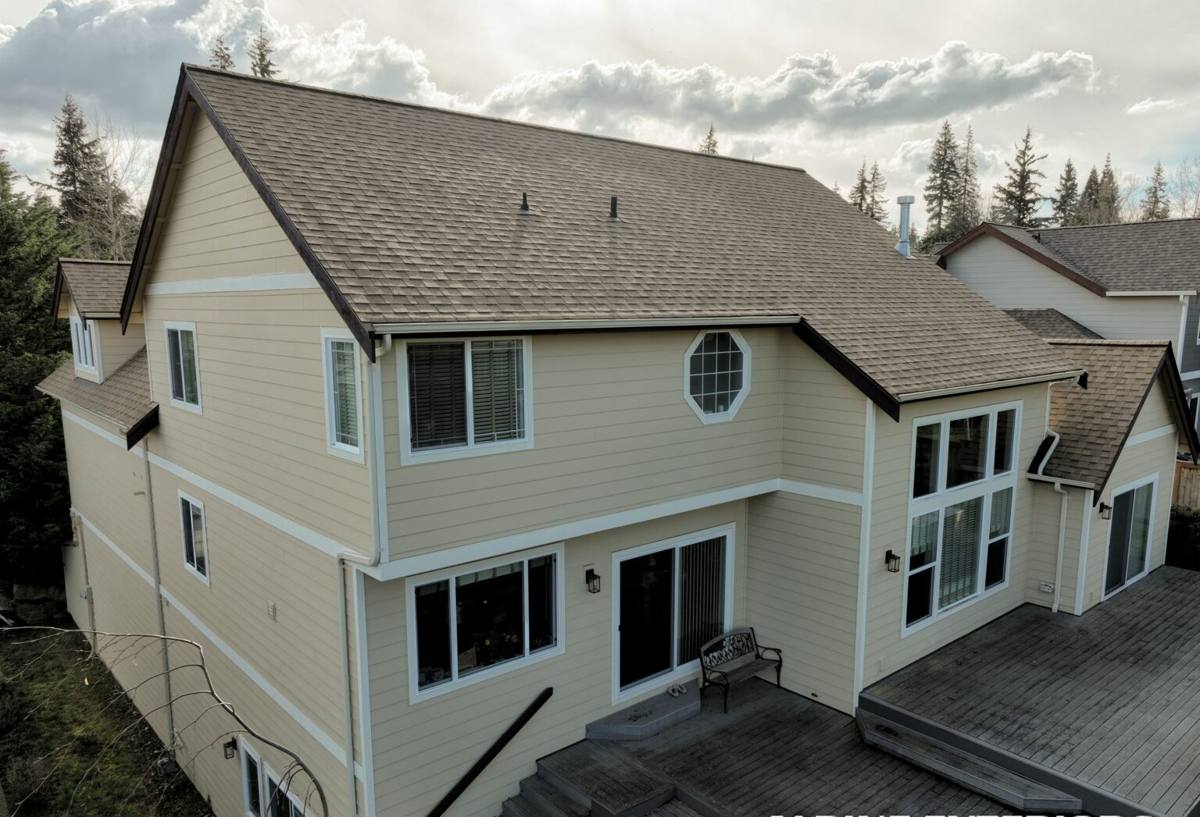
What Salt Air, Rain, and Moss Actually Do to a Roof
Salt Air
Airborne salt accelerates the breakdown of exposed metal — flashing, fasteners, vent caps, and drip edge — well before the shingles themselves fail. Once flashing starts to corrode or fasteners back out, water finds a way underneath the shingle mat even if the shingles look intact from the ground. This is why we pay as much attention to the metal components of a roof system as to the shingles.
Driving Rain
Storms moving through the channel and off the Sound don't just drop rain straight down — wind pushes it sideways and up under shingle tabs, at valleys, and around any penetration (vents, chimneys, skylights). A roof here needs underlayment and flashing detail that assumes water will be pushed where gravity alone wouldn't take it, not just a system designed for straight-down rainfall.
Moss and Algae
Shaded roof sections, north slopes, and areas near overhanging trees stay damp longer in this climate, and moss and blue-green algae both thrive in that moisture. Moss is the bigger structural concern: as it grows, it lifts shingle edges, holds water against the roof deck, and works its way under tabs, which is exactly the kind of slow, hidden damage that turns into a deck repair instead of a simple shingle replacement.
What a Correct Installation Involves Here
A shingle roof is a system, not a single product. In a climate like this, every layer of that system needs to be chosen and installed with salt air, wind-driven rain, and moisture retention in mind:
- Underlayment: a synthetic or ice-and-water-shield underlayment at eaves, valleys, and penetrations, not just felt paper alone, gives a second line of defense when wind-driven rain gets past the shingle surface.
- Flashing: corrosion-resistant flashing at all penetrations, chimneys, and roof-to-wall transitions, properly stepped and sealed rather than caulked over as a shortcut.
- Fasteners: correctly rated nails, placed in the manufacturer's specified nailing zone — under-driven, over-driven, or misplaced nails are one of the most common causes of early shingle failure in wet, windy climates.
- Ventilation: balanced intake and exhaust airflow so moisture from inside the home doesn't condense against the roof deck from underneath, compounding what's happening from outside.
- Valleys and edges: properly woven or metal-lined valleys and a drip edge that actually directs water into the gutter instead of behind the fascia.
Skipping any one of these doesn't necessarily show up as a leak in year one. It shows up in year four or five, often as rot in the decking that costs far more to fix than doing it right the first time would have.
Choosing the Right Shingle for This Climate
Not every asphalt shingle product is a good fit for a marine, moss-prone environment. The table below covers the practical trade-offs we walk homeowners through.
| Shingle Type | Typical Lifespan Here | Moss/Algae Resistance | Wind Rating Fit for Channel Winds |
|---|---|---|---|
| Standard 3-tab | 15–20 years | Low unless treated | Adequate, lower margin |
| Architectural (laminated) | 25–30 years | Better mat, still needs algae-resistant granules | Good, higher wind rating available |
| Algae-resistant (copper/zinc granules) | 25–30 years | Significantly better long-term appearance | Good |
| Impact/high-wind rated architectural | 30+ years | Good, especially with AR granules | Best fit for exposed or waterfront lots |
For most La Conner homes, we lean toward algae-resistant architectural shingles. The upfront cost difference over standard 3-tab is modest, and the reduction in staining and moss colonization over the life of the roof is noticeable — especially on shaded or north-facing slopes.
Our Process, Start to Finish
- On-site inspection and estimate: we look at the existing roof, decking condition, ventilation, flashing points, and any moss or algae already present before quoting anything.
- Tear-off and deck inspection: old material comes off down to the deck so we can actually see the plywood or sheathing condition, not guess at it from the attic.
- Deck repair if needed: any soft, delaminated, or moisture-damaged sections get replaced before anything new goes down — this is non-negotiable, since a new roof over a bad deck fails early regardless of shingle quality.
- Underlayment and flashing installation: synthetic underlayment, ice-and-water shield at vulnerable areas, and new corrosion-resistant flashing throughout.
- Shingle installation: installed to manufacturer nailing and exposure specs, with attention to valleys, ridges, and penetrations.
- Ventilation check: intake and exhaust airflow confirmed and corrected if the existing system was undersized or blocked.
- Final walkthrough and cleanup: job site cleaned, debris and nails cleared, and the finished roof reviewed with the homeowner.
Living With a Shingle Roof in a Moss Climate
Even a correctly installed roof needs some ongoing attention here — that's just the reality of this climate, and we'd rather tell homeowners that upfront than let them assume "new roof" means "no maintenance."
- Keep overhanging branches trimmed back so roof sections get more light and air movement, which slows moss growth.
- Clear gutters and valleys of debris at least twice a year — clogged gutters back water up under the shingle edge.
- Have moss gently removed (not pressure-washed, which strips granules) as soon as it's visible rather than waiting until it's established.
- Schedule a roof check after major windstorms, especially if you notice granules collecting in gutters or downspouts.
Signs Your Roof Needs Attention
Homeowners often wait too long because the roof "looks fine" from the ground. A few things worth checking or having inspected:
- Dark streaking or green/black staining on shingle surfaces
- Visible moss buildup, especially on shaded or north-facing slopes
- Granules collecting in gutters or at the base of downspouts
- Curling, cupping, or lifted shingle edges
- Rust streaking around flashing or vent boots
- Any soft spots noticed when walking near the roof edge from a ladder (not something to check by walking the roof itself)
- Daylight visible through the roof deck from inside the attic
What Affects Cost
Every roof is different, so we won't quote a number without seeing the job, but these are the main factors that move the price up or down:
| Factor | Why It Matters |
|---|---|
| Roof size and pitch | Steeper roofs take longer and require more safety setup |
| Number of layers to remove | Multiple existing layers add tear-off time and disposal cost |
| Deck condition | Rotted or delaminated sheathing needs replacement before shingles go down |
| Shingle grade chosen | Standard vs. algae-resistant vs. impact-rated architectural |
| Number of penetrations | Chimneys, skylights, and multiple vents each need individual flashing |
| Access and site conditions | Tight lots, tree cover, or waterfront exposure affect setup and staging |
Why It Matters to Hire a Crew That Already Works This Area
A roofing crew that mostly works drier, inland climates will often default to standard installation practices that are perfectly fine there but leave gaps here — lighter underlayment, standard flashing instead of corrosion-resistant, or ventilation that doesn't account for how much moisture this area actually holds through the fall and winter. A crew that regularly works La Conner and the greater Anacortes area already knows which slopes tend to hold moss, how much wind-driven rain a valley needs to be built for, and which flashing details actually hold up against salt air over time rather than just on paper.
That local experience doesn't show up as a line item on an estimate, but it shows up ten years later in whether the roof is still performing the way it should.
Ready for an Honest Look at Your Roof?
If your La Conner home needs a new asphalt shingle roof, or you're not sure whether what you're seeing is normal wear or something that needs attention, we're happy to take a look and give you a straight answer. Request a free, no-pressure estimate using the form below.