 Anacortes Siding
 Composite Decking Built for La Conner's Waterfront Climate
La Conner sits right on the Swinomish Channel, which means homes here deal with a version of Pacific Northwest weather that's a step harder on exterior materials than what you'd see a few miles inland. Salt-laced air off the water, long stretches of driving rain through fall and winter, and a moss season that seems to start earlier every year all work against a deck's structure and finish at the same time. Composite decking handles that combination better than most alternatives, but only when it's specified and installed with this specific environment in mind — not just installed the same way you'd do it in a dry inland yard.
This page is about composite decking specifically for La Conner properties: what the climate actually does to a deck here, what a correct installation looks like, and what to expect from a crew that already knows the area.
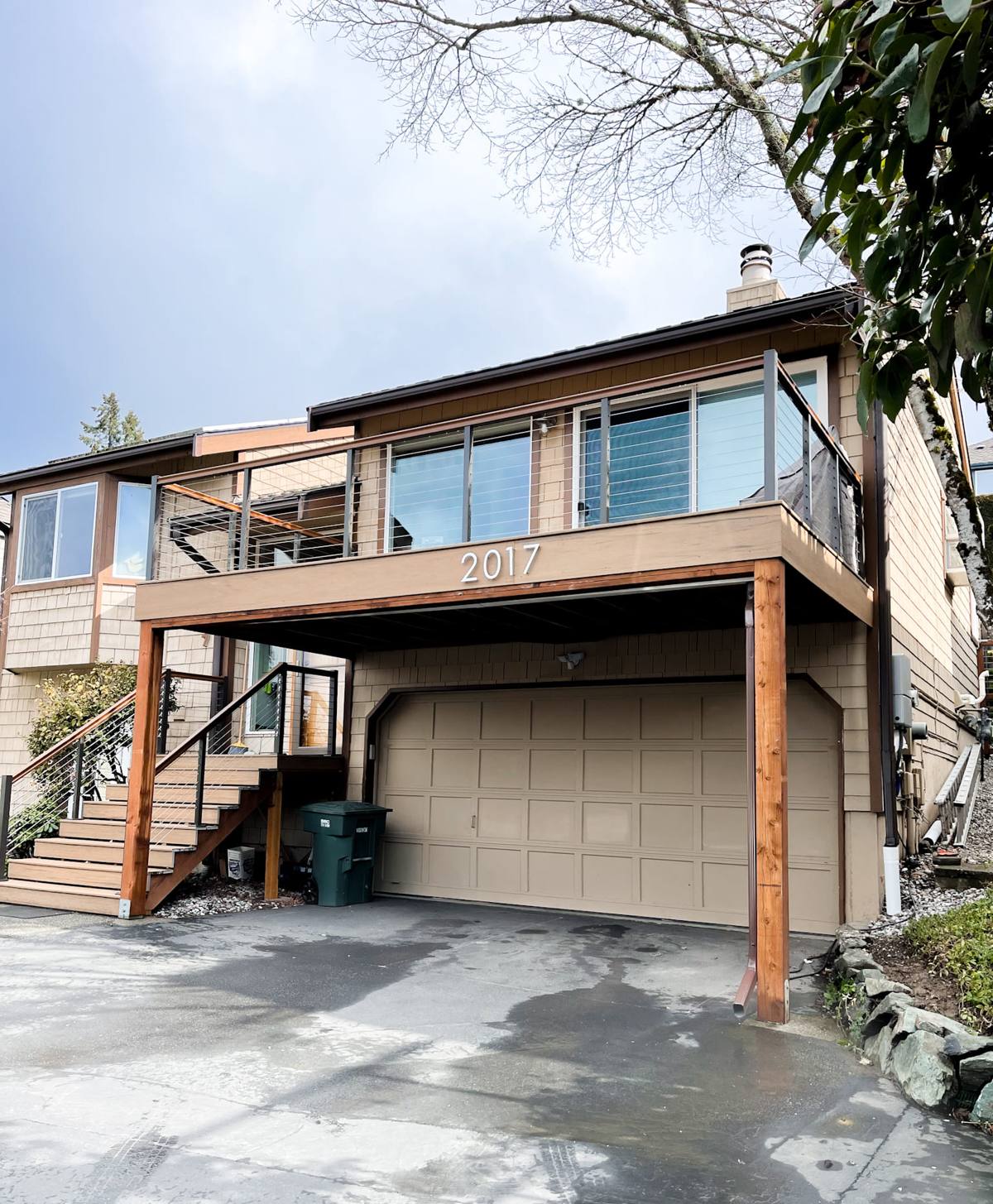
What Salt Air, Rain, and Moss Actually Do to a Deck
Salt Air
Proximity to tidal water means airborne salt settles on every exposed surface, including deck boards, fasteners, and any exposed metal hardware. On wood decks, that salt exposure accelerates the breakdown of finishes and speeds up weathering of the fibers underneath. On decks with lower-grade or uncoated fasteners, it corrodes screws and connectors over time, which is a structural issue, not just a cosmetic one.
Driving Rain
Wind-driven rain off the channel doesn't just fall straight down — it gets pushed sideways and up under railings, against ledger boards, and into any gap that isn't properly flashed or sealed. Water that gets trapped against framing or pools on a deck surface is what leads to rot in the substructure, even when the decking material on top looks fine.
Moss and Algae
Extended damp periods with limited direct sun — common under trees or on shaded sides of a house — create ideal conditions for moss and algae growth. On a wood deck, moss holds moisture against the surface and speeds up decay. On composite, it's mostly a surface and slip-hazard issue, but it still needs to be accounted for in board selection and cleaning routine.
Why Composite Makes Sense Here — And Where It Still Needs Care
Composite decking doesn't absorb water the way wood does, doesn't need refinishing, and resists the freeze-thaw and moisture-cycling that causes wood to cup, crack, and splinter. That's a real advantage in a climate with this much sustained moisture. But composite isn't maintenance-free, and it isn't immune to a bad installation. The board itself resists rot; the deck as a system — framing, fasteners, flashing, drainage, ventilation — still needs to be built correctly, or you've just put a durable surface on top of a structure that's failing underneath.
We treat composite decking as a system, not a product. The board matters, but the substructure and detailing matter just as much in this climate.
What a Correct Composite Deck Installation Involves
Framing and Substructure
Many homes around La Conner have existing decks or porches built decades ago, before current joist spacing and fastening standards. Before we install any composite decking, we inspect the existing framing for rot, undersized joists, and inadequate spacing — composite boards generally require tighter joist spacing than solid wood, especially on angled or picture-frame layouts. If the substructure isn't sound, replacing the decking on top of it just hides the problem.
Flashing and Ledger Connection
Where a deck attaches to the house, proper ledger flashing is what keeps driving rain from working its way behind the siding and into the wall assembly. This is one of the most common shortcuts on older or budget deck jobs, and it's invisible until there's already water damage behind the wall.
Fasteners and Hardware
Given the salt exposure in this area, we use stainless steel or coated fasteners and structural hardware rated for corrosive environments, not standard galvanized hardware that's fine inland but degrades faster here. This is a small cost difference at install time and a significant difference in how long the connections last.
Drainage and Airflow
Composite decks need airflow underneath to manage humidity and prevent moisture from getting trapped between the boards and the framing. That means correct joist tape application, proper board spacing, and grading or drainage detailing so water isn't pooling under the deck after every rain event.
Board Layout and Spacing
Composite boards expand and contract with temperature more than most homeowners expect. Gapping between boards, and between boards and any fixed obstruction like a post or wall, has to account for that movement — too tight and boards can buckle; too loose and the deck looks unfinished and collects debris.
Composite vs. Other Decking Options for This Climate
| Material | Behavior in Salt Air / Rain | Moss & Algae Resistance | Long-Term Maintenance |
|---|---|---|---|
| Wood (cedar/pressure-treated) | Absorbs moisture, requires sealing/staining to slow weathering | Low — moss holds moisture against fibers | Sanding, staining, board replacement over time |
| Composite | Does not absorb water; resists warping and rot | Moderate to good depending on board texture and color | Periodic washing; no staining or sealing |
| PVC/Capped Composite | Fully moisture-resistant surface | Good, smoother surfaces shed algae more easily | Lowest maintenance; typically higher upfront cost |
We install composite because it's the best balance of durability, appearance, and cost for most La Conner homes, but we'll talk through capped composite or PVC options honestly if a homeowner's site conditions — heavy shade, low airflow, direct water exposure — call for it.
How Our Process Works
- On-site assessment — we look at the existing deck or build site, check framing condition, drainage, sun/shade exposure, and proximity to the water, since that affects fastener and board recommendations.
- Honest scope and estimate — we tell you what's structurally necessary versus optional, and price accordingly. No inflated scope, no vague allowances.
- Permitting — deck work in and around La Conner often requires a permit through the Town of La Conner or Skagit County depending on the property's location; we handle that process rather than leaving it to you.
- Demo and framing work — removal of failed decking or structure, repair or replacement of framing, correct flashing at the ledger.
- Composite installation — hidden or face-fastened boards depending on the product, with attention to spacing, fastener selection, and airflow.
- Final walkthrough and cleanup — we go over care recommendations specific to this climate before we consider the job done.
Why a Crew That Already Works La Conner Matters
Deck work here isn't the same as deck work in a dry, inland part of the state. A crew that hasn't dealt with the combination of salt air, sustained rain, and moss growth around the Swinomish Channel will sometimes spec standard hardware, skip extra flashing detail, or underestimate how much airflow a deck needs underneath — and none of that shows up as a problem until a year or two later. Working in Skagit County regularly means we've already seen how decks in this environment age, both the ones done right and the ones done as a generic build. That experience shapes the material and hardware choices we make on every job, not just the ones on the water.
Maintaining a Composite Deck in This Climate
Composite decking cuts down on maintenance significantly compared to wood, but "low-maintenance" isn't "no-maintenance" here. A few habits go a long way:
- Sweep or rinse the deck surface regularly during wet months to prevent organic buildup that feeds moss and algae
- Wash off salt residue periodically, especially on decks with direct exposure to water or wind off the channel
- Keep gutters and downspouts clear so runoff isn't dumping extra water onto or under the deck
- Trim back overhanging branches to improve sun exposure and airflow, which reduces moss growth
- Check railing posts and stair connections annually for movement, since hardware is the first thing to show wear even when the decking itself looks fine
- Use a soft-bristle brush and a composite-safe cleaner rather than a pressure washer on high settings, which can damage the board surface
What Affects the Cost of a Composite Deck Project
| Factor | Why It Matters |
|---|---|
| Existing framing condition | Rot or undersized joists mean substructure repair or replacement before decking goes on |
| Deck size and layout | Picture-frame borders, angled boards, and multiple levels add labor and material |
| Board tier (composite vs. capped/PVC) | Capped or PVC boards cost more upfront but resist moisture and staining better long-term |
| Railing and stair systems | Composite or metal railing systems vary widely in price and installation time |
| Site access and water exposure | Decks close to the channel may need upgraded hardware and additional flashing detail |
| Permitting requirements | Structural changes or decks over a certain height typically require permits and inspections |
We'll walk through these factors specific to your property during the estimate, so you know what's driving the price rather than getting a flat number with no explanation behind it.
A Few Things to Confirm Before You Hire Anyone
- Ask whether they inspect and repair framing, or just install new boards over what's already there
- Ask what fasteners and hardware they use, and whether that changes for properties closer to the water
- Ask how they handle ledger flashing where the deck meets the house
- Ask whether the estimate includes permitting, or whether that's on you to sort out separately
- Ask for a clear explanation of board spacing and expansion gaps for the specific product they're recommending
If you're planning a new composite deck or replacing an aging one in La Conner, we're happy to take a look and give you a straightforward, no-pressure estimate — just fill out the form below.