 Anacortes Siding
 Siding La Conner Homes for Skagit County's Water-Edge Climate
La Conner sits right on the Swinomish Channel, and that waterfront setting is exactly what makes it a beautiful place to live and a genuinely tough place to keep a house's exterior in good shape. Salt-laden air moves off the channel and Skagit Bay every day, driving rain comes in sideways off the water during fall and winter storms, and the shaded, moisture-heavy stretches of the year create long moss and algae seasons on anything that stays damp too long. We're based out of Anacortes and have been working homes in and around La Conner long enough to know that siding decisions here can't be made off a generic checklist — the material and the installation both have to answer to this specific environment.
This page is about one service in one place: fiber cement siding for La Conner homes. Not a general siding overview, not a company brochure — what this climate actually does to an exterior, what a correct fiber cement installation looks like in response, and why the crew doing the work matters as much as the product itself.
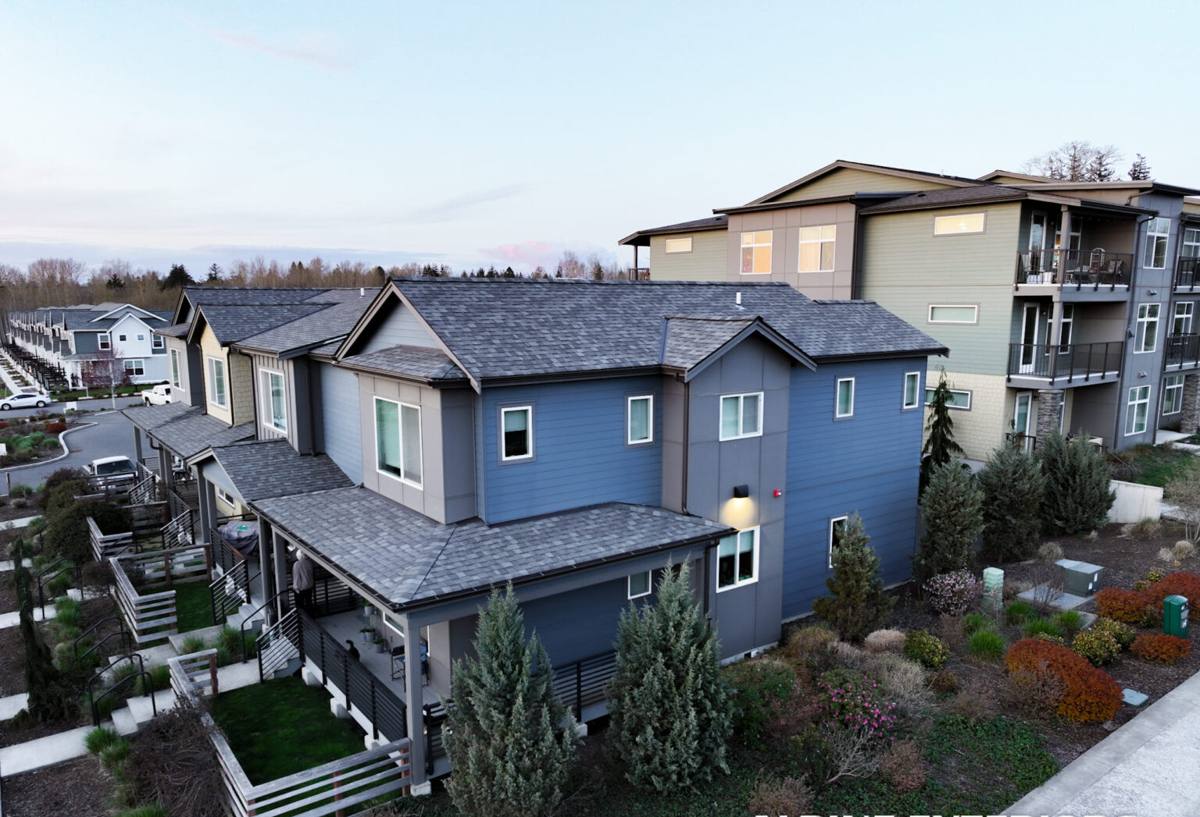
What Salt Air, Driving Rain, and Moss Actually Do to Siding
Homeowners who haven't dealt with a marine climate before are often surprised by how fast an exterior can show wear near the water. A few things are working against your siding at the same time in La Conner:
Salt Air
Airborne salt is corrosive to exposed metal fasteners, trim flashing, and hardware, and it accelerates the breakdown of finishes that aren't formulated to resist it. Paint film on wood or composition siding tends to chalk and fail faster within a mile or two of the water than it would further inland.
Driving Rain
Wind-driven rain off the channel doesn't just wet the surface of a wall — it pushes water sideways and upward into laps, seams, and penetrations that a calmer climate would never test. Any weakness in the water-resistive barrier, flashing, or caulking behind the siding gets found here, usually within a few winters, not a few decades.
Moss and Algae
Shaded north and east walls, combined with long stretches of damp weather, give moss and algae exactly what they need to take hold. Once organic growth establishes itself on a porous or poorly-finished surface, it holds moisture against the substrate and keeps that section of wall wet far longer than the rest of the house.
None of this is unique to La Conner — it's Puget Sound waterfront living — but it's more concentrated here than it is a few miles inland, and it's the reason siding choices that work fine in Mount Vernon or Burlington sometimes underperform right on the water.
Why We Install Only James Hardie Fiber Cement — Nothing Else
We don't install vinyl, LP SmartSide, primed spruce, cedar, or other fiber cement brands. That's a deliberate standard, not a lack of options, and in a climate like La Conner's the reasoning holds up:
- Vinyl can warp and become brittle with UV and temperature cycling, and its seams and J-channels give wind-driven rain more opportunities to find a way behind the cladding.
- Wood-based composite siding depends on an intact factory coating to keep moisture out of an engineered wood core; once that coating is compromised at a cut edge or fastener hole, water intrusion can spread through the substrate.
- Raw or primed wood siding (cedar, primed spruce) needs disciplined, repeat maintenance — sealing every cut edge, staying ahead of the paint cycle, watching for moisture at grade — to hold up near saltwater, and that maintenance burden only grows in a moss-prone microclimate.
James Hardie fiber cement is a cement-and-cellulose composite that doesn't rot, doesn't support combustion, and isn't a food source for the organic growth that thrives in shaded, damp corners of a La Conner property. Its ColorPlus factory finish is baked on rather than field-applied, which matters directly here: a consistent, engineered finish resists the chalking and fading that plain field paint struggles with in salt air. Hardie's HZ5 product line is engineered specifically for this kind of climate — colder, wetter conditions where moisture cycling is the main threat to an exterior. That's the material we stand behind on every La Conner project.
What a Correct Fiber Cement Installation Involves
Fiber cement siding is only as good as the installation behind it. The product itself resists moisture and rot; a sloppy install creates the exact pathways for water intrusion that the material is supposed to prevent. On a home exposed to driving rain off the channel, these details aren't optional extras — they're the difference between a wall system that sheds water and one that traps it.
The Details That Matter Most
- Weather-resistive barrier installed and lapped correctly behind the siding, with all penetrations properly flashed before a single board goes up.
- Clearances maintained at grade, roof lines, decks, and other transitions — Hardie specifies minimum gaps for a reason, and skipping them is one of the most common causes of moisture damage in this climate.
- Fastener pattern and type matched to the substrate and the product, driven correctly (not overdriven, not underdriven) so the board can move slightly without cracking or pulling loose in high wind.
- Butt joints and caulking sealed with a product rated for the movement and moisture exposure fiber cement sees, not just whatever caulk was on the truck.
- Cut edges primed in the field wherever a factory edge is cut, since an unsealed cut edge is a weak point for water absorption.
Any one of these done wrong can undercut everything else about the product. This is why the installation crew matters as much as the brand on the box.
Our Process for La Conner Projects
The steps are straightforward, but each one is where we account for the specific conditions of a waterfront property.
- On-site assessment. We look at wall exposure, shaded and moisture-prone sections, existing moss or algae growth, and the condition of the sheathing and water barrier underneath the current siding.
- Scope and product plan. We confirm the right Hardie product line, plank exposure, and finish for the house, and flag any trim, flashing, or drainage issues that need to be corrected as part of the job, not left behind the new siding.
- Tear-off and prep. Old siding comes off, the sheathing is inspected for hidden moisture damage, and the weather-resistive barrier and flashing are installed or repaired to current standards before anything new goes up.
- Installation. Fiber cement siding is installed to Hardie's fastening, clearance, and joint specifications, with attention to the walls that take the brunt of the driving rain off the channel.
- Finish and walkthrough. Trim, caulking, and touch-up are completed, the site is cleaned up, and we walk the property with the homeowner before calling the job done.
Comparing Siding Options for a Waterfront Climate Like La Conner's
| Factor | Vinyl | Wood / Cedar | James Hardie Fiber Cement |
|---|---|---|---|
| Salt air resistance | Moderate — can chalk, fade, become brittle | Low without ongoing maintenance | High — factory finish engineered for weathering |
| Wind-driven rain performance | Depends heavily on seam and J-channel installation | Depends on coating integrity and joint sealing | High when installed to spec with proper flashing |
| Moss/algae resistance | Moderate — organic growth can still take hold on the surface | Low — porous surface holds moisture | High — non-organic, non-combustible substrate |
| Maintenance cycle | Low effort, limited repairability | Frequent — repainting and sealing on a repeat schedule | Low — periodic cleaning and occasional repaint of trim |
| Typical lifespan when installed correctly | 20–30 years | 10–20 years depending on maintenance | 30+ years with a strong transferable warranty |
This isn't a claim that every alternative material fails on the water — it's why, given what we see on Skagit County homes year after year, fiber cement is the material we're willing to put our name behind here.
What to Check Before You Hire Anyone for This Job
Whether you go with us or another contractor, these are the things worth confirming before work starts on a La Conner home:
- Do they have current experience installing on waterfront or near-waterfront properties, not just inland siding jobs?
- Will they inspect and repair the weather-resistive barrier and flashing, or just cover whatever is already there?
- Are they a certified or manufacturer-trained installer for the specific fiber cement product being used?
- Do they specify the correct Hardie product line (including HZ5 where climate calls for it) rather than a one-size-fits-all choice?
- Is the warranty — both material and labor — explained in writing, including what voids it?
- Do they have a plan for protecting your landscaping, deck, and walkways during tear-off and install?
Why a Crew That Already Works La Conner Matters
A lot of what makes siding fail near the water isn't the product — it's a crew treating a waterfront home like any other job. Wall exposures that face the channel need different attention than sheltered walls. Shaded sections that stay damp longer need to be flagged before moss becomes a maintenance problem instead of a cosmetic one. Homes in this area, including many with real historic character, often need trim and transition details handled with more care than a standard subdivision install. Working in and around Anacortes and the rest of Skagit County means we see these patterns repeatedly, and it shapes how we scope and execute every job on the water, including this one.
Get a Straight Answer on Your La Conner Siding Project
If your home's siding is showing what salt air, driving rain, and moss season do over time — fading, soft spots, persistent green streaking on the shaded walls — it's worth having someone look at it before those issues spread further. We'll walk the property, tell you honestly what we see, and put together a plan built around James Hardie fiber cement, the only siding system we install. Fill out the form below for a free, no-pressure estimate.