 Anacortes Siding
 Roofing Built for La Conner's Marine Climate
La Conner sits right on the Swinomish Channel, which means homes here take on weather most inland Skagit County properties never see. Salt-laden air off the channel and Puget Sound works into fasteners, flashing, and shingle granules year after year. Add in driving rain that comes sideways off the water during winter storms, and a moss season that can run from October through May under our tree cover and cloud ceiling, and you've got a roofing environment that punishes shortcuts. A roof that's correctly installed for La Conner's conditions looks a lot like a roof anywhere else on the outside — but underneath, the fastener choices, flashing details, and ventilation plan need to account for salt exposure and near-constant moisture in a way that a generic install doesn't.
We install roofs throughout Anacortes and the surrounding Skagit County waterfront communities, and La Conner's mix of older homes, newer builds, and everything in between means no two roofs get the exact same treatment. What stays consistent is the standard we hold the work to.
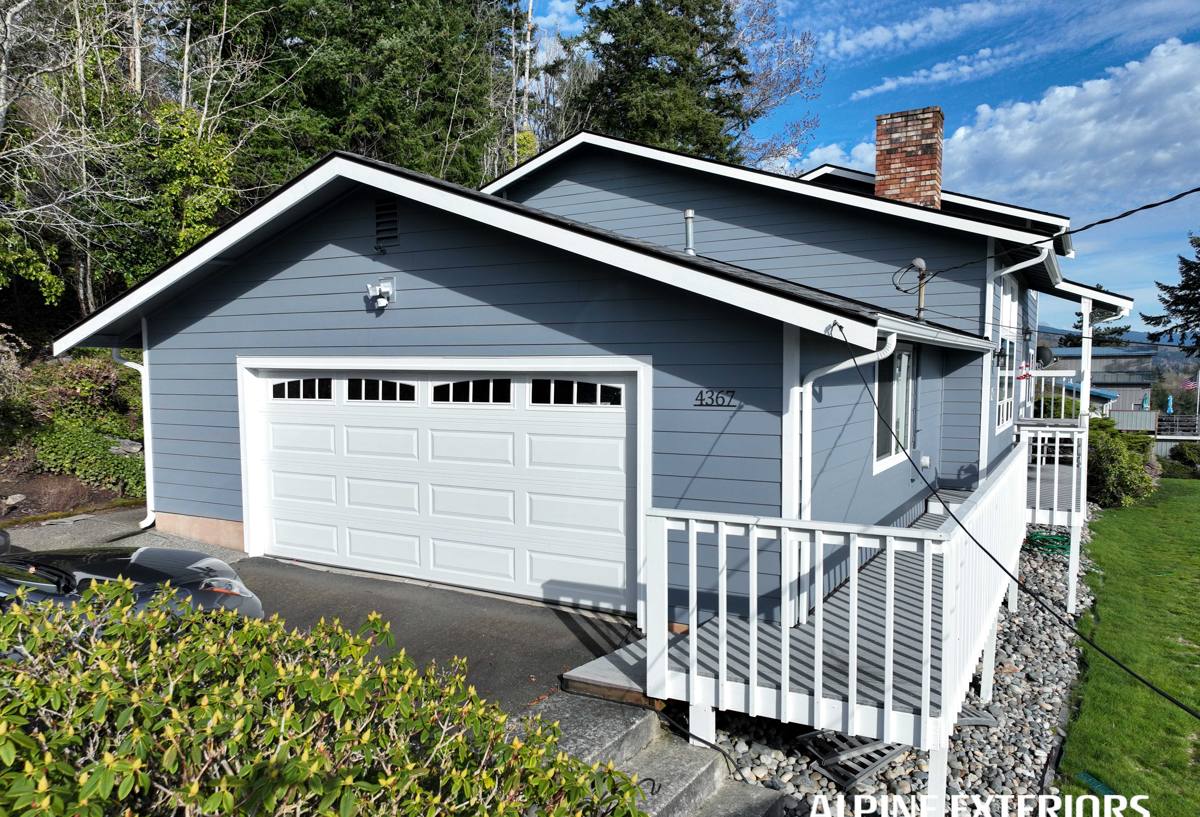
Signs a La Conner Roof Needs Replacing, Not Patching
Not every roofing problem calls for a full tear-off. But there's a point where patching individual leaks or replacing a few shingles stops making sense — usually somewhere between years 18 and 25 for asphalt composition roofing in this climate, sooner if the original install skimped on ventilation or underlayment. Signs worth taking seriously include:
- Granules collecting in gutters or at downspout outlets, a sign shingles are losing their protective surface
- Curling, cupping, or cracked shingles, especially on south and west-facing slopes that see the most sun and rain
- Moss or algae streaking that keeps coming back within a season or two of cleaning
- Soft spots in the decking felt underfoot during an inspection
- Daylight visible through the roof deck from inside the attic
- Rusted, lifting, or missing flashing around chimneys, vents, and skylights
- Interior water stains on ceilings, especially after a windy rainstorm rather than a light drizzle
If you're seeing two or more of these, it's worth having a roof looked at before the next storm cycle rather than after.
What a Correct Roof Installation Actually Involves
Tear-Off and Deck Inspection
A proper reroof starts with a full tear-off down to the decking, not a layover on top of old shingles. That's the only way to actually inspect the plywood or OSB underneath for soft spots, delamination, or rot — problems that are common on La Conner homes where a roof has been quietly leaking at a flashing point for years without an obvious interior sign. Any damaged decking gets cut out and replaced before anything else happens.
Underlayment
This is where a lot of the actual weatherproofing happens, and it matters more here than in drier parts of the state. We use synthetic underlayment as the field layer and self-adhered ice-and-water membrane at the eaves, valleys, and around every roof penetration — the spots most exposed to wind-driven rain coming off the channel. This membrane layer is what keeps water out even if wind manages to force rain up under the shingle tabs, which happens during Skagit County's winter windstorms.
Flashing
Flashing failures cause more roof leaks than worn-out shingles do. Every chimney, skylight, vent pipe, and roof-to-wall intersection needs new, properly lapped metal flashing — never just caulked over old flashing, which is a shortcut that fails within a few years in salt air. In coastal Skagit County we lean toward corrosion-resistant materials for flashing and fasteners specifically because standard galvanized steel degrades faster this close to saltwater.
Ventilation
Balanced intake and exhaust ventilation keeps the attic space dry and temperature-stable, which does two things: it protects the decking and framing from condensation-driven rot, and it slows the moss and algae growth that thrives when a roof surface stays damp and cool. A roof with poor ventilation will grow moss faster than a well-ventilated one right next door, even with identical shingles.
Field Layer Installation
Shingles or panels go down to manufacturer nailing patterns and exposure specs, with attention to proper overlap in valleys and along hips and ridges — areas that see concentrated water flow during heavy rain.
Material Options for La Conner Homes
Most La Conner reroofs land on one of three material paths. Each has real trade-offs worth understanding before you decide, rather than picking on looks alone.
| Material | Typical Lifespan Here | Moss/Algae Resistance | Notes for This Climate |
|---|---|---|---|
| Asphalt composition shingle | 20-30 years | Moderate; algae-resistant granule options help | Most common choice; good value, wide color range, straightforward repairs |
| Standing seam metal | 40-50+ years | High; sheds moss and needles well | Higher upfront cost, sheds rain and snow fast, holds up well to wind and salt air with the right coating |
| Cedar shake | 25-30 years with upkeep | Low; needs regular treatment | Traditional look for older La Conner homes, but the highest maintenance burden in a damp, mossy climate |
We don't push cedar shake as a low-maintenance option because it isn't one here — a shake roof in this climate needs regular moss treatment and periodic re-coating to hit its expected lifespan, and skipping that upkeep shortens it considerably. That's not a knock on the material, just an honest trade-off homeowners should know going in. If you love the look, we'll install it correctly and tell you what the upkeep schedule actually looks like.
Our Installation Process, Start to Finish
- On-site inspection and estimate — we walk the roof, check the attic, and measure before quoting anything
- Material selection — we go over options, colors, and warranty terms based on your home and budget
- Scheduling around weather — in La Conner we plan tear-offs for stretches with a reliable dry window, since an open roof deck can't sit exposed to channel weather overnight
- Tear-off and disposal — old roofing removed and hauled off, deck inspected and repaired as needed
- Underlayment, flashing, and ventilation install — the weatherproofing layers that do the real work
- Field material installation — shingles, panels, or shakes installed to spec
- Final walkthrough and cleanup — magnetic sweep for stray nails, gutter check, and a full site cleanup
Moss, Algae, and Long-Term Maintenance
Even a well-installed roof in La Conner will see some moss pressure — it's the nature of a marine climate with tree cover and long stretches of overcast, damp weather. The goal of a good install isn't to make a roof moss-proof, which isn't realistic, but to slow it down and make upkeep manageable:
- Proper ventilation and a dry attic reduce the cool, damp conditions moss favors
- Algae-resistant shingle granules (available on most quality asphalt lines) slow black streaking
- Keeping gutters and valleys clear of needles and leaves prevents the standing debris that gives moss a foothold
- Periodic soft-washing, rather than pressure washing, removes moss without stripping granules or damaging shingles
- Zinc or copper strips near the ridge can help suppress regrowth on shingle and shake roofs
What Drives the Cost of a New Roof
| Factor | Why It Matters |
|---|---|
| Roof size and pitch | Steeper roofs take longer to work safely and use more material |
| Number of penetrations | Every chimney, skylight, and vent needs its own flashing detail |
| Deck condition | Rotted or soft decking found during tear-off adds repair cost |
| Material choice | Asphalt, metal, and cedar carry very different price points |
| Access and staging | Waterfront lots and tight lanes common in La Conner can affect equipment and material staging |
| Layers to remove | A single-layer tear-off costs less than removing two or three old layers |
We'll never give you a real number until we've actually seen the roof — anyone quoting a firm price over the phone is guessing. What we can tell you is that the estimate should be itemized, not a single lump figure, so you can see what you're paying for.
Why a Crew That Already Works La Conner Makes a Difference
A roofer who's worked La Conner and the surrounding Anacortes and Skagit County waterfront knows which fastener and flashing upgrades are worth the extra cost here versus a drier inland job, how to sequence a tear-off around the area's rain patterns, and what permitting looks like for the town and county. That's not something you get from a crew that mostly works elsewhere and treats a coastal job like any other. It shows up in details — the flashing metal specified, the underlayment coverage at valleys, the fastener corrosion rating — that don't get noticed until years later when one roof is still tight and another is leaking.
Before You Hire: A Practical Checklist
- Confirm the contractor is licensed and insured in Washington, and ask to see current proof
- Ask whether the quote includes full tear-off and deck inspection, not a layover
- Get the underlayment and flashing materials specified in writing, not just "standard"
- Ask how ventilation will be assessed and addressed, not just the shingle brand
- Clarify who pulls the permit and confirm it will actually be pulled
- Get manufacturer and workmanship warranty terms in writing, and understand what voids each
- Ask about their plan for weather delays on an open roof deck
Permits and Local Requirements
Roof replacements in La Conner and unincorporated Skagit County typically require a building permit, and homes in some La Conner areas may fall under additional review given the town's historic district status. We handle the permitting process as part of the job so you're not left tracking down paperwork, and we build code-required ventilation and ice-barrier standards into every install regardless of what's visible from the ground.
If your roof is showing its age or you just want an honest look at where it stands, we're happy to come out and give you a straightforward, no-pressure estimate — use the form below to get started.