 Anacortes Siding
 Why La Conner Roofs Age Differently
La Conner sits right on the water in Skagit County, close enough to Anacortes and Fidalgo Island that homes here deal with the same marine weather pattern day in and day out. That combination — salty, moisture-heavy air coming off the water, long stretches of driving rain through fall and winter, and shaded, damp conditions that favor moss growth most of the year — is harder on a roof than the average inland home ever sees. A roofing system built for a drier climate, or installed without the right details for this area, tends to show problems years before it should.
We replace roofs on homes in La Conner regularly, and the patterns repeat: granule loss and premature aging on the north- and shade-facing slopes where moss takes hold first, soft or delaminating sheathing under valleys and around chimneys where water has been sneaking past old flashing, and corroded fasteners or metal components on roofs that weren't detailed for a salt-air environment. None of that is unusual for the area — it's just what happens when a roof isn't built or maintained with these specific conditions in mind.
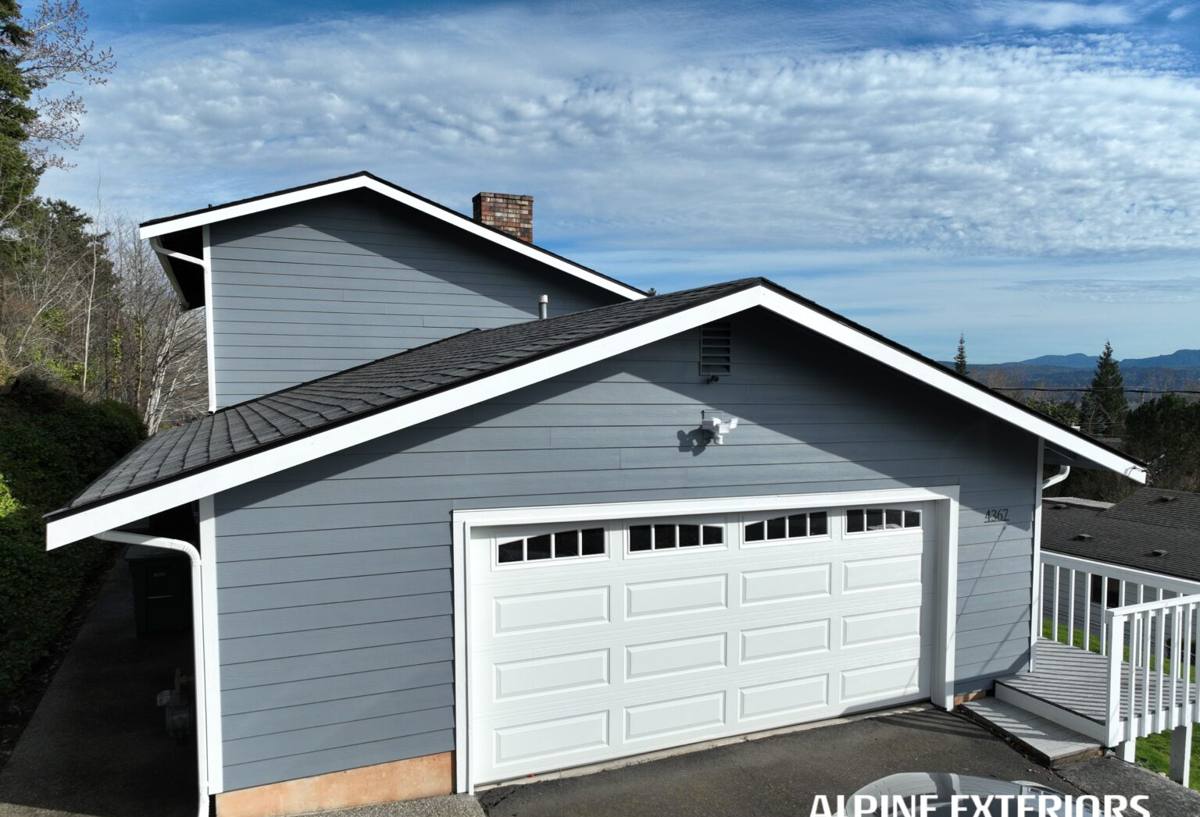
The Climate Factors That Matter Most
Salt Air and Metal Fatigue
Airborne salt from the Salish Sea accelerates corrosion on anything exposed metal — nails, flashing, vent stacks, gutter hardware. Standard electro-galvanized fasteners and thin flashing stock can start rusting within a handful of years this close to the water. It's a slow, quiet failure mode: you don't see it until a leak shows up around a penetration or the fastener heads holding your shingles down have weakened.
Driving Rain and Wind-Driven Water
Storms off the water don't just drop rain straight down — wind pushes it sideways and up under laps, edges, and flashing that would be fine in a calm rain. That's why the underlayment, flashing, and edge details on a La Conner roof carry more of the waterproofing burden than they would on a similarly-priced roof somewhere with milder weather.
Moss Season
Shaded, tree-covered lots and the region's mild, wet winters give moss a long growing window — often close to nine months of the year with the right conditions. Moss holds moisture against the roofing material, works its way under shingle tabs, and lifts edges as it grows, which shortens the life of the roofing material and opens the door to leaks well before the shingles themselves would otherwise wear out.
Signs a La Conner Home Needs Roof Replacement, Not Just a Repair
Not every roof problem calls for full replacement, but there's a point where patching stops making financial sense. Here's what tends to tip a roof from "repair" to "replace" territory:
- Granule loss heavy enough that you can see bare, shiny patches on the shingle surface, especially on shaded slopes
- Moss or algae growth that's spread across a large percentage of the roof rather than isolated patches
- Shingles that are cupping, curling, or cracking in multiple areas, not just one storm-damaged spot
- Soft spots, sagging, or visible staining on the underside of the roof deck from the attic
- Repeated leaks in different locations after previous repairs
- A roof already past or near the end of its rated lifespan, especially if it was never re-flashed or re-vented
- Visible rust streaking from fasteners, flashing, or metal vents
If your roof is showing one or two of these in isolation, a repair might genuinely be the right call. If you're seeing several at once, replacement is usually the more honest recommendation — and the one that saves money over continuing to chase leaks.
What a Correct Roof Replacement Actually Involves
A roof replacement done right for this climate is not just stripping old shingles and nailing down new ones. The parts that don't show are what determine whether the roof holds up through another twenty or thirty years of Skagit County winters.
Tear-Off and Deck Inspection
Full tear-off lets us see the actual condition of the sheathing underneath — something you can't evaluate from the ground or from inside the attic alone. Any water-damaged or soft decking gets replaced before anything new goes down. Skipping this step, or "roofing over" existing layers, just buries a problem that will resurface.
Underlayment Built for Wet Climates
We use underlayment products suited to a marine climate with extended exposure windows and strong water resistance, not the minimum-grade felt that's adequate in drier regions. In valleys, around penetrations, and along eaves, we add self-adhering waterproof membrane as a second line of defense against wind-driven rain and ice damming.
Flashing That Actually Sheds Water
Flashing around chimneys, skylights, sidewalls, and roof-to-wall transitions is where most leaks start on an otherwise sound roof. We use corrosion-resistant flashing material and install it in the correct layered sequence with the underlayment and roofing material — not caulked over old flashing as a shortcut.
Ventilation
Proper intake and exhaust ventilation keeps moisture from building up in the attic, which matters as much for preventing rot and mold as it does for roof lifespan. A lot of older La Conner homes are under-ventilated by today's standards, and correcting that during a replacement is one of the more valuable, least visible things we do.
Fasteners and Metal Components
Given the salt air, we specify corrosion-resistant fasteners and metal accessories rather than standard-grade hardware. It costs a little more up front and saves you from the slow, hidden fastener failures that show up as leaks a few years down the road.
Choosing a Roofing Material for This Climate
There's no single "best" roofing material — the right choice depends on your home's design, your budget, and how much long-term maintenance you're willing to take on. Here's how the common options stack up for a home exposed to salt air, heavy rain, and moss:
| Material | Moss/Moisture Behavior | Salt Air Durability | Maintenance |
|---|---|---|---|
| Architectural asphalt shingle | Good with proper ventilation; moss-resistant granule options available | Good, especially with corrosion-resistant fasteners | Low to moderate |
| Standing seam metal | Excellent — sheds moisture quickly, little surface for moss to grip | Very good with a marine-grade coating and correct fastener spec | Low |
| Cedar shake | Requires consistent maintenance to resist moss and rot in this climate | Moderate — needs regular treatment | High |
| Basic 3-tab asphalt shingle | Fair — shorter lifespan under sustained moss pressure | Fair, especially with standard hardware | Moderate |
For most La Conner homes, we steer clients toward architectural asphalt shingle or standing seam metal because they hold up well against this specific combination of moisture and salt exposure without demanding constant upkeep. Cedar shake can look great and has its place, but we're upfront that it asks for a level of ongoing maintenance — cleaning, treating, watching for moss intrusion — that a lot of homeowners underestimate when they choose it, and we'd rather you go in with that expectation than be surprised by it later.
What Drives the Cost of a Roof Replacement Here
Every roof is different, so we won't quote a number without seeing your home, but these are the factors that move the price up or down on a typical La Conner project:
| Factor | Why It Matters |
|---|---|
| Roof size and number of stories | More square footage and steeper access both add labor time |
| Roof pitch and complexity | Multiple valleys, dormers, and roof-to-wall transitions each need extra flashing work |
| Existing deck condition | Sheathing replacement adds material and labor that can't be known until tear-off |
| Material selection | Asphalt, metal, and cedar carry different material and installation costs |
| Ventilation upgrades | Adding or correcting intake/exhaust venting is worth doing during a replacement, not after |
| Layers to remove | Homes with multiple existing roofing layers take longer to tear off |
As a general guide, most full roof replacements on homes in this area run in the mid five figures for asphalt systems, with metal roofing typically landing higher due to material and labor costs. The only way to get a number you can actually rely on is a walk of your specific roof.
Our Process for a La Conner Roof Replacement
- On-site inspection. We walk the roof and attic, check ventilation, look for soft decking, and note flashing and moss conditions specific to your property.
- Written estimate. You get a clear scope and price before any work begins — no vague allowances or "we'll figure it out" line items.
- Material selection. We walk through the trade-offs for your home and budget rather than pushing one product across the board.
- Tear-off and deck repair. Old roofing comes off, the deck gets inspected, and any damaged sheathing is replaced before new material goes down.
- Underlayment, flashing, and ventilation installation. This is where the climate-specific details we covered above get built in correctly.
- New roofing installation. Installed to manufacturer specification so your warranty is valid, not just installed "close enough."
- Final walkthrough and cleanup. We check the finished roof with you and make sure the property is left clean, including a magnetic sweep for stray fasteners.
Why Local Experience in La Conner Matters
A roof that's engineered for inland Skagit County or for a different climate zone entirely will often pass inspection and look fine on installation day — the problems show up two, five, ten years later, once salt exposure, moss, and driving rain have had time to work on the weak points. Crews that already work in and around La Conner and Anacortes know which slopes on a given lot orientation tend to hold moss longest, which fastener and flashing grades actually hold up this close to saltwater, and where older homes in this area typically need ventilation corrected. That's the kind of judgment that only comes from doing this work here repeatedly, not from a general roofing checklist.
It also matters for the practical side of the job — knowing local permitting requirements, being available for follow-up if a question comes up after the job is done, and having a reputation in the community worth protecting. A crew that's planning to be doing roofs in La Conner next year and the year after has every incentive to get the details right the first time.
Ready to Talk About Your Roof?
If your La Conner home's roof is showing its age, dealing with persistent moss, or just due for an honest evaluation, we're glad to take a look. Reach out for a free, no-pressure estimate using the form below — we'll walk the roof, tell you what we actually see, and give you a clear, written picture of your options.