 Anacortes Siding
 La Conner sits right on the Swinomish Channel, and that waterfront setting is part of what makes the town what it is — but it also means the homes here take on a specific, steady kind of exterior wear. Salt-laden air moves off the water daily, wind-driven rain comes in sideways during storm systems, and a long Pacific Northwest moss season keeps shaded and channel-facing walls damp for much of the year. A lot of the homes in and around La Conner are older, with siding that's been patched, painted over, or repaired piecemeal for years. Getting a siding repair right here isn't about slapping a matching board over a bad spot — it's about understanding why that spot failed in the first place and fixing the actual cause, not just the symptom.
Why Siding Repair in La Conner Isn't a Generic Job
Siding repair advice written for a national audience assumes a fairly forgiving climate — occasional rain, occasional sun, nothing sustained enough to punish a sloppy repair. That's not the environment a La Conner home sits in. Water-facing walls catch wind-driven rain at an angle, which pushes moisture into laps, seams, and trim joints that were only ever designed to shed water moving straight down. Salt air accelerates corrosion in fasteners and metal flashing faster than it would a few miles inland, and once a fastener starts to corrode, it loses holding strength and can open a small gap right at the point where it penetrates the siding. Add a moss season that runs long on shaded, north-facing, and channel-side walls, and you've got conditions that will find and exploit a repair that wasn't done correctly.
That's the core difference between a repair that lasts and one that fails again in a year or two: whether the person doing the work understood what this specific climate does to a wall assembly, or just matched the color and moved on.
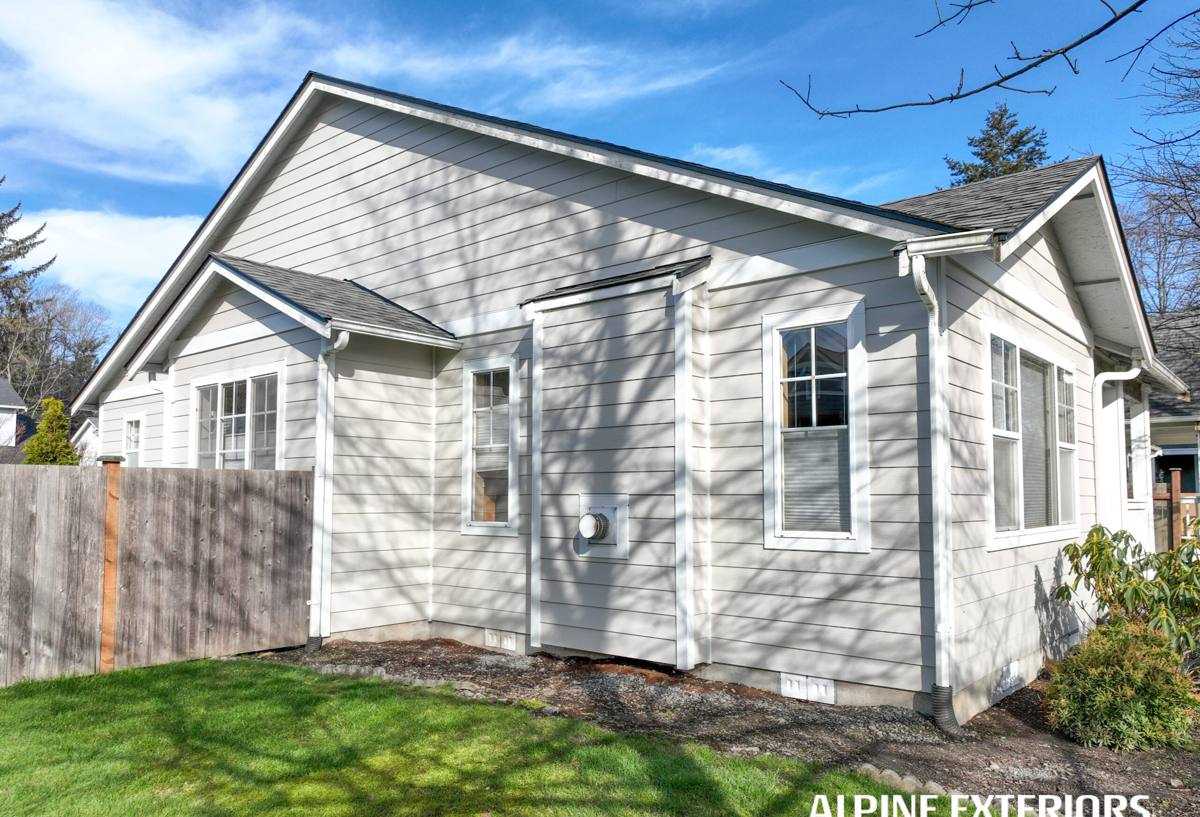
What Local Siding Repair Actually Needs to Solve
Most siding repair calls in this area trace back to one of a handful of root causes, and a correct repair addresses the cause, not just the visible damage.
Water Intrusion Behind the Siding
By the time damage is visible on the surface — a soft spot, a stain, a section that's pulling away from the wall — water has usually been getting behind the siding for a while. Patching over that spot without finding and correcting the entry point (a failed flashing detail, an open joint, a gap where two materials meet) just delays the next repair call.
Corroded or Failing Fasteners
Salt air works on fasteners and flashing continuously. A repair that reuses corroded fasteners, or uses the wrong fastener type for the material and exposure, is a repair with a short clock already running on it.
Moss and Organic Growth Holding Moisture
Moss itself doesn't damage fiber cement, but on wood-based or engineered wood siding it holds moisture against the surface long after a storm has passed, extending every wet cycle the material goes through. A repair on a moss-prone wall needs to account for why that wall stays wet longer than others on the same house.
Impact and Storm Damage
Wind-driven debris, fallen branches, and storm impacts happen here like anywhere in the Pacific Northwest. These repairs are usually more straightforward, but matching the replacement material and finish to existing siding — especially older siding that may be discontinued or weathered to a different shade — takes more care than it looks like from the curb.
Signs Your Siding Needs a Repair Call
- Soft, spongy, or visibly warped sections, especially near the bottom of walls or below windows
- Cracked, split, or missing boards or panels after a storm
- Persistent staining or dark streaking that doesn't wash off, particularly on shaded or channel-facing walls
- Bubbling or peeling paint concentrated in one area rather than spread evenly across the house
- Visible gaps at trim, corners, or window and door casings where caulking has failed
- Rust streaking below fasteners or metal flashing
- A musty smell or soft drywall on an interior wall that backs up to an exterior section showing damage
Repair or Replace? How We Make the Call
Not every damaged section means a full re-side, and not every repair is worth doing instead of planning a replacement. We look at the scope, the age and condition of the surrounding siding, and what's actually causing the damage before recommending either one.
| Situation | Usually a Repair | Usually Points Toward Replacement |
|---|---|---|
| Damage extent | Isolated to one or two sections or walls | Spread across multiple walls or the whole exterior |
| Underlying cause | A single identifiable flashing or fastener issue | Systemic moisture intrusion affecting the sheathing behind multiple sections |
| Siding age and material | Still within its expected service life, matching material available | Original material is failing broadly, discontinued, or was never suited to this climate |
| Sheathing condition | Sheathing behind the damaged area is dry and sound | Sheathing shows rot or sustained moisture damage when opened up |
| Cost over time | One targeted repair resolves the issue | Repeated repair calls to the same areas year after year |
If we open up a section and find the sheathing is sound and the cause is a single correctable detail, we'll say so and do the repair. If we find the same pattern of failure spreading across the house, we'll tell you that too, along with what a replacement would actually involve — we'd rather give you a straight answer than talk you into more work than the house needs, or less than it needs.
What a Correct Repair Actually Involves
A repair that holds up in this climate isn't just about the patch itself — it's about everything behind and around it.
- Remove the damaged section and inspect the sheathing and water-resistive barrier underneath, not just the siding surface
- Identify and correct the actual entry point — a flashing gap, a failed joint, a missing kick-out, or a fastener issue — before anything goes back on the wall
- Replace any compromised sheathing or framing found during the inspection rather than closing it back up over a problem
- Re-integrate the water-resistive barrier and flashing correctly, lapped in the right sequence so water sheds outward and down
- Install matching or compatible siding material with correct fastener type, spacing, and depth for the product and this climate's exposure
- Seal and finish joints and cut edges to match the surrounding wall's sun and shade exposure
Skip the middle steps and you've got a repair that looks right on the day it's finished and fails again once the next wet season really sets in.
Repairing Different Siding Materials
La Conner has a mix of siding on its homes — older wood and cedar, some engineered wood products, vinyl, and increasingly James Hardie fiber cement. We repair what's already on your house, and we're straightforward with you about how each material holds up to a repair versus how much longer it's likely to need attention.
| Material | Repair Considerations | Long-Term Outlook Here |
|---|---|---|
| James Hardie fiber cement | Cut and matched to the existing profile; ColorPlus finish matched at trim points where possible | Dimensionally stable, doesn't absorb moisture into the material itself — what we install for full re-sides |
| Cedar / solid wood | Sound sections can be patched and refinished; rotted sections need full removal and sheathing check | Requires ongoing sealing, refinishing, and moss control to keep performing in a channel-side climate |
| Engineered wood (LP SmartSide and similar) | Cut edges must be fully sealed and primed at the repair line or moisture will re-enter there | Wood-fiber core is prone to swelling at damaged or poorly sealed edges over repeated wet-dry cycles |
| Vinyl | Panel replacement is straightforward if matching stock is available; color fading over time can make matches obvious | Doesn't absorb water but can warp with age and temperature swings; seams remain a weak point |
When a homeowner asks us to repair a material we don't install for new work, we'll do the repair honestly and correctly. But if the underlying material is failing broadly rather than in one spot, we'll also tell you why we standardized on James Hardie for replacement work — non-combustible fiber cement, climate-engineered HZ product lines, a factory-applied ColorPlus finish, and a strong transferable warranty — rather than just selling you another repair on a product we don't think holds up as well here long-term.
Our Repair Process
We keep the process simple and honest, because the value in a siding repair is in the diagnosis, not the sales pitch.
- A walk-through inspection of the damaged area and a check of the surrounding walls for related or early-stage issues
- An honest assessment of whether the fix is a targeted repair or whether the damage points to a bigger underlying problem
- A clear explanation of what caused the damage, not just what we're going to replace
- A written scope before any work starts, so you know exactly what's being done and why
- Repair work that matches material, fastener, and finish to your existing siding as closely as possible
- A final check of flashing and joint details before we consider the job done
Why a Crew That Already Works La Conner Matters
A contractor who works this part of Skagit County regularly has seen how a channel-facing wall ages differently than a wall on the same street set back and sheltered by trees or neighboring structures. That kind of pattern recognition matters when you're diagnosing why one section of siding failed while the rest of the house looks fine — it's the difference between a repair that addresses the real cause and one that just replaces what's visible. It also means someone local is reachable if a repair needs a follow-up look, rather than tracking down a crew that only passed through town for one job.
Keeping Repaired Siding From Becoming a Repeat Call
Once a repair is done correctly, a little seasonal attention keeps it that way. Clear gutters ahead of the wet season so overflow doesn't soak siding and trim at the eaves. Check shaded and channel-facing walls periodically for early moss growth and address it before it spreads and holds moisture against the surface. Look over caulked joints at trim and penetrations every year or two, since that's usually where the next problem starts if one is coming. A contractor who did the repair correctly should be able to tell you exactly what to watch for on your specific house going forward.
If you've got a section of siding that's cracked, staining, or just not looking right, we're happy to take a look and give you a straight answer about what's causing it and what it'll take to fix — no pressure, no upsell. Reach out below for a free estimate.