 Anacortes Siding
 Why La Conner Windows Wear Out Faster Than You'd Expect
La Conner sits right on the Swinomish Channel, and that waterfront location is part of what makes the town beautiful — and part of what makes windows here work harder than windows twenty miles inland. Salt-laden air moves off the water and settles on glass, vinyl, and metal hardware year-round, not just during storms. Combine that with Skagit County's long wet season and the moss and algae growth that comes with it, and you've got a climate that's genuinely rough on building materials.
None of this is unique to any one house. It's a regional pattern. Homes closer to the channel and open water tend to show corrosion on hardware and seal failure sooner than homes set back from it, but even inland La Conner properties get enough driving rain and humidity to shorten the life of an aging window. If your windows are original to a home built more than 20-25 years ago, the materials they were built with almost certainly weren't engineered for what they've been exposed to since.
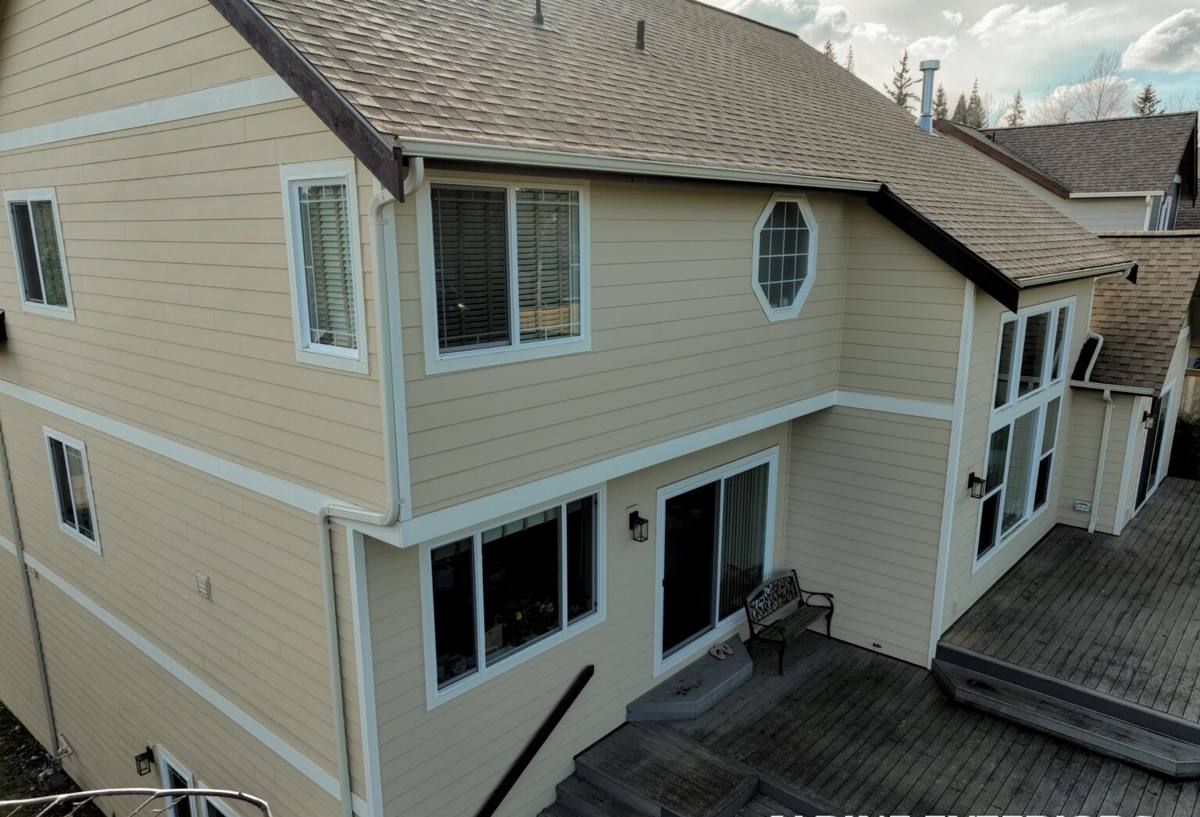
Signs Your Windows Are Telling You Something
Window failure is usually gradual, which is why a lot of homeowners live with problems longer than they need to. Here's what we look for, and what you can check yourself before calling anyone:
- Fogging or a permanent haze between panes of double-glazed glass — this means the seal has failed and the gas fill (or air gap) has been compromised
- Wood trim or sills that feel soft, spongy, or show dark staining, especially on the exterior-facing side
- Visible gaps between the window frame and the siding or trim, or daylight showing around the frame
- Windows that are difficult to open, close, or lock — often a sign the frame has shifted or swollen
- A noticeable draft or cold spot near the window even when it's fully closed
- Moss or dark green/black growth building up on sills, tracks, or exterior trim faster than you can keep it cleaned off
- Higher heating bills than similar-sized homes nearby, with no other obvious explanation
Any one of these on its own might not mean much. Two or three together, especially on windows facing prevailing weather, usually means the window has reached the end of its useful service life rather than needing a repair.
What a Correct Window Replacement Actually Involves
Window replacement gets treated like a simple swap — pull the old one, drop in the new one — and that's exactly how a lot of moisture problems get built into a house. In a climate like ours, the parts nobody sees matter more than the window itself.
The Details That Actually Determine Whether It Lasts
A correct installation accounts for flashing and water management first, glass and frame second. That means integrating the window opening with a proper weather-resistant barrier, flashing tape or pan flashing at the sill to direct any water that gets past the exterior back outward, and a sealed, continuous connection between the window frame and the surrounding wall assembly. Skip or rush any of that and you can install the best window on the market and still end up with rot inside the wall cavity within a few years — you just won't see it until the damage is already done.
Sill Pans and Sloped Sills
Given how much driving rain this area gets, we pay particular attention to the sill — the bottom of the window opening. A properly sloped sill pan sheds water outward instead of letting it pool against the frame. This is a small detail that's easy to skip and expensive to fix later.
Insulation and Air Sealing
The gap between the new window frame and the rough opening needs to be filled with a low-expansion foam or backer rod and sealant, not stuffed with fiberglass insulation alone. Fiberglass doesn't stop air movement; foam and proper sealant do. This is also where a lot of drafts originate on otherwise "new" windows that were installed carelessly.
Choosing a Window Material That Holds Up Near Salt Air
Not every window product performs the same way in a marine climate. Hardware, frame material, and finish all matter more here than they would in a dry inland climate. This is a general comparison of what we typically see in terms of trade-offs — your specific home, budget, and aesthetic goals still drive the final choice.
| Frame Material | How It Handles Salt Air & Moisture | Maintenance | Typical Trade-Offs |
|---|---|---|---|
| Vinyl | Doesn't corrode; performs well overall in coastal air | Low — occasional cleaning | Limited color/finish options; can look plasticky in higher-end homes |
| Fiberglass | Very stable, resists warping and doesn't corrode | Low | Higher upfront cost than vinyl |
| Wood | Needs a well-maintained exterior finish to resist moisture intrusion | High — regular repainting/resealing | Best traditional look for historic-style homes, but highest upkeep near water |
| Wood-clad (wood interior, metal/composite exterior) | Good, if cladding and seams are properly detailed | Moderate | Cladding seams are a common failure point if not installed carefully |
| Aluminum | Prone to corrosion and condensation in coastal, wet climates unless thermally broken | Moderate to high | We're selective about where we'll recommend it here |
For most La Conner homes, we lean toward vinyl or fiberglass for straightforward performance and low upkeep, and wood or wood-clad when a homeowner wants to match a historic or traditional look and is willing to keep up with exterior maintenance. We'll walk through what fits your house rather than pushing one product line.
Full-Frame Replacement vs. Insert Replacement
There are two basic approaches to replacing a window, and which one applies depends on the condition of your existing frame.
Insert (Pocket) Replacement
The new window is installed inside the existing frame, which stays in place. This is faster and less invasive, and it works fine when the original frame is still structurally sound and dry. It's not the right call if there's already hidden rot or moisture damage — you'd be sealing a problem inside the wall instead of fixing it.
Full-Frame Replacement
The entire window unit, including the old frame, is removed down to the rough opening. This lets us inspect and repair any water damage to the framing, install new flashing and a sill pan properly, and start clean. It costs more in labor but is often the right choice for older La Conner homes, especially ones that have gone years without anyone checking behind the trim.
We don't default to one method to keep a bid low. Part of the estimate visit is opening things up enough to tell you honestly which approach your windows actually need.
Our Window Replacement Process
- On-site assessment — we look at each window individually, not just from the curb. Condition varies a lot window to window, even on the same wall.
- Honest scope and estimate — you'll know upfront whether we're recommending insert or full-frame replacement, and why, along with a written estimate before any work starts.
- Material selection — we go over frame material, glass package, and finish options that fit your home and budget, without steering you toward whatever's easiest for us to install.
- Removal and inspection — old windows come out carefully, and we check the framing and sheathing behind them for hidden moisture damage before anything new goes in.
- Flashing and water management — sill pans, flashing tape, and weather-resistant barrier integration happen before the new window is set, not as an afterthought.
- Installation and air sealing — window is set plumb and level, shimmed correctly, and sealed with proper foam and sealant, not just caulked around the outside and called done.
- Interior and exterior trim finish — trim is reinstalled or replaced to match your home, and the site is cleaned up before we leave.
- Final walkthrough — we check operation on every window with you and answer questions about care going forward.
What Affects the Cost of Window Replacement
We don't publish blanket per-window pricing because it genuinely depends on your specific windows and home, but these are the main factors that move a price up or down:
| Factor | Why It Matters |
|---|---|
| Insert vs. full-frame replacement | Full-frame involves more labor, framing repair, and exterior trim work |
| Frame material | Vinyl is typically the most budget-friendly; fiberglass and wood-clad cost more upfront |
| Window size and configuration | Large picture windows, bays, or custom shapes cost more than standard operable windows |
| Hidden damage discovered during removal | Rotted sheathing or framing needs repair before a new window can be properly installed |
| Number of windows done at once | Doing a full house at once is generally more cost-efficient per window than one-off replacements |
| Glass package | Low-E coatings, gas fills, and impact-resistant glass options add cost but improve performance |
| Historic or period-appropriate trim detail | Matching existing exterior trim profiles on older La Conner homes can add labor time |
The only way to get real numbers is a walkthrough of your actual windows — anything else is a guess, and we'd rather give you an accurate estimate than a low one that changes once we start.
Why It Matters to Hire a Crew That Already Works in La Conner
Window replacement isn't identical everywhere in Skagit County. A crew that mostly works dry, inland, newer-construction jobs may not think twice about sill flashing or salt-air-rated hardware, because they've never had to. Working regularly in La Conner and the surrounding Anacortes area means we're used to older homes, waterfront exposure, and the kind of driving rain that finds every gap a rushed installation leaves behind.
There's also a practical side to local familiarity: knowing which window styles suit older and historic-character homes in the area, being reachable if a question comes up after the job is done, and standing behind the work because we're not driving in from out of the area for a one-time job. We're not going to claim we know every home in town — we don't invent familiarity we don't have — but a contractor with real, repeated experience in this specific climate and building stock is going to make fewer costly assumptions than one who doesn't.
Living With New Windows in a Salt-Air, Moss-Season Climate
New windows still need some basic upkeep to get their full lifespan in this environment. None of this is complicated, but skipping it shortens the life of even a well-installed window.
- Rinse salt residue and grime off exterior glass and frames a few times a year, more often if you're close to the water
- Keep weep holes (the small drainage openings along the bottom of the frame) clear of debris and moss so water can drain out instead of pooling
- Clean window tracks and sills periodically to prevent moss and algae buildup from holding moisture against the frame
- Check exterior caulking and sealant once a year for cracking or separation, and have it addressed before it becomes a moisture path
- For wood or wood-clad windows, keep the exterior finish maintained — repaint or reseal before you see bare wood, not after
- Operate each window a few times through the year, even ones you rarely open, so hardware and weatherstripping don't seize up
If you're not sure what to look for, that's a normal question — we're happy to point out what to watch for on your specific windows when we're out for an estimate, whether or not you end up moving forward with the work.
Get a Straightforward Estimate
If your windows are fogging, drafty, hard to operate, or just original to a home that's been through a lot of La Conner winters, it's worth having someone take an honest look before you decide anything. We'll walk the exterior and interior of each window with you, tell you plainly what we find, and put together a written estimate with no pressure to sign anything on the spot. Reach out through the form below to schedule a free estimate.