 Anacortes Siding
 Windows on March Point Take a Different Kind of Beating
March Point sits close enough to Fidalgo Bay and the Guemes Channel that homes here deal with a specific combination of weather most inland Skagit County houses never see: salt-laden air, wind-driven rain that hits windows at an angle instead of straight down, and a long, damp moss season that keeps exterior wood and trim wet for months at a stretch. None of that is dramatic on its own, but stacked together year after year, it's exactly the kind of slow, steady exposure that finds every weak point in a window installation — bad flashing, undersized drip caps, cheap hardware, sealant that was never rated for coastal use.
A window that performs fine in a dry inland climate can fail early out here. That's not a knock on any particular product — it's just physics. Salt air accelerates corrosion on hardware and fasteners, standing moisture from moss and shade encourages rot at the sill, and repeated wind-driven rain finds gaps that a light rain never would. Custom windows for a March Point home need to be selected and installed with that reality in mind from the start, not treated the same as a job in a drier part of the county.
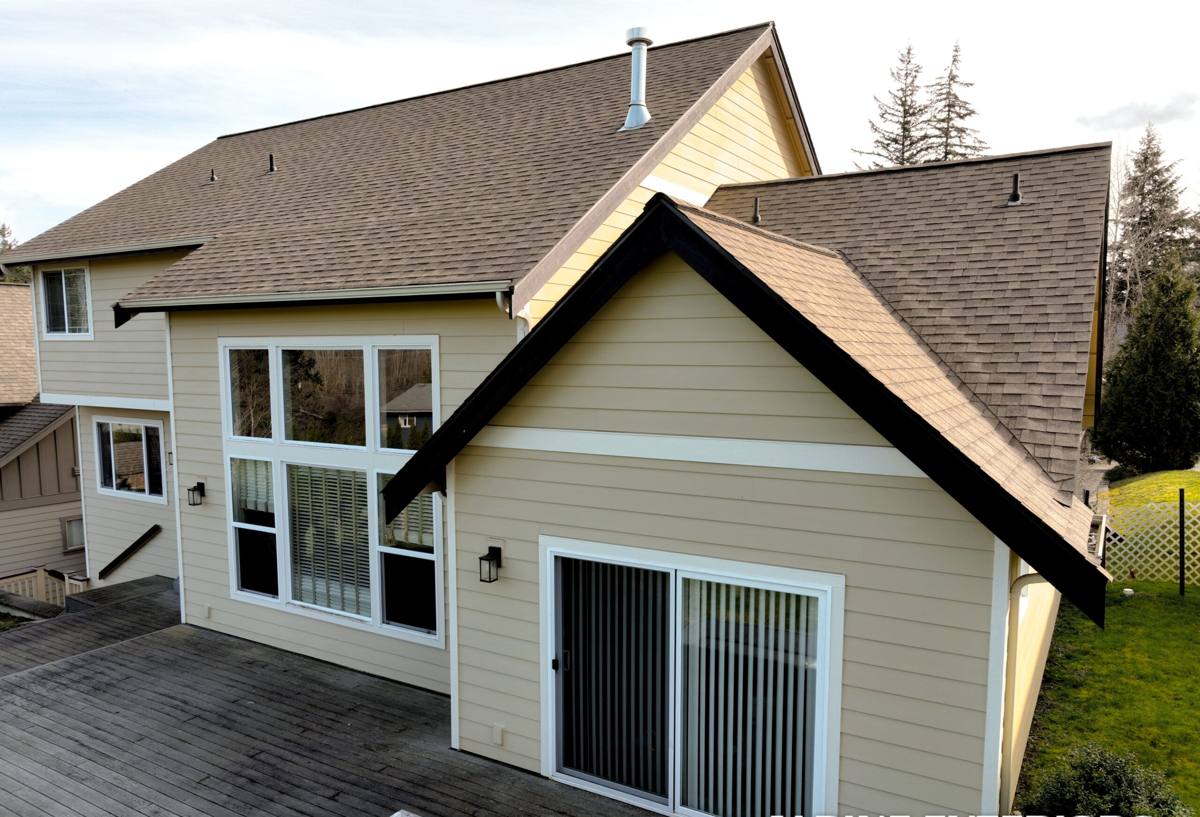
What "Custom" Actually Means Here
"Custom" doesn't mean fancy trim or a premium upgrade tier — it means the window is built to fit your actual opening and your actual house, instead of forcing your house to fit a stock size. On older March Point homes, especially anything built before standardized window sizing became common, openings are often slightly out of square, a little larger or smaller than modern stock sizes, or framed with rough openings that have shifted a bit over decades of settling.
Custom sizing matters for two practical reasons:
- A properly sized window seats correctly against the framing, so flashing and sealant can do their job instead of compensating for gaps
- It avoids the shims, filler strips, and extra trim work that stock replacement windows sometimes require — every extra seam is another place water can eventually find a way in
For a coastal-influenced spot like March Point, a tight, correctly sized opening isn't a cosmetic nicety. It's part of how the window resists wind-driven rain over the long run.
Common Window Problems We See Around March Point
Sill and Frame Rot
Wood or wood-composite sills that stay damp longer than they should — because of shade, moss growth nearby, or a north-facing exposure — are the most common failure point we run into. Once rot starts at the sill, it spreads into the frame and eventually the surrounding wall framing if it isn't caught.
Failed Seals and Fogged Glass
Insulated glass units rely on a sealed air or gas-filled gap between panes. Salt air and constant moisture cycling can shorten the life of that seal compared to a drier climate. Once it fails, you'll see fogging or condensation trapped between the panes — that's not something that can be cleaned or repaired, the glass unit has to be replaced.
Corroded Hardware
Latches, locks, and hinges on lower-quality windows can start showing surface corrosion within a few years this close to the water. It's a small thing until a window won't latch securely, which is both a security and an air-sealing problem.
Moss and Algae Staining Around Frames
Even when the window itself is sound, moss and algae growth on nearby siding or trim holds moisture against the window frame longer, which accelerates whatever wear is already happening.
Frame and Glass Choices That Hold Up in This Climate
There's no single "best" window material — the right choice depends on your home's style, your budget, and how much long-term maintenance you're willing to do. Here's how the common options actually compare for a home exposed to salt air and driving rain:
| Frame Material | Salt Air / Moisture Resistance | Maintenance | Typical Cost Position |
|---|---|---|---|
| Vinyl | Good — won't rot or corrode, but can become brittle over many years in constant UV and salt exposure | Low — no painting, occasional cleaning | Lower to mid |
| Fiberglass | Very good — dimensionally stable, resists corrosion and doesn't absorb moisture | Low | Mid to higher |
| Aluminum | Fair — durable but prone to corrosion near saltwater unless properly coated/anodized | Low to moderate | Mid |
| Wood / Wood-Clad | Fair without diligent upkeep — cladding protects the exterior face, but exposed wood needs attention | Higher — periodic painting/sealing, especially in shaded, damp areas | Higher |
For glass, we generally recommend dual-pane, low-E coated units as the practical minimum for this area — the coating helps with both energy performance and long-term UV wear, and dual-pane construction gives you a second line of defense if one seal ever starts to age. Argon-filled units add a modest efficiency boost but aren't the deciding factor most homeowners think they are; correct installation matters more than the gas fill.
Our Installation Process
The window itself is only part of the job. How it's installed determines whether it actually performs the way it's rated to. Our process on March Point homes typically includes:
- On-site measurement and inspection — we check the rough opening, sill condition, and existing flashing before ordering anything
- Addressing any rot or moisture damage found — we don't install a new window into a compromised opening; damaged framing or sill material gets repaired first
- Proper flashing and weather barrier integration — flashing tape and pan flashing are installed to shed water down and out, tied into the existing weather-resistive barrier correctly, not just caulked over
- Setting the window level, plumb, and square, with shimming as needed rather than relying on fasteners to force alignment
- Sealing with coastal-appropriate sealant rated for the movement and moisture exposure this area sees, not just whatever caulk is on hand
- Interior and exterior trim finish matched to your home's existing look
- Final function and weather-seal check before we consider the job done
Skipping or rushing any one of those steps is usually how a window that should last decades ends up with problems in five or six years.
Why a Local Anacortes Crew Matters for This Job
A crew that already works March Point and the rest of Anacortes regularly has seen how homes in this specific area age — which exposures tend to hold moisture, where moss builds up fastest, and which older construction details need extra attention during a window swap. That's not something you get from a general contractor passing through the area once.
Being local also means we're not disappearing after the invoice clears. If a question comes up after installation, or you want a second opinion on a window that's showing early wear before you commit to full replacement, you're working with a crew that's still in town and still standing behind the work.
Signs It's Time to Replace, Not Just Repair
Not every window problem means full replacement. Here's a practical way to think about it:
- Fogging or condensation between panes — the seal has failed; replacement of that glass unit or the window is the only fix
- Soft, spongy, or visibly rotted sill or frame material — repair is possible if caught early, but advanced rot usually means replacement
- Windows that won't latch, lock, or stay open on their own — sometimes a hardware fix, sometimes a sign the frame has shifted
- Noticeable draft or cold spot near the window in winter — could be a seal or weatherstripping issue worth inspecting before assuming the worst
- Visible daylight around the frame, or paint/trim damage radiating out from the window — usually points to water intrusion that's been going on a while
- Single-pane original windows in a home that's otherwise been updated — often the biggest energy and comfort gap in an older March Point house
If you're not sure which category your windows fall into, an honest look from someone who isn't trying to upsell you is worth more than guessing.
Living With Custom Windows in a Coastal Climate
Even a well-installed, well-chosen window benefits from a little seasonal attention here. Rinsing salt residue off frames and glass periodically, keeping gutters and nearby moss growth from holding water against trim, and checking exterior sealant every year or two for cracking are simple habits that extend the life of the investment. None of it is complicated — it's just specific to living this close to the water, and it's worth mentioning up front rather than letting a homeowner find out the hard way.
If your March Point home has windows that are fogging, drafty, hard to operate, or just original to a much older build, we're happy to come take an honest look. The estimate is free, there's no pressure, and you'll get a straight answer about whether repair or replacement makes sense for your situation — use the form below to get started.