 Anacortes Siding
 Deck Repair Built for March Point's Marine Climate
March Point sits right on the water outside Anacortes, and that location comes with a specific kind of weather load: salt-laden air off the surrounding bays, rain that comes in sideways during winter storms, and long stretches of gray, damp weather that keep wood surfaces wet for days at a time. A deck built or repaired without that climate in mind will show problems years before it should — soft boards, rusted fasteners, and a slick coat of moss that makes stairs and landings dangerous underfoot.
We work on decks throughout Anacortes and the surrounding Skagit County waterfront, and March Point properties often get the fuller version of that exposure because there's frequently less tree cover to break the wind and more direct contact with salt spray. Repair work here has to account for that, not just patch what's visible and hope it holds through the next storm season.
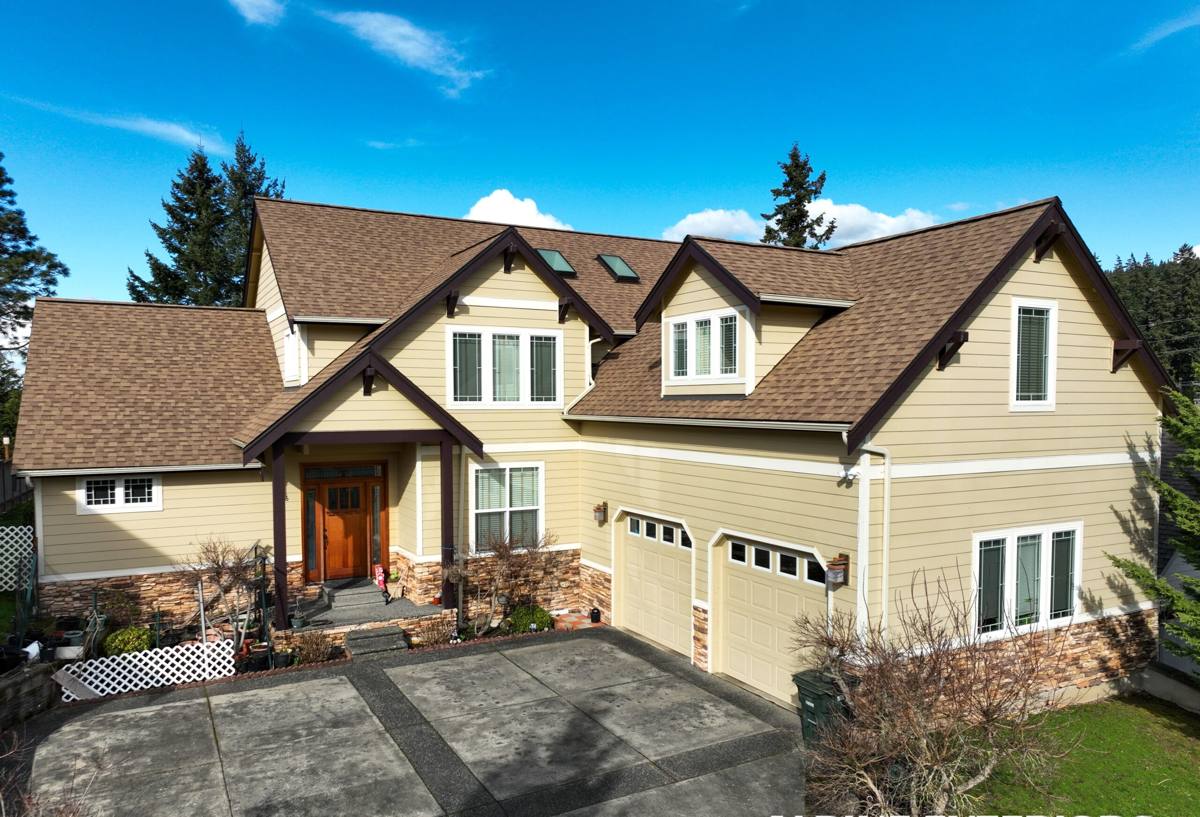
What Salt Air, Rain, and Moss Do to a Deck Over Time
Fastener and Hardware Corrosion
Standard fasteners and connectors weren't built for a salt-air environment. Once a galvanized coating breaks down, rust works fast, and a single failed joist hanger or ledger bolt can undermine an otherwise sound deck. This is often the first thing we check on an inspection, because hardware failure is a structural problem hiding behind what looks like a cosmetic issue.
Wood Decay at Connection Points
Driving rain doesn't just fall on a deck — it drives sideways into the joints, the ledger-to-house connection, and any spot where flashing is missing or has failed. Wood stays saturated longer in our climate than in drier parts of the country, and it's that constant moisture, not any single storm, that causes rot. The ledger board attachment, stair stringers, and post bases are the usual failure points we find first.
Moss, Algae, and Surface Buildup
A long moss season means shaded or north-facing decks can stay damp for months at a stretch. Moss and algae hold moisture against the wood surface, accelerate decay underneath, and create a genuine slip hazard on stairs and ramps. Surface cleaning matters, but if moss has been established for a while, it's worth checking whether it has been masking soft or decayed boards underneath rather than just discoloring the surface.
Signs Your March Point Deck Needs Attention
Most deck problems in this area develop slowly, which is exactly why they get missed. Here's what we tell homeowners to watch for between inspections:
- Boards that feel spongy or flex more than they used to underfoot
- Nails or screws backing out, or visible rust streaks around fasteners
- Gaps, dark staining, or soft wood where the deck meets the house at the ledger
- Persistent moss or algae that returns quickly after cleaning
- A wobbly railing post or stair stringer that moves under weight
- Gray, weathered wood that no longer takes stain or sealer evenly
- Standing water that doesn't drain within an hour or two after rain stops
Any one of these on its own might be minor. Several of them together usually mean it's time for a real structural inspection rather than another round of surface cleaning.
Repair or Rebuild? How We Make the Call
Not every deck problem calls for a full rebuild, and not every deck is worth patching over. The honest answer depends on where the damage is concentrated and how much of the structure it actually touches.
| Situation | Repair Is Usually Enough | Rebuild Is the Better Call |
|---|---|---|
| Decking boards | A few boards are soft or split, framing underneath is sound | Most boards are weathered, cupped, or failing at once |
| Framing & ledger | Isolated rot at one joist or connection point | Rot at multiple structural points, or at the ledger itself |
| Fasteners & hardware | Localized rust, hardware still holds securely | Widespread corrosion across connectors and hangers |
| Railings & stairs | One loose post or baluster | Structure doesn't meet current code or is failing throughout |
| Age & history | Deck is under roughly 15 years old, built reasonably well | Deck is older, undersized for how it's used, or has been patched more than once already |
We'll tell you honestly which side of that table your deck falls on, including when a repair is the responsible choice even though a rebuild would be a bigger job for us.
What a Correct Deck Repair Actually Involves
Structural Framing and the Ledger Connection
This is the part that matters most and shows the least. A correct repair means checking the ledger board flashing — the point where the deck attaches to the house — along with the joist hangers and post bases, not just the decking surface on top. Flashing that's missing, cracked, or installed incorrectly is one of the most common causes of hidden rot we find on decks in this area.
Decking Surface
Whether we're replacing individual boards or resurfacing the whole deck, the goal is a flat, properly fastened surface that actually drains. Board spacing and orientation matter for drainage in a climate where standing water is the enemy of everything underneath it.
Railings and Stairs
Railings and stair stringers take a lot of structural stress and are subject to specific code requirements for height, baluster spacing, and load. A repair that leaves a railing out of code isn't a finished job, even if it looks fine to the eye.
Fasteners and Hardware for Coastal Exposure
Given the salt air, we favor stainless steel or coated fasteners rated for corrosive environments over standard galvanized hardware wherever it's practical, especially at structural connections. It costs a bit more up front and saves a callback a few years down the road.
Choosing Materials That Actually Hold Up Here
Material choice affects both how a repair performs and what it costs. There's no single right answer — it depends on the existing deck, your budget, and how much ongoing maintenance you want to take on.
| Material | Maintenance in This Climate | Typical Cost Factor |
|---|---|---|
| Pressure-treated wood | Needs regular sealing or staining; moss and mildew show up quickly if neglected | Lowest material cost |
| Cedar | Naturally more decay-resistant, but still needs periodic sealing to hold its color and shed moisture | Mid-range |
| Composite decking | No staining or sealing needed; still needs periodic cleaning so moss and algae don't gain a foothold | Higher upfront cost, lower upkeep over time |
For repair work specifically, we usually recommend matching the existing material unless the current material is part of what's failing — for example, if untreated or low-grade wood was used in the original build and it's decaying faster than it should for its age.
Seasonal Care That Extends a Repair's Life
A repair holds up longer with a little seasonal attention, and in this climate that attention matters more than in drier regions:
- Clear leaves and debris from between boards before fall rains set in, so water isn't trapped against the wood
- Rinse or scrub moss and algae off stairs and shaded areas before they get a full season to establish
- Check that gutters and downspouts near the deck aren't dumping extra water onto it
- Re-seal or re-stain wood decking on the schedule the product calls for — usually every one to three years in a climate this wet
- Walk the deck once a year and check for the same warning signs listed earlier in this page
Our Process, Start to Finish
- On-site inspection. We check the framing, ledger connection, fasteners, and decking surface — not just what's visible from the top looking down.
- Honest assessment. We tell you plainly what's cosmetic, what's structural, and what can reasonably wait a season or two.
- Written estimate. A clear scope and price before any work starts, with repair and rebuild options laid out side by side if both are reasonable.
- Permit check. Structural deck work can require a permit, and jurisdiction matters — March Point properties may fall under Skagit County rather than the City of Anacortes, which can affect the process. We sort this out before work begins, not after.
- The repair itself. Framing and hardware first, then decking, then railings and stairs, in that order, because a good surface on a bad frame never actually holds.
- Cleanup and walkthrough. We walk the finished deck with you and point out anything worth keeping an eye on going forward.
Why a Crew That Already Works March Point Matters
A deck repair crew that only occasionally works near the water can miss things that are routine knowledge for a crew that works this stretch of Skagit County regularly. Knowing which jurisdiction applies for permits, recognizing what early salt-air corrosion looks like before it becomes obvious, and understanding how much drainage a deck actually needs in a marine climate all come from doing this work here repeatedly, not from a general checklist written for anywhere in the country.
It also means faster, more accurate estimates. We're not guessing at how this particular climate treats a deck over time; we're accounting for it from the first walk-through, which means fewer surprises once the work is underway.
If your deck in March Point is showing any of the signs above — or you'd just like an honest opinion on whether repair or replacement makes more sense for your situation — we're happy to take a look. Use the form below to request a free, no-pressure estimate.