 Anacortes Siding
 Why March Point's Waterfront Exposure Changes the Roofing Equation
March Point sits out on the water, and that changes what a roof has to deal with on a daily basis. Homes here take wind off the bay, salt-laden air, and rain that comes in sideways more often than it falls straight down. A roofing product that holds up fine a few miles inland in Anacortes can wear differently out on the point, where the exposure is more constant and more direct.
That doesn't mean March Point needs an exotic roofing solution. It means the details — fastener choice, flashing, coating quality, ventilation — matter more here than they do on a sheltered lot. Metal roofing, installed correctly for this environment, is one of the more sensible answers to that exposure. Installed poorly, it's one of the more expensive mistakes a homeowner can make.
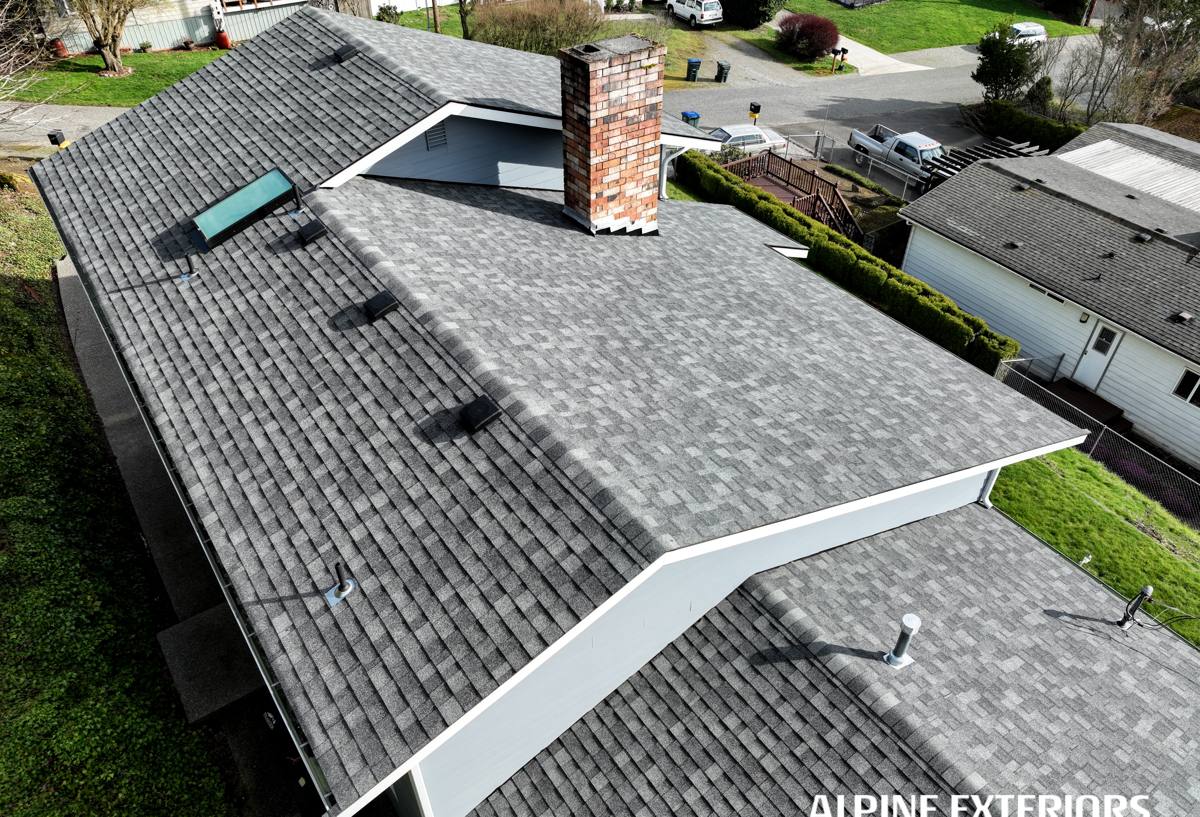
What Salt Air, Wind-Driven Rain, and a Long Moss Season Do to a Roof
Skagit County's marine climate is mild compared to a lot of the country, but "mild" doesn't mean easy on a roof. Three things do most of the damage over time:
- Salt air accelerates corrosion on any metal component that isn't rated for coastal exposure — fasteners, flashing, and lower-grade panel coatings all degrade faster near the water than they would inland.
- Wind-driven rain doesn't just fall on a roof, it gets pushed under laps, around penetrations, and into any gap that a calmer climate would let a builder get away with. Roofs here need real weather-resistant detailing, not just water-shedding on a calm day.
- Moss and moisture build up in the shaded, damp months that make up a big share of the year in this part of Washington. Moss holds water against a roof surface and, on the wrong material, that moisture sits and does slow damage long before it's visible from the ground.
None of these are dramatic, one-time events. They're slow, cumulative pressure — which is exactly why the roofing choice and the installation quality matter more here than in a drier, calmer climate.
Why Metal Roofing Holds Up Better in This Environment
Metal roofing isn't the right fit for every house or every budget, but for a waterfront-exposed property like the ones on March Point, it has real advantages over asphalt shingles:
It sheds moss and standing water more effectively than a shingle surface, because there's no granular texture for moss spores and debris to grip. It handles wind uplift better when installed with the correct fastening pattern, which matters on an exposed point where gusts off the bay are a regular occurrence rather than an occasional storm event. And a properly coated panel resists the salt-air corrosion that shortens the life of lower-grade metal or exposed steel components.
Metal roofing also tends to outlast asphalt shingles by a wide margin when it's installed and maintained correctly, which matters for a homeowner who doesn't want to be back on the roof budget again in fifteen years. That said, metal roofing is not maintenance-free, and it is not forgiving of a rushed or generic installation — the details below are where a roof either earns that long lifespan or falls short of it.
Standing Seam vs. Exposed-Fastener Panels
Not all metal roofing is the same product wearing different colors. The two common systems homeowners choose between behave very differently over time, and that difference matters more on an exposed site like March Point.
| Feature | Standing Seam | Exposed-Fastener (Ag Panel) |
|---|---|---|
| Fasteners | Concealed under raised seams — no exposed penetrations | Screws driven through the panel face |
| Long-term weather sealing | Depends on seam integrity, not gaskets | Depends on screw gaskets, which age and can fail |
| Typical cost | Higher material and labor cost | Lower upfront cost |
| Best fit | High-exposure sites, main roofs, longer ownership horizon | Outbuildings, shops, budget-driven projects |
| Maintenance | Minimal — no gaskets to inspect | Periodic gasket and fastener inspection recommended |
On a sheltered inland lot, exposed-fastener panels can perform well for years with basic upkeep. On a wind- and salt-exposed site like March Point, we lean toward standing seam for main roofs specifically because it removes the weakest point in the system — the gasketed screw — from the equation entirely.
Installation Details That Matter on a Coastal Roof
Fasteners and Flashing
Coastal-grade fasteners aren't optional out here. Standard fasteners can start showing corrosion streaks within a few years in a salt-air environment, which is both a cosmetic problem and, eventually, a structural one. Flashing at valleys, chimneys, and wall transitions needs to be detailed for wind-driven rain specifically — a flashing lap that works fine in calm rain can still let water in when the wind is pushing it uphill.
Underlayment and Ventilation
A quality synthetic or self-adhered underlayment underneath the metal panels acts as the real waterproofing layer — the panels are the first line of defense, but the underlayment is what protects the deck if wind ever does force water past a seam or penetration. Proper attic and roof ventilation also matters more in this climate than people expect: trapped moisture under a roof deck in a damp, mild climate like Skagit County's can cause rot and mold long before it ever shows up as a leak inside the house.
Our Process for a March Point Metal Roofing Job
We approach every March Point roof with the site's exposure in mind from the first visit, not as an afterthought:
- On-site assessment — we look at the roof's exposure to wind and water direction specific to your lot, not just its square footage.
- System recommendation — standing seam or exposed-fastener, panel gauge, and coating, matched to your home's exposure and your budget.
- Deck and structure check — we confirm the roof deck is sound and ventilated correctly before any panel goes down.
- Installation — coastal-rated fasteners, properly lapped and sealed flashing, and underlayment suited to wind-driven rain.
- Final walkthrough — we go over what the roof needs from you going forward, in plain terms, before we consider the job done.
We're not guessing at what March Point's weather does to a roof — it's the same wind, salt air, and moss pattern we plan around on every job in this area.
Keeping a Metal Roof Performing Long-Term
A metal roof is low-maintenance compared to shingles, but "low-maintenance" isn't "no-maintenance," especially this close to the water. A short annual routine keeps small issues from becoming expensive ones:
- Clear debris and moss buildup from valleys and low-slope sections, where moisture sits longest
- Check exposed-fastener panels for gasket wear or early rust streaking around screw heads
- Inspect flashing at chimneys, vents, and wall transitions after major windstorms
- Keep gutters and downspouts clear so water isn't backing up under roof edges
- Look for any scratched or bare-metal spots where the protective coating may have been damaged, since those are where corrosion starts
Most of this is a once-a-year walk-around, not a major undertaking — but skipping it is how a minor, cheap-to-fix issue turns into a deck repair.
What Affects Your Cost
Metal roofing costs vary more than people expect, and the exposure at a site like March Point can shift some of these factors compared to a sheltered inland home.
| Factor | Why It Matters Here |
|---|---|
| Panel system (standing seam vs. exposed-fastener) | Standing seam costs more upfront but removes long-term gasket maintenance |
| Fastener and coating grade | Coastal-rated hardware and coatings cost more but resist salt-air corrosion far longer |
| Roof complexity | Valleys, dormers, and multiple penetrations mean more flashing work, which is labor-intensive to do correctly |
| Tear-off vs. recover | Removing old roofing adds cost but lets us fully inspect and address the deck underneath |
| Ventilation upgrades | Adding or correcting attic ventilation during the reroof avoids a separate project later |
We'll walk through these specific to your roof during an estimate rather than quoting off a generic range — a simple gable roof and a roof with several valleys and penetrations are genuinely different projects, even at the same square footage.
Why a Crew That Already Works March Point Matters
There's a real difference between a crew that's installed a handful of roofs near the water and one that treats every March Point job like a standard inland reroof. The exposure here isn't extreme, but it's constant, and a crew that already accounts for it — in fastener selection, flashing detail, and coating spec — is going to make fewer assumptions and fewer callbacks than one working from a generic playbook.
We're not asking you to take that on faith. Ask any Skagit County roofing contractor how they'd detail a valley for wind-driven rain, or what fastener grade they spec for a waterfront property, and the answer will tell you a lot about how much thought actually goes into the job before the first panel goes up.
If you're weighing a metal roof for a home on March Point, we're happy to walk the roof with you and give you a straight answer on what it needs — no pressure, no generic quote. Use the form below to request a free estimate.