 Anacortes Siding
 Siding Repair Built for March Point's Exposure
March Point sits out on its own point of land along Fidalgo Bay, and that location comes with a specific kind of weather load. Homes here catch wind and salt spray straight off the water, take on driving rain during fall and winter storms, and sit in shade pockets long enough each year to grow a serious moss problem on north-facing walls. Siding that would hold up fine a few miles inland in a more sheltered part of Anacortes can fail early out here if it wasn't built or installed for this exposure.
That's the reason a generic "siding repair" conversation doesn't really fit March Point. The repair has to account for salt-laden moisture working into seams and fasteners, wind-driven rain finding any gap in the flashing, and moss holding water against the wall surface for weeks at a time. We treat March Point as its own case, not a smaller version of an Anacortes-wide service area.
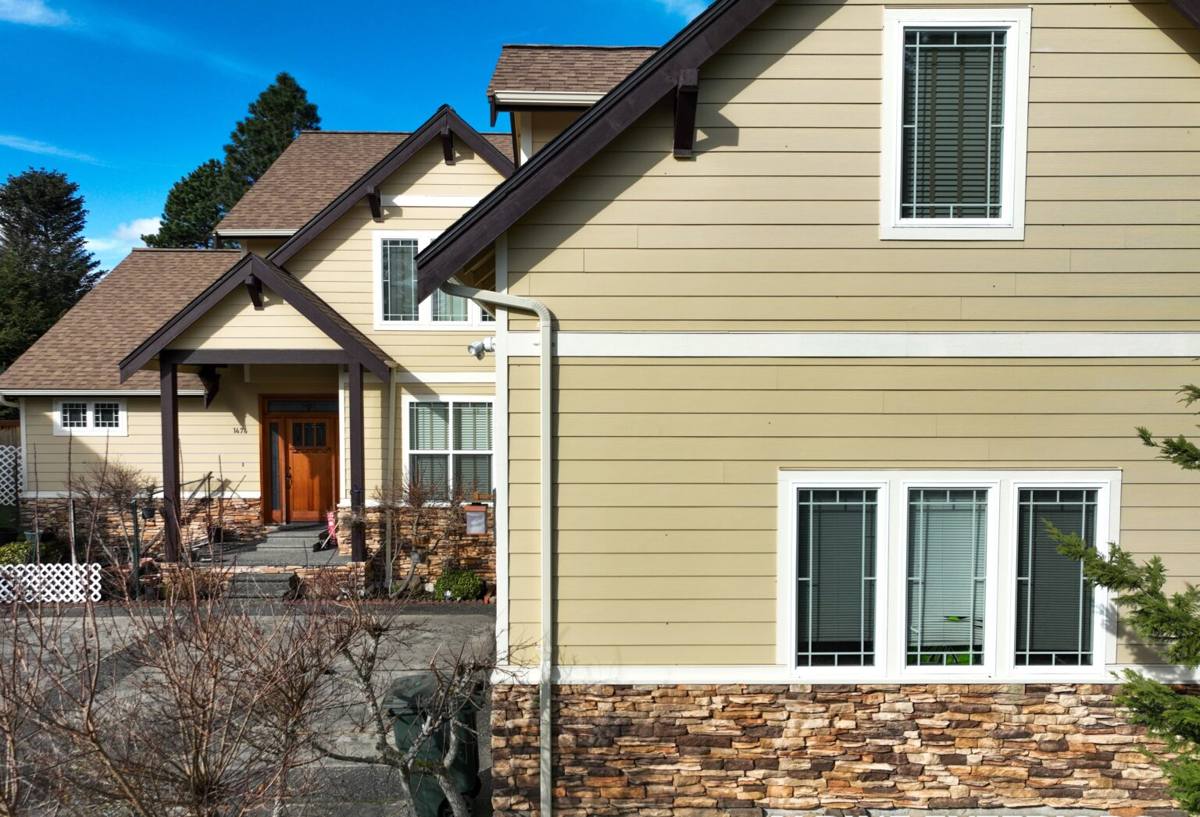
What Skagit County's Climate Does to Siding Over Time
Skagit County doesn't get extreme heat or hard freezes very often, but it makes up for that with sustained, low-grade moisture exposure almost year-round. On a point like this, three things do most of the damage:
- Salt air: accelerates corrosion on exposed fasteners, metal trim, and any galvanized flashing that isn't properly coated or covered.
- Driving rain: pushed sideways by wind off the bay, it finds horizontal seams, unsealed joints, and any siding that's lost its factory coating.
- Moss and algae: Anacortes' long wet season keeps north- and west-facing walls damp for extended stretches, and moss growth holds that moisture directly against the siding surface instead of letting it shed.
Wood and older composite sidings absorb this punishment the worst — they swell, delaminate, or rot from the back side where you can't see it until the damage is well established. Vinyl holds up better against moisture but tends to crack or warp under repeated wind stress and doesn't offer much of a moisture barrier if a seam opens up.
Signs a March Point Home Needs Siding Repair
Most siding problems out here start small and stay hidden until they've been active for a season or two. Homeowners who catch issues early save real money, because a section repair costs a fraction of what water damage to sheathing or framing costs once it spreads.
- Soft or spongy spots when you press on the siding, especially near the bottom courses or below windows
- Visible moss or dark green-black staining that keeps coming back after cleaning
- Cracked, warped, or bowed panels, particularly on the side that takes the most wind
- Gaps opening up at seams, corners, or where siding meets trim, window, or door casing
- Paint or factory finish that's peeling, chalking, or has lost its sheen unevenly
- Rust streaks below nail heads or metal trim pieces
- Rising utility bills or noticeably cooler rooms along exterior walls, which can point to moisture-compromised insulation behind the siding
Any one of these on its own might be minor. Two or three together, especially clustered in one area of the house, usually means water has been getting behind the siding for a while.
What a Correct Siding Repair Actually Involves
A repair that just swaps out the visibly bad boards and calls it done is how the same failure shows up again in a year or two. A repair worth doing right includes a few steps that don't show once the job is finished, but they're the reason it lasts:
Checking what's underneath
Before any new siding goes on, we pull back enough of the damaged area to look at the water-resistive barrier, flashing, and sheathing underneath. If moisture has already reached the sheathing, patching over it just seals the problem in.
Fixing the water path, not just the symptom
Most repair failures trace back to a flashing or sealant detail that let water in — a window head flashing that wasn't lapped correctly, a butt joint that was caulked instead of flashed, or a kick-out flashing missing where a roofline meets a wall. We correct the underlying detail as part of the repair, not just the cosmetic surface.
Matching the existing material and finish
Repairs on a visible wall need to match the existing siding's profile, exposure, and color closely enough that the patch doesn't stand out. This is easier with materials that use a consistent factory finish system — it's one of the reasons color-matching is more predictable with modern fiber cement than with field-painted wood or aged vinyl that's faded unevenly.
Sealing and fastening for the exposure
On a site with this much wind-driven rain and salt exposure, fastener choice and sealant placement matter more than they would in a sheltered inland lot. We use corrosion-resistant fasteners and seal transitions in a way that sheds water rather than trapping it.
Repair or Replace: How to Think About the Decision
Not every damaged section is worth repairing, and not every problem calls for a full re-side. The right call usually comes down to how widespread the damage is, how old the existing siding is, and what it's made of.
| Factor | Leans toward repair | Leans toward replacement |
|---|---|---|
| Extent of damage | Isolated to one or two wall sections | Recurring problems in multiple areas |
| Age of siding | Under 10-15 years, otherwise sound | Near or past expected service life |
| Material | Fiber cement or newer, well-maintained product | Older wood, LP-style OSB-based siding, or failing vinyl |
| Underlying moisture barrier | Intact, no widespread water intrusion | Compromised WRB or sheathing rot found during inspection |
| Color/profile match | Close match available | Discontinued product, no reasonable match |
When damage is contained and the rest of the wall is sound, a targeted repair is the honest recommendation — there's no reason to re-side a whole house over one bad section. But when we open up a wall on a March Point home and find the water-resistive barrier failing in more than one spot, or the underlying material was never suited to this level of moisture exposure to begin with, we'll say so and lay out what a full replacement would look like instead of patching something that's going to keep failing.
Our Process for a March Point Repair Call
- On-site inspection: we look at the damaged area and enough of the surrounding wall to understand how far the problem extends, not just what's visible.
- Moisture check: where there's any sign of past water intrusion, we open the wall enough to check the sheathing and barrier condition before quoting the repair.
- Honest scope: we tell you plainly whether this is a repair, a partial re-side of one elevation, or a case where full replacement is the more sensible long-term move.
- Matched materials: for repairs, we source siding that matches the existing profile and finish as closely as possible.
- Correct flashing and sealing: every repair includes fixing the water-management detail that caused the failure, not just replacing boards.
- Cleanup and walk-through: we go over the completed repair with you and point out anything worth watching going forward.
Why We Only Install James Hardie When a Job Calls for New Siding
When a repair call turns into a "this section needs to be replaced, not patched" conversation, or when enough of a wall has failed that a partial re-side makes more sense than another round of patching, we install James Hardie fiber cement and nothing else. That's a deliberate standard, not a brand preference we picked at random.
Fiber cement is non-combustible, which matters in a region where wildfire smoke and dry summer stretches are a growing concern even on the water side of the county. It's dimensionally stable in a way wood and many composites aren't, so it doesn't swell, cup, or telegraph fastener movement the way older materials do after a few wet seasons. Hardie's ColorPlus factory finish is baked on and warrantied against fading and peeling, which solves the two problems we see most often on failed siding out here — coating breakdown from UV and salt exposure, and the patchwork look that comes from field-painting repairs over the years. Hardie's HZ5 product line is engineered specifically for wetter, harsher climates like ours, and the transferable warranty gives homeowners real protection if the house changes hands.
We don't install LP SmartSide, vinyl, Cemplank, Allura, primed spruce, or cedar. Each of those has legitimate uses elsewhere, but on a site with this much sustained moisture, wind-driven rain, and salt exposure, we've made the call that Hardie is the product we're willing to warranty our workmanship on. If your existing siding is one of these materials and it's failing, we'll be direct about what we're seeing and what replacing it with Hardie would involve — without pretending the material itself was the wrong choice for every situation, just not one we'll install going forward.
Choosing a Crew That Actually Works March Point
Siding repair is detail work, and the details that matter on a point exposed to wind and salt spray are different from the details that matter on a sheltered inland lot. A crew that regularly works this specific stretch of Anacortes knows which wall orientations take the worst of the weather, how aggressively moss builds back if it isn't addressed at the surface, and which flashing shortcuts show up as failures within a couple of wet seasons rather than ten.
When you're vetting a contractor for a repair like this, a few things are worth asking directly:
- Will you open up the wall to check for moisture damage before quoting the repair, or just replace what's visible?
- What's your plan for matching the existing siding's color and profile?
- Are you licensed and insured in Washington, and can you provide proof?
- What warranty do you offer on the repair labor itself, separate from any material warranty?
- Have you worked on homes in this specific area before, and do you understand the wind and moisture exposure here?
A contractor who answers these plainly, without dodging the moisture question, is one worth trusting with the job.
Keeping Siding in Good Shape Between Repairs
A well-executed repair buys you years, but a little seasonal attention stretches that further, especially in a climate that grows moss as readily as this one does.
- Rinse siding annually, focusing on north- and west-facing walls where moss and algae build up fastest
- Trim back vegetation and tree limbs that keep a wall shaded and damp longer than it needs to be
- Check caulking at trim, window, and door transitions once a year and re-seal anything that's cracked or pulled away
- Walk the exterior after major windstorms to catch loose panels or lifted trim before the next rain gets behind them
- Keep gutters clear so overflow isn't running down the wall face during heavy rain
If you're seeing moss buildup, soft spots, or open seams on a March Point home, it's worth having a local crew take a look before the next wet season sets in. We offer free, no-pressure estimates — walk us through what you're seeing and we'll give you a straight answer on whether it's a repair or something bigger, using the form below.