 Anacortes Siding
 Siding Replacement Built for March Point's Exposure
March Point sits out on the water, with exposed shoreline on multiple sides and very little standing between your siding and whatever the weather is doing that day. Homes here take a different kind of beating than houses a few miles inland in Anacortes proper. Salt-laden air moves across the point constantly, wind-driven rain hits walls at an angle instead of falling straight down, and the shaded, damp stretches of the year run long. Siding that would hold up fine in a drier, more sheltered part of Skagit County can start failing here years ahead of schedule if it wasn't chosen or installed with this specific exposure in mind.
This page covers what siding replacement actually means for a March Point home: what the local climate does to different siding materials, what a correct installation involves, how our process works, and why it matters to hire a crew that has already worked in this specific pocket of the county rather than one learning the area on your project.
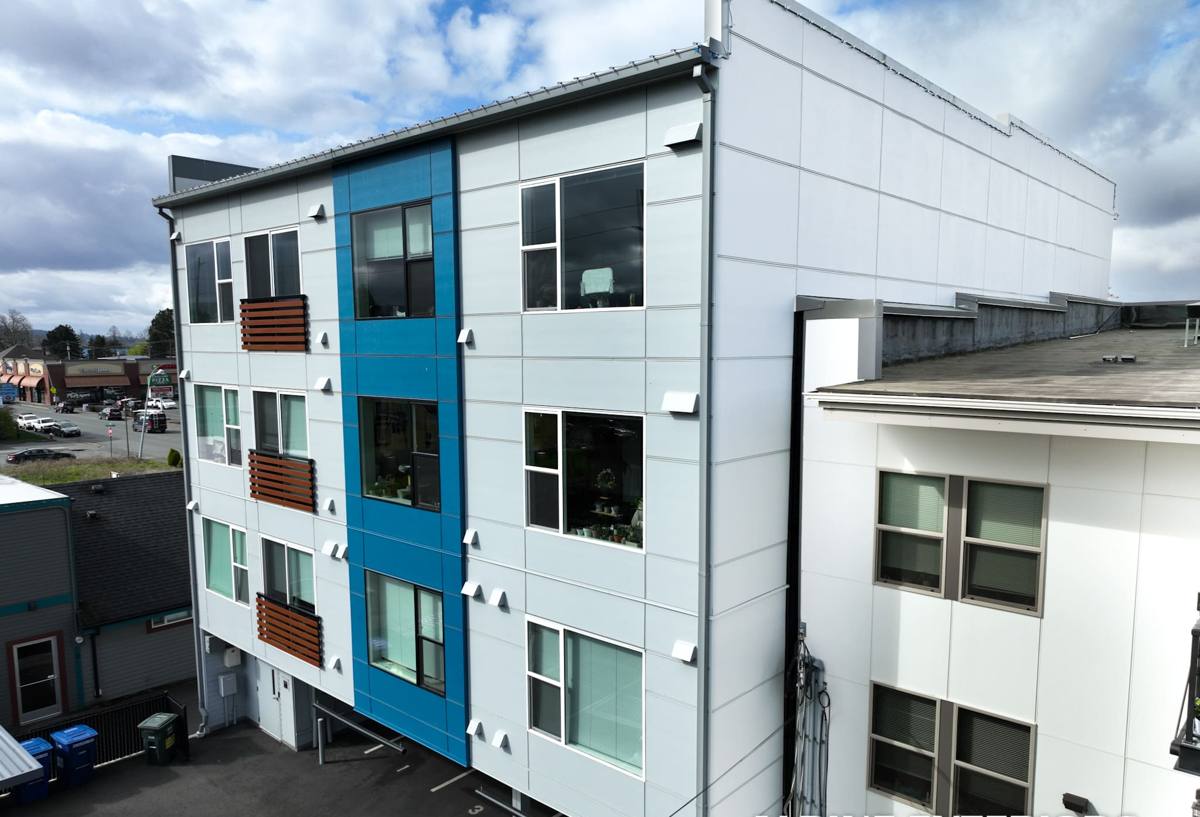
What March Point's Climate Does to Siding
Salt Air and Corrosion
Airborne salt from the surrounding water doesn't just affect boats and docks. It settles on siding, trim, and fasteners day after day. Over time it accelerates corrosion in low-grade nails and staples, degrades cheap coatings, and speeds up the breakdown of materials that weren't engineered to resist it. This is one of the biggest reasons fastener selection and coating quality matter more here than in a typical inland install — a siding job that looks fine on day one can show rust streaks and failing fasteners within a few years if the materials weren't rated for a marine-influenced environment.
Driving Rain
Wind off the water pushes rain sideways into walls instead of letting gravity do the work of shedding it downward. That means water gets forced into laps, seams, and penetrations that would stay dry in a calmer setting. Siding systems on March Point need tighter, better-executed flashing details and a water-resistive barrier that's actually installed correctly — not just present — because the margin for error is smaller here than it is a few miles away.
A Long Moss and Algae Season
Skagit County's damp, overcast stretch of the year runs long, and homes near the water tend to stay shaded and moist longer into the season than homes on higher, drier ground. That combination is exactly what moss and algae need to take hold on north- and west-facing walls, in siding laps, and around trim. Once organic growth gets established, it holds moisture against the surface underneath it, which compounds whatever damage the rain and salt air are already causing.
Why Siding Fails Early Out Here
We see the same failure patterns repeat on March Point homes, almost always tracing back to one of three causes: a material that wasn't built for sustained moisture and salt exposure, an installation that skipped or shortcut flashing and water management details, or ordinary aging that was accelerated by this specific climate. Wood-based products swell, delaminate, or rot at their most vulnerable points — butt joints, corners, and anywhere water can sit. Vinyl can warp or become brittle from repeated wet-dry cycling and UV exposure. Even siding that's holding its shape can be failing underneath, with a compromised water-resistive barrier letting moisture into the wall assembly long before it shows up as a visible problem on the surface.
What a Correct Siding Replacement Involves
Replacing siding on a March Point home isn't just pulling off old material and nailing up new panels. Done right, it's a sequence of steps where each one protects the next:
- Full tear-off and inspection — removing the old siding down to the sheathing so we can actually see what's underneath: rot, soft spots, compromised framing, or old water damage that's been hidden for years.
- Sheathing repair — replacing any damaged sheathing before anything else goes back on the wall. Covering over a problem never fixes it.
- Water-resistive barrier installation — a correctly lapped, sealed barrier that manages the water driving rain forces into the wall, installed shingle-style so gravity and wind both work in your favor, not against you.
- Flashing at every penetration — windows, doors, vents, hose bibs, light fixtures, and anywhere else something passes through the wall. This is where the majority of real-world leaks originate, and it's the detail that separates a durable install from one that fails in a few years.
- Siding installation to manufacturer spec — correct fastener type and placement, correct clearances above grade, decks, and roofing, and correct gaps and sealant at trim and joints.
- Trim, caulking, and final detailing — the finish work that keeps water out of the small gaps that are easy to overlook and expensive to ignore.
Skip or rush any one of those steps and the whole system is weaker, no matter how good the siding material itself is.
Why We Install Only James Hardie Fiber Cement
We standardized on James Hardie fiber cement siding for every project we take on, including in March Point, and we don't install vinyl, LP SmartSide, Cemplank, Allura, primed spruce, or cedar. That's a deliberate professional standard, not a sales pitch.
Fiber cement is non-combustible and dimensionally stable, meaning it doesn't expand, contract, warp, or rot the way wood-based products can when they're exposed to repeated wet-dry cycling. James Hardie's ColorPlus factory-applied finish is baked on under controlled conditions rather than field-applied, which gives it better adhesion and fade resistance than a job-site paint job — a real advantage on a property that's getting hit with salt air and UV exposure day after day. Hardie also engineers regional HZ5 product lines specifically for wetter, harsher climates like ours, and backs the material with a strong transferable warranty that reflects genuine confidence in how it performs over time, not just on installation day.
None of that means other products are junk. Vinyl is inexpensive and low-maintenance in mild climates. Wood-based and cedar products have real appeal for homeowners who want that traditional look. But on a point of land dealing with salt air, driving rain, and a long moss season, we've made the call that fiber cement gives our clients the best combination of durability, low maintenance, and long-term value — and we'd rather stand behind one product line we trust completely than install several we have reservations about.
Our Siding Replacement Process
Every March Point project starts with an on-site assessment, not a phone estimate. We walk the exterior, check for soft spots and existing moisture damage, look at how the house is oriented relative to prevailing wind and rain, and identify any trouble spots — corners, low clearances, penetrations — that need extra attention. From there:
- We provide a written estimate that spells out material, labor, and scope so there are no surprises later.
- We schedule around weather windows, since a rushed install during a wet stretch is how corners get cut.
- We handle tear-off, sheathing repair, water-resistive barrier, flashing, and Hardie installation as one continuous sequence rather than splitting it across crews who don't talk to each other.
- We walk the finished project with you before calling it done, so you know exactly what was done and why.
Because we've worked on other homes in this area, we already understand the exposure March Point presents before we ever step on your property — we're not guessing at how the wind and rain behave on your specific lot.
Cost Factors for a March Point Siding Replacement
Every home is different, and we don't quote pricing without seeing the property, but these are the main variables that move the number up or down:
| Factor | Why It Matters |
|---|---|
| Extent of existing damage | Hidden rot or compromised sheathing found during tear-off adds repair work before new siding can go on |
| Home size and complexity | More wall area, corners, and roof lines mean more material and more flashing detail work |
| Number of penetrations | Windows, doors, vents, and fixtures each need individual flashing — more of them means more labor |
| Exposure and orientation | Walls facing prevailing wind and rain often need more attention to water management details |
| Siding profile and trim selection | Board width, texture, and trim style affect material cost and installation time |
| Site access | Tight lots, fencing, or landscaping near the house can slow tear-off and staging |
Signs Your March Point Home May Need Siding Replacement
- Persistent moss or algae growth that returns soon after cleaning
- Soft, spongy, or bubbling spots when you press on the siding
- Visible warping, cupping, or gaps opening at seams and corners
- Paint that keeps failing or blistering in the same spots year after year
- Rust streaking from fasteners or trim
- Rising energy bills that suggest air and moisture are getting through the wall
- Interior signs like peeling paint, musty odor, or staining on walls that back up to the exterior
Any one of these on its own isn't necessarily an emergency, but on a home exposed to March Point's conditions, it's worth having a professional take a real look rather than waiting for it to get worse.
Why Local Experience Matters Here
A crew that hasn't worked this specific stretch of Skagit County will often treat a March Point home the same as any other siding job. That's a mistake. The combination of salt air, wind-driven rain, and shaded, moisture-holding conditions calls for specific attention to fastener selection, water-resistive barrier detailing, and flashing — the parts of the job that don't show up in a photo but determine whether the siding is still performing in fifteen years. A contractor who already understands how this point of land behaves in a winter storm isn't learning that on your project.
If your March Point home's siding is showing its age, or you're planning ahead rather than waiting for a problem, we're happy to take a look and talk through what we'd recommend. Reach out for a free, no-pressure estimate using the form below.