 Anacortes Siding
 Why March Point Roofs Take a Different Kind of Beating
March Point sits out on the water, exposed to wind and weather that inland Anacortes neighborhoods don't see nearly as much of. Being close to Fidalgo Bay and Padilla Bay means salt-laden air is a constant presence on roofing materials, and winter storms that roll in off the water tend to hit this area with more sustained wind than the sheltered parts of Skagit County. That combination — salt air, driving rain, and long stretches of damp, shaded moss season — wears roofs down faster here than a lot of homeowners expect.
None of that means a March Point roof is doomed. It means storm damage repair here has to account for things a generic patch job doesn't: corrosion-prone fasteners, wind-driven rain finding its way under flashing, and moss that's already been working on weak points before the storm ever hit. A repair that doesn't account for those factors tends to fail again at the next storm, not years down the road.
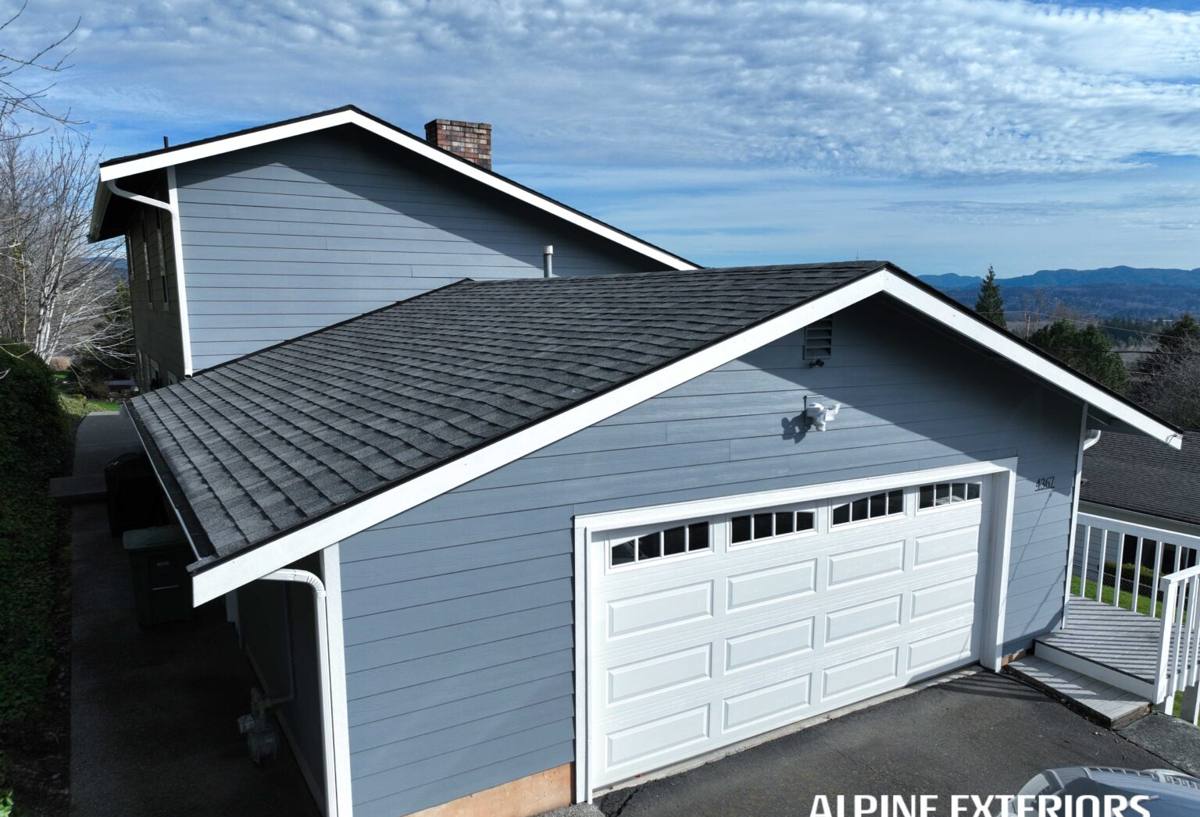
What Actually Counts as Storm Damage
Not every roof problem after a storm is storm damage in the way insurance or a contractor would define it, and it's worth knowing the difference before you call anyone out.
Wind Damage
Sustained wind and gusts can lift shingle tabs, crease them, or tear them off outright. Ridge cap shingles and the edges of the roof — eaves, rakes, and hips — are usually the first to go because they take the most direct wind pressure. Sometimes the damage is obvious from the ground; often it isn't, and a shingle that's been lifted and reset by wind can look fine while its seal is broken underneath.
Wind-Driven Rain
This is the damage that shows up inside the house days or weeks later. Rain pushed sideways by wind can work its way under flashing, around chimneys and skylights, and through any gap in the shingle seal that wouldn't normally leak in a straight-down rain. March Point's exposure means wind-driven rain is a bigger factor here than in more sheltered parts of Anacortes.
Debris Impact
Branches and wind-blown debris can bruise or puncture shingles, crack ridge caps, or dent metal flashing and gutters. Impact damage is often localized and easy to miss unless you're specifically looking for it.
Signs You Should Have a Roof Checked After a Storm
- Granules collecting in gutters or at the base of downspouts
- Shingles that look curled, lifted, or missing entirely
- Water stains on ceilings or upper interior walls, even faint ones
- Flashing around chimneys, vents, or skylights that looks bent, loose, or separated
- Visible sagging in any part of the roofline
- Moss buildup near valleys or the roof edge, which holds moisture and hides damage underneath
- Debris or a fallen branch that made direct contact with the roof
If you can check any of these safely from the ground with binoculars, that's plenty — getting on a wet or wind-damaged roof yourself is not worth the risk.
What a Correct Storm Damage Repair Involves
The right fix depends entirely on what the storm actually did, which is why an honest inspection has to come before any talk of scope or cost.
Spot Repairs
When damage is limited to a section — a handful of lifted or missing shingles, a damaged flashing point — a spot repair replaces just that section with matching material and re-seals it properly. Done right, this includes checking the underlayment beneath the damaged shingles, not just the shingles themselves, since wind-driven rain often gets underneath before the surface damage is even visible.
Flashing and Sealant Work
A large share of storm-related leaks trace back to flashing, not shingles — around chimneys, skylights, vent pipes, and roof-to-wall transitions. In a salt air environment, metal flashing and fasteners corrode faster, so a repair crew should be checking fastener condition, not just resealing over a problem that's going to resurface.
Larger Section Replacement
If a storm damaged a wide enough area, or if the surrounding shingles are already near the end of their service life from years of moss and salt exposure, patching a small area next to worn-out material is a poor long-term value. In those cases we'll tell you honestly that a larger section — or the full roof — makes more sense, rather than doing a patch that won't blend or hold up.
Repair Approach Comparison
| Approach | Best For | Trade-offs |
|---|---|---|
| Spot repair | Isolated wind or debris damage on an otherwise sound roof | Fast and lower cost, but only makes sense if surrounding material is still in good shape |
| Flashing/sealant repair | Leaks at chimneys, skylights, vents, or wall transitions | Addresses the actual leak source, but won't fix separate shingle damage elsewhere |
| Larger section replacement | Concentrated storm damage plus visibly aging shingles nearby | Higher upfront cost than a patch, but avoids repeat repairs on worn material |
| Full roof replacement | Roofs already near end of life where storm damage is the tipping point | Biggest investment, but resets the clock on materials, flashing, and ventilation together |
Our Process for Storm Damage Repair
We keep the process straightforward because after a storm, homeowners usually just want a clear answer, not a sales pitch.
1. Inspection and Documentation
We walk the roof (or use safe elevated access when conditions call for it) and photograph the damage in detail — this documentation matters if you're filing an insurance claim, and we'll explain plainly what we're seeing and why it matters.
2. Honest Scope Assessment
We tell you what actually needs repair versus what's cosmetic or can reasonably wait. If a spot repair is the right call, that's what we'll recommend — we don't pad scope to inflate a job.
3. Repair or Replacement
Matching materials as closely as possible, proper flashing and underlayment work where needed, and fastener choices suited to a salt air environment.
4. Cleanup and Walkthrough
Job site cleared of debris and old material, and a final walkthrough so you can see what was done before we consider the job finished.
Insurance Claims: What to Know Going In
Many storm-related roof repairs are covered under homeowners insurance, but coverage details vary by policy and insurer, so we're not going to tell you what your policy covers — that's between you and your adjuster. What we can do is provide clear photo documentation and a written scope of damage that supports your claim, and answer an adjuster's questions about the roofing side of things if that's helpful. Getting an inspection soon after a storm, before damage has a chance to worsen from continued rain exposure, generally makes for a cleaner claims process either way.
The Ongoing Factor: Salt Air and Moss Between Storms
Storm repair fixes the immediate problem, but March Point's location means the underlying conditions that made the roof vulnerable don't go away once the repair is done. Salt air continues to work on exposed metal and fasteners year-round, and Skagit County's long wet season gives moss plenty of time to establish itself, especially on north-facing slopes and shaded sections near trees. A roof that's had moss cleared and fasteners checked heading into storm season tends to hold up far better than one that hasn't been looked at since it was installed. We're happy to flag these things during a storm repair visit even when they're not the reason you called.
Why a Crew That Already Works March Point Matters
A roofer who works this specific stretch of the Anacortes waterfront has already seen how salt air and wind-driven rain behave on roofs out here, and that shows up in the details — fastener choices, flashing sequencing, and knowing which parts of a roof take the worst of a March Point storm. It also means faster response after weather events, since we're not driving in from across the county to get eyes on your roof. That local familiarity is part of why we treat every storm repair as more than a quick patch: we're accounting for the next storm, not just this one.
After a Storm: What to Do First
- Check for interior water stains on ceilings and upper walls, even small ones
- Look at gutters and the ground around the house for shingle granules or debris
- Photograph any visible exterior damage from the ground before cleanup starts
- Avoid climbing onto a wet or wind-damaged roof yourself
- Cover any known active leak from the inside with a container, not a roof-top patch, until a professional can assess it
- Call for an inspection sooner rather than later — minor damage left exposed to continued rain gets worse fast
If a recent storm has you wondering about the condition of your roof, we're glad to come take an honest look. Reach out below for a free, no-pressure estimate — we'll tell you straight what we find and what it actually needs.