 Anacortes Siding
 Why Burlington Roofs Need a Different Kind of Roofing Plan
Burlington sits in the Skagit Valley, close enough to the water that marine air off the Salish Sea moves through the lowlands most of the year. That air carries moisture and a faint edge of salt, and it settles on everything — including your roof. Combine that with the driving, sideways rain that shows up during fall and winter storms, and a moss season that can stretch from October well into April, and you've got a roofing environment that punishes shortcuts. A roof that's built for a drier climate, or installed without attention to the details that matter here, will show problems years before it should.
Metal roofing, done correctly, handles this environment better than almost anything else on the market. It sheds water fast, doesn't give moss the foothold that shingles do, and holds up to wind-driven rain without the granule loss and edge-lifting that shortens the life of asphalt roofs in this part of Skagit County. But "metal roofing" isn't one product — it's a category with real differences in performance, cost, and how forgiving each option is of imperfect installation. This page is about what actually matters for a Burlington home specifically.
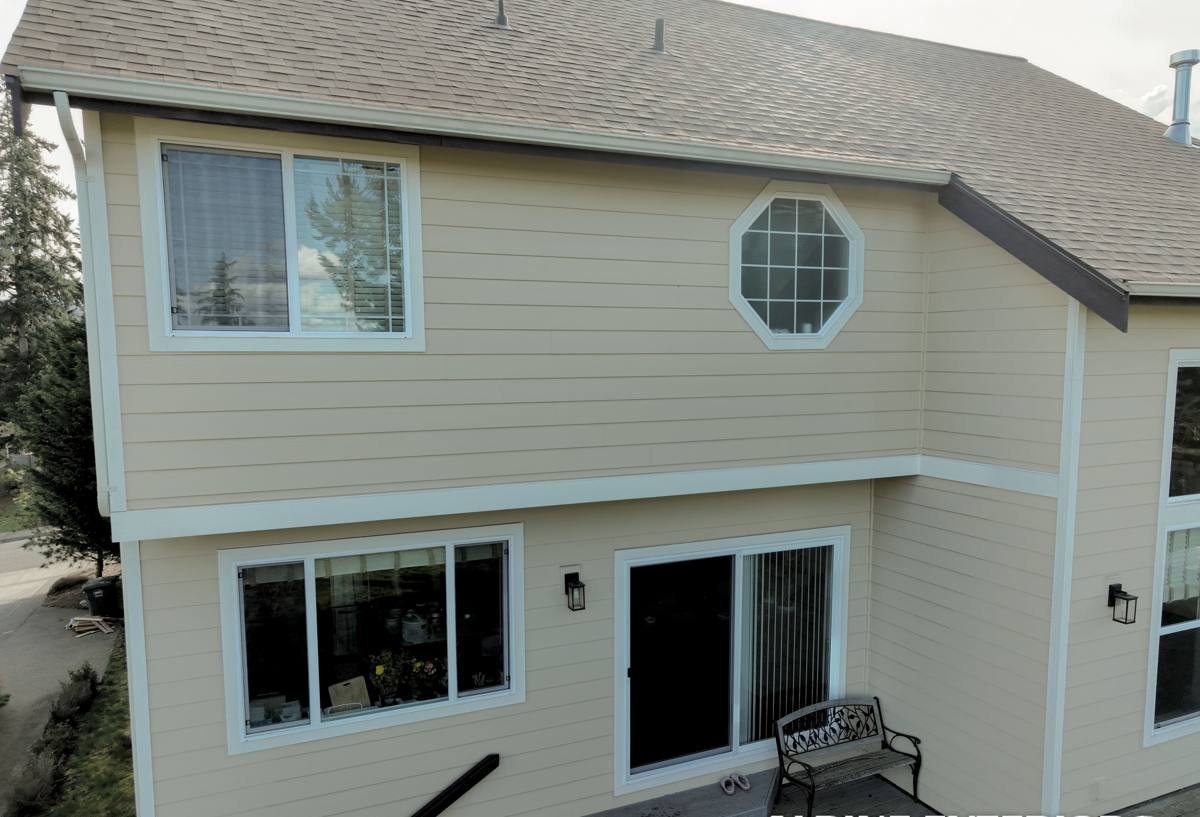
What Burlington's Climate Actually Does to a Roof
Moisture That Doesn't Let Up
Skagit County doesn't get flash floods of rain most of the year — it gets steady, low-intensity rain that can fall for days at a stretch. That kind of weather finds every weak seam, every under-flashed penetration, and every spot where felt or synthetic underlayment was stapled instead of properly lapped. A roof here needs to shed water efficiently under sustained exposure, not just survive an occasional downpour.
Moss Season Is Not a Minor Issue
The long stretch of cool, damp weather from fall through spring is exactly what moss and algae need to take hold. On asphalt shingles, moss roots into the granule surface and lifts tabs as it grows, which opens the door to water intrusion. Metal doesn't give moss the same surface to grip, and a properly pitched, properly detailed metal roof sheds spores and debris far more effectively — but valleys, low-slope sections, and areas that stay shaded still need to be designed with drainage and airflow in mind.
Wind and Driving Rain Off the Sound
Storms moving through this part of Washington often push rain sideways, not straight down. That matters because it means water gets tested at flashing, fastener penetrations, and panel overlaps in ways that a calm, vertical rain never would. Any metal roof installed in Burlington needs to be detailed as if every storm will be driving rain — because eventually, it will be.
Choosing the Right Metal Roofing System
Not every metal roof is built the same way, and the differences matter more here than in a drier climate. Below is an honest comparison of the systems we install most often on homes in this area.
| System | How It's Fastened | Moisture & Moss Performance | Typical Lifespan | Best Fit For |
|---|---|---|---|---|
| Standing Seam | Concealed clips, interlocking seams | Excellent — no exposed fasteners to fail, seams shed water cleanly | 40-60+ years | Homes where long-term, low-maintenance performance matters most |
| Exposed-Fastener Panel | Screws driven through the panel face | Good if installed and re-torqued correctly, but fasteners and washers are the weak point over time | 25-40 years | Budget-conscious projects, outbuildings, shops |
| Stone-Coated Steel | Concealed fastening under a granule-coated steel panel | Very good; profile mimics shingle or shake look while shedding water like metal | 40-50 years | Homeowners who want a traditional look with metal's durability |
For most Burlington homes, we lean toward standing seam or stone-coated steel because the concealed-fastener design removes the single most common failure point on a metal roof: fasteners that back out or lose their seal over decades of freeze-thaw and wind cycling. Exposed-fastener panels aren't a bad product — they're just a different trade-off, and we'll tell you honestly when that trade-off makes sense for your budget or your structure.
Steel or Aluminum?
Both are common in Skagit County. Steel, properly coated (Galvalume or a comparable coating under paint), holds up well and costs less. Aluminum naturally resists corrosion without relying on a coating, which can matter more the closer a home sits to open water and salt-influenced air. We'll walk through your home's specific exposure before recommending one over the other rather than defaulting to whichever is easiest to sell.
The Details That Separate a Correct Installation From a Problem Waiting to Happen
Metal panels themselves are durable. Most metal roof failures we get called out to inspect trace back to the details around the panels, not the panels themselves. A correct installation in this climate includes:
- Full underlayment coverage — synthetic underlayment or self-adhered ice-and-water membrane at eaves, valleys, and penetrations, not just at code-minimum locations
- Proper deck condition — any soft, delaminated, or water-stained sheathing gets replaced before a single panel goes down, not covered over
- Correct panel overlap and seam direction — panels run so that laps shed water with the prevailing wind and rain direction for the roof plane
- Closed and vented ridge details — sealed against wind-driven rain while still allowing the attic to breathe
- Custom-formed flashing at every chimney, skylight, vent stack, and wall intersection, rather than generic stock pieces bent to fit
- Thermal movement allowance — metal expands and contracts with temperature swings, and fastening systems need to accommodate that without loosening seams or splitting sealant joints
Skip any one of these and you can end up with a roof that looks right for a few years and then leaks at exactly the spots that were rushed.
Ventilation and Moisture Management
A metal roof's outer shell can outlast the house underneath it, but that only holds true if moisture isn't trapped inside the attic. Skagit County's damp climate makes attic ventilation a bigger deal than homeowners usually expect. Warm, moist air that can't escape condenses against the underside of a cold metal roof deck, and over years that leads to rot, mold, and insulation damage that has nothing to do with the roof surface itself. Part of a correct metal roofing job on a Burlington home is checking intake ventilation at the soffits and exhaust ventilation at the ridge, and correcting any imbalance before it becomes a hidden moisture problem behind a roof that otherwise looks fine.
Our Installation Process
Every metal roof we install in Burlington follows the same sequence, because skipping steps is where problems start.
- On-site inspection and measurement. We look at pitch, exposure, existing ventilation, and any trouble spots before recommending a system.
- Material selection. We walk through panel type, gauge, finish, and color options based on your home's exposure and your budget — no one-size-fits-all pitch.
- Tear-off and deck inspection. Old roofing comes off down to the deck so we can actually see what's underneath, rather than covering up hidden damage.
- Deck repair as needed. Any soft or damaged sheathing is replaced before underlayment goes down.
- Underlayment and ice-and-water barrier installation. Full coverage at eaves, valleys, and penetrations, sized for this climate rather than code minimums alone.
- Panel installation and flashing. Panels go down with correct overlap and fastening, followed by custom-formed flashing at every transition point.
- Ridge and ventilation detailing. Ridge caps and vents are installed to balance moisture control with wind and rain resistance.
- Final walk-through. We go over the finished roof with you, point out the details we handled, and answer questions before we consider the job done.
What Drives the Cost of a Metal Roof in Burlington
Metal roofing costs more upfront than asphalt shingles, typically running in a broad range of roughly $9 to $18 per square foot installed depending on the system and details — standing seam toward the higher end, exposed-fastener panel toward the lower end. What actually moves the number for a specific home comes down to a handful of factors.
| Cost Factor | Why It Matters |
|---|---|
| Roof pitch and complexity | Steep pitches, multiple valleys, and dormers all add labor time and custom flashing work |
| Tear-off vs. overlay | Full tear-off costs more upfront but lets us inspect and repair the deck — something we recommend rather than skip in this climate |
| Panel system chosen | Standing seam runs higher than exposed-fastener panel due to material and labor for concealed fastening |
| Deck condition | Rot or delamination found during tear-off adds repair cost, but leaving it hidden costs far more later |
| Ventilation upgrades | Correcting soffit or ridge ventilation during the same project is far cheaper than doing it as a separate job later |
We give a written, itemized estimate before any work starts, so you can see exactly what you're paying for and why.
Maintenance: What a Metal Roof Actually Needs
One of the real advantages of metal roofing in this climate is how little ongoing maintenance it demands compared to shingles. That doesn't mean zero maintenance. A simple annual routine keeps a metal roof performing the way it's designed to for decades.
- Clear needles, leaves, and debris from valleys and around any roof penetrations before the fall rains set in
- Check gutters and downspouts for clogs so water actually leaves the roof edge instead of backing up
- Look for moss or algae buildup in shaded or low-slope areas and remove it gently — never with a pressure washer, which can force water under seams and strip protective coatings
- Inspect flashing around chimneys, skylights, and vents for any sealant that's cracked or pulled away
- After major windstorms, do a visual check for lifted panels, dented flashing, or debris damage
Why a Crew That Already Works Burlington Matters
Roofing crews that mostly work drier inland climates or come from out of the region often default to installation practices that are fine elsewhere but leave gaps here — underlayment coverage sized for a lighter rain climate, ventilation details that don't account for how long moisture sits in the air in the Skagit Valley, or moss-prone valley details that get treated as an afterthought. A crew that already works Burlington and the surrounding Anacortes area knows what this climate does to a roof over ten and twenty years, not just what a spec sheet says on installation day. That local track record shapes real decisions — which underlayment gets used at eaves, how much ridge ventilation a given attic actually needs, and where extra flashing attention pays for itself.
There's also a practical side to hiring local: a crew based nearby can respond quickly if a storm causes damage, stands behind their work because they're not driving hours away, and has relationships with area suppliers that keep material lead times predictable.
Is Metal Roofing Right for Your Burlington Home?
Metal roofing isn't the automatic right answer for every home or every budget, and we won't tell you it is. It makes the most sense when you're planning to stay in the home long-term, when you're tired of dealing with moss and algae maintenance every year, or when your current roof's next replacement is a good moment to invest in something that will outlast several shingle roofs. If your priority is the lowest possible upfront cost and you don't mind more frequent maintenance and replacement cycles, asphalt shingles remain a reasonable choice — and we'll tell you that honestly during an estimate rather than push a product that doesn't fit your situation.
If you're weighing options for your roof in Burlington, we're happy to take a look, walk you through what we see, and put together a straightforward, no-pressure estimate. There's no obligation — just an honest read on what your roof needs and what it would take to do it right. Use the form below to get started.