 Anacortes Siding
 Metal Roofing Built for Conway's Climate
Conway sits low in the Skagit River valley, close enough to Skagit Bay and the Puget Sound shoreline that salt-laden air, heavy fog, and driving winter rain are a fact of life. Add the tree cover common to this part of Skagit County and you get long, damp shade that keeps roofs wet for days after a storm passes. That combination — moisture, salt, and shade — is exactly the kind of environment where roofing materials get tested hardest, and it's why metal roofing has become a serious option for homeowners here rather than just a style preference.
We install metal roofing across the greater Anacortes area, and Conway comes with its own set of considerations. Homes here often sit closer to grade, near fields or tree lines, and see more standing moisture and organic debris than roofs up on Fidalgo Island's higher, more wind-scoured lots. A metal roof done right accounts for all of that. A metal roof done wrong — wrong fasteners, wrong underlayment, poor ventilation — will show problems faster in this climate than almost anywhere else in the county.
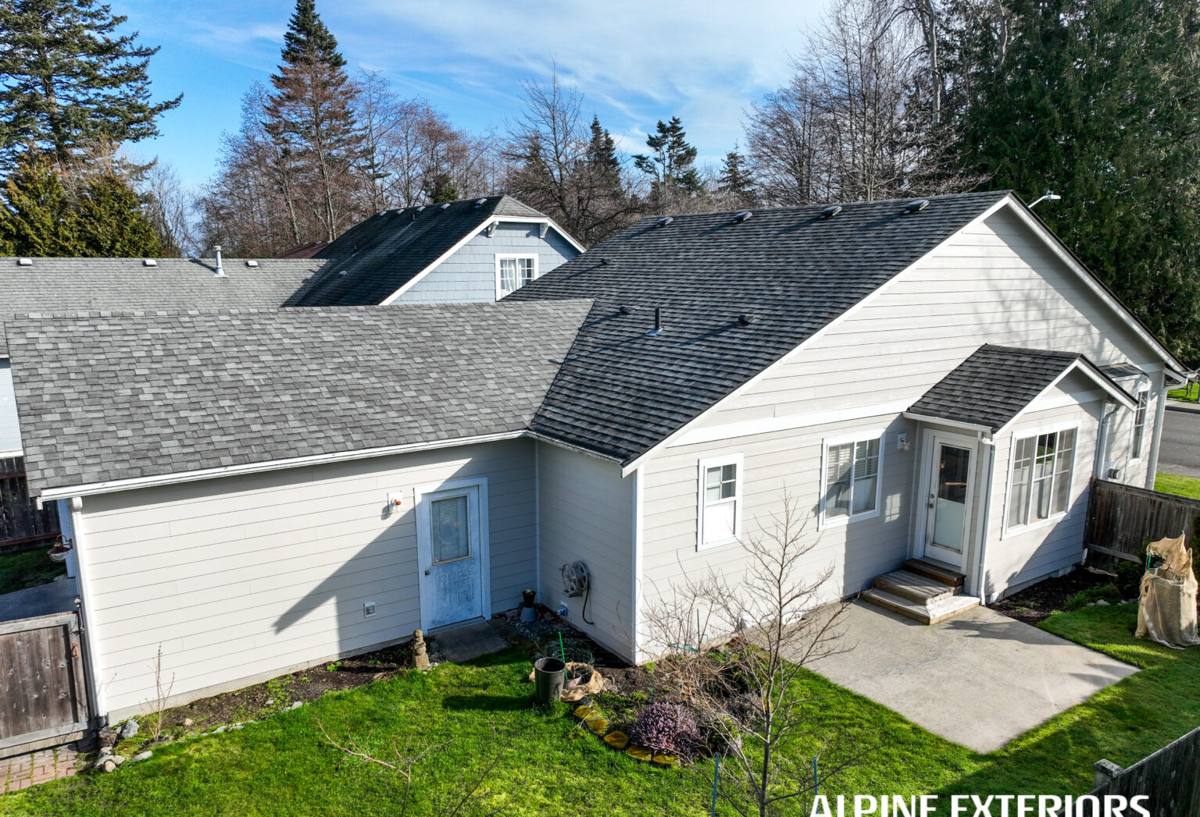
Why Salt Air, Rain, and Moss Change the Equation
Salt Air and Corrosion
Coastal and estuary air carries fine salt particles that settle on any exposed metal — roofing panels, fasteners, flashing, gutters. Left unmanaged, salt exposure accelerates corrosion, especially at cut edges, fastener heads, and dissimilar-metal contact points where galvanic reaction can eat through a coating over time. This is a material and detailing issue, not a metal roofing problem in general — the right panel coating and the right hardware solve it.
Driving Rain
Storms moving through the Skagit Valley don't just drop rain straight down — wind pushes it sideways, up under eaves, and into any gap a lazy install leaves behind. Metal roofing sheds water fast, which is a strength, but only if the underlayment, flashing, and panel laps are installed to handle wind-driven moisture rather than just vertical rainfall.
Moss and Organic Growth
Shaded, damp roofs in this part of Skagit County grow moss and lichen readily, especially where conifer needles and leaf litter collect. On a shingle roof, moss roots into the granules and lifts them. On metal, moss can't root into the surface, but it can still hold moisture against panels and fasteners if debris is allowed to pile up in valleys and at the eaves — which is why panel profile and roof design matter as much as the material itself.
What a Correct Metal Roofing Install Actually Involves
Metal roofing rewards good workmanship and punishes shortcuts. A correct install in a climate like Conway's includes:
- A synthetic or self-adhered underlayment rated for the panel type and local moisture exposure, not just whatever is on the truck
- Proper fastener selection — matched metallurgy to avoid galvanic corrosion between the fastener and the panel
- Closed or vented ridge details that keep wind-driven rain out while still allowing the roof deck to breathe
- Ice-and-water or high-wind underlayment at eaves, valleys, and penetrations, where wind-driven rain and debris concentrate
- Correct panel overlap and expansion allowance, since metal panels move slightly with temperature swings
- Flashing detail at every chimney, vent, skylight, and wall transition — the majority of roof leaks trace back to flashing, not the field of the roof
None of this is exotic. It's standard trade practice done consistently, which is where a lot of roofing problems in this region actually start — not from bad material, but from steps skipped to save time.
Choosing the Right Metal Panel for a Conway Home
Not all metal roofing is the same, and the right choice depends on your roof's pitch, exposure, and how much you want to spend up front versus over the life of the roof.
| Panel Type | Best For | Maintenance Note |
|---|---|---|
| Standing Seam | Homes wanting the cleanest look and best long-term weathertightness; concealed fasteners | Lowest maintenance; fasteners are hidden and protected from direct weather |
| Exposed-Fastener Panel | Budget-conscious projects, outbuildings, some main roofs | Fastener gaskets should be checked periodically; more exposure points for salt air to work on |
| Stone-Coated Steel | Homeowners who want a shingle or shake look with metal's durability | Coating protects the steel; keep granule surface clear of trapped moss and debris |
For most Conway homes dealing with regular moisture and salt exposure, we lean toward standing seam or a quality stone-coated system with a proven coating warranty. Exposed-fastener panels still have their place — they're a sound, economical option for shops, additions, and lower-pitch secondary roofs — but we're upfront that they carry a longer list of small maintenance items over the years.
Coatings Matter as Much as the Metal
Bare or lightly coated steel has no business on a roof this close to salt water and standing moisture. We install panels with a proper protective coating system — galvanized or Galvalume steel with a baked-on paint finish rated for coastal exposure. This is where corners get cut on cheap jobs, and it's also where problems show up first: chalking, fading, and premature rust at panel edges within a few years instead of decades.
Moss and Debris Management on a Metal Roof
Metal roofing doesn't eliminate moss and organic growth in a shaded, damp property like many in the Conway area — it just changes how you deal with it. Because moss can't anchor into a metal panel the way it does into shingle granules, routine care is simpler:
- Keep valleys, eaves, and gutters clear of needles and leaf litter so water and moss spores don't sit against the panel
- Rinse rather than pressure-wash — high-pressure washing can damage coatings and force water under laps
- Trim back overhanging branches where practical to reduce shade and debris buildup
- Have flashing and fastener points checked periodically, since that's where moisture and salt do the most damage over time
This is lighter maintenance than a shingle roof needs in the same conditions, but it isn't zero maintenance — anyone who tells you a roof of any material is maintenance-free in this climate isn't being straight with you.
Our Process for Conway Metal Roofing Projects
We walk every project the same way, adjusted for the specifics of the property:
- On-site assessment — we look at pitch, tree cover, existing moss or moisture damage, ventilation, and how the roof has handled wind-driven rain historically.
- Panel and coating recommendation — based on exposure, budget, and how the roofline is put together, not a one-size answer.
- Tear-off and deck inspection — we check the sheathing for rot or soft spots before anything new goes down, since covering a compromised deck just hides a bigger problem.
- Underlayment and flashing install — the part of the job that determines whether the roof actually performs in Skagit County weather.
- Panel installation — correct fastening, overlap, and expansion detail for the panel type chosen.
- Final walkthrough — we go over the finished roof and what maintenance, if any, it needs going forward.
Cost Factors for Metal Roofing in Conway
Metal roofing costs more up front than asphalt shingles, and the honest answer is that the total depends heavily on your specific roof. The factors that move the number most are:
| Factor | Why It Matters |
|---|---|
| Panel type | Standing seam costs more than exposed-fastener panels due to material and labor complexity |
| Roof complexity | Valleys, dormers, and multiple roof planes add flashing work and labor time |
| Deck condition | Rot or damage found during tear-off adds repair cost before new roofing goes on |
| Coating and warranty tier | Higher-grade coatings cost more but hold up longer against salt air and moisture |
| Access and pitch | Steep or hard-to-access roofs take more time and equipment to work safely |
We give straight, itemized estimates rather than a single vague number, so you can see exactly where the cost is going and make an informed call on panel type and coating tier.
Signs Your Conway Home May Need a New Roof
- Granule loss, curling, or bald patches on an aging shingle roof
- Moss buildup that keeps returning within a season or two of cleaning
- Rust streaking or corrosion at existing metal flashing and vents
- Soft or spongy spots on the roof deck, or sagging along the ridge or eaves
- Daylight visible through the attic or staining on interior ceilings after storms
- Frequent minor leaks around chimneys, skylights, or wall-to-roof transitions
Any one of these on its own might just need a repair. Several together, especially on an older roof, usually mean it's worth pricing out a full replacement before a bigger problem develops during the next round of Skagit Valley winter storms.
Why Hire a Crew That Already Works in Conway
Conway isn't a generic job site — it's low-lying, close to water, and shaded in a way that changes how a roof needs to be built and flashed. A crew that mainly works drier, higher-elevation properties can still install a metal roof, but they may not default to the underlayment, fastener, and flashing choices that hold up specifically to salt air and standing moisture. We work throughout Skagit County and the Anacortes area regularly, so the coastal and river-valley details aren't an afterthought — they're the starting point for how we spec the job.
If you're weighing a metal roof for a home in Conway, we're happy to take a look and walk you through what your specific roof needs — no pressure, no pushy sales pitch. Reach out for a free estimate using the form below.