 Anacortes Siding
 Why La Conner's Waterfront Climate Is Hard on Siding
La Conner sits right on the water, and that location cuts both ways. It's part of what makes the town beautiful, and it's also exactly why siding here fails faster than it does twenty miles inland. Homes along the Swinomish Channel and the surrounding Skagit County lowlands take on a steady diet of salt-laden air, wind-driven rain that comes in sideways instead of straight down, and long stretches of gray, damp weather that never quite dries the north and shaded sides of a house. Add in moss season, which in this part of Washington can run from fall through spring, and you've got siding that's under near-constant moisture pressure for most of the year.
Salt air accelerates corrosion on fasteners, trim, and any siding material that isn't built to shrug off airborne moisture and salt deposits. Driving rain finds every gap, seam, and poorly flashed joint and pushes water behind the siding rather than letting it run off the face. And moss doesn't just look bad — it holds moisture against the wall assembly, feeds off organic material in wood-based products, and keeps siding wet long after the rain has stopped. Any siding replacement in La Conner has to be planned around these three realities, not just around what looks good from the street.
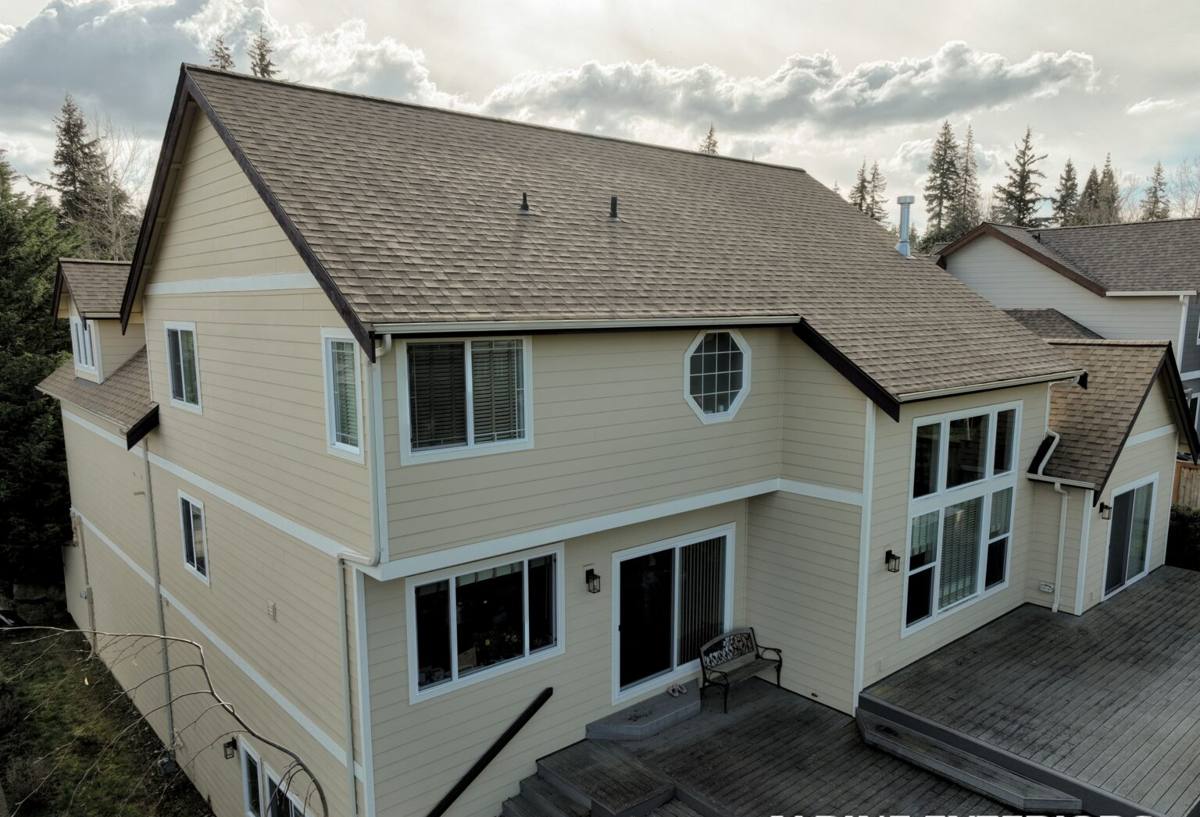
How to Tell Your Siding Is Losing the Battle
Waterfront and near-waterfront homes often show wear in different places than homes further inland — usually starting on the sides that face the water or catch the prevailing wind. Here's what we look for during an inspection:
- Soft spots or visible sagging, especially near the bottom courses and around window and door trim
- Persistent green or black staining that comes back within weeks of being cleaned
- Paint that's peeling, bubbling, or chalking faster than the repaint schedule would suggest
- Visible gaps at seams, corners, or trim where caulking has shrunk or failed
- Rust streaks below nail heads or fasteners
- A musty smell or visible moisture staining on interior walls that back up to exterior siding
- Warping or cupping boards, particularly on wood or engineered wood siding
Any one of these on its own might just mean a maintenance job. Several at once, especially combined with siding that's original to an older home, usually means it's time to talk about full replacement rather than another round of patching.
Why We Only Install James Hardie Fiber Cement Here
We've made a deliberate call as a company to install James Hardie fiber cement siding and nothing else. Not vinyl, not cedar, not primed spruce, not LP SmartSide, not other fiber cement brands. That's not a marketing line — it's a standard we hold to because we've seen how each of these materials actually performs in a climate like La Conner's, where salt air and sustained moisture aren't occasional stressors, they're the baseline condition.
Vinyl
Vinyl is inexpensive and low-maintenance in mild, dry climates, but it's a poor match for this kind of exposure. It expands and contracts significantly with temperature swings, which opens seams over time, and it becomes brittle with age and UV exposure — a problem in a region that gets both hard sun in summer and freezing snaps in winter. It also can't be painted to refresh its look once it fades or chalks, so an aging vinyl-clad house in a salt-air environment tends to look tired years before the siding technically "fails."
Cedar and Primed Wood
Cedar and primed spruce look beautiful when new and can be a genuinely good choice in the right, well-maintained setting. But wood siding demands a maintenance schedule that most homeowners underestimate — regular repainting or restaining, careful caulking, and prompt attention to any moisture intrusion. In a moss-prone, high-humidity coastal environment, wood siding that falls behind on maintenance rots faster than it would almost anywhere else in the state.
LP SmartSide
LP SmartSide is an engineered wood product, and like all wood-based sidings it depends on its factory treatment and edge sealing staying intact. Damaged edges, poor field cutting, or gaps in caulking give moisture a path into the substrate, and once that happens, swelling and deterioration can follow. In a climate that stays wet for months at a stretch, we don't think that's a risk worth asking a homeowner to manage.
| Material | Moisture Resistance | Salt Air Durability | Maintenance Burden |
|---|---|---|---|
| Vinyl | Sheds water but seams open with age | Fades and becomes brittle | Low, but not repaintable when it fades |
| Cedar / Primed Wood | Absorbs moisture if finish fails | Vulnerable without diligent upkeep | High — regular refinishing required |
| LP SmartSide | Good if edges stay sealed | Depends on factory treatment holding | Moderate — edge and joint monitoring |
| James Hardie Fiber Cement | Non-combustible, engineered for moisture | Built for coastal and Pacific NW exposure | Low — factory finish holds up for years |
Choosing the Right Hardie Product Line for a La Conner Home
James Hardie makes climate-specific product lines, and for homes in the Skagit County / Puget Sound region, we spec their HZ5 line, which is engineered for cold, wet, and coastal-influenced climates rather than a one-size-fits-all national product. That distinction matters more here than in a lot of markets, because a product engineered for a dry Southwest climate simply isn't built around the same moisture assumptions.
James Hardie's ColorPlus factory-applied finish is another piece of why this holds up in salt air: the finish is baked on under controlled conditions rather than field-applied, which gives it more consistent coverage and better fade resistance than a job-site paint job. For La Conner specifically, many of the homes we work on are older and have real architectural character worth preserving — this is exactly why Hardie's range of profiles matters. Lap siding in varying exposure widths, shingle-style panels, and trim boards can all be matched to a home's existing look, so a full re-side doesn't have to mean losing the character that made the house distinctive in the first place. If a property carries any local design guidelines given its age or location, we work within them rather than defaulting to whatever's easiest to install.
What Correct Installation Actually Involves
Fiber cement siding is only as good as the installation behind it, and in a high-moisture environment, installation mistakes show up faster and cause more damage than they would in a drier climate. A correct James Hardie install in this area includes:
- A drainage plane and rainscreen gap behind the siding, so any moisture that does get past the surface has somewhere to go instead of sitting against the wall sheathing
- Proper flashing at every window, door, and roof-to-wall transition — the majority of moisture intrusion we find in older homes traces back to flashing details, not the siding material itself
- Correct fastener type, spacing, and depth per the manufacturer's requirements, since over-driven or corrosion-prone fasteners are a common failure point in salt-air settings
- Manufacturer-specified caulking and sealant at seams and joints, applied to hold up under sustained damp conditions rather than just look sealed on installation day
- Correct clearance between the bottom of the siding and grade, decks, or roof lines, so splash-back and standing moisture aren't trapped against the material
Skipping any one of these doesn't necessarily show up on day one. It shows up two, five, or ten years later as trapped moisture, staining, or a failure that's much more expensive to fix than it would have been to install correctly the first time.
Our Process, Start to Finish
- Inspection and assessment — we look at the whole exterior envelope, not just the siding surface, including trim, flashing, and any moisture damage already present
- Honest scope and estimate — we tell you what actually needs replacing versus what can be left alone, and walk through product and profile options for your home
- Prep and tear-off — removal of old siding, inspection of the sheathing underneath for rot or damage that needs addressing before new siding goes on
- Weather barrier and rainscreen installation — the drainage layer that does most of the long-term work protecting your walls
- Hardie installation to manufacturer spec — correct fastening, flashing, and joint treatment throughout
- Final finish and detail work — trim, caulking, and a walkthrough so you know exactly what was done and why
What Siding Replacement Costs to Expect
Every home is different, and the honest answer to "what will this cost" depends on square footage, the number of stories, the condition of the sheathing underneath, and how much trim and detail work is involved. That said, here are the factors that move the number most:
| Cost Factor | Why It Matters |
|---|---|
| Sheathing condition | Rot or moisture damage found during tear-off adds repair work before new siding can go on |
| Home size and stories | More square footage and taller walls mean more material, labor, and access equipment |
| Trim and architectural detail | Homes with more corners, dormers, and trim take longer to do right |
| Siding profile chosen | Lap widths, shingle-style panels, and custom trim combinations vary in material and labor cost |
| Site access | Waterfront lots, tight setbacks, or limited staging space can affect labor time |
We give real numbers during the estimate, based on your actual house, not a generic per-square-foot quote pulled out of thin air.
Why a Crew That Already Works in La Conner Matters
Siding work in a small waterfront community isn't quite the same job as siding work in a typical suburban subdivision. Lot sizes, setbacks, and site access can be tighter. Older homes often have layers of past repairs, additions, and previous siding installations stacked on top of each other, and figuring out what's actually going on underneath takes experience with this specific building stock. A crew that already understands the moisture patterns typical of Skagit County waterfront properties — which walls take the worst of the weather, where moss tends to establish first, where past installers cut corners on flashing — starts the job with a real advantage over a crew seeing a La Conner home for the first time.
There's also a practical side to working with a local, established contractor: someone who's still around next year if a warranty question comes up, who knows the area's permitting norms, and who isn't learning the region's climate quirks on your project.
If your La Conner home's siding is showing its age, or you're just planning ahead, we'd be glad to take a look and give you a straight, no-pressure estimate — no obligation, just an honest read on what your house actually needs.