 Anacortes Siding
 Asphalt Shingle Roofing for Mount Vernon Homes
Mount Vernon sits in the Skagit Valley, close enough to the water and the river bottomland that roofs here deal with a specific mix of problems: long stretches of steady rain, humid air that never really dries out in winter, and a moss season that can run from October through May. An asphalt shingle roof installed correctly for this environment looks almost identical to one installed anywhere else — the difference is underneath, in the underlayment, the flashing, and the ventilation choices that determine whether the roof is still performing well in fifteen years or quietly failing at the edges.
We install and repair asphalt shingle roofs throughout the Anacortes and Skagit County area, and Mount Vernon's mix of older neighborhood homes, newer subdivisions, and everything in between means we see roofs at every stage of life. The same climate rules apply to all of them.
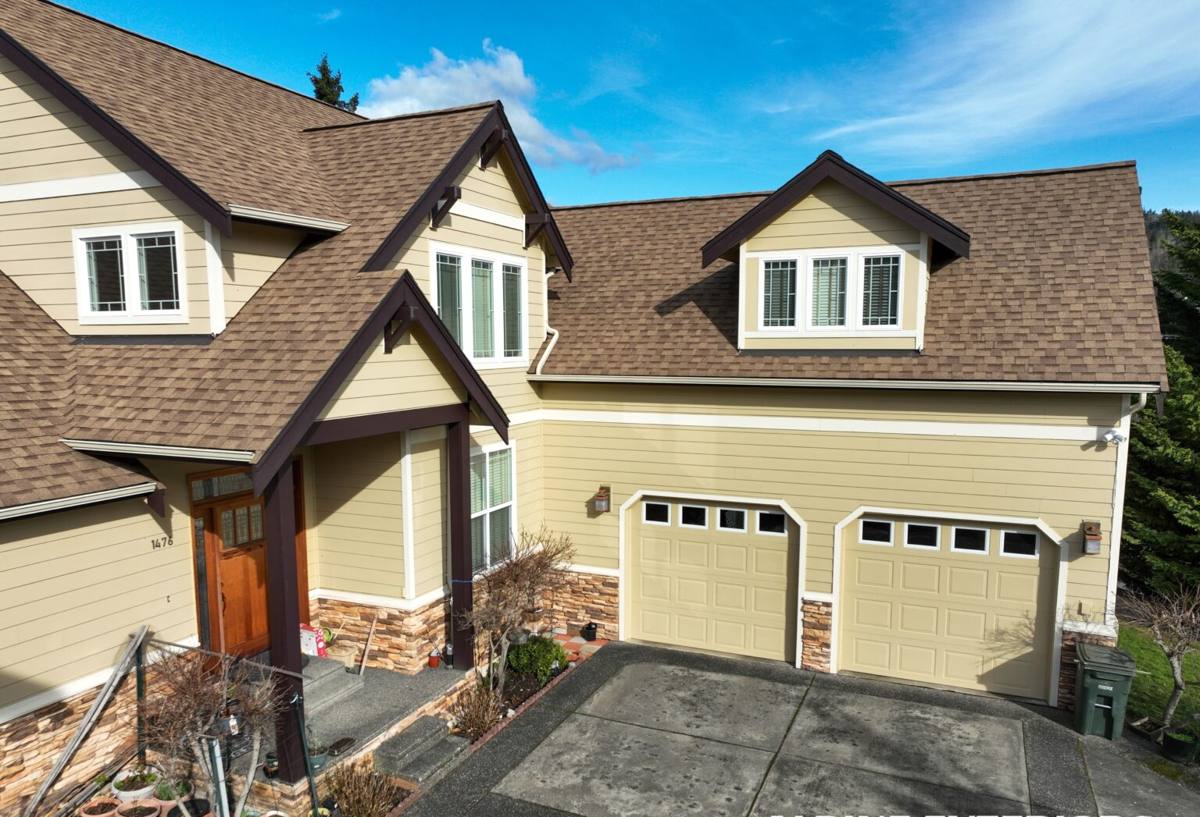
What This Climate Does to a Shingle Roof
Asphalt shingles are a durable, well-understood product, but they're not immune to how they're installed and where they sit. In Mount Vernon, three conditions do most of the damage over time:
Sustained Rain and Standing Moisture
It's rarely a single hard storm that causes trouble here — it's weeks of steady, low-intensity rain that finds every gap in flashing, every under-nailed shingle, and every spot where ice-and-water underlayment was skipped. Water doesn't need to pour through a roof to cause rot; it just needs a path and enough time.
Moss and Organic Growth
Shaded roof sections, north-facing slopes, and areas under overhanging trees stay damp far longer than sun-exposed sections. Moss takes hold in the granule surface, holds moisture against the shingle, and over years lifts shingle edges enough for wind-driven rain to get underneath. Left unchecked, it shortens the life of an otherwise good roof.
Humid, Poorly Ventilated Attics
Skagit Valley humidity means an attic without adequate intake and exhaust ventilation traps moisture year-round, not just in summer. That trapped moisture condenses on the underside of the roof deck, promotes mold, and can rot sheathing from the inside — a failure mode that has nothing to do with the shingles themselves but will still show up as a "roof problem."
What a Correctly Installed Roof Includes
A shingle roof that's built for this area isn't just shingles nailed to plywood. The parts that matter most are the ones you don't see once the job is done:
- Ice-and-water shield at eaves, valleys, and around every penetration — not just where code minimums require it
- Synthetic underlayment across the full deck as a secondary water barrier
- Balanced attic ventilation — intake at the soffits and exhaust at the ridge, sized to the attic volume
- Properly lapped step and counter-flashing at every wall intersection, chimney, and skylight
- Correct nailing pattern for the shingle manufacturer's wind rating, not just "enough nails"
- Drip edge at eaves and rakes to keep water off the fascia
Skip any one of these and the roof can still look fine from the ground for years — the failures show up later, usually as a leak that seems to come from nowhere because it's actually traveling along the underlayment or flashing before it drips through the ceiling.
Choosing a Shingle for This Area
Most manufacturers offer three general tiers of asphalt shingle, and the right choice depends on the roof's exposure, the home's style, and how long the homeowner plans to stay in it.
| Shingle Type | Typical Lifespan | Best Fit | Trade-Offs |
|---|---|---|---|
| 3-Tab | 15-20 years | Budget-conscious re-roofs, rental properties | Lower wind rating, less algae resistance, thinner profile shows deck irregularities |
| Architectural (Dimensional) | 25-30 years | Most Mount Vernon homes | Heavier, better wind and impact rating, more resale appeal |
| Premium/Designer | 30-50 years | Higher-end homes, steep-slope or highly visible roofs | Higher upfront cost, longer manufacturer warranty |
For most homes in this area, we recommend architectural shingles with algae-resistant (AR) granules built in. That granule treatment specifically targets the blue-green algae and moss-friendly conditions common in western Washington — it won't make a roof moss-proof, but it measurably slows growth compared to standard granules, which matters given how long our shingles stay wet each year.
Our Process for a Mount Vernon Roof Replacement
1. Inspection and Honest Assessment
We start on the roof and in the attic, not just with a drive-by look. That means checking deck condition, existing ventilation, flashing at every penetration, and signs of past leaks that may not be visible from inside the house yet. If a roof can be repaired instead of replaced, we'll say so.
2. Tear-Off and Deck Inspection
We remove existing roofing down to the deck rather than layering over old shingles. That's the only way to actually see the sheathing — soft or delaminated plywood needs to be replaced before anything new goes down, and you can't know it's there until the old layer is off.
3. Underlayment and Flashing First
Before a single shingle goes on, the deck gets ice-and-water membrane at vulnerable areas, full synthetic underlayment, new drip edge, and new flashing at every wall, chimney, and roof penetration. Reusing old flashing to save time is a common shortcut we don't take — it's usually the flashing that failed on the old roof in the first place.
4. Ventilation Correction
If the attic's intake and exhaust aren't balanced, we address it during the same project. Adding ridge vent or soffit vents while the roof is already open is far more practical — and less disruptive — than doing it later.
5. Shingle Installation
Installed to the manufacturer's nailing and exposure specifications, which is also what keeps the manufacturer's wind and workmanship warranty valid. We check specs by product line rather than assuming one method fits every shingle.
6. Final Walkthrough
We walk the finished roof and the property with the homeowner, covering what was done, what to expect from the shingles as they weather in, and basic maintenance going forward.
Maintenance That Actually Extends Roof Life Here
A well-installed roof still needs upkeep in this climate. The homeowners who get the most life out of their roofs tend to do a few simple things consistently:
- Keep gutters clear so water isn't backing up under the eave line during heavy rain
- Trim back tree limbs that shade roof sections and keep them damp
- Have moss treated or gently removed before it spreads, rather than after it's established
- Schedule a roof check after major windstorms, even if nothing looks obviously wrong
- Watch for granules collecting in gutters, which signals a shingle surface wearing down
None of this requires climbing on the roof yourself — most of it is visual and can be done from the ground or during a gutter cleaning.
Repair, Recover, or Full Replacement?
Not every roof problem in Mount Vernon means a full tear-off. The right call depends on the roof's age, how widespread the damage is, and what's happening at the deck level.
| Situation | Likely Approach |
|---|---|
| Isolated leak, roof under 15 years old, deck sound | Targeted repair — reflash, replace damaged shingles |
| Moss buildup with shingles otherwise intact | Moss treatment and removal, plus a ventilation check |
| Widespread granule loss, curling shingles, roof near end of rated life | Full replacement |
| Soft or spongy deck sections, staining in the attic | Full replacement with deck repair — patch repairs won't hold |
We'll tell you when a repair makes more sense than a full replacement, even if that means a smaller job. A roof that's genuinely near the end of its service life gets treated that way; one that isn't doesn't need to be sold as one.
Why a Local Crew Matters
A roof installed for Skagit Valley conditions isn't the same job as one installed in a dry inland climate, even if the shingle bundle looks identical. Crews that work Mount Vernon and the surrounding Anacortes area regularly know which slopes and orientations tend to hold moss, how much ventilation the humid winters actually demand, and where flashing details need extra attention because of how long roofs here stay wet each year. That local pattern recognition shows up in fewer callbacks and roofs that hold up the way they're supposed to.
If you're dealing with an aging roof, a persistent leak, or you're just planning ahead before the next wet season sets in, we're happy to take a look and give you a straightforward assessment. Reach out for a free, no-pressure estimate using the form below.