 Anacortes Siding
 Mount Vernon's Climate Is Hard on Siding — Here's Why
Mount Vernon sits in the Skagit Valley, a short drive inland from Anacortes and Fidalgo Island, and while it isn't right on the water, it still sits inside Skagit County's marine-influenced climate. Moisture-laden air moves up the valley from Skagit Bay and Puget Sound, mixes with river humidity, and settles against homes shaded by mature trees and close-set neighborhoods. The result is a climate that's less about hard freezes and more about long stretches of damp that never fully dry out. Siding here doesn't fail because of one bad storm — it fails because of years of slow, steady moisture exposure that most products were never engineered to shed.
Rain That Doesn't Let Up
Skagit County gets rain that's less about intensity and more about duration. Driving rain during fall and winter storms pushes water sideways into wall assemblies, and the gap between storms is often too short for siding, trim, and sheathing to fully dry. Any siding product with weak seams, poor flashing detail, or a finish that absorbs water instead of shedding it will show it within a few seasons — usually as swelling, staining, or soft spots at the bottom courses and trim returns.
Moss, Algae, and a Long Green Season
Shade, humidity, and mild temperatures add up to a moss and algae season that runs most of the year in Mount Vernon. North-facing walls, siding under overhangs, and anything near tree cover collect organic growth fastest. Left alone, moss holds moisture against the siding surface, which accelerates whatever damage the rain is already causing. A siding system's ability to resist moisture absorption — not just its paint color — determines how well it holds up against this kind of steady biological growth.
Why We Only Install James Hardie Fiber Cement
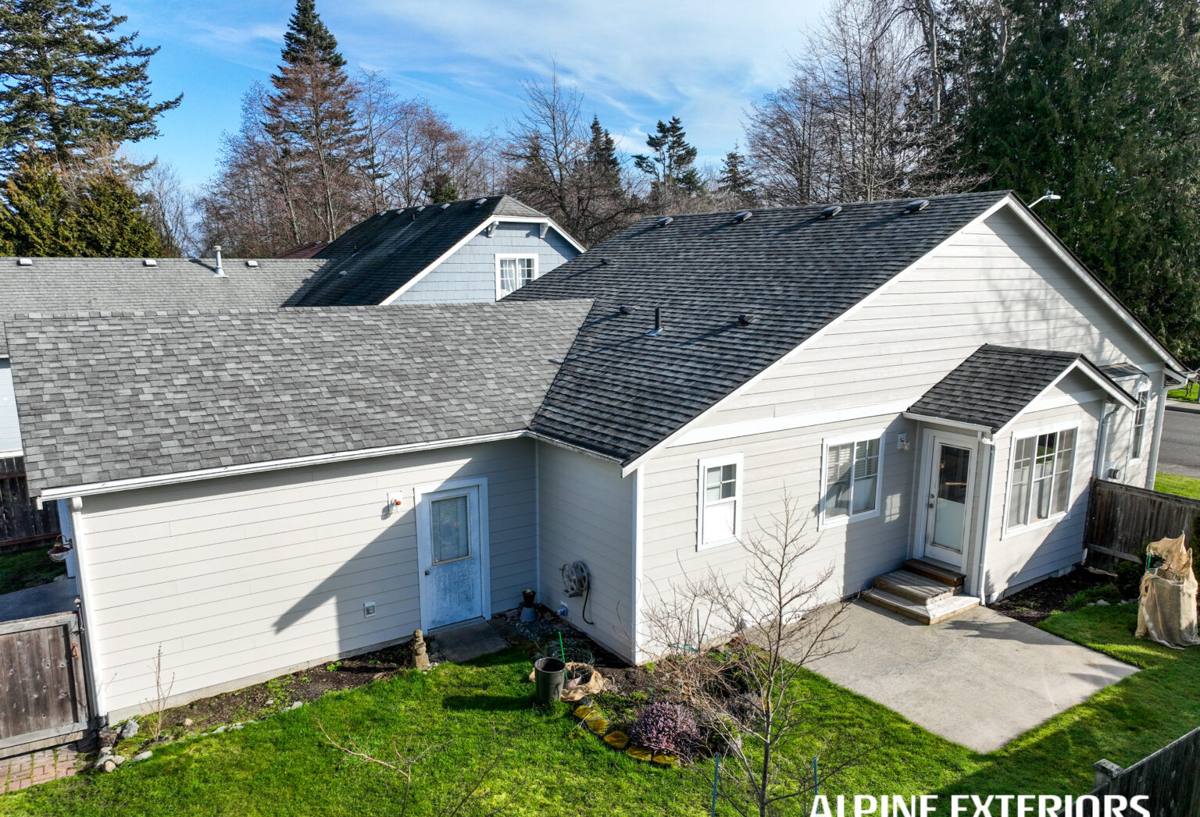
We install one siding product on every home we work on in Skagit County: James Hardie fiber cement. That's a deliberate standard, not a lack of options. Hardie's fiber cement formulation is non-combustible, dimensionally stable in wet-dry cycling, and finished at the factory with ColorPlus technology rather than field-painted, which matters enormously in a climate where field-applied finishes get less drying time between rain events. We don't install vinyl, LP SmartSide, cedar, Cemplank, or Allura, and we're upfront about why: each of those products carries real trade-offs in moisture behavior, long-term maintenance, or installation sensitivity that we've decided aren't worth passing on to homeowners in this climate. That's our professional standard, built around what actually holds up here — not a claim that every alternative is unusable everywhere.
The Hardie Product Lines That Make Sense for Mount Vernon Homes
James Hardie makes several product lines, and part of doing this job correctly is matching the right one to the wall, the exposure, and the look the homeowner wants. Most Mount Vernon homes end up on a combination of HardiePlank lap siding for the field, HardiePanel for vertical or accent sections, and HardieTrim for corners, fascia, and window surrounds. All of it should be specified in the HZ5 formulation, which is engineered for climates like ours — freeze-thaw cycling combined with sustained moisture exposure — rather than a generic version built for a drier region.
| Product Line | Typical Use | Why It Fits This Climate |
|---|---|---|
| HardiePlank Lap Siding | Primary field siding on most walls | Overlapping profile sheds driving rain; factory finish resists moisture absorption |
| HardiePanel Vertical Siding | Accent walls, gables, modern facades | Fewer horizontal joints where water can collect |
| HardieTrim Boards | Corners, window/door surrounds, fascia | Stable dimensions reduce gapping and caulk failure over time |
| HZ5 Formulation | All of the above, specified for our zone | Engineered for freeze-thaw plus sustained regional moisture, not a generic climate spec |
What a Correct James Hardie Installation Actually Involves
Hardie siding performs the way it's rated to perform only when it's installed to the manufacturer's specification — and in a climate like Skagit County's, the details that get skipped are exactly the ones that cause problems. Correct installation isn't just nailing boards to a wall; it's a system of clearances, barriers, and flashing details that work together to keep water out and let anything that does get in dry out again.
The Details That Actually Matter
- A weather-resistive barrier installed correctly behind the siding, lapped shingle-style so water drains outward, not inward
- Proper clearance between the bottom of the siding and grade, decks, roofing, and other horizontal surfaces
- Flashing at every penetration — windows, doors, hose bibs, light fixtures, and roof-to-wall transitions
- Correct fastener type, spacing, and placement per Hardie's published fastening schedule
- Factory-cut and field-cut edges sealed before installation, since raw fiber cement edges absorb water
- Caulking only where Hardie specifies it — not as a substitute for proper flashing
- Butt joints and seams treated to shed water rather than trap it
Skip any one of these and the siding itself can still be premium material sitting on a wall system that's set up to fail early. This is the gap between a siding job that looks right at handoff and one that's still performing correctly ten and twenty years later.
Our Process on Mount Vernon Projects
We start with an assessment of the existing wall, not just the visible siding. That means checking for soft sheathing, trapped moisture, and rot at trim returns and penetrations — problems that are common on older homes in this area and that need to be addressed before new siding goes on, not covered up by it. From there, our process is straightforward: full tear-off of the old siding, repair or replacement of any compromised sheathing, installation of a new weather-resistive barrier, and then the Hardie system installed to spec with correct flashing at every opening. We finish with trim, caulking, and a final walkthrough so the homeowner sees exactly what was done and why.
Common Issues We Find on Older Mount Vernon Homes
A lot of the siding we tear off in this area shows the same handful of problems. Old cedar and T1-11 panel siding frequently hide moisture damage at the sheathing that isn't visible until the siding comes off. Vinyl siding installed directly over older wood siding traps moisture between layers, which accelerates rot rather than preventing it. And on shaded walls — especially north- and east-facing sides near mature trees — we regularly find moss and algae buildup that's been sitting against the siding long enough to break down caulk joints and finish coatings underneath.
None of this is unusual for homes in a climate like Skagit County's. It's the predictable result of years of steady moisture exposure on materials that weren't built to shed it long-term. It's also exactly why a proper tear-off and reassessment, rather than a re-side over existing material, matters more here than it might in a drier region.
Maintenance: What Hardie Siding Needs (and Doesn't) in This Climate
James Hardie siding with a ColorPlus finish needs far less upkeep than field-painted alternatives, but "low maintenance" doesn't mean "no maintenance," especially with our moss season. A simple annual rinse-down and moss treatment on shaded walls keeps organic growth from taking hold and staining the finish. Caulk joints at trim and penetrations should be checked periodically, since caulk — not the fiber cement itself — is usually the first thing to age out in a wet climate. Pressure washing should be done carefully and at the correct distance and angle; too aggressive a spray can force water behind the siding at seams and joints, which defeats the point of maintaining it in the first place.
Why the Factory Finish Matters Here
Because ColorPlus finish is baked on at the factory under controlled conditions, it holds color and resists moisture penetration far better than a finish rolled or sprayed on-site between rain events. In a climate where field-painted surfaces rarely get enough consecutive dry days to cure properly, that difference compounds over the life of the siding.
Why Hiring a Crew That Already Works in Mount Vernon Matters
Siding installation quality is only half the equation — the other half is understanding the specific conditions a given wall, street, or neighborhood deals with. A crew that already works around Mount Vernon and greater Skagit County knows which walls tend to hold moss longest, which older neighborhoods commonly hide sheathing damage under original siding, and how to sequence a tear-off and install around our wet-season weather windows so the wall assembly isn't left exposed longer than necessary. That local pattern recognition, combined with correct HZ5-spec Hardie installation, is what actually protects a home here — not just using the right material, but installing it the way this specific climate demands.
If you're planning a siding replacement in Mount Vernon or anywhere else in Skagit County, we're happy to walk your home, look at what's actually happening behind your current siding, and put together a straightforward, no-pressure estimate for a correctly installed James Hardie system. Use the form below to get started.