 Anacortes Siding
 Metal Roofing Built for Mount Vernon's Climate
Mount Vernon sits inland from Anacortes along the Skagit River, but it still gets the full package of Skagit County weather: long wet winters, salt-tinged air pushing in off Fidalgo Bay and the Salish Sea, and a moss season that can run eight months or more. A roof here works harder than a roof in a dry climate, and it shows the difference over time — not in one dramatic failure, but in slow, quiet ways: a fastener that backs out, a seam that starts weeping, moss mats that hold moisture against the deck long after the rain stops. Metal roofing, installed correctly for this specific environment, handles that load better than most other roofing materials. Installed poorly, it fails in exactly the same spots that generic installers miss everywhere else.
We're a siding and exterior crew based out of Anacortes, and Mount Vernon is part of our regular service area — not a stretch job we take when work is slow. That matters more with metal roofing than with almost any other exterior product, because so much of whether a metal roof performs for twenty-plus years comes down to details that are invisible once the job is done.
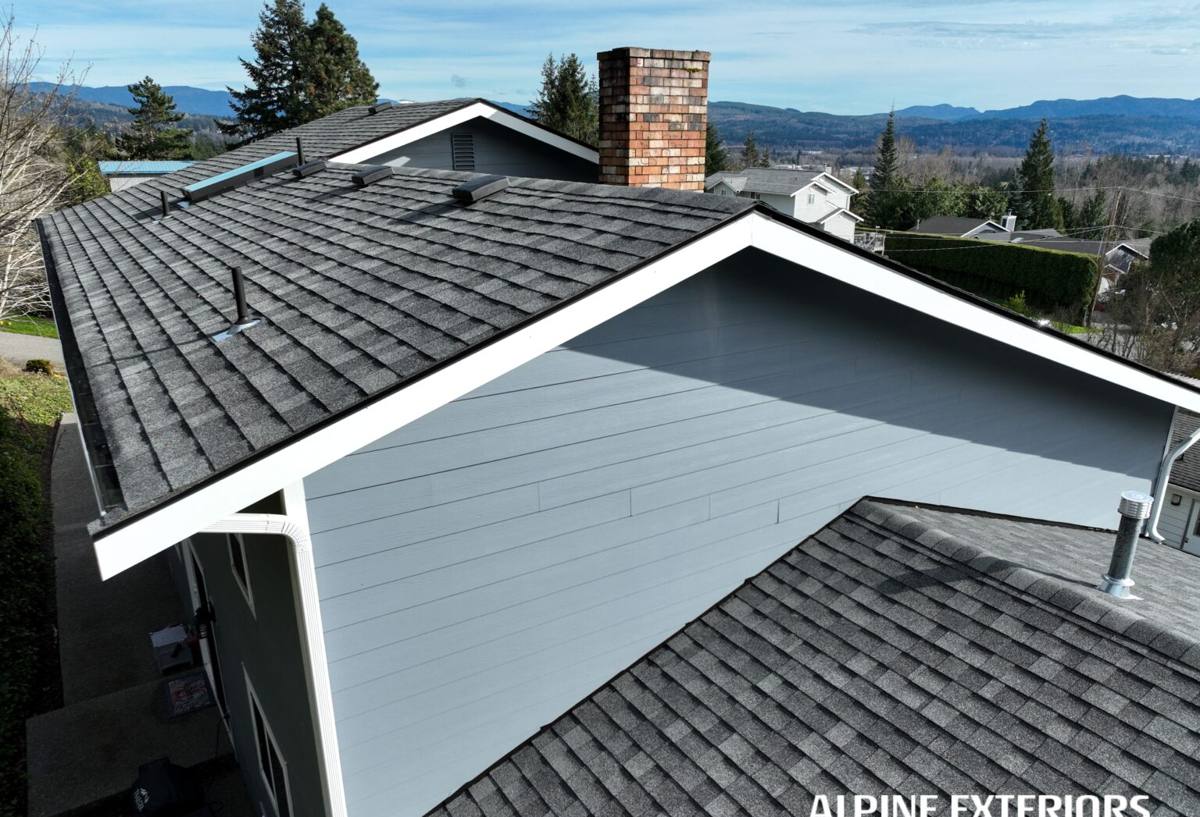
What Driving Rain and Salt Air Actually Do to a Roof
Two separate climate factors shape how we spec and install metal roofing for Mount Vernon homes:
Driving rain and wind-driven moisture
Skagit County storms don't always drop rain straight down — wind pushes it sideways, up under laps, and into any gap that isn't properly lapped or sealed. A metal roof relies on correct panel overlap, fastener placement, and underlayment to shed that water before it ever reaches the deck. Get the lap direction or fastener spacing wrong and water finds its way in slowly, often showing up as a stain on an interior ceiling months after the install.
Salt air and corrosion
Being close to the water means airborne salt settles on exposed metal and accelerates corrosion at cut edges, exposed fasteners, and any point where the protective coating has been scratched or compromised during installation. This is why fastener quality, edge treatment, and coating choice matter more here than they would fifty miles inland — a roof that would perform fine in a dry eastern Washington town can corrode noticeably faster a few miles from the bay if it's the wrong spec or poorly handled during install.
Panel Types: What We Recommend and Why
Not every metal roofing product is a good fit for a maritime climate, and not every product is a good fit for every home's roof pitch, budget, or architectural style. Here's how the common options compare for Mount Vernon conditions:
| Panel Type | Best For | Climate Trade-Offs |
|---|---|---|
| Standing seam (concealed fastener) | Most homes, especially lower-slope roofs and anywhere long-term watertightness matters most | Fasteners are hidden under the seam, so there's nothing exposed for salt air to attack — generally our first recommendation here |
| Exposed-fastener panels | Budget-conscious projects, outbuildings, steeper roofs | Lower upfront cost, but exposed screws and washers need periodic inspection and eventual replacement as gaskets age — more maintenance in a wet climate |
| Stone-coated steel | Homeowners who want the look of shingle or tile with metal's durability | Good moisture shedding, but more seams and fasteners than standing seam, so installation care matters even more |
We don't push one product on every roof. A steep, simple gable roof on a smaller Mount Vernon home may do perfectly well with a quality exposed-fastener system installed correctly. A lower-slope roof, or a roof over living space where a leak would be costly to repair, is where we steer people toward standing seam. That recommendation comes from what the roof and the climate call for, not from what's easiest to install or highest margin.
Why We're Selective About Coatings
Paint and coating systems vary a lot between manufacturers, and in a salt-air environment the coating is doing real work, not just providing color. We favor products with a track record of holding up in coastal Pacific Northwest conditions and steer away from bargain coatings that look identical on a spec sheet but haven't been tested the same way. This isn't a knock on any specific brand — it's just that we'd rather warranty a roof we trust than save a homeowner a small amount up front on a coating we're not confident in.
What a Correct Installation Actually Involves
Metal roofing has a reputation for being low-maintenance, and it is — but only after the install is done right. The parts that matter most, and that a homeowner can't easily check after the fact:
- Deck condition: Any soft, rotted, or moisture-damaged decking gets addressed before a single panel goes on — covering a bad deck with new metal just hides the problem.
- Underlayment: A synthetic, high-temp underlayment rated for the climate, lapped correctly so water is directed out and down, not trapped.
- Ice and water shield at vulnerable points: Valleys, eaves, and penetrations get additional protection, since these are where wind-driven rain and ice concentrate.
- Fastener type and spacing: Corrosion-resistant fasteners, spaced per manufacturer specification — not "close enough."
- Flashing at every transition: Chimneys, skylights, vents, and wall intersections are where most metal roof leaks actually originate, not the flat field of the roof.
- Ventilation: Proper intake and exhaust airflow so moisture doesn't condense against the underside of the panels — a common cause of hidden deck rot on roofs that "look fine" from below.
Moss, Debris, and the Maritime Growing Season
Skagit County's long, mild, wet season is exactly what moss and lichen need to establish themselves on a roof. Metal roofing resists moss far better than shingles because there's no porous surface for it to root into, but moss can still build up in valleys, around penetrations, and anywhere debris collects and holds moisture — especially under tree cover. Left alone, a moss mat traps water against metal for extended periods, which speeds up any localized coating wear and gives corrosion a foothold at scratches or cut edges nearby.
The fix isn't aggressive pressure washing, which can damage coatings and force water under laps. It's simple, periodic clearing of debris and moss buildup, done carefully, along with keeping gutters and valleys clear so water actually leaves the roof instead of sitting on it.
Our Process for a Mount Vernon Metal Roof
- On-site inspection: We look at the existing roof, deck condition, ventilation, and any trouble spots — flashing, valleys, areas with tree cover or moss history.
- Honest scope and options: We walk through panel type, coating options, and what the job actually requires, including anything the current roof reveals once we're up there (deck repair, added ventilation, etc.).
- Tear-off and deck prep: Old roofing removed, deck inspected and repaired where needed before anything new goes down.
- Underlayment and flashing installed first: This is the layer that actually keeps water out — it goes in before panels, done right, not rushed.
- Panel installation: Correct fastening, lap direction, and spacing per the manufacturer's specification for our wind and rain exposure.
- Final walkthrough: We go over the finished roof with the homeowner, including what routine upkeep (if any) it needs going forward.
Repair or Replace? What We Actually Look At
Not every roofing concern in Mount Vernon means a full replacement. When we're called out to look at an existing metal roof, or a homeowner considering a switch from another material, here's the general checklist we work through:
- Are leaks isolated to flashing points, or spread across multiple areas of the field?
- Is there visible rust or coating failure, and is it surface-level or has it penetrated the panel?
- Has the deck underneath been compromised by long-term moisture, or is it sound?
- Is the ventilation adequate, or is condensation likely contributing to the problem?
- Is moss or debris buildup a maintenance issue, or has it already caused damage?
- How old is the current roofing system, and what's left on its practical service life?
Sometimes the honest answer is a targeted flashing repair, not a new roof. We'll tell you that. Full replacement makes sense when the underlying issues are widespread or when the cost of continuing to patch starts to approach the cost of doing it right once.
Cost Factors for a Mount Vernon Metal Roof
Metal roofing costs more upfront than asphalt shingles, and the range depends on more than just square footage. Rough factors that move the number:
| Factor | Why It Matters |
|---|---|
| Panel type | Standing seam runs higher than exposed-fastener panels, largely due to labor and material |
| Roof complexity | More valleys, penetrations, and transitions mean more flashing work and labor time |
| Deck condition | Rot or soft decking found during tear-off adds repair cost before install can proceed |
| Ventilation upgrades | Older homes often need added intake or exhaust venting brought up to a workable standard |
| Access and pitch | Steep or hard-to-access roofs take longer and require more safety setup |
We don't quote a number without seeing the roof. Anyone quoting a firm metal roofing price over the phone, sight unseen, is guessing — and that guess tends to grow once the crew is actually on the roof.
Why a Local Mount Vernon Crew Matters
Metal roofing is unforgiving of shortcuts in exactly the conditions Skagit County provides — sideways rain, salt air, and a moss season most of the year. A crew that regularly works Mount Vernon and the surrounding Anacortes area already knows what that combination does to a roof over time, because we've seen it on other homes in the same climate, not just in a training manual. That familiarity shows up in the decisions that aren't on the invoice: which flashing detail to use at a given transition, how much ventilation a particular roof design actually needs, which coating holds up a few miles from saltwater versus one that only performs well inland.
It also means we're not disappearing after the job. If a question comes up two years later about maintenance or a minor issue, you're calling a crew that's still working in your area, not chasing down an installer who moved on to the next region.
Get a Straight Answer for Your Roof
If you're weighing metal roofing for a Mount Vernon home, or wondering whether your current roof needs repair or replacement, we're happy to take a look and give you a straightforward assessment — no pressure, no inflated scope. Fill out the form below for a free estimate.