 Anacortes Siding
 New Construction Is a Different Job Than Replacement
When people hear "window installation," most picture swapping an old window for a new one in an existing wall. New-construction windows are a different task entirely. They go in during framing, before the weather-resistive barrier and siding are closed up, and they come with a nailing fin that gets integrated directly into the wall's water management system. There's no old frame to work around and no existing flashing to inspect and patch. You're building the water path from scratch, and if it's built wrong, you won't find out until there's a stain on drywall two winters later.
We install new-construction windows for builders, remodelers, and homeowners working on new homes, additions, and room build-outs across Mount Vernon and Anacortes. The window itself is only part of the job. The bigger part is making sure it's tied correctly into the sill, the sides, the head, and the barrier behind the siding, in the right order, every time.
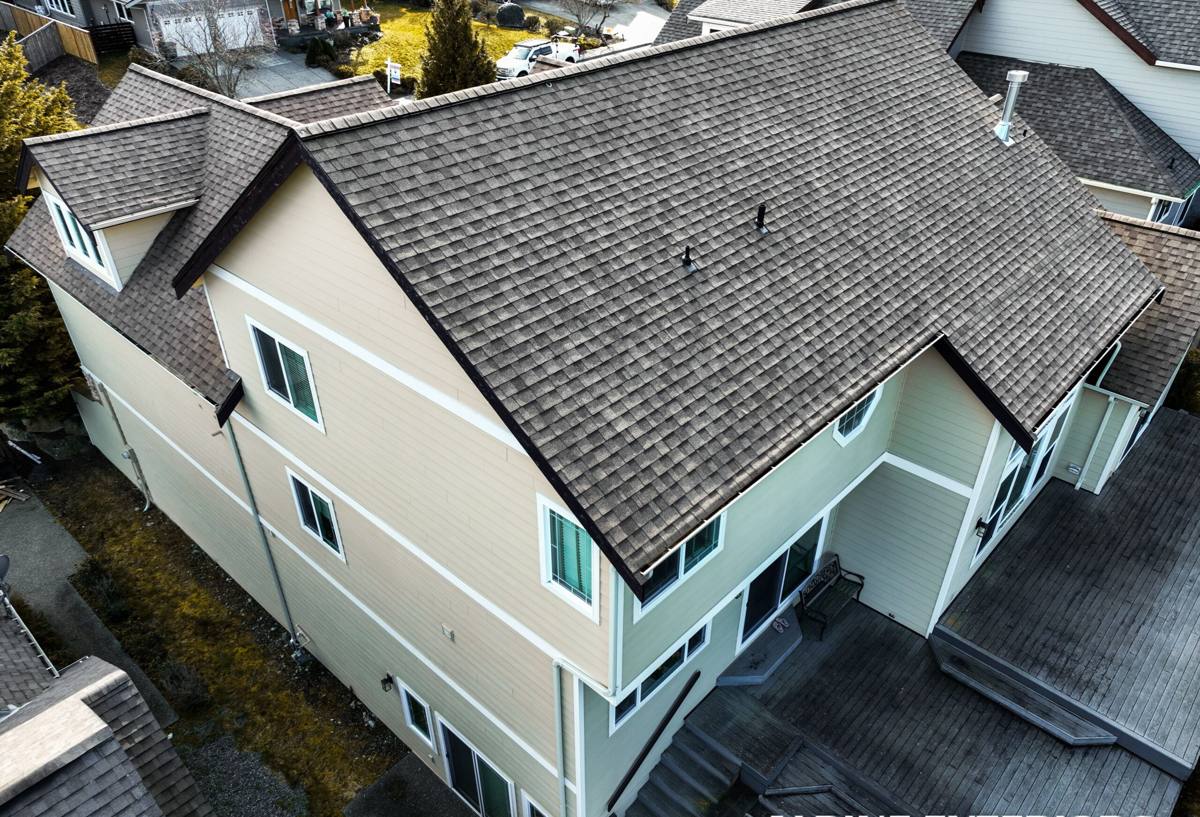
What Skagit County Weather Asks of a New Window Opening
Skagit County sits between Puget Sound and the Cascade foothills, and that combination produces a specific set of conditions a window opening has to handle for decades, not just for one storm.
Salt Air
Anacortes sits close to saltwater, and airborne salt is hard on exposed metal — screen frames, hinge hardware, and especially fasteners that aren't rated for it. We spec corrosion-resistant fasteners and hardware on coastal-exposed builds rather than treating every job like it's inland.
Driving Rain
Wind off the Sound doesn't just drop rain straight down — it pushes it sideways into wall assemblies. A window opening that only sheds water in a calm downpour will leak the first time wind drives rain up under a sill or sideways past a jamb. Sill pan flashing and correctly lapped house wrap aren't optional extras here; they're the difference between a dry wall cavity and a slow, hidden leak.
Moss Season
The long stretch of damp, mild months that gives this region its moss also keeps window sills, tracks, and north-facing wall sections wet for extended periods. Moss and algae growth on sills and trim isn't just cosmetic — it holds moisture against wood and finish surfaces longer than a quick-drying climate would. Drainage details that let water actually leave the opening, rather than pool at the sill, matter more here than in a drier region.
Mount Vernon adds another layer: it sits in the low, flat river valley of the Skagit, with generally higher ambient humidity than the bluffs and hillsides around Anacortes. That extra humidity plays into condensation risk at the glass and frame, especially in a newly built, tightly sealed home before it's fully dried out and ventilated.
What a Correct Install Actually Involves
The window unit itself gets most of the attention, but the sequence around it is what actually keeps water out. On a new-construction opening, the order of operations matters as much as the materials.
- Rough opening checked for square, level, and correct dimension before the window ever shows up on site
- Sill pan flashing installed to catch and direct any water that gets past the window back outside the wall, not into the framing
- Weather-resistive barrier cut and prepped at the opening in a way that will shingle-lap correctly with the window flanges
- Window set, shimmed plumb and square, and fastened through the nailing fin per the manufacturer's schedule — not just "enough nails to hold it"
- Flashing tape or flashing membrane applied at the sides and head, lapped in the correct order so every layer sheds water onto the layer below it
- Head flashing installed and integrated with the barrier above the opening
- Interior and exterior sealant applied at the right points only — sealing the wrong joint can trap water instead of keeping it out
- Final check for operation, square, and a visual flashing inspection before siding closes the wall up
That last point matters more than it sounds. Once siding goes on, the flashing work is hidden for the life of the house. If it's done wrong, nobody finds out until there's a problem, and by then it's a repair instead of a five-minute fix.
Frame Material and Glass Choices for This Climate
There's no single "best" window brand or material for every project — it depends on budget, the look of the home, and how exposed the opening is to weather. What we do is steer clients away from choices that create long-term maintenance headaches in a wet, salt-touched climate, and explain the honest trade-offs of each option.
| Frame Material | How It Handles This Climate | Trade-Off to Know |
|---|---|---|
| Vinyl | Doesn't rot or corrode; consistent performance in wet, salty air | Limited color/finish flexibility; expands and contracts with temperature swings |
| Fiberglass | Very stable dimensionally, holds paint well, strong moisture resistance | Higher upfront cost than vinyl |
| Wood or wood-clad | Traditional appearance, good insulating properties | Requires ongoing maintenance to keep exposed wood sealed against sustained damp exposure |
| Aluminum | Strong and slim sightlines | Conducts cold and can be prone to condensation without thermal breaks; needs corrosion protection near salt air |
On glass, dual-pane with a low-E coating and argon fill is the practical baseline for this region — it manages both heat loss in winter and glare/heat gain in the brief warm stretch of summer, and it helps reduce interior condensation risk during the long damp season. Triple-pane is worth discussing for north-facing or particularly exposed elevations, but it's not always necessary for every opening on a build.
How We Work With Builders and GCs
Most new-construction window work isn't a standalone project — it's one stage in a larger build, coordinated around a general contractor's schedule. We show up on the framer's timeline, work off the approved window schedule and rough opening dimensions, and communicate directly with the GC or site super about sequencing so window install doesn't hold up house wrap, siding, or trim crews behind us.
If you're a homeowner managing your own build or acting as your own GC, we'll walk the rough openings with you before windows arrive, confirm sizes against the order, and flag anything — an out-of-square opening, a header height issue — before it becomes a change order.
Our Process, Start to Finish
- Site visit to review the build set, rough openings, and window schedule
- Written estimate covering material, flashing scope, and labor
- Coordination with the builder or homeowner on delivery timing so windows arrive when the openings are ready
- Install following the sequence above, opening by opening
- Walkthrough before siding closes the wall, so any flashing question gets resolved while it's still visible
- Final operational check once trim and siding are complete
Cost Factors on a New-Construction Window Job
Pricing on new-construction window work depends on more than just the number of openings. These are the variables that actually move the number:
| Factor | Why It Affects Cost |
|---|---|
| Number and size of openings | More openings and larger units mean more material and labor hours |
| Frame material selected | Vinyl, fiberglass, wood-clad, and aluminum carry different material costs |
| Glass package | Standard dual-pane vs. upgraded low-E/argon or triple-pane changes unit cost |
| Wall exposure | Openings on wind- and rain-exposed elevations may call for additional flashing detail and time |
| Site access and scheduling | Coordinating around other trades and site conditions can affect labor efficiency |
We give a straightforward written estimate after seeing the plans and openings — we don't work from vague per-window averages, because the factors above genuinely change the number.
Mistakes We See in New-Construction Window Installs
A lot of window callbacks in this region trace back to the same handful of shortcuts:
Skipping or shortcutting sill pan flashing. It's the single most important detail on the opening, and it's invisible once the window is set, which makes it an easy thing to rush.
Wrong lap order on flashing tape. Water has to shed downward through every layer. Even one strip taped in the wrong order can funnel water into the wall instead of away from it.
Over-sealing. Caulking every seam solid, including ones that are supposed to let incidental water drain back out, traps moisture inside the assembly instead of keeping it out.
Under-shimming or racking the frame. A window that's fastened out of square operates poorly and stresses the seals over time, which shows up as air and water infiltration years down the road.
These aren't brand problems or product defects — they're installation-sequence problems, and they're exactly what a crew with local, repeat experience is trained to avoid.
Why Hiring a Crew That Already Works Mount Vernon and Anacortes Matters
New-construction window flashing is a detail-order job, and the right details depend on what the wall actually faces — a rain-driving southwest exposure is not the same problem as a sheltered, moss-prone north wall. A crew that regularly works Skagit County openings has already seen how salt air treats hardware, how driving rain behaves against these wall assemblies, and how a long moss season affects sill drainage over time. That familiarity shows up as fewer callbacks, not as guesswork corrected after the fact.
It also matters for coordination. Builders and GCs in this area know which trades show up on schedule and communicate clearly about sequencing. That reliability protects your build timeline as much as it protects the window openings themselves.
Living With Your New Windows
Once the build is finished, new-construction windows need very little from you. Rinse sills and tracks occasionally to keep moss and organic debris from building up, especially on shaded or north-facing elevations where the long damp season lingers. Check that weep holes at the sill stay clear of debris so water can drain as designed. Beyond that, a properly installed window in this climate is meant to be low-maintenance — the work that prevents problems happens during the install, not afterward.
If you're planning a new build or addition in Mount Vernon or Anacortes and want windows installed correctly the first time, we're happy to walk your plans and openings and put together a free, no-pressure estimate. Use the form below to get started.