 Anacortes Siding
 Roofing Built for Mount Vernon's Skagit Valley Climate
Mount Vernon sits in the Skagit Valley, close enough to the Salish Sea that salt-laden air, prevailing marine winds, and a long, wet moss season all show up in the condition of local roofs. Homes here don't fail the way roofs do in drier inland climates. The damage is usually slower and less obvious: moisture that never fully dries out between fall and spring, moss that works its way under shingle tabs, and flashing that corrodes years before the shingles around it are actually worn out. A roof replacement in this area has to account for all of that, not just swap old shingles for new ones.
We've worked on homes throughout Skagit County long enough to know which failure patterns show up here again and again, and we build every replacement to address them directly rather than treating this as a generic reroof.
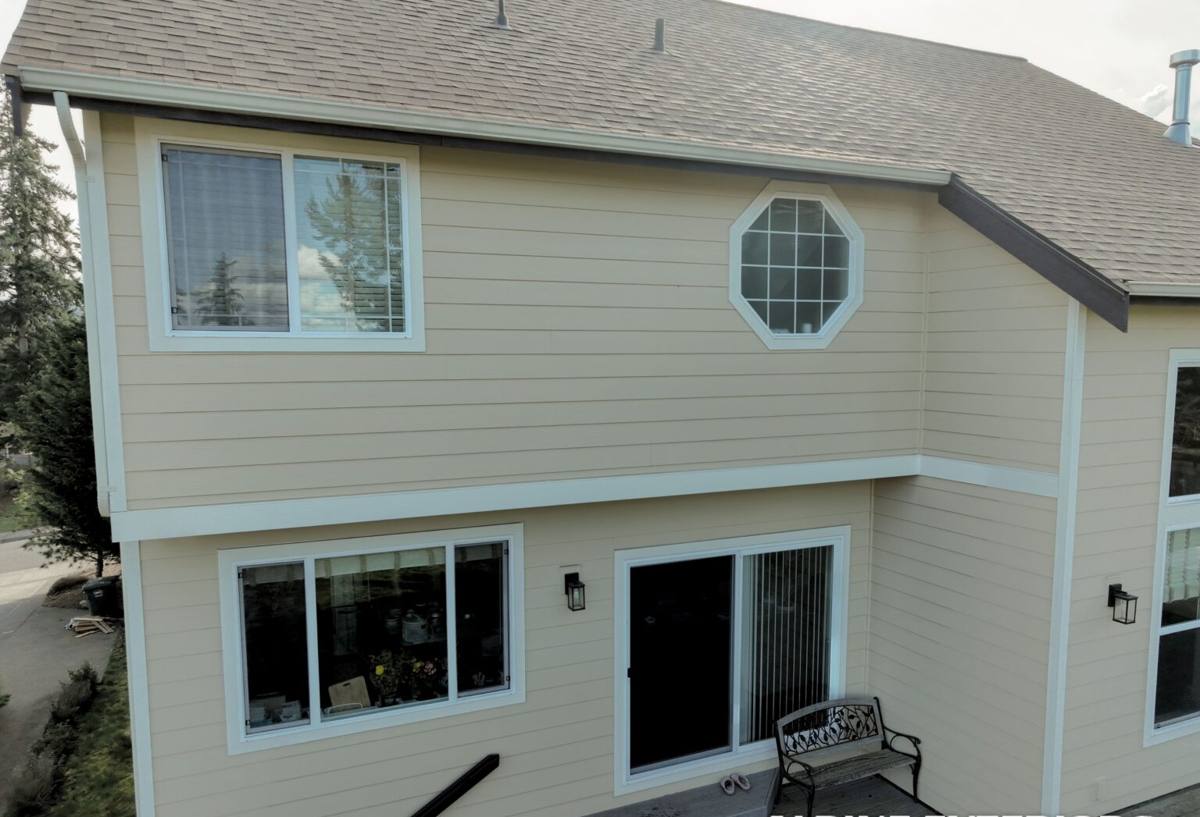
Signs a Mount Vernon Roof Needs Replacement, Not Another Patch
Not every roofing problem calls for a full tear-off. But there's a point where repeated patching stops making financial sense and starts masking a bigger issue underneath. Common signs we look for on Skagit Valley homes include:
- Granule loss heavy enough that you can see bare, shiny patches on south- and west-facing slopes
- Moss colonies thick enough to lift shingle edges, especially on north-facing roof planes that stay shaded and damp most of the year
- Soft or spongy decking felt underfoot in the attic, usually near valleys, chimneys, or old vent penetrations
- Daylight visible through the roof deck from inside the attic
- Shingles curling, cracking, or losing their seal along the edges after repeated freeze-thaw and wet-dry cycles
- Rust streaking or soft spots around flashing at chimneys, skylights, and wall intersections
If you're seeing two or more of these, a roof is usually past the point where spot repairs buy you meaningful time. Continuing to patch a roof that's already let moisture into the decking just shifts the cost from the roof itself to the framing underneath it.
What a Correct Roof Replacement Actually Involves
A roof replacement is only as good as what's underneath the shingles. On a proper job, the visible roofing material is the last piece installed, not the main event. The parts that actually determine how long a roof lasts in this climate are the ones you won't see once it's finished.
Tear-Off and Deck Inspection
Every layer of old roofing comes off down to the deck. This is the point where hidden rot, soft sheathing, or old leak damage gets found and dealt with, rather than covered over. Any damaged decking gets replaced before anything else goes down.
Underlayment
Given how much wind-driven rain this area sees, we don't consider old-style felt paper adequate on its own anymore. A synthetic underlayment, with self-adhered ice-and-water membrane at eaves, valleys, and roof-to-wall transitions, gives the deck a real second line of defense if wind ever drives moisture past the shingles.
Flashing
Flashing around chimneys, skylights, vents, and sidewalls is where most leaks actually start, not in the open field of shingles. All flashing gets replaced with new metal during a full reroof, not reused, since old flashing is usually the first thing to corrode from years of exposure to marine air.
Ventilation
Balanced intake and exhaust ventilation keeps the attic close to outdoor temperature, which reduces condensation on the underside of the deck during our cool, damp winters. Poor ventilation is one of the more common reasons a "perfectly good" 15-year-old roof turns out to have rotten sheathing underneath.
Roofing Material Installation
Only once the deck, underlayment, flashing, and ventilation are right does the finish material go down, installed to the manufacturer's nailing pattern and exposure specs rather than shortcuts that can void a warranty later.
Comparing Roofing Materials for a Skagit County Home
There's no single "best" roofing material for every home. The right choice depends on your roof pitch, your budget, and how much long-term maintenance you're willing to take on, especially with moss and moisture in the picture.
| Material | Moss/Moisture Behavior | Typical Lifespan | Relative Cost |
|---|---|---|---|
| Architectural asphalt shingle | Good with proper ventilation; needs periodic moss treatment | 25-30 years | Lower to mid |
| Standing seam metal | Sheds moss and standing water very well; minimal debris buildup | 40-50+ years | Higher upfront |
| Synthetic/composite shake | Resists moisture absorption better than wood shake | 30-40 years | Mid to higher |
| Cedar shake (untreated) | Absorbs moisture readily; high moss and rot risk without diligent upkeep | 20-30 years with upkeep | Mid to higher |
Most homeowners in Mount Vernon land on architectural asphalt shingle for the balance of cost and performance, or standing seam metal when they want to largely stop thinking about moss and moisture management for decades. We're honest with clients about untreated cedar shake specifically because of how much upkeep it demands in a climate this wet — it's a maintenance-intensity trade-off, not a knock on the product itself.
How Our Roof Replacement Process Works
- On-site inspection. We walk the roof and the attic, check decking condition, ventilation, and flashing points, and take photos of anything that affects the scope or price.
- Written estimate. You get a clear scope of work and price before anything is scheduled, with material options laid out plainly.
- Material selection and permitting. We handle the local permit application and confirm material delivery timing around Skagit Valley weather windows.
- Protection setup. Landscaping, siding, gutters, and driveways get covered or protected before tear-off starts.
- Tear-off and deck repair. Old roofing comes off, the deck gets inspected, and any soft or rotted sheathing is replaced.
- Underlayment, flashing, and ventilation installation. The parts that determine long-term performance go in correctly before the finish material.
- Finish roofing installation. New material is installed to spec, with attention to nailing pattern, exposure, and fastening at ridges, valleys, and edges.
- Cleanup and magnetic nail sweep. Site is cleared of debris and swept for stray fasteners before we walk it with you.
- Final walkthrough. We go over the finished roof together and answer any questions before closing out the job.
Managing Moisture and Ventilation in a Wet Climate
Roof failures in the Skagit Valley are more often about trapped moisture than they are about wind or storm damage. Warm, moist air from inside the house rises into an under-ventilated attic, hits cold roof sheathing on a damp winter night, and condenses. Over years, that condensation cycle rots decking from the inside, well before the shingles themselves show any wear. Correct intake ventilation at the eaves paired with exhaust at the ridge keeps air moving through the attic space, which is a small design detail with an outsized effect on how long a roof actually lasts here. During your inspection, we check existing ventilation and will tell you plainly if it needs to be corrected as part of the replacement.
Dealing With Moss Before It Becomes a Structural Problem
Moss on a roof isn't just a cosmetic issue in this area. As it establishes itself, its root structure holds moisture against the shingle surface and can gradually lift shingle tabs, giving wind-driven rain a path underneath. North-facing slopes and roofs shaded by mature trees are the most exposed, which describes a lot of Mount Vernon's tree-lined residential streets. A new roof won't stay moss-free forever, but we install with moss growth in mind: zinc or copper strips near the ridge on shingle roofs release trace metal ions with each rain that inhibit new moss growth, and proper attic ventilation keeps the deck itself drier, which gives moss less to hold onto in the first place.
Permits, Timing, and Working Around Skagit Valley Weather
Most roof replacements in Mount Vernon require a building permit, which we pull as part of the job rather than leaving that step to the homeowner. Scheduling around this region's weather matters more than people expect: a tear-off left exposed during an unexpected rain event can do more damage in an afternoon than years of gradual wear. We watch the forecast closely, sequence tear-off and dry-in to happen the same day whenever possible, and won't start a tear-off if a wet system is closing in, even if it means a short delay. A full residential reroof typically takes one to three days of active work once material is on site, depending on roof size, pitch, and how much deck repair is needed.
Questions to Ask Before Hiring a Roofing Contractor
A roof replacement is a significant investment, and the difference between a roof that lasts 30 years and one that leaks in year eight often comes down to who's doing the work, not just what material they're using. Before signing anything, it's worth asking:
- Is the contractor licensed and insured to do roofing work in Washington State, and can they provide proof?
- Does the written estimate specify underlayment type, flashing replacement, and ventilation, or just the shingle brand and color?
- Will they pull the required building permit, or is that left to you?
- What's the manufacturer's warranty on materials, and is there a separate workmanship warranty from the installer?
- How do they handle unexpected deck rot discovered mid-project, and how is that priced?
- Do they have experience specifically with homes in this area, and can they speak to how they handle moss, moisture, and weather scheduling here?
Why a Crew That Already Works in Mount Vernon Makes a Difference
A roofing crew that works this specific area regularly already knows which failure patterns to expect before they open up your roof. They know which slopes tend to hold moss longest, how local building departments handle permitting, and how tight a weather window they actually have to work with during a tear-off. That local familiarity translates into fewer surprises mid-project and a roof that's built with this exact climate in mind, not a generic install pulled from a manual written for a drier region. For a homeowner, that difference shows up years down the road, in whether the roof is still performing well after its first few wet winters or already showing the same problems the old one had.
If your roof is showing wear, or you just want an honest read on how much life it has left, we're glad to come out and take a look. Fill out the form below for a free, no-pressure estimate.