 Anacortes Siding
 Windows Built for the Oak Harbor Climate, Not a National Average
Oak Harbor sits in the marine layer that rolls off the Salish Sea, and that changes what a window needs to survive here versus what a manufacturer's spec sheet assumes for a dry inland climate. Homes in this part of Island and Skagit County deal with three things year-round: salt-laden air that accelerates corrosion on hardware and fasteners, wind-driven rain that gets pushed sideways into wall assemblies during winter storms, and a long moss and mildew season where shaded north and west elevations rarely get a chance to fully dry out. A window that's rated fine for a showroom in a drier climate can still fail here in five or six years if it wasn't installed with this environment in mind.
Custom window work in Oak Harbor isn't about upgrading to a fancier product line. It's about matching frame material, glazing, and flashing detail to a house that's going to sit through decades of salt spray and rain events, and doing the installation in a way that actually sheds water instead of trapping it against the sheathing.
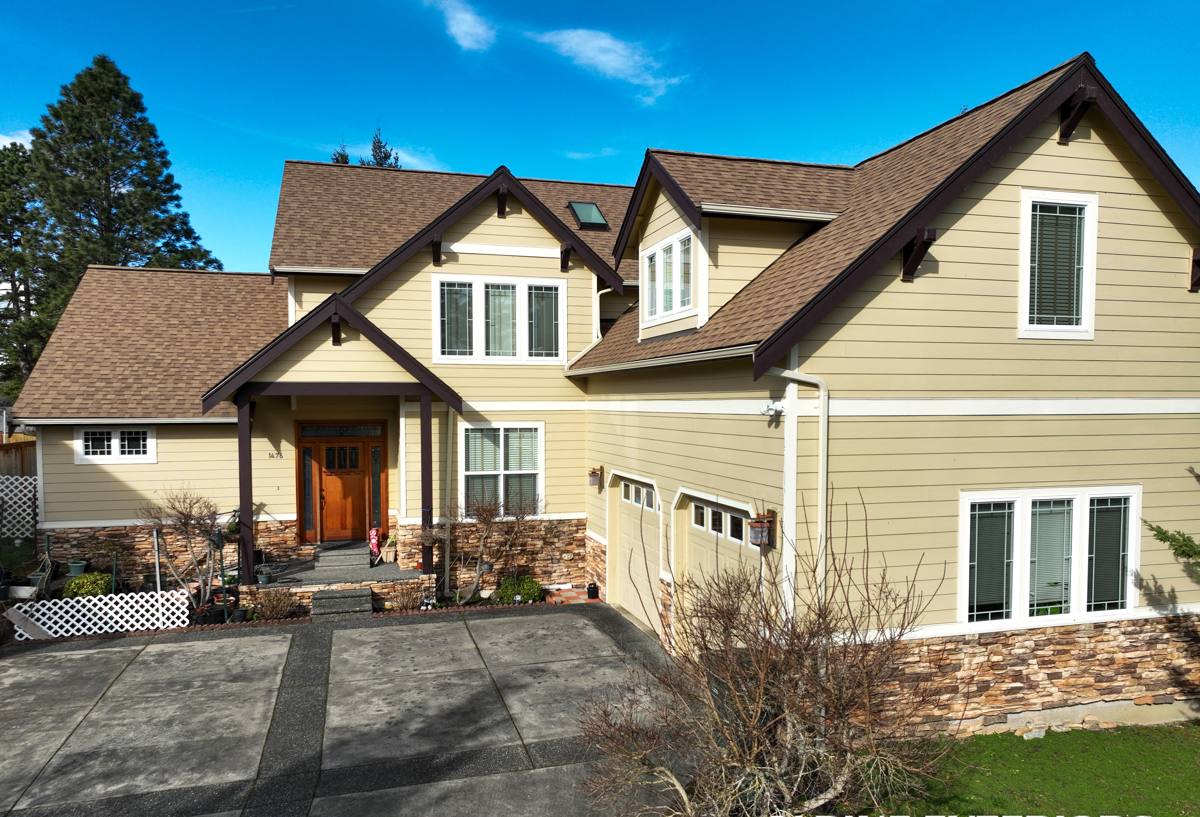
What "Custom" Really Means Here
"Custom" gets used loosely in this trade, so it's worth being specific. On a real custom window job, we're not pulling a stock size off a shelf and shimming it to fit. We're working from actual rough opening measurements on your house, matching sightlines and sash configuration to the rest of the home, and building openings for shapes standard catalogs don't cover well — bays, arched tops, oversized picture windows, or openings that were never square to begin with because the house has settled over the years.
Custom also means matching the window to the wall it's going into. A window on an exposed west-facing gable that takes direct storm wind needs a different sealing and flashing approach than a sheltered window under a deep eave. Treating every opening on the house the same way is how leaks start.
What a Correct Custom Job Includes
- Precise field measurement of each opening, not assumed "standard" sizes
- Frame material selected for the exposure of that specific wall
- Flashing and water management detailed to the existing siding and wall assembly
- Glass package chosen for orientation — sun exposure, wind load, and privacy needs differ wall to wall
- Interior and exterior trim that matches the home's existing lines, not a generic profile
Frame Materials: What Holds Up in Salt Air and What Doesn't
Every frame material has trade-offs, and in a coastal climate those trade-offs matter more than they would inland. We'll walk you through what we've seen hold up and what tends to need more attention.
| Material | Salt Air / Moisture Behavior | Maintenance | Where It Fits Best |
|---|---|---|---|
| Vinyl (quality, welded-corner) | Doesn't corrode or rot; good baseline for coastal exposure | Low — occasional cleaning | Most standard openings, budget-conscious full-home replacements |
| Fiberglass | Excellent — very stable in temperature swings and moisture, resists warping | Low | Exposed elevations, larger openings, long-term durability priority |
| Wood-clad (exterior clad, wood interior) | Good if cladding and flashing are done correctly; interior wood needs protection from any water intrusion | Moderate — depends on cladding integrity | Homes where interior wood sightlines matter, sheltered walls |
| Aluminum | Prone to corrosion and condensation in this climate unless thermally broken | Higher | We use it selectively, mainly for specific architectural needs |
Hardware matters as much as frame material. Standard steel fasteners and hinges corrode fast in salt air. We spec stainless or coated hardware on exterior-exposed components so the window doesn't develop rust streaks or seized locks a few winters in.
Signs Your Current Windows Are Losing the Battle
Most homeowners don't call about windows until something's visibly wrong, but the early signs show up well before that. If you're seeing any of these, it's worth having someone look before it becomes a wall repair instead of a window job.
- Fogging or a permanent haze between panes — the seal on the insulated glass unit has failed
- Visible moss or dark streaking on the sill or trim, especially on north- or west-facing windows
- Drafts you can feel even with the window latched shut
- Wood trim that's soft, discolored, or has a musty smell near the frame
- Windows that are hard to open, close, or lock — frames can shift as wood around them absorbs moisture
- Paint or caulk failing repeatedly at the same spot no matter how often it's touched up
That last one is a common trap. Homeowners re-caulk the same failing joint for years without realizing the underlying flashing is the actual problem, not the caulk.
Our Installation Process
The process is straightforward, but the order and the details are what determine whether the window performs for twenty years or leaks in five.
- On-site assessment. We look at each opening individually — exposure, existing flashing condition, sill pitch, and any signs of past water intrusion before quoting anything.
- Measurement and product selection. Openings are measured precisely, and frame material, glass package, and hardware are matched to that wall's exposure, not applied uniformly across the house.
- Removal. Old windows come out carefully so we can inspect the framing and sheathing underneath before anything new goes in. This is often where we catch problems that weren't visible from outside.
- Framing repair if needed. Any soft or water-damaged framing gets addressed before a new window ever goes in the opening. Installing a new window over compromised framing just hides the problem.
- Flashing and installation. The window is set, leveled, and flashed using a sequenced approach — sill pan, side flashing, then head flashing — so water is directed out and away from the wall assembly, not just sealed with caulk and hoped for.
- Insulation and air sealing. The gap between the window frame and rough opening is properly insulated and air-sealed, which affects both comfort and long-term moisture behavior inside the wall.
- Trim and finish. Interior and exterior trim is installed and finished to match the home.
- Final check. Every window is operated, checked for square, and inspected for a clean, weathertight seal before we consider the job done.
Flashing and Moisture Management — Where Most Failures Actually Start
In a climate with this much driving rain, the window unit itself is rarely the reason a job fails. It's almost always the water management around it. A sill pan that isn't properly sloped or sealed lets water sit against the framing instead of draining out. Head flashing that isn't integrated correctly with the house wrap or siding lets water track behind the window instead of over it. These details are invisible once the trim goes back on, which is exactly why they matter — nobody checks them again for years, and by the time a soft spot or stain shows up, water's been getting in for a while.
This is also why moss season matters more than people expect. Moss and algae hold moisture against the wall longer than clear siding would, and on north- and west-facing walls around Oak Harbor that stay shaded much of the year, that extended dampness finds any weak point in the flashing detail faster than it would on a drier elevation.
Glass and Energy Performance
Glass selection isn't one-size-fits-all either. A south-facing window dealing with more solar heat gain benefits from a different low-E coating than a north-facing window that needs to retain heat without much direct sun. Wind exposure on upper stories or open lots also factors into glass thickness and spacer selection for the insulated unit. We'll talk through what makes sense for each elevation of your home rather than quoting one glass package across the board — it affects both comfort and your heating costs through the winter.
Why Hiring a Crew That Already Works Oak Harbor Matters
A window contractor who mostly works drier inland areas is going to default to installation methods that work fine there but leave gaps here. Flashing sequences, sealant selection, and even hardware choices should reflect what actually holds up against Salish Sea weather, not a generalized national install standard. Working regularly in Skagit and Island County means we've seen how different elevations, siding types, and window ages in this specific area behave over time — which is the kind of judgment that only comes from doing the work here repeatedly, not from a training manual.
It also means faster, more honest answers. If a window issue on your home is really a flashing or siding problem rather than something a new window alone will fix, you want to hear that up front, not after you've paid for windows that leak again in the same spot.
Keeping New Windows Performing Long-Term
A correctly installed window still benefits from basic upkeep, especially in a climate this wet. A little attention once or twice a year goes a long way toward getting the full lifespan out of the investment.
- Rinse salt residue off exterior frames and hardware periodically, especially after storms
- Clear moss or debris from sills and tracks so water doesn't sit and pool
- Check weep holes on vinyl and fiberglass frames to make sure they're not blocked
- Inspect exterior caulking annually and have any cracked or separated joints resealed
- Operate locks and hardware periodically so they don't seize up over the winter months
If you're dealing with drafty, foggy, or hard-to-operate windows in Oak Harbor, or you're planning a full replacement and want it done with this climate actually accounted for, we're glad to come take a look. The estimate is free, there's no pressure, and you'll get a straight answer about what your home actually needs — use the form below to get started.