 Anacortes Siding
 Oak Harbor Decks Take a Different Kind of Beating
Oak Harbor sits on Whidbey Island, just across Deception Pass from our Anacortes base, and that location comes with a specific set of problems for outdoor wood structures. Salt-laden air off the water gets into fasteners, flashing, and any exposed metal hardware. Driving rain off Puget Sound finds every gap in old decking and drives moisture straight into framing that was never sealed properly to begin with. And the long moss season here — often stretching from fall through spring — turns any deck surface that doesn't get regular sun or airflow into a green, slick, slowly rotting mess.
None of that is unusual for this part of the Pacific Northwest. But it does mean a deck built or repaired the way you'd do it in a dry inland climate will fail here faster than it should. We've replaced enough decks around the region to know which parts of a build actually matter for Oak Harbor's conditions, and which shortcuts show up as soft joists and rusted fasteners five or six years down the road.
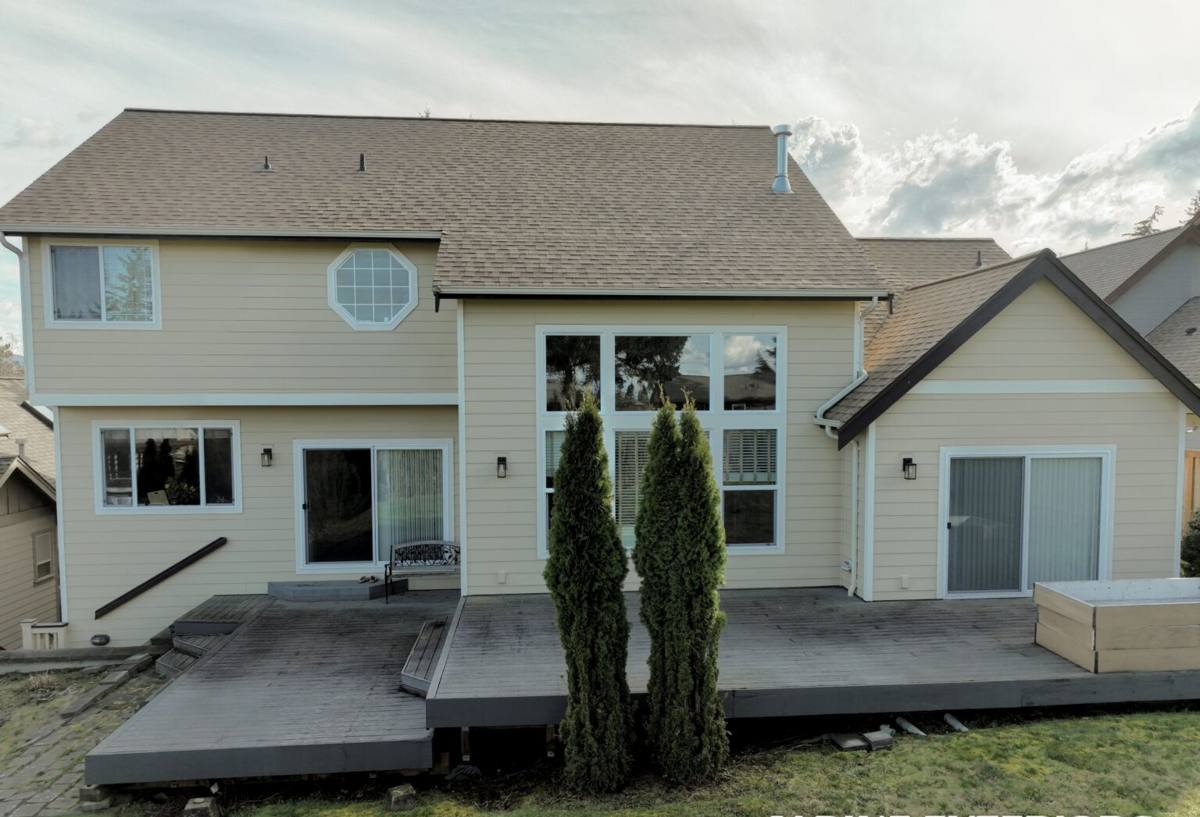
When Repair Isn't Enough Anymore
A lot of homeowners call us wanting a repair quote and end up needing a replacement instead — and a lot of homeowners call us worried about a full replacement when a repair would've done the job. We'll always tell you honestly which one you actually need. A few signs point clearly toward replacement rather than patching:
- Soft or spongy decking boards in more than one or two isolated spots, not just around a single planter or grill mat
- Visible rot, splitting, or crumbling wood at the ledger board where the deck attaches to the house
- Rust streaks or corroded fasteners showing through the board surface
- Posts or footings that have shifted, settled, or show gaps at the base
- Railings that flex or wobble under normal pressure, not just heavy leaning
- A structure more than 15-20 years old that was never re-flashed or waterproofed at the house connection
- Persistent moss or algae growth that comes back within weeks of cleaning, suggesting trapped moisture underneath
If you're only seeing one or two of these, a repair might genuinely be the right call, and we'll say so. Replacement makes sense once the structural wood — not just the surface boards — is compromised, because at that point patching individual boards just delays a bigger failure.
What a Correct Deck Replacement Actually Involves
A deck replacement done right is mostly invisible once it's finished — the parts that matter most are the ones you never see again. This is where a lot of lower-quality rebuilds cut corners, because it's easier to skip a step that no one will notice until the deck is failing again in a few years.
Framing and Structural Work
We inspect and, where needed, replace the ledger board, joists, beams, and posts before any new decking goes down. In this climate, joist framing that's been exposed to years of rain and splash-back is often softer than it looks from the top. We check footings for movement and confirm they're set to a depth and bearing that holds up under our wet winters, not just visually level.
Ledger Attachment and Flashing
The ledger board — where the deck ties into your house — is the single most common failure point on decks in wet climates, because it's the hardest area for water to drain away from. Correct flashing here, installed so water sheds outward instead of pooling against the house band board, is not optional in our process regardless of what decking material goes on top.
Fasteners and Hardware
Salt air corrodes standard fasteners faster than most homeowners expect. We use hardware rated for coastal and treated-lumber exposure, and we're deliberate about matching fastener metal to the framing connectors to avoid the kind of galvanic corrosion that eats through hardware from the inside over a few wet seasons.
Decking Surface and Drainage
Board spacing, air gap beneath the deck, and slope away from the house all affect how fast a deck dries out after rain — which, around here, matters more than almost anything else. A deck that can't shed water and dry between storms is a deck that grows moss and rots joists no matter what surface material you choose.
Choosing a Decking Material for This Climate
There's no single "best" decking material — it depends on your budget, how much upkeep you want to do, and how the deck gets used. Here's how the common options compare specifically for a wet, salt-air, moss-prone environment like Oak Harbor's:
| Material | Upfront Cost | Moisture Behavior | Maintenance | Typical Lifespan Here |
|---|---|---|---|---|
| Pressure-treated wood | Lowest | Absorbs moisture; needs sealing to resist rot and moss | Annual cleaning and re-sealing recommended | 10-15 years with upkeep |
| Cedar | Moderate | Naturally rot-resistant but still needs sealing in this climate | Regular cleaning, periodic oiling | 15-20 years with upkeep |
| Capped composite | Higher | Doesn't absorb water or support rot; can stay damp on the surface longer, so airflow beneath still matters | Occasional washing, no sealing or staining | 25+ years |
| PVC decking | Highest | Fully non-absorbent; best resistance to moss staining and moisture damage | Lowest — mostly just washing | 25-30+ years |
We install all of these depending on what a homeowner wants, and we'll walk you through the honest trade-offs rather than pushing whatever has the best margin. Wood costs less up front but asks for real annual maintenance to hold up against this much rain and moss pressure. Composite and PVC cost more initially but largely remove the maintenance burden, which matters a lot to homeowners who don't want to be out re-sealing a deck every spring.
Our Deck Replacement Process
Every job follows roughly the same sequence, adjusted for the size and condition of your existing deck:
- On-site assessment of the current deck, including framing, ledger condition, and footings — not just a look at the surface boards
- Honest recommendation on repair versus full replacement, with the reasoning explained
- Written estimate covering material options, structural work needed, and a realistic timeline
- Permit pull where required, before any demolition begins
- Removal of old decking and inspection of framing once the surface is stripped, confirming the original scope still matches what we find underneath
- Structural repairs or replacement of joists, ledger, and posts as needed
- Flashing and waterproofing at the house connection
- Installation of new decking, railings, and stairs to code
- Final walkthrough so you know what maintenance, if any, your new deck needs going forward
That mid-project step — checking framing once the old boards are off — matters more than it sounds like. We build our estimates around what we can see, but occasionally we find hidden rot or damage once demolition starts. When that happens, we stop and talk it through with you before doing any additional work, rather than surprising you with it on the final invoice.
Permits and Code Requirements
Deck replacements involving structural changes — new footings, altered height, or attached railings above a certain deck height — typically require a permit and inspection through the local building department. Requirements can vary depending on deck size, height above grade, and whether the footprint is changing from what's there now. We handle the permit process as part of the job rather than leaving it for the homeowner to sort out, and we build our framing and railing work to current code, including guardrail height and baluster spacing, so the deck passes inspection the first time.
What to Expect After Replacement
A properly built deck in this climate still needs some ongoing attention — the material you choose just determines how much. For wood decking, that means an annual cleaning and a re-seal every one to two years, paying particular attention to end grain and any spots where standing water tends to collect. For composite and PVC, it's mostly a matter of washing off moss, pollen, and debris a couple of times a year so nothing has a chance to take hold on the surface.
A few habits go a long way regardless of material:
- Sweep debris off the deck regularly, especially in fall when leaf litter traps moisture against the surface
- Keep gutters and downspouts near the deck clear so runoff isn't draining directly onto it
- Check the ledger board area once a year for any signs of water intrusion at the house connection
- Trim back vegetation that shades the deck and slows drying between rain events
- Address any loose or squeaking boards promptly rather than waiting for them to worsen
Why It Matters That We Already Work Oak Harbor
A crew that's replaced decks around Oak Harbor and the wider Whidbey and Fidalgo Island area already knows which details actually hold up against this specific mix of salt air, rain, and moss — not a generic climate assumption from a manual. We know which fastener grades hold up, how much air gap decking needs here versus a drier region, and how local permitting works for deck projects in this area. That local familiarity means fewer surprises during the job and a deck that's built for the conditions it will actually face, not just for conditions in general.
If your deck is showing its age, or you're just not sure whether you're looking at a repair or a full replacement, we're happy to come take a look. Fill out the form below for a free, no-pressure estimate — we'll give you an honest read on your deck's condition and what it would take to fix it right.