 Anacortes Siding
 Metal Roofing Built for Oak Harbor's Marine Climate
Oak Harbor sits close enough to the water that homes here take a different kind of weathering than roofs twenty miles inland. Salt-laden air drifts off the Salish Sea, driving rain comes in sideways off the strait more often than most homeowners expect, and the tree cover across Whidbey Island and the Fidalgo Island side near Anacortes keeps roofs shaded and damp for long stretches of the year. That combination — salt, moisture, and shade — is exactly the environment metal roofing was designed to outlast, when it's installed correctly for this specific climate rather than treated like a generic upgrade.
We work on homes throughout Oak Harbor and the surrounding area regularly, and the roofs that hold up best share the same traits: the right metal and coating for a marine environment, fasteners and flashing detailed for wind-driven rain, and ventilation that doesn't trap moisture under the panels. This page walks through what that actually looks like, not the sales-brochure version.
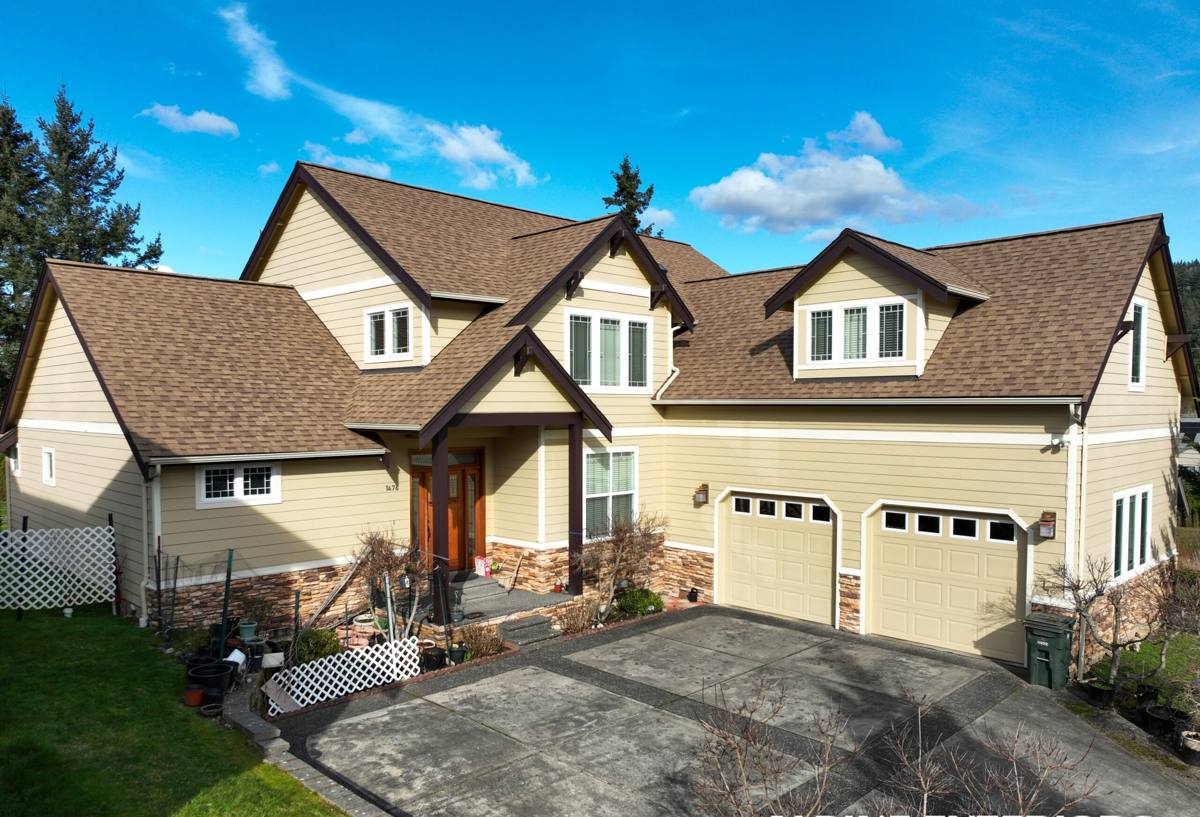
What Salt Air, Driving Rain, and Moss Season Actually Do to a Roof
Every material on a roof in this region is fighting the same three things at once, and they compound each other.
Salt Air
Airborne salt accelerates corrosion on any exposed metal — fasteners, flashing edges, cut panel ends. It doesn't take a beachfront lot to matter; homes set back from the water still get enough salt exposure over a few decades to eat through unprotected steel, especially at points where the factory coating has been cut, drilled, or scratched during installation.
Driving Rain
Storms off the strait don't always fall straight down. Wind-driven rain gets pushed sideways and upward under laps, around penetrations, and into any seam that wasn't lapped or sealed with that in mind. A roof that would shed water fine in a calmer climate can still leak here if the details weren't built for horizontal rain.
Moss Season
Long, wet, shaded stretches of the year — especially under fir and cedar cover common around Oak Harbor — let moss and moisture-loving growth take hold. On asphalt shingles this traps moisture against the surface and shortens roof life. On metal, moss is far less of a structural threat, but it can still hold moisture against fasteners and in valleys if the roof wasn't designed to shed debris.
None of these are exotic problems. They're just the normal cost of being close to the water in the Pacific Northwest, and they're exactly why the installation details matter more here than the marketing on the metal panel itself.
Choosing the Right Metal Roofing System
"Metal roofing" isn't one product — the panel style, metal type, and coating all affect how a roof performs in a salt-air, high-rain climate. Here's how the common options compare for a home in this area.
| System | How It's Attached | Best For | Trade-Offs Near the Water |
|---|---|---|---|
| Standing Seam | Concealed clips, no exposed fasteners on the field | Long-term, low-maintenance roofs; most homes in marine climates | Higher upfront cost; needs a crew experienced with seaming and thermal movement |
| Exposed-Fastener (Corrugated/Ribbed) | Screws driven through the panel face into the deck | Budget-conscious projects, outbuildings, shops | Fastener washers are the first thing salt air degrades; needs re-torquing and washer replacement over time |
| Stone-Coated Steel | Interlocking panels resembling shingle or tile profiles | Homeowners who want a traditional look with metal's durability | More seams and fasteners than standing seam; coating chips need prompt touch-up near salt air |
For most Oak Harbor homes we recommend standing seam when the budget allows it, specifically because it has no exposed fasteners for salt air to attack. Exposed-fastener panels aren't a bad product — they're a reasonable choice for a shop or budget reroof — but we're upfront that they carry a real maintenance schedule in this climate, not a "set it and forget it" one.
Metal Type and Coating
Galvalume steel with a quality paint finish is the standard workhorse for residential metal roofing and performs well here when detailed correctly. Aluminum is worth discussing for homes closer to the immediate shoreline, since it doesn't rust the way steel can if a coating is ever breached — it costs more, and we'll talk through whether that upgrade makes sense for your specific lot rather than upselling it by default.
What a Correct Metal Roof Installation Involves
The panel is the part homeowners see. The parts that determine whether the roof performs for decades are underneath it.
- Underlayment: A synthetic or self-adhered underlayment rated for the exposure, not just whatever meets minimum code — this is the backup layer when wind-driven rain gets past the panel laps.
- Deck condition: Metal telegraphs an uneven or soft deck. We check the sheathing before panels go on, not after a problem shows up.
- Fastener spec: Stainless or coated fasteners matched to the panel metal — mixing incompatible metals against each other accelerates corrosion through a reaction most homeowners never see coming until it's failed.
- Flashing and laps: Valleys, penetrations, and rake edges get lapped and sealed for sideways rain, not just downhill water.
- Ventilation: A metal roof over a poorly vented attic traps condensation underneath the panels just as easily as it sheds rain off the top. Intake and exhaust need to balance.
Skipping any one of these is usually invisible for the first year or two. It shows up as a leak, a corroded fastener, or a soft deck spot five to ten years later — which is exactly why we don't cut corners on the parts that don't show.
Our Process for Oak Harbor Metal Roofing Projects
1. On-Site Assessment
We look at the existing roof, deck condition, ventilation, and how exposed the home is to wind and salt — a roof tucked into tree cover gets a different plan than one on an open, wind-exposed lot.
2. System Recommendation
We walk through panel style, metal type, and coating options in plain terms, including honest trade-offs, so the decision fits your budget and how long you plan to be in the home.
3. Written Estimate
A clear scope of work and price before anything is scheduled — no vague allowances that turn into change orders mid-project.
4. Installation
Deck prep, underlayment, panels, flashing, and ventilation work done in the sequence that actually protects the home, with attention to the fastener and flashing details this climate demands.
5. Final Walkthrough
We go over the finished roof with you, including what routine upkeep (if any) applies to your specific system.
Maintenance: What Actually Needs Attention After Installation
One of the real advantages of metal roofing is how little upkeep it needs compared to shingles — but "little" isn't "none," especially near the water. A short annual check covers most of it.
- Clear needles, cones, and debris from valleys and around penetrations before moss season sets in
- Check exposed fasteners (if your system has them) for loosening or washer wear
- Look for scratches or chips in the coating near flashing edges and touch up promptly — that's where salt air finds bare metal fastest
- Confirm gutters and downspouts are clear so water isn't backing up under the drip edge
- After major windstorms, a quick visual check for lifted flashing or displaced panels
None of this requires a specialist visit every year. It's the kind of thing a homeowner can do from the ground or during a gutter cleaning, and it's the difference between a metal roof that goes 40-plus years and one that develops preventable problems at year fifteen.
Cost Factors for Oak Harbor Metal Roofing
Metal roofing costs more upfront than asphalt shingles, and the honest answer to "what will it cost" depends on several factors specific to your home rather than a flat per-square-foot number.
| Factor | Why It Matters Here |
|---|---|
| Panel system | Standing seam runs higher than exposed-fastener panels but needs less long-term upkeep in salt air |
| Roof complexity | Valleys, dormers, and penetrations add labor and flashing — homes with simpler rooflines cost less per square |
| Tear-off vs. overlay | Removing an old roof to inspect and repair the deck adds cost but is often necessary, especially on older homes with moisture history |
| Access and pitch | Steep or hard-to-access roofs take longer and require more safety setup |
| Metal and coating grade | Aluminum and premium coatings cost more but pay off on the most exposed, water-facing lots |
We'd rather walk your specific roof and give you real numbers than quote a range that doesn't mean much until we've seen the deck and the layout in person.
Why Hiring a Crew That Already Works Oak Harbor Matters
A roof installed by someone unfamiliar with this specific stretch of coastline often looks fine on day one and shows its shortcuts five or ten years in — a fastener spec that ignores salt exposure, flashing details built for a drier climate, or ventilation sized without accounting for the moisture load here. We work this area regularly, which means we're not guessing at how Oak Harbor's combination of salt air, wind-driven rain, and long wet shoulder seasons behaves on a roof — we've seen it, and we build for it from the first fastener.
That local familiarity also means straightforward communication: realistic timelines around the weather patterns here, and a crew that shows up when it says it will rather than juggling a schedule built for a different climate entirely.
If you're weighing a metal roof for your Oak Harbor home, we're glad to take a look and talk through what makes sense for your roofline and budget. Use the form below for a free, no-pressure estimate.