 Anacortes Siding
 Why Oak Harbor Roofs Take a Different Kind of Beating
Homes near Oak Harbor sit close enough to the water that the air itself works against a roof year-round. Salt-laden moisture drifts in off the Sound, driving rain comes in sideways during winter storms, and the mild, damp shoulder seasons give moss and algae months at a time to take hold before anyone notices. None of these problems show up overnight. A roof out here fails slowly, through fastener corrosion, saturated underlayment, and shingles that never fully dry out between rain events. By the time a stain shows up on a bedroom ceiling, the underlying damage has usually been building for a season or two.
We repair roofs in this area regularly, and the pattern is consistent: the roofs that last are the ones that get looked at before a leak forces the issue, and the repairs that hold up are the ones done with materials and fastening methods suited to salt exposure and constant moisture — not just whatever's fastest to install.
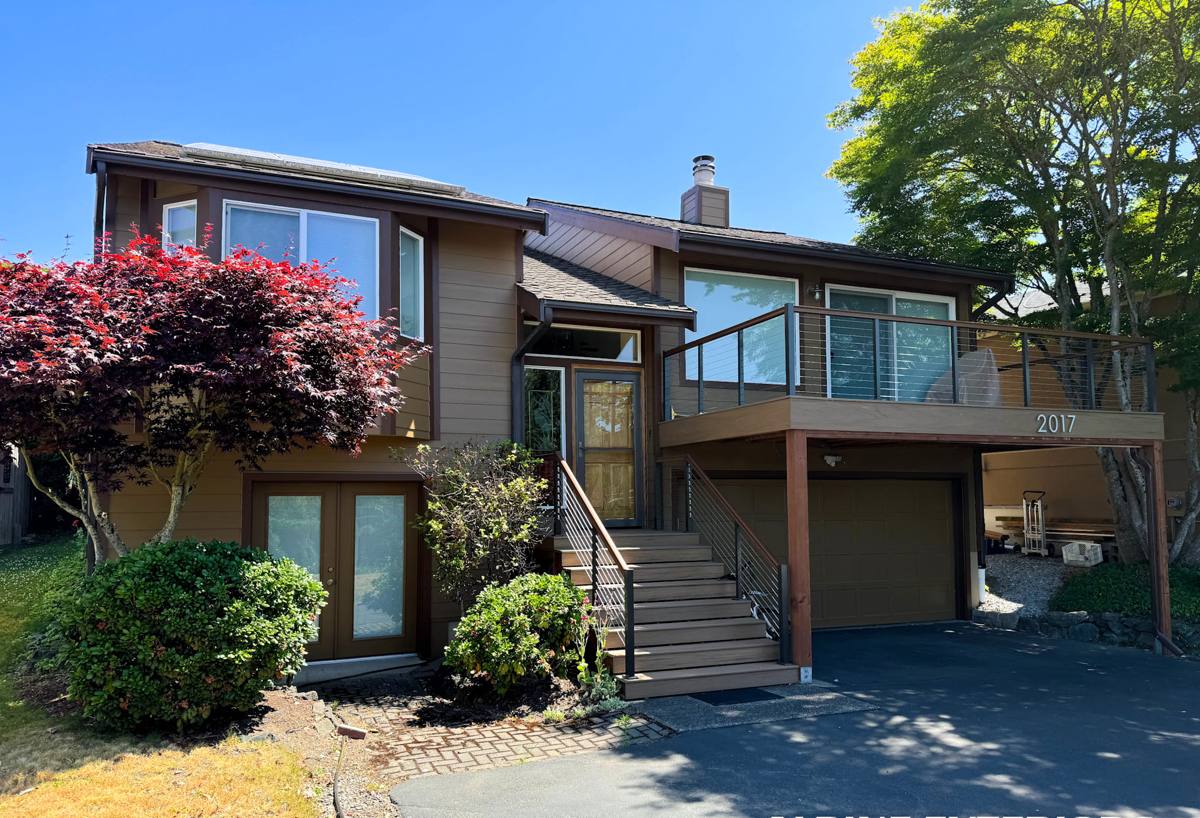
Signs Your Oak Harbor Roof Needs Attention
Most roof damage in this climate is visible from the ground or the attic if you know what to look for. We'd rather a homeowner call us for a look that turns out to be nothing than wait until water is already inside the house.
- Granules collecting in gutters or at downspout outlets — a sign shingles are wearing thin
- Dark streaking or green-black patches, especially on north-facing slopes that stay shaded and damp
- Moss growing at shingle edges or in valleys, lifting the shingle tabs as it spreads
- Curling, cracked, or missing shingles after a windstorm
- Rust streaks or visible corrosion around flashing, vent boots, or exposed fasteners
- Soft or discolored spots on interior ceilings, especially near chimneys, skylights, or where two rooflines meet
- Daylight visible through the roof deck when viewed from inside the attic
- Sagging or spongy feel underfoot near valleys or roof penetrations
Any one of these on its own may be minor. Several together usually mean it's time for a professional look rather than a wait-and-see approach.
What a Correct Roof Repair Actually Involves
Diagnosis Before Repair
A leak rarely shows up directly above where the water is entering. We start every repair by tracing the actual path of water intrusion — following it from the interior stain or attic evidence back up through the roof assembly to the real point of failure. Patching the spot where water happens to be dripping without finding the entry point is the single most common reason a "fixed" roof leaks again the next winter.
Matching Materials, Not Just Colors
When we replace a section of shingles, underlayment, or flashing, we match not just the appearance but the performance characteristics of what's already on the roof — shingle weight, underlayment type, and fastener material. Mixing incompatible materials, especially metals, can accelerate corrosion in a salt-air environment through galvanic reaction, which turns a small repair into a recurring problem.
Flashing and Moisture Points Get Priority
Most leaks trace back to flashing — around chimneys, skylights, dormers, and wherever two roof planes meet — rather than to the shingle field itself. A repair that replaces shingles but reuses old, corroded, or improperly lapped flashing is a repair that will leak again. We treat flashing work as the priority, not an afterthought.
Moss, Algae, and Salt Air: The Maintenance Reality
The three most persistent issues we see on roofs in this area aren't separate problems — they compound each other. Moss holds moisture against the shingle surface, that moisture accelerates granule loss, and salt air speeds up corrosion on every exposed metal fastener and flashing edge. Understanding how each one actually damages a roof helps explain why the fix has to match the cause.
| Issue | What Causes It | What It Does to the Roof | Correct Response |
|---|---|---|---|
| Moss growth | Shade, poor airflow, prolonged dampness | Lifts shingle edges, holds water against the roof deck, accelerates rot | Manual removal, not pressure washing; treatment products applied per shingle manufacturer guidance |
| Algae staining | Airborne spores, humidity, limited sun exposure | Cosmetic at first, but heavier growth traps moisture like moss | Gentle cleaning; algae-resistant shingles on replacement sections when possible |
| Salt air corrosion | Coastal proximity, wind-driven salt spray | Rusts exposed fasteners, pits metal flashing and vent boots over time | Corrosion-resistant fasteners and flashing on every repair, not just the original install |
| Wind-driven rain intrusion | Storms pushing rain sideways under shingle edges and flashing laps | Saturates underlayment, causes deck rot if undetected | Proper shingle sealing, correctly lapped flashing, sealed penetrations |
Pressure washing deserves a specific warning: it's a common DIY response to moss and algae, but high-pressure water drives granules off asphalt shingles and can force water up under the shingle edge, which creates the exact leak path homeowners are trying to prevent. We remove moss by hand and treat it with products intended for roofing, not a pressure washer.
Repair vs. Replacement: How We Help You Decide
Not every roof problem calls for a full replacement, and we don't push one when a targeted repair will genuinely hold up. The decision usually comes down to how localized the damage is and how much useful life is left in the rest of the roof.
| Factor | Favors Repair | Favors Replacement |
|---|---|---|
| Age of roof | Under 10-15 years, or well short of the shingle's expected service life | Near or past the expected lifespan for the material |
| Extent of damage | Isolated to one section, flashing point, or storm-damaged area | Widespread granule loss, curling, or multiple leak points |
| Deck condition | Solid, dry decking under the damaged area | Soft, rotted, or repeatedly saturated decking |
| Leak history | First occurrence, clear single cause | Recurring leaks in different spots each season |
| Moss/algae coverage | Limited to shaded patches | Widespread across most of the roof surface |
We'll always tell you honestly when a repair is the right call, even if that means a smaller job. We'll also tell you when patching a roof that's genuinely at the end of its life is just delaying a bigger expense — and let you weigh that decision with real information instead of pressure.
Our Process, From First Call to Finished Repair
- Initial conversation. We ask what you're seeing — stains, missing shingles, a specific storm event — so we know what to look for before we're even on the roof.
- On-site inspection. We check the roof surface, flashing points, attic (when accessible), and gutters, and walk you through what we find in plain terms.
- Written estimate. You get a clear scope of work and price before anything is scheduled — no vague allowances, no surprise add-ons once we're underway.
- The repair itself. We remove and replace only what's actually failed, match materials appropriately, and prioritize flashing and moisture points over cosmetic shingle work.
- Final walkthrough. We show you what was done and what to watch for going forward, including any maintenance that will extend the life of the rest of the roof.
Materials We Use and Why
For repair work in a coastal, high-moisture climate, the fasteners and flashing matter as much as the shingles. We use corrosion-resistant fasteners rather than standard galvanized nails wherever salt exposure is a factor, because standard fasteners can start rusting years before the shingles around them wear out. Flashing gets replaced with material compatible with what's already on the roof to avoid galvanic corrosion between dissimilar metals. Where a full section of shingles needs replacing, we look at algae-resistant shingle options, since the copper or zinc granules in those products help slow regrowth in shaded, damp areas — a real factor here, not a marketing detail.
We don't recommend or install products based on what's cheapest to source that week. If a material choice has a real trade-off — a shorter warranty, a higher maintenance need, or sensitivity to installation conditions — we'll tell you that upfront rather than let you find out later.
Why It Matters to Hire a Crew That Already Works This Area
Roofing problems in Oak Harbor and the surrounding Anacortes and Skagit County coastline aren't generic. A crew that mostly works inland, drier regions may correctly diagnose a shingle problem but miss how much of the damage is actually salt-driven corrosion on the fasteners underneath, or underestimate how aggressively moss will return without the right prevention. We work roofs in this climate regularly enough to recognize these patterns quickly, which keeps the diagnosis accurate and the repair from becoming a repeat visit.
Local experience also means practical familiarity with what tends to fail first on homes exposed to wind off the water — which flashing details need extra attention, which roof orientations hold moss longest, and which fastening choices actually hold up instead of just meeting minimum code.
Maintenance That Extends the Life of a Repair
A good repair can still fail early without basic upkeep in this climate. A few habits make a real difference:
- Keep gutters and downspouts clear so water isn't backing up under the roof edge
- Trim back overhanging branches that keep sections of the roof shaded and damp
- Have moss treated before it spreads, rather than after it's lifted shingle edges
- Schedule a roof check after any major windstorm, even if nothing looks obviously wrong
- Address small leaks immediately — deck rot from a slow, ignored leak is far more expensive than the original repair would have been
If you're seeing signs of wear, a recent storm has you concerned, or you just want an honest look at where your roof actually stands, we're happy to come take a look. The estimate is free, there's no pressure attached to it, and you'll get a straight answer about whether you need a repair, a bigger job, or nothing at all right now — just fill out the form below to get started.