 Anacortes Siding
 Oak Harbor Roofs Take a Different Kind of Beating
Homes in the Oak Harbor area sit right where marine weather off the water meets whatever storm system happens to be rolling through Skagit County that week. It's rarely one dramatic event that causes the damage we get called out for — it's the combination. Driving rain finds its way under shingles that wind has already loosened. Salt air corrodes exposed fasteners and flashing faster than inland homes ever see. And the long, wet moss season that runs through much of the fall, winter, and spring keeps roofs damp for weeks at a stretch, which accelerates rot in anything that's already compromised.
That combination means storm damage here often isn't a clean, obvious hole. It's a handful of lifted shingles, a strip of failing flashing, and a section of sheathing that's been slowly absorbing moisture since the last storm — all at once. A repair that only addresses the visible problem tends to fail again in the next windstorm.
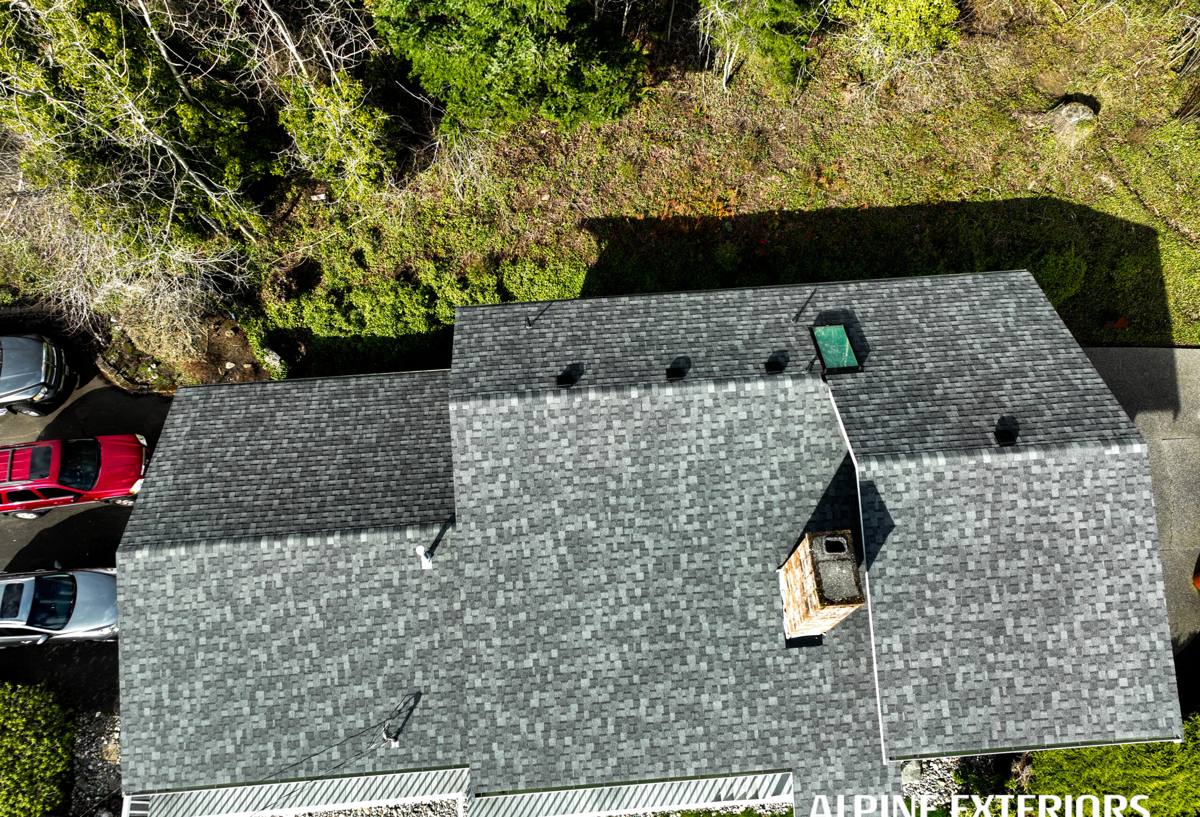
What Storm Damage Actually Looks Like on Oak Harbor Homes
Wind Damage
Sustained wind and gusts off the water don't usually rip a roof apart — they work at the edges. Shingle tabs lift and crease, ridge caps loosen, and ventilation components get pried at their seams. Once a shingle's seal is broken, it doesn't reseal on its own; it stays vulnerable until it's replaced or properly resealed.
Wind-Driven Rain
Rain that comes in at an angle behaves differently than rain falling straight down. It can push up and under shingle edges, around chimney and skylight flashing, and into any gap that a calmer rain would never reach. This is the most common source of storm-related leaks we find in this area, and it's often discovered well after the storm has passed — sometimes as a ceiling stain days later.
Moss and Trapped Moisture
Moss itself doesn't cause storm damage, but it sets the stage for it. A moss-covered roof holds water against the shingle surface far longer than a clean one, which softens shingles and speeds up granule loss. A roof that's already weakened by moss and moisture is much more likely to actually fail during the next windstorm, even a moderate one.
Debris and Impact Damage
Branches and tree debris are a real factor for many properties in this area, especially those with mature trees nearby. Impact damage can crack shingles, dent flashing, or puncture the roof deck outright, and it's not always visible from the ground.
What a Correct Storm Damage Repair Involves
A proper storm repair isn't just swapping out the shingles that are obviously missing. It requires figuring out how far water actually traveled, because water rarely stops where the damage is visible from the outside.
- Deck inspection: Pulling back damaged shingles to check the roof sheathing underneath for soft spots, staining, or rot — not just eyeballing it from the attic.
- Underlayment condition: Confirming the underlayment beneath the damaged area is still intact, since torn or saturated underlayment defeats the point of new shingles above it.
- Flashing integrity: Checking flashing at chimneys, vents, skylights, and roof-to-wall transitions, since these are common failure points that get overlooked when the focus is only on the shingle field.
- Ventilation check: Making sure intake and exhaust venting still work correctly, since trapped moisture in the attic compounds any existing storm damage.
- Matching materials: Sourcing shingles and components that match the existing roof closely enough that the repair doesn't stand out or create a mismatched seal line.
Skipping any of these steps is how a "repaired" roof ends up leaking again in the next storm — the visible damage gets fixed, but the underlying cause doesn't.
Our Process: From Inspection to Finished Repair
- Initial assessment. We walk the roof (or use a ladder and binoculars for steep or fragile sections) and document what we find, including areas that look fine from the ground but aren't.
- Interior check. We look at the attic and any interior ceilings near the affected area for signs of water intrusion that haven't shown up as visible staining yet.
- Written scope and estimate. You get a clear explanation of what's damaged, what needs to be repaired versus replaced, and why — no vague line items.
- Repair work. We remove and replace only what's compromised, replace any wet or rotted decking, and reseal flashing and transitions properly.
- Final check. We confirm the repaired section ties into the surrounding roof correctly, sheds water properly, and matches as closely as possible.
Repair or Replace? How We Make That Call
Not every storm-damaged roof needs a full replacement, and not every roof can be honestly saved with a patch. The right call depends on a few factors we walk through with the homeowner directly.
| Factor | Repair Usually Makes Sense | Replacement Usually Makes Sense |
|---|---|---|
| Extent of damage | Limited to one section or slope | Spread across multiple slopes or widespread granule loss |
| Roof age | Roof is well within its expected lifespan | Roof was already nearing the end of its service life |
| Deck condition | Sheathing underneath is sound | Rot or soft decking found in multiple areas |
| Moss/moisture history | Isolated issue, no chronic moss problem | Long-term moss buildup has weakened shingles broadly |
| Insurance scope | Damage is localized to the storm event | Adjuster identifies pre-existing wear complicating a partial repair |
We'll always tell you honestly which side of that table your roof falls on, including when a repair is the right call even though a replacement would be more profitable for us.
Materials and Methods We Use for Coastal Storm Exposure
Given the salt air and near-constant moisture cycle this area deals with, we're selective about what goes into a storm repair, not just what's fastest to install.
- Corrosion-resistant fasteners and flashing: Standard fasteners degrade faster in salt-air environments, so we use materials rated for coastal exposure wherever the repair calls for new flashing or fastening.
- Synthetic underlayment: In areas with repeated moisture exposure, synthetic underlayment holds up better over time than older felt products, which is a meaningful factor in a climate where the roof rarely gets a long dry stretch.
- Proper sealant application: We use roofing sealants appropriately at flashing and transition points rather than as a substitute for correct flashing work — sealant is a detail, not a repair method on its own.
- Matched shingle profiles: We try to match the existing shingle's profile and color as closely as the manufacturer's current line allows, since older roofs sometimes require sourcing discontinued-adjacent styles.
Why a Crew That Already Works in the Oak Harbor Area Matters
Storm repair work goes faster and holds up better when the crew already understands the conditions a roof in this area is dealing with. That means knowing which flashing details tend to fail first in this climate, recognizing early moss damage instead of mistaking it for cosmetic staining, and understanding how wind off the water behaves differently than a straight-down rainstorm when it comes to water intrusion points.
It also means being available when storm season actually hits. A contractor who only shows up in this region occasionally can't always respond quickly when a homeowner needs a tarp on the roof the same day a storm passes through, and delayed temporary protection is one of the most common ways a small leak turns into a bigger repair.
Working With Your Insurance Claim
Most storm damage repairs in this area involve an insurance claim, and we work with that process regularly. We can provide a clear, documented assessment of the damage — photos, a written scope, and an honest explanation of cause — that you can hand to your adjuster. We won't inflate a scope to pad a claim, and we won't downplay damage to make a job look smaller than it is. Our job is to give you an accurate picture so the claim reflects what the roof actually needs.
What to Do Right After a Storm
- Check your attic and ceilings for new staining, drips, or damp spots as soon as it's safe to do so.
- Look at the roofline from the ground for missing shingles, displaced ridge caps, or obviously bent flashing.
- Clear debris away from downspouts and gutters so water can actually drain off the roof.
- Avoid climbing onto the roof yourself, especially on wet or moss-covered sections — that's how a storm damage call turns into an injury call.
- Get a professional inspection promptly, even if the damage looks minor, since hidden moisture intrusion gets worse the longer it sits.
- Take photos of visible damage right away in case you need them for an insurance claim later.
A Roof That's Ready for the Next Storm, Not Just This One
The goal of a storm repair isn't just to make a roof look fixed — it's to make sure the same section doesn't fail again the next time the wind picks up or the rain comes in sideways. That means finding the real extent of the damage, using materials suited to this coastline's conditions, and being straightforward about what actually needs to happen.
If you've got storm damage on your roof, or you're not sure whether what you're seeing needs attention, we're happy to take a look and give you a straight answer. Use the form below to request a free, no-pressure estimate.