 Anacortes Siding
 Old Town Anacortes: A Roof Climate of Its Own
Old Town Anacortes sits close enough to the water that the air itself is part of the maintenance equation. Homes here deal with a combination most inland Skagit County properties don't: salt-laden air off Fidalgo Bay and the surrounding straits, wind-driven rain that doesn't fall straight down, and a wet season that stretches long enough to grow a healthy crop of moss on any roof that isn't paying attention. None of that is unusual for the Pacific Northwest coast, but it does mean a roof installed with generic assumptions — the kind of install that would be fine forty miles inland — won't hold up the same way out here.
This page is about one job done right in one place: asphalt shingle roofing on Old Town Anacortes homes. Not a general overview of shingle roofing everywhere, but what actually matters for this neighborhood's mix of older homes, exposure to marine weather, and the practical realities of getting a roofing crew and equipment into some of these older, tighter lots.
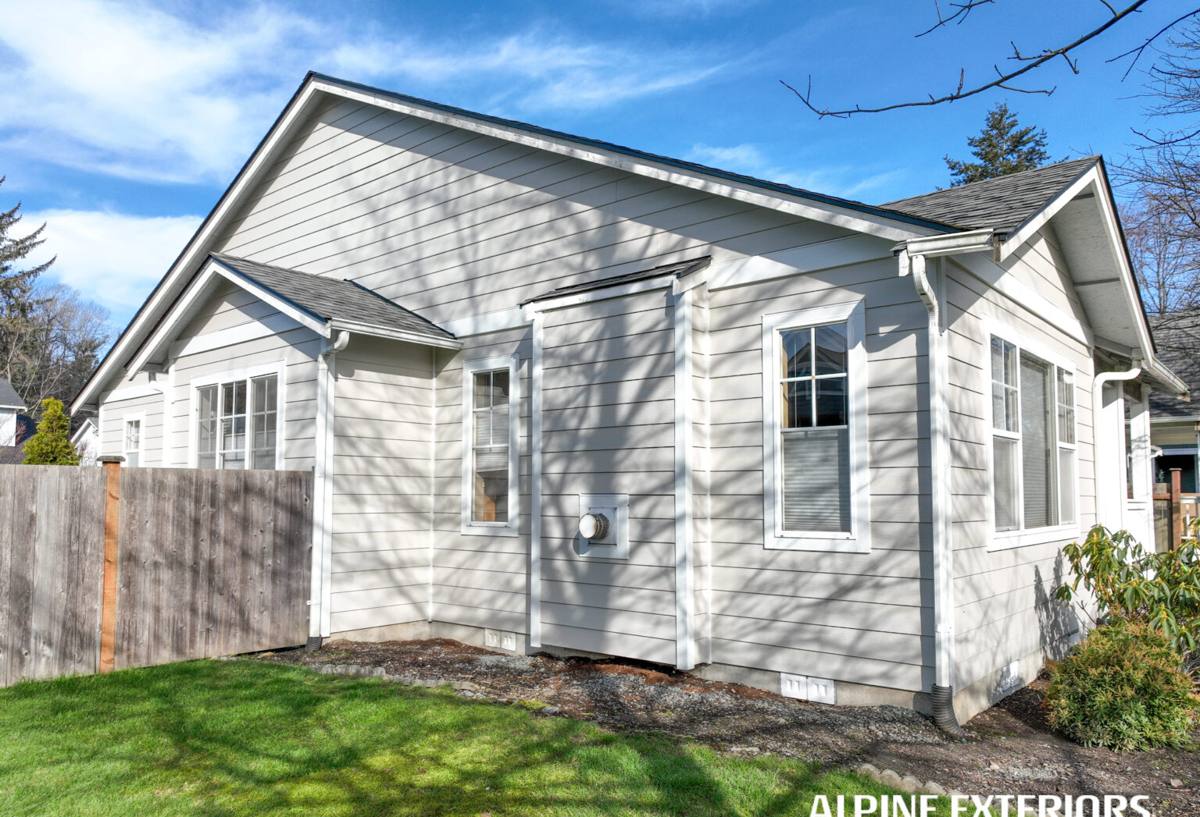
What Salt Air, Driving Rain, and Moss Actually Do to a Shingle Roof
Salt Air
Salt in the air doesn't just affect metal flashing and fasteners, though that's where it shows up first. Airborne salt accelerates the breakdown of exposed metal edges, valleys, and vent stacks, and it can shorten the working life of lower-grade fasteners. On a roof near the water, the metal components matter as much as the shingles themselves — a roof is only as durable as its weakest material.
Driving Rain
Anacortes doesn't just get rain, it gets wind alongside it, which pushes water sideways and upward under laps that would stay dry in a calm downpour. That's why underlayment coverage, proper shingle overlap, and flashing detail around penetrations and valleys carry more weight here than they would somewhere with mostly still, vertical rainfall. A roof that's "basically fine" on paper can still leak at a valley or a chimney flashing if it was installed to a minimum standard rather than a coastal one.
Moss
Shade, moisture, and mild temperatures are a moss factory, and Old Town Anacortes has mature trees and a marine-tempered climate that keeps roofs damp longer than drier parts of the state. Moss holds moisture against the shingle surface, works into granule loss over time, and can lift shingle edges enough to let wind-driven rain underneath. Left unaddressed for a few seasons, a moss problem turns from a cosmetic issue into a moisture problem.
What a Correct Asphalt Shingle Job Involves Here
A shingle roof is a system, not a single product. In a marine climate like this one, every layer of that system needs to be right, not just the shingles that show on top.
- Deck inspection first. Old roofs in this area sometimes hide soft or delaminated sheathing under the old shingles, especially near valleys, eaves, and old vent penetrations. That gets caught and fixed before anything new goes down — covering a bad deck just hides the problem.
- Ice-and-water shield at vulnerable points. Anacortes doesn't get heavy snow loads, but eaves, valleys, and low-slope transitions still benefit from self-adhering membrane where wind-driven rain is most likely to find a way in.
- Synthetic underlayment across the full deck, not just felt paper, for a more consistent moisture barrier under sustained wet seasons.
- Corrosion-resistant flashing and fasteners at valleys, chimneys, and vent stacks — standard-grade metal degrades faster this close to salt air.
- Proper nailing pattern and shingle exposure matched to the manufacturer's wind rating, since gusty coastal wind events are part of the normal weather cycle here, not a rare exception.
- Ventilation that actually balances intake and exhaust, so the attic isn't trapping moisture that condenses and works against the roof deck from underneath.
Choosing a Shingle for This Climate
Not every asphalt shingle product is built the same way, and the differences matter more in a marine climate than they do somewhere dry. Here's how the common tiers compare for a home in this area.
| Shingle Type | Typical Wind Rating | Algae/Moss Resistance | Best Fit |
|---|---|---|---|
| Standard 3-tab | Lower end of manufacturer ratings | Minimal unless treated | Budget-driven projects, less exposed roof planes |
| Architectural (laminate) | Mid-to-high range | Often available with algae-resistant granules | Most Old Town Anacortes homes — the balance point of cost, durability, and appearance |
| Premium/impact-rated laminate | Highest available | Algae-resistant granules standard on most lines | Fully exposed roof planes, homeowners prioritizing longevity over upfront cost |
For most homes in this neighborhood, an architectural shingle with algae-resistant granules is the honest recommendation — it holds up to wind-driven rain and moss pressure noticeably better than a basic 3-tab, without the cost jump of premium impact-rated lines that make more sense on fully exposed, high-wind sites.
Our Process on Old Town Anacortes Roofs
The process itself isn't dramatically different from any professional shingle replacement, but the sequence and attention shift toward the details that matter in this specific setting.
- On-site inspection — deck condition, current flashing state, ventilation setup, and how much moss or algae buildup is present.
- Written scope and shingle selection — matched to the home's exposure, roof pitch, and the homeowner's priorities on cost versus longevity.
- Tear-off and deck repair — old material removed, deck inspected board by board, any soft or damaged sheathing replaced before underlayment goes down.
- Underlayment and flashing — ice-and-water membrane at eaves and valleys, synthetic underlayment across the field, corrosion-resistant flashing at all penetrations.
- Shingle installation — nailing pattern and exposure per manufacturer spec, verified against the shingle's rated wind speed.
- Ventilation check — intake and exhaust balanced so the attic isn't working against the new roof from day one.
- Final walkthrough — cleanup, magnetic sweep for stray fasteners, and a review of what was done and why.
Because this is work we do regularly in this neighborhood, we already know the common deck conditions on the older homes here, the access constraints on tighter lots, and which details tend to get skipped by crews unfamiliar with the area's weather pattern.
Homeowner Maintenance Checklist
A well-installed roof still needs basic upkeep in this climate. Here's what actually moves the needle for a shingle roof in Old Town Anacortes:
- Clear gutters and downspouts at least twice a year — clogged gutters back water up under the shingle edge.
- Have moss and algae growth treated before it spreads across a full roof plane, not after.
- Trim overhanging branches to cut down on shade, debris buildup, and moss pressure.
- After major wind events, do a visual check (from the ground, or have a pro check) for lifted or missing shingles.
- Check attic ventilation isn't blocked by insulation or storage — poor airflow speeds up moisture problems from the inside.
- Have flashing around chimneys, vents, and valleys inspected every few years, since these are the most common points of failure long before the shingles themselves wear out.
Repair or Full Replacement?
Not every roofing issue in Old Town Anacortes calls for a full tear-off. The honest answer depends on the roof's age, how localized the damage is, and what's underneath.
A repair usually makes sense when the damage is limited to a section — a valley leak, a few wind-lifted shingles, a failed flashing detail — and the rest of the roof and deck are sound. Full replacement makes more sense once the shingles are broadly past their service life, moss and moisture have compromised multiple areas, or repeated repairs are becoming their own maintenance burden. We'll always give a straight answer on which category a given roof falls into rather than defaulting to the bigger job.
Why a Crew That Already Works This Neighborhood Matters
Roofing crews who mostly work drier, inland areas sometimes apply those habits here without adjusting for what this climate actually demands — lighter underlayment coverage, standard-grade flashing, or shingle choices that don't account for sustained moss pressure. That's not a defect in those crews' general skill, it's a mismatch between their normal working conditions and Skagit County's marine climate.
Working Old Town Anacortes regularly means knowing which roof details fail first in this exposure, what the older housing stock here tends to hide under existing shingles, and how to sequence a job around the area's weather windows rather than fighting them. That local pattern recognition is what separates a roof that looks right on installation day from one that's still performing correctly five wet seasons later.
Get a Straight, No-Pressure Estimate
If you're dealing with moss buildup, a suspected leak, or just want an honest read on how much life is left in your current roof, we're glad to take a look. Fill out the form below for a free estimate — no pressure, just a clear assessment of what your roof actually needs.