 Anacortes Siding
 Old Town Anacortes Puts Siding Through a Lot
Old Town Anacortes sits close to the water on Fidalgo Island, and that proximity is exactly what makes siding decisions here different from a job twenty miles inland. Many of the homes in this part of Anacortes are older housing stock, built well before modern water-resistive barriers, rainscreen gaps, and factory-cured finishes were standard practice. That combination — an aggressive marine climate and an older building envelope underneath — is the starting point for every siding conversation we have in this neighborhood.
Salt Air and Slow Corrosion
Airborne salt off the Salish Sea doesn't just affect boats and railings. It settles on exterior surfaces, works into hairline gaps around fasteners and trim, and speeds up corrosion on anything metal that isn't rated for coastal exposure. Over years, that shows up as rust streaking below nail heads, failing flashing, and paint that chalks and fades faster than the same product would inland.
Wind-Driven Rain and Wall Assemblies
Anacortes gets plenty of rain that arrives sideways, not straight down. On an older home, wind-driven rain finds every shortcut a wall assembly offers — a missing kick-out flashing above a roofline, a lap gap that's too tight, trim caulked instead of properly flashed. Water that gets behind the siding on a home without a drainage plane has nowhere to go, and that's when sheathing rot starts, often unseen for years.
A Long Moss and Algae Season
Skagit County's damp season runs long, and shaded or north-facing walls in Old Town Anacortes can stay damp for weeks at a stretch. Wood-based siding products hold that moisture at the surface, which is exactly the environment moss and algae need to take hold. Once organic growth is established on a porous surface, it holds even more moisture against the wall behind it — a cycle that accelerates whatever damage started it.
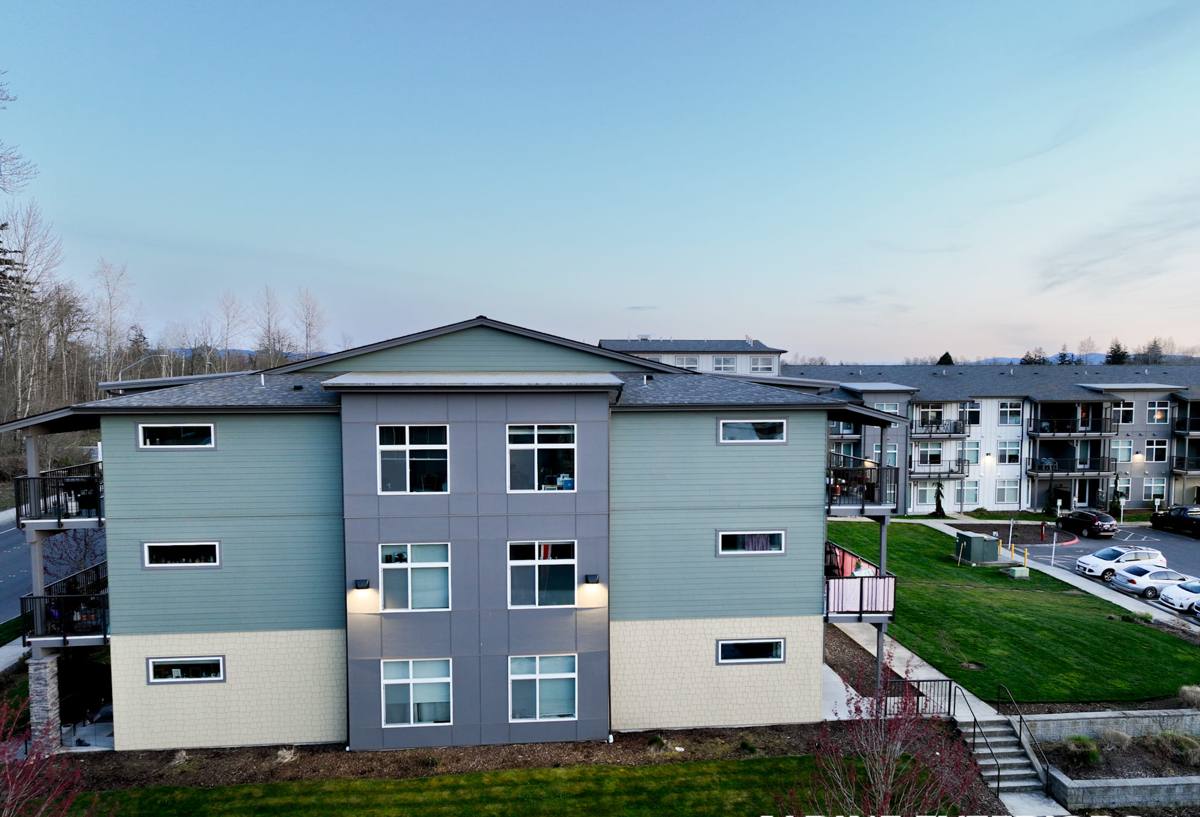
Why Older Homes Need More Than a Siding Swap
Residing an older Old Town Anacortes home is rarely a simple material swap. The sheathing underneath may be original, the framing may have settled unevenly over decades, and there's often no continuous water-resistive barrier at all — just siding installed directly over boards or early sheathing. Any of that needs to be addressed before new siding goes on, not covered up by it. A proper tear-off is also the only real chance to find and fix hidden rot before it's sealed behind a new wall for another thirty years.
This is also where corner-cutting shows up fastest. Installing modern fiber cement over a compromised wall assembly, without fixing the water management underneath first, just delays the same failure by a few years instead of preventing it.
Why We Install Only James Hardie Fiber Cement Siding
We standardized on James Hardie fiber cement and don't install vinyl, engineered wood, or cedar. That's not a marketing position — it's a decision built around what actually holds up on homes exposed to salt air and sustained moisture. Fiber cement is non-combustible, doesn't feed moss and algae the way wood fiber does, and holds a factory-applied ColorPlus finish that's cured under controlled conditions rather than painted on-site in variable weather.
James Hardie also engineers specific product lines for regional climate zones — the HZ5 line is built for wetter, more temperate regions like the Pacific Northwest, with formulations meant to perform in sustained moisture rather than dry heat. Paired with a transferable warranty backed by a manufacturer with decades in the fiber cement category, it's the product we're willing to stand behind on a home that's going to face fifty more years of Fidalgo Island weather.
What a Correct Installation Actually Involves
Water Management Comes First
Every correct fiber cement job starts with the water-resistive barrier and flashing details, not the siding itself. That means a continuous WRB, properly lapped and taped seams, head flashing over every window and door, and kick-out flashing anywhere a roofline meets a wall. On a home exposed to wind-driven rain off the water, these details matter more than the siding brand nailed on top of them.
Fastening and Clearances
Fiber cement has to be fastened per the manufacturer's published instructions — corrosion-resistant fasteners, correct spacing, and the right depth so the board isn't crushed or left loose. Ground clearance and gaps at trim, corners, and penetrations aren't cosmetic; they're what lets the assembly shed water and dry out between storms instead of trapping it.
Finish and Caulk Compatibility
ColorPlus finish is factory-cured and holds color far longer than field-applied paint, but cut edges and any touch-up need to be sealed with the correct edge sealer, and any caulking needs to be a sealant rated to move with the material and hold up in this climate. Skipping this step is a common source of early moisture intrusion at joints and trim.
Matching Old Town Anacortes' Character
A lot of homes in this part of Anacortes have a defined architectural character — traditional lap reveals, detailed trim boards, sometimes a shingle or shake accent on a gable. Fiber cement is available in lap widths, panel profiles, and shingle-style products that can match that character rather than flattening it, along with trim boards sized to look right against those proportions. Color selection matters here too — a factory finish that will actually hold its tone through a Skagit County winter is worth more long-term than a shade that looked perfect on a sample chip.
Fiber Cement vs. Other Siding Materials
For a home exposed to salt air, driving rain, and a long damp season, the material comparison isn't close — but it's worth laying out plainly rather than just asserting it.
| Material | Salt Air & Moisture Resistance | Maintenance | Fire Resistance | Typical Warranty |
|---|---|---|---|---|
| James Hardie Fiber Cement | Strong — inorganic, engineered for wet climates (HZ5) | Occasional rinse and caulk checks | Non-combustible | Long, transferable |
| Vinyl Siding | Doesn't rot, but can warp, fade, and crack in wind and temperature swings | Low, but panels can't be spot-repaired cleanly | Combustible, can melt/deform near heat | Varies widely, often prorated |
| Engineered Wood (e.g., LP SmartSide-type products) | Wood-fiber core is vulnerable if moisture reaches it | Regular inspection of seams and finish | Combustible | Moisture-related exclusions common |
| Cedar / Solid Wood | Absorbs moisture, feeds moss and algae growth | Regular refinishing and moss treatment | Combustible | Typically none from a manufacturer |
Our Process for Old Town Anacortes Projects
- On-site assessment of the existing siding, trim, and any visible moisture damage or moss growth
- Tear-off of old siding and inspection of the sheathing and framing underneath
- Repair of any rot or damaged sheathing found before new materials go on
- Installation of a continuous water-resistive barrier with properly integrated flashing at every window, door, and roofline
- James Hardie fiber cement installation to manufacturer specifications — fastening, clearances, and joint treatment
- Caulking and finish touch-up using compatible, climate-rated sealants
- Final walk-through and site cleanup
Keeping Fiber Cement Looking Right After Installation
Fiber cement is low-maintenance compared to wood, but "low-maintenance" isn't "no-maintenance," especially this close to the water. A short annual routine keeps a Hardie exterior performing the way it's designed to:
- Rinse salt residue off exterior walls periodically, especially on sides facing open water or prevailing wind
- Keep gutters and downspouts clear so water isn't sheeting down the siding face
- Check shaded and north-facing walls for early moss or algae growth and address it before it spreads
- Inspect caulking at trim, corners, and penetrations once a year and re-seal anything that's cracked or pulled away
- Trim back vegetation that keeps a wall section shaded and damp longer than the rest of the house
- Avoid high-pressure washing directly at seams and edges, which can force water behind the siding
Why Local Experience in Old Town Anacortes Matters
A crew that's worked on older homes in this specific neighborhood already knows what's usually hiding behind the existing siding, how the wind and rain typically hit a given exposure, and which details get skipped on older construction. That's the difference between a crew estimating from a general spec sheet and one that's already fixed the same sheathing and flashing issues on the house down the street. For a home that's going to sit through decades more of Anacortes weather, that local track record is worth as much as the material itself.
If you're weighing a siding replacement on an Old Town Anacortes home, we're happy to take a look and walk through what your specific home needs — no pressure, no obligation. Fill out the form below to schedule a free estimate.