 Anacortes Siding
 Old Town Anacortes and the Weather That Wears Siding Down
Old Town Anacortes sits close to the water, which means its homes take a different kind of weather beating than houses further inland in Skagit County. Salt-laden air corrodes untreated metal fasteners and trim, wind-driven rain finds every gap in a poorly flashed wall, and the long, wet shoulder seasons here keep north-facing walls and shaded siding damp for weeks at a time. That dampness is exactly what moss and algae need to take hold.
None of this makes siding replacement here more complicated in theory. It makes it more unforgiving in practice. A siding system that would perform fine in a drier part of Washington can fail early in Old Town Anacortes if the product, the flashing details, or the fastening aren't matched to this specific exposure. That's the lens we use on every job in this neighborhood: not "what siding looks good," but "what siding and installation will actually hold up a few blocks from the water."
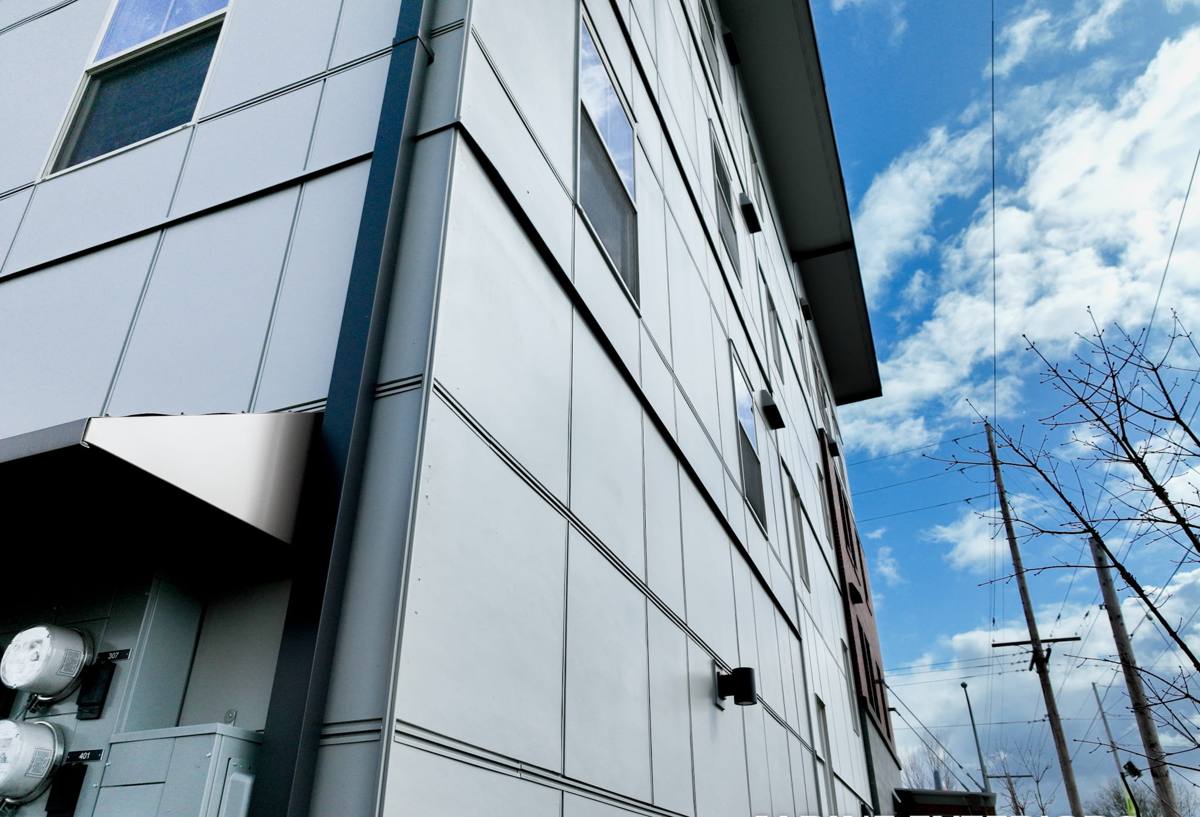
What Siding Actually Has to Do Here
Strip away the marketing and a siding system on an Old Town Anacortes home has three jobs: keep bulk water out, let any moisture that does get behind it dry out, and resist the salt air and biological growth that come with being this close to the marine environment. A lot of siding failures we see aren't dramatic — they're slow. Water gets behind a poorly lapped joint, the wall assembly stays damp longer than it should because there's nowhere for that moisture to go, and a few years later there's rot in the sheathing that nobody noticed until the siding itself started to fail.
That's why we install James Hardie fiber cement exclusively. It's a non-combustible, dimensionally stable material that doesn't swell, cup, or rot the way wood-based sidings can when they take on repeated moisture. It holds paint and factory finish far longer than primed wood products, which matters in a climate where north and shaded walls rarely get a long dry stretch. None of that replaces good installation — but it gives a correctly installed wall a much longer runway before problems start.
Why We Don't Install Other Products Here
We get asked why we don't offer vinyl, LP SmartSide, cedar, or primed spruce as options. Vinyl can warp and fade, and its seams and J-channels give wind-driven rain more places to work behind the material over time. Wood-based and OSB-core products depend heavily on paint maintenance and edge sealing to keep moisture out — skip a recoat cycle in a climate this wet and the clock on decay starts running. Cedar is a beautiful, legitimate material, but it demands a maintenance commitment most homeowners don't want to sign up for on a marine-exposed wall. We standardized on James Hardie because it holds up with realistic maintenance, not perfect maintenance, and that's what actually happens in the real world.
Choosing the Right Hardie Product for This Location
James Hardie makes climate-specific product lines, and for a location like Old Town Anacortes, the HZ5 product line is the right baseline — engineered for wetter, cooler climates rather than the HZ10 line built for freeze-thaw extremes or the HZ3 line meant for hot, humid regions. On top of that, we default to Hardie's ColorPlus factory finish rather than field-applied paint wherever the color selection allows it. Factory finish is baked on under controlled conditions and carries its own finish warranty — it holds color and resists the salt-air fading and chalking that field-applied paint tends to show first on a home this close to the water.
Panel style matters too. Lap siding is the most common choice and performs well when the reveal and fastening are done correctly. Board-and-batten or panel systems can look sharp on certain elevations but concentrate more joints in a smaller area, so those joints need extra attention to flashing and sealant during installation. We walk through the trade-offs of each style with the specific elevations of your home rather than defaulting to one look for the whole project.
The Installation Details That Actually Matter
Fiber cement siding is only as good as the wall assembly underneath it and the details at every joint. On Old Town Anacortes homes, we pay particular attention to a handful of things that generic installation crews sometimes rush:
- Proper weather-resistive barrier and rainscreen or drainage gap, so any moisture that gets behind the siding has somewhere to go instead of sitting against the sheathing
- Correct starter strip height and clearance off decks, patios, and grade — a common failure point on older homes where grade has crept up over the decades
- Flashing integrated at every window, door, and penetration, lapped shingle-style so water sheds outward at each layer
- Manufacturer-specified fastener spacing and corrosion-resistant fasteners, given the corrosive effect of salt air on lesser hardware
- Factory-cut edges and any field cuts sealed per Hardie's specifications before they're covered
- Minimal reliance on caulk as a primary water barrier — caulk is a backup, not the plan
Any one of these done wrong won't necessarily show up as a visible problem for a few years. That's what makes installation quality harder to judge at a glance than it should be, and why the crew doing the work matters as much as the product going on the wall.
Moss and Algae: A Realistic Maintenance Picture
Given the shade, humidity, and moisture that come with the Pacific Northwest's long wet season, moss and surface algae are close to inevitable somewhere on most homes in this area, especially on north-facing walls, under tree cover, and near roof-to-wall transitions where runoff concentrates. This is a surface and moisture-management issue, not a sign that fiber cement siding is failing — Hardie's factory finish resists staining better than bare wood or field-painted surfaces, but nothing is immune to organic growth in a climate this wet.
Two things reduce the burden over time: installation that keeps water moving off the wall instead of pooling or sheeting across it, and periodic gentle cleaning — a soft wash rather than aggressive pressure washing, which can drive water behind joints and panels. We'll flag any areas of your home that are naturally more exposed to this — heavy shade, low clearance, or a wall that catches roof runoff — so you know what to expect and don't mistake normal regional weathering for a product or installation problem.
How We Approach a Project in Old Town Anacortes
- On-site assessment. We look at your current siding, the condition of the sheathing and trim underneath where accessible, drainage around the foundation, and any areas already showing moisture staining, moss buildup, or soft spots.
- Moisture and structural check. Before any new siding goes on, we confirm what's underneath is sound. If there's hidden rot from old flashing failures, that gets addressed first — new siding over a compromised wall just hides the problem longer.
- Product and color selection. We walk through HZ5 panel and lap options, reveal sizes, and ColorPlus color choices suited to your home's style and the surrounding streetscape.
- Tear-off and prep. Old siding, damaged sheathing, and outdated flashing come off and get replaced as needed, with a proper weather barrier installed before anything new goes up.
- Installation to spec. Flashing, fastening, and clearances are installed to Hardie's published requirements — not shortcuts based on what's faster.
- Final walkthrough and cleanup. We review the finished work with you, confirm caulking and trim details, and leave the site clean.
What a Project Like This Costs — and What Drives the Range
Every home is different, and we won't quote a number without seeing the house, but the factors below are what actually move the price up or down on a James Hardie project in a neighborhood like this one.
| Cost Factor | Why It Matters |
|---|---|
| Age and condition of existing siding | Older homes more often reveal hidden sheathing repair or old flashing that needs correcting during tear-off |
| Wall assembly and drainage plane | Adding or upgrading a rainscreen gap adds labor but meaningfully improves how the wall handles this climate |
| Panel style (lap vs. board-and-batten vs. panel) | More joints and trim detail generally mean more labor per square foot |
| Trim and architectural detail | Older, detailed homes often have more corners, dormers, and trim transitions than a simple rectangular elevation |
| Site access | Narrow lots, mature landscaping, and close neighboring structures can slow staging and material handling |
| Color and finish selection | Factory ColorPlus finish costs more upfront than field paint but avoids a repaint cycle for years |
A Practical Pre-Project Checklist
- Ask what's included in tear-off — is sheathing repair itemized or assumed?
- Confirm which Hardie product line and reveal size is being quoted, not just "Hardie siding"
- Ask whether ColorPlus factory finish or field paint is included, and what each warranty covers
- Get clarity on how flashing at windows, doors, and roof lines will be handled
- Ask how drainage and clearance at grade, decks, and patios will be addressed
Why Local Experience on These Homes Matters
Old Town Anacortes has a mix of older, established homes alongside newer construction, and older homes in a marine climate tend to carry a longer history of small repairs, past siding jobs, and weather exposure than a house built last decade. A crew that hasn't worked much in this kind of neighborhood can miss the signs of that history — an old flashing detail that was never quite right, a wall that's been slowly drying out behind cosmetic siding for years. Working regularly in Anacortes and the surrounding Skagit County waterfront means we've seen what this specific combination of salt air, rain, and moss actually does to a wall over time, and we plan the installation around that reality rather than a generic spec sheet.
If you're weighing a siding replacement on an Old Town Anacortes home, we're glad to take a look and give you a straightforward, no-pressure estimate — including what we find underneath your current siding, not just a number for the new material.