 Anacortes Siding
 Why Old Town Anacortes Homes Need New-Construction Windows Done Right
Old Town Anacortes has some of the oldest housing stock on Fidalgo Island, and a lot of it was built long before modern window flashing, housewrap, or drainage planes were standard practice. When one of these homes needs new siding, the wall gets opened up down to the studs and sheathing — and that's the one moment in a home's life when it makes sense to also correct how the windows are flashed and sealed, instead of just working around them.
That's the real case for new-construction windows in this neighborhood. These are windows installed with a full nailing flange set directly into the framed opening, tied into fresh flashing and the water-resistive barrier, rather than shimmed and face-fastened inside an old frame. If your siding is already coming off, it's usually the smarter and more cost-effective path — you're paying for the labor to expose the wall either way.
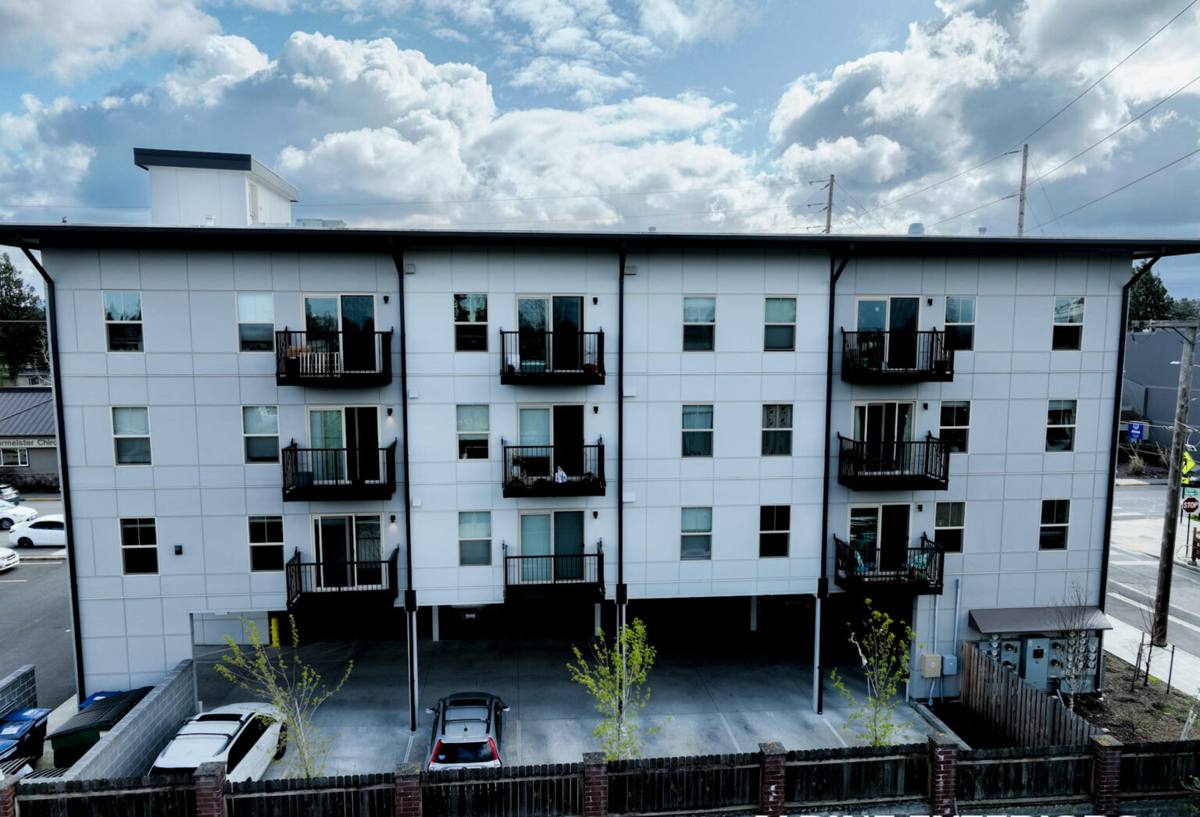
What Fidalgo Island's Climate Does to Window Openings
Anacortes sits surrounded by saltwater, and that shapes how windows and the framing around them age. A few things stand out for Old Town in particular:
- Salt air corrosion — metal fasteners, window hardware, and flashing that aren't rated for a marine environment can corrode faster here than they would twenty miles inland.
- Driving, wind-driven rain — storms coming off the water don't just fall straight down; they push rain sideways into window openings, which punishes any flashing detail that isn't lapped correctly.
- A long moss and damp season — shaded lots and mature trees common in older neighborhoods keep siding and trim wet for extended stretches, which is exactly the condition that finds a bad seal or missing sill pan.
Individually, none of these are dramatic. Together, over years, they're what turns a minor flashing gap into rotted sheathing or a soft sill. Getting the window detail right the first time matters more here than it does in a drier, more sheltered part of the state.
New-Construction vs. Pocket Replacement Windows
Homeowners often assume "replacement window" is the only option once a house is older. In Old Town, when siding is already being removed, a true new-construction window is usually the better call. Here's how they compare:
| Factor | New-Construction Windows | Pocket (Insert) Replacement |
|---|---|---|
| How it's installed | Set into the open framed rough opening with a nailing flange | Slid into the existing old frame, which stays in the wall |
| Flashing and moisture control | Fully renewed — sill pan, WRB integration, and flange flashing all fresh | Relies on whatever flashing (or lack of it) is already behind the old frame |
| Best used when | Siding is already off or the wall is being opened for other repairs | Siding and trim will stay untouched, budget is tight, old frame is sound |
| Glass area | Can often be slightly larger, since the old frame doesn't stay in place | Reduced slightly by the old frame remaining as a liner |
| Long-term performance in wet climates | Strong — new drainage path built into the wall assembly | Depends entirely on the condition of the original installation |
Pocket replacements aren't wrong in every situation — they have their place when a home's siding and trim are staying put and the existing frame is genuinely sound. But when the wall is already open, layering a new window over old, unknown flashing doesn't make sense.
What a Correct New-Construction Install Involves
The quality of a new-construction window install comes down to sequence. Skip a step or do it out of order, and the window itself doesn't matter — water will find a way in eventually. On an Old Town siding project, the process generally looks like this:
- Remove siding and trim around the opening to expose the sheathing.
- Inspect the framing and sheathing for rot or soft wood — common at sills in shaded, damp areas of the yard — and repair before moving forward.
- Install or repair the water-resistive barrier (housewrap or building paper) so it laps correctly with the rest of the wall.
- Form a sloped sill pan at the bottom of the opening so any water that gets past the window sheds back outside instead of sitting on the sill.
- Set the window plumb, level, and square, then fasten the nailing flange per the manufacturer's schedule.
- Flash the flange in shingle fashion — sides first, then the head lapped over the top — so water is always directed down and out, never trapped behind the drainage plane.
- Seal and insulate the interior gap, then re-side and re-trim to match the surrounding wall.
That shingle-style lapping in step six is the detail that matters most in a wind-driven-rain climate like this one. It's also the easiest step to shortcut if a crew is moving fast, which is why we treat it as non-negotiable rather than optional.
Matching the Character of Old Town's Older Homes
Many homes in Old Town Anacortes were built well before today's window styles existed, and swapping in something that looks out of place can hurt a home's character and curb appeal. New-construction windows give you more flexibility here than a pocket replacement does, since you're not constrained by an old frame:
- Grille patterns can be matched to the home's original divided-lite look without sacrificing modern glass performance.
- Exterior trim can be rebuilt to the same proportions as the original casing, rather than shrunk down to fit around a replacement frame.
- Frame material — vinyl, fiberglass, or wood-clad — can be chosen for the look and maintenance level that fits the home, not just whatever fits the existing pocket.
We're not precious about a single "correct" style — the goal is a window that performs well in this climate and looks like it belongs on the house, whether that's a simple cottage or a more detailed early-1900s design.
Our Process for Old Town Anacortes Projects
Because most of this work happens alongside a siding project, we coordinate the two so nothing gets rushed or done twice:
- Walkthrough and assessment — we look at existing window condition, framing access, and siding scope together, not as separate jobs.
- Written estimate — clear pricing for window units, flashing and sheathing repair, and siding tie-in, with no vague allowances.
- Permitting — we handle the paperwork with the City of Anacortes where structural or exterior changes require it.
- Removal and inspection — siding and trim come off, framing gets inspected before a single new window goes in.
- Installation — sill pans, flashing, and windows set per the sequence above, inspected before siding closes the wall back up.
- Final trim and cleanup — exterior finish work matched to the home, site cleaned, and a walkthrough before we call it done.
What Affects Cost
There's no single price for new-construction window work, because so much depends on what's found once the wall is open. The main cost drivers are:
| Factor | Why It Affects Cost |
|---|---|
| Number of window openings | More openings mean more flashing, framing checks, and labor hours |
| Window size and configuration | Large units or multi-panel configurations cost more than a standard single window |
| Framing and sheathing condition | Rot found once the wall is open adds repair scope that can't always be predicted in advance |
| Window material and glazing | Vinyl, fiberglass, and wood-clad options carry different price points and maintenance needs |
| Trim and exterior finish work | Rebuilding period-appropriate trim takes more time than a plain, simple casing |
| Story height and access | Second-story or hard-to-reach openings require staging or lift access |
We'd rather walk a home and give a real number than quote a range that doesn't hold up once the siding comes off.
Before You Hire — Questions Worth Asking
Whoever you hire for this work, a few questions will tell you quickly whether they're doing it correctly:
- Do you install a sloped sill pan under every window, or just caulk the opening?
- How do you sequence the flashing — sides first, then head, lapped over the drainage plane?
- Will you inspect and repair sheathing if you find rot once the siding is off?
- Are you licensed and bonded to do this work in Washington?
- Do you handle the city permit, or is that on the homeowner?
- What's covered under your workmanship warranty versus the window manufacturer's warranty?
If a contractor can't answer these clearly, or brushes past the flashing sequence, that's worth treating as a red flag on a coastal project like this one.
Why Local Experience in Old Town Anacortes Matters
Old Town's housing stock, its exposure to wind off the water, and its shaded, moss-prone lots aren't the same conditions you'd plan around in a newer subdivision inland. A crew that's opened up walls on this side of Skagit County before knows roughly what to expect behind the siding — where rot tends to show up, how much flashing detail a given exposure needs, and which trim details actually hold up here long-term. That experience shows up in fewer surprises mid-project and a finished install that's built for the conditions it actually has to survive, not just a generic install sheet.
If you're planning a siding project in Old Town Anacortes and want your windows handled correctly at the same time, we're happy to take a look and put together a free, no-pressure estimate. Fill out the form below and we'll go from there.