 Anacortes Siding
 Roof Repair Built for Skagit County Weather
Mount Vernon sits close enough to the Salish Sea and the Anacortes shoreline that homes here deal with a combination of weather stresses you don't see further inland: salt-laden air, long stretches of driving rain off Puget Sound, and a moss season that can run nine months out of the year in shaded, north-facing roof sections. None of these problems are dramatic on their own. A little moss, a slow drip, a few lifted shingles — it's easy to put off. But roofs in this part of Skagit County fail slowly and quietly, usually inside the attic or the wall cavity, long before a homeowner sees a stain on the ceiling. Roof repair here isn't just patching a leak. It's understanding how this specific climate attacks a roof system over years, not weeks.
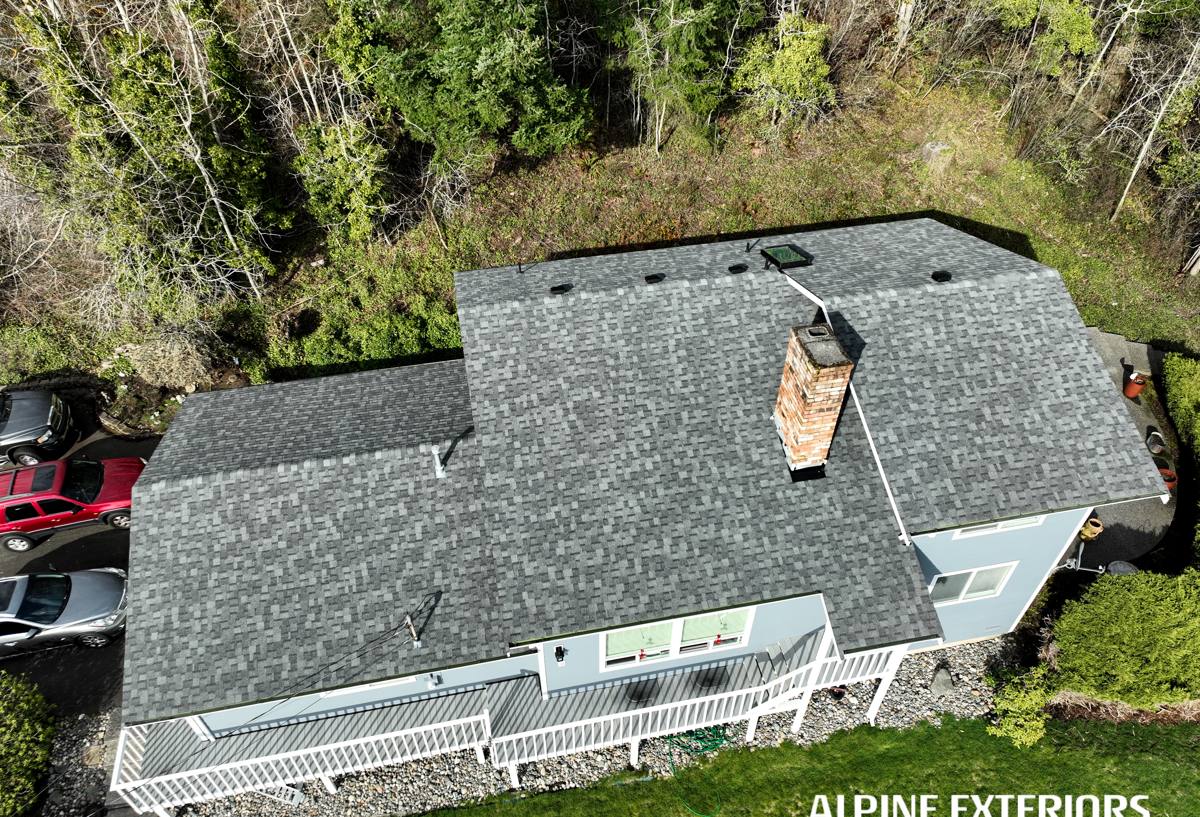
Why Local Homes Wear Out the Way They Do
Three things drive most of the roof repair calls we get in and around Mount Vernon and Anacortes:
- Salt air corrosion — metal flashing, fasteners, and gutter hardware corrode faster near the water than they would fifty miles inland. Once a fastener or flashing seam starts to go, water finds its way underneath the roofing material even if the shingles themselves look fine from the ground.
- Driving rain — wind-driven rain off the Sound doesn't just fall straight down. It gets pushed sideways and upward under shingle edges, around vents, and into any gap in flashing that wouldn't leak in a calmer climate. Roofs here need details — laps, seals, underlayment — that are more forgiving of wind-driven moisture than a standard installation in a drier region.
- Moss and organic growth — the marine layer keeps roof surfaces damp for long stretches, especially on north- and west-facing slopes shaded by mature trees, which are common on older Mount Vernon lots. Moss doesn't just sit on top of shingles. Its root structure lifts shingle tabs and holds moisture directly against the roofing material, which accelerates granule loss and, eventually, rot in the decking underneath.
None of these are exotic problems. They're just persistent, and a roof repair that doesn't account for all three tends to fail again within a season or two.
Signs a Repair — Not a Full Replacement — Is the Right Call
Not every roof issue means a new roof. Most of the repair work we do in Mount Vernon falls into a fairly predictable set of problems that can be fixed properly without tearing off a roof that still has useful life left:
- Isolated leaks around chimneys, skylights, plumbing vents, or roof-to-wall transitions
- Wind or storm damage limited to a section of the roof rather than the whole field
- Cracked, curling, or missing shingles in specific areas, especially near valleys and edges
- Moss buildup that has started lifting shingles but hasn't yet compromised the decking
- Corroded or failing flashing at valleys, chimneys, or dormers
- Soft spots or minor sag limited to a small area, often from a slow leak that's finally been traced
If the damage is widespread, the decking has rotted through in multiple areas, or the roof is past its expected service life across the board, replacement is the honest answer and we'll tell you that directly rather than stack patches on a roof that needs to come off.
What a Proper Roof Repair Actually Involves
A roof repair done right isn't just sealing the spot where water is showing up inside the house. Water travels before it drips, so the leak point and the entry point are often several feet apart. A proper repair means:
1. Tracing the leak to its actual source
This usually means getting on the roof and into the attic, not just looking at the ceiling stain. Flashing failures, nail pops, and worn underlayment are common culprits that have nothing to do with where the water eventually shows up indoors.
2. Checking the decking underneath
If water has been getting in for any length of time, the plywood or OSB decking under the affected shingles may be soft or delaminating. Patching shingles over rotten decking is a short-term fix that fails again within a year or two — we check this before closing up any repair.
3. Matching materials correctly
Shingle color and profile change over the years, and a mismatched patch stands out and can behave differently in weather than the surrounding roof. We match as closely as the existing roofing allows and are upfront when an exact match isn't possible.
4. Rebuilding flashing details, not just resealing them
Caulk and roofing cement over old flashing is a temporary fix, not a repair. Flashing that has corroded or pulled away needs to be replaced and properly integrated with the underlayment and shingle courses above and below it.
Repair vs. Replacement: How We Help You Decide
| Factor | Points Toward Repair | Points Toward Replacement |
|---|---|---|
| Age of roof | Under 15–20 years, depending on material | At or beyond expected service life |
| Extent of damage | Localized to one section or detail | Spread across multiple roof planes |
| Decking condition | Solid, no soft spots found | Soft, delaminated, or rotted in several areas |
| Moss/organic growth | Surface growth, shingles intact underneath | Growth has lifted and degraded shingles broadly |
| Shingle wear | Granule loss limited to affected area | Widespread granule loss, brittle shingles roof-wide |
| History of leaks | First occurrence or isolated pattern | Recurring leaks in different spots over time |
We walk every roof with this kind of honest checklist in mind before recommending a direction. A repair that's done well can reasonably extend a roof's life; a repair on a roof that's genuinely at the end of its service life just delays an inevitable replacement while adding cost.
Our Roof Repair Process
- Inspection — we get on the roof and in the attic where accessible, looking at flashing, underlayment condition, decking, ventilation, and moss or debris buildup, not just the reported leak spot.
- Written scope and estimate — you get a clear explanation of what's failing, why, and what the repair will involve, in plain language, before any work starts.
- Repair work — removal of damaged materials, decking repair where needed, proper flashing rebuild, and matched shingle or roofing material installation.
- Moss and debris treatment — where moss contributed to the problem, we clear growth and debris from valleys and low-slope areas so the repair isn't undermined again within a season.
- Final check — we confirm the repair holds under close inspection, including flashing laps and seal points, before calling the job done.
Materials and Methods We Use
For most Mount Vernon and Anacortes homes, that means composition shingle repair matched to the existing roof, corrosion-resistant flashing appropriate for a marine environment, and underlayment that holds up to sustained damp conditions rather than the minimum required in drier climates. On metal roofing, repairs focus on fastener condition, seam integrity, and coating wear, since salt air is harder on exposed metal than on shingle roofs. We don't push a full tear-off when a targeted repair with the right materials and detailing will genuinely hold.
Checklist: What to Ask Before Hiring a Roof Repair Crew
- Will you get on the roof and in the attic, or just look from the ground?
- Will the estimate spell out exactly what's being repaired and why?
- Do you check decking condition before closing up the repair, not just after a problem resurfaces?
- Are you licensed and insured to work in Washington, and can you provide proof?
- Do you have experience with moss and marine-climate roof issues specific to this area, or mainly drier-climate work?
- Will flashing be replaced where it's failed, or just resealed over?
- Is there a warranty on the repair labor, separate from any manufacturer material warranty?
Why Local Experience in Mount Vernon Matters
A roofing crew that mostly works drier, inland climates tends to under-detail flashing and underlayment for what Skagit County actually throws at a roof. Crews that work Mount Vernon and Anacortes regularly know which roof orientations hold moss longest, which flashing details fail first in driving rain, and how salt air shortens the working life of exposed fasteners. That local pattern recognition is the difference between a repair that solves the problem and one that becomes a callback in a year. We work this area consistently, and we bring that experience to every roof repair, whether it's a single leak or a storm-damaged section.
If you're dealing with a leak, storm damage, or moss buildup that's starting to lift shingles, we're happy to take a look and give you a straight answer on what it needs. Reach out for a free, no-pressure estimate using the form below.