 Anacortes Siding
 Old Town Anacortes Roofs Face Conditions Most Repairs Aren't Built For
Old Town Anacortes sits close to the water, under mature tree cover, on streets lined with some of the city's older housing stock. That combination is hard on a roof in ways that a lot of roof repairs simply don't account for. Salt-laden air off the surrounding waterways works on exposed fasteners, flashing, and vent boots year-round, not just during storms. Driving rain, common through fall and winter in this part of Skagit County, finds every gap in flashing and underlayment that a milder climate would never expose. And a long, shaded moss season — a direct result of the tree canopy that gives this neighborhood its character — keeps roof surfaces damp for months at a stretch instead of drying out between rains.
None of that is unique to any single house. It's the baseline every roof in this part of Anacortes has to survive, year after year. A repair that ignores it tends to fail again within a season or two. A repair that's built around it holds up.
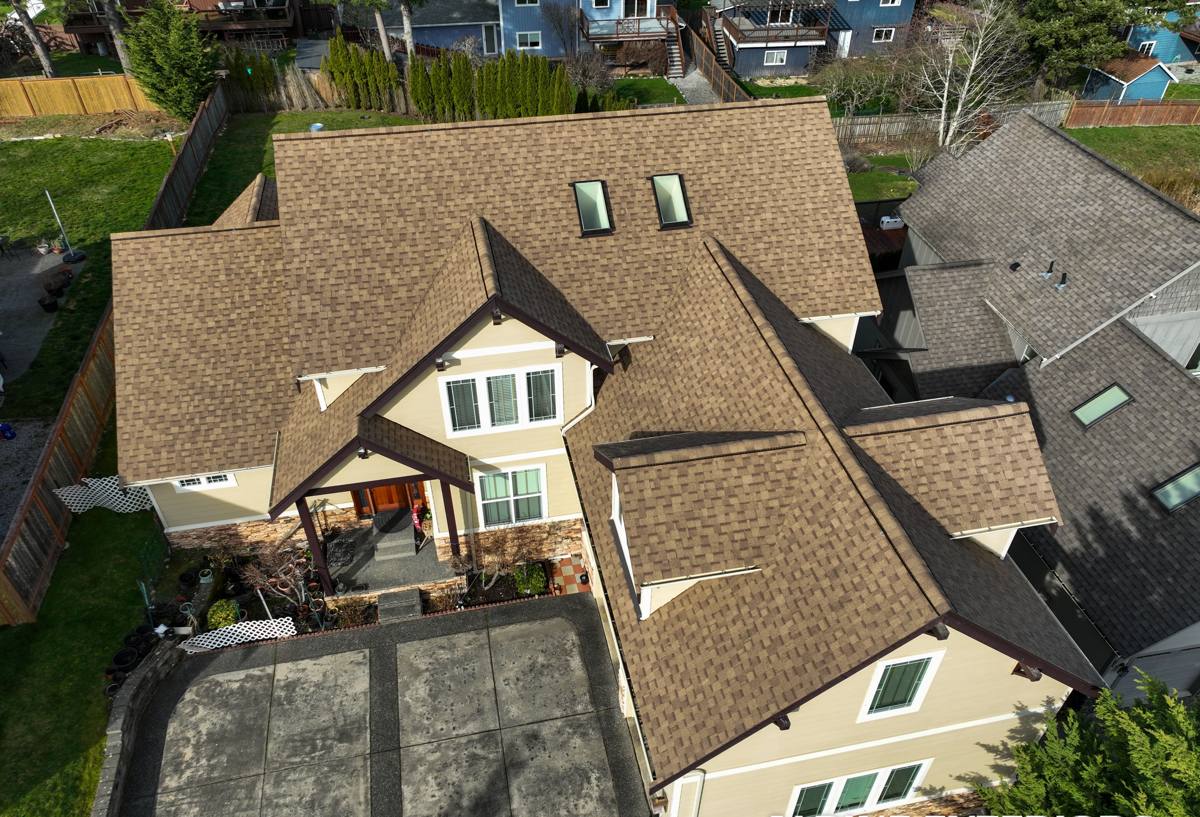
Recognizing When a Roof Needs Repair — Not Replacement
Signs inside the house
Most homeowners find out about a roof problem indoors, long after the roof itself started failing. Watch for:
- Water stains on ceilings or upper walls, especially after a heavy rain
- A musty smell in an attic or upstairs closet
- Visible daylight through the roof deck when you look up in the attic
- Sagging or soft spots in ceiling drywall
Signs on the roof itself
From the ground or a ladder, look for missing or curling shingles, granules collecting in gutters, dark streaking or thick moss growth, and flashing that's pulled away from a chimney, wall, or roof valley. Any one of these can usually be addressed with a targeted repair. It's when several show up together, or when the roof covering itself is past its expected service life, that replacement starts to make more sense than another patch.
Repair or Replace: How We Help You Decide
Not every roof problem calls for the same fix, and an honest contractor should be able to explain why. We look at the age of the roof, how much of it is affected, and whether the underlying deck and structure are still sound before recommending anything.
| Factor | Usually points to repair | Usually points to replacement |
|---|---|---|
| Age of roof covering | Under roughly 15 years for asphalt | Near or past manufacturer's expected life |
| Extent of damage | Localized — one section, one leak source | Spread across multiple slopes or layers |
| Roof deck condition | Solid, dry sheathing under the damaged area | Soft, rotted, or delaminated sheathing |
| Moss and granule loss | Surface growth, shingles still intact | Widespread granule loss, brittle shingles |
| Flashing condition | Isolated failure at one penetration | Original flashing failing throughout |
On many Old Town homes, the roof deck and framing are older than the current roof covering. That's exactly why we open up the damaged area before quoting anything — a repair estimate on a rotted deck isn't an honest estimate.
What a Correct Repair Actually Involves
A roof repair is more than swapping out a few shingles. Done right, it starts with tracing the leak to its actual source, which is often several feet away from where the stain shows up inside. Water travels along the underside of the deck before it drips through, so a repair that only addresses the visible drip point frequently misses the real problem.
Diagnosis before demolition
We start by inspecting the roof surface, the flashing at every penetration — chimneys, vents, valleys, and any wall-to-roof transitions — and the attic or roof deck from the inside where it's accessible. This is where we find out whether we're dealing with a flashing failure, worn-out roofing material, ventilation problems, or a combination of all three.
Matching materials, not just covering the hole
Once we know what's failed, the repair itself should tie into the existing roof properly — correct shingle or material match where possible, new underlayment in the repaired section, and flashing detailed to shed water the way the original design intended, not just caulked over.
Checking what caused it
A repair that doesn't address the cause is a repair you'll pay for twice. If moss buildup, poor attic ventilation, or a clogged gutter contributed to the failure, we'll tell you — and give you the option to address it, not just the symptom.
The Roofing Materials You'll Find on Old Town Homes
Older Anacortes neighborhoods have a mix of roofing generations layered into their housing stock. Knowing what you're working with changes how a repair should be handled.
| Material | What we typically see | Repair considerations |
|---|---|---|
| Asphalt composition shingle | Most common on updated roofs | Matching color/style gets harder as shingles weather and age; we source the closest match available |
| Older cedar shake | Occasionally found on original or older roofs | Requires experience with wood roofing details; we're upfront if a shake roof is past reasonable repair |
| Metal roofing or metal accent panels | Sometimes used on additions, porches, or dormers | Salt air accelerates fastener and seam corrosion; repairs need corrosion-resistant hardware |
| Built-up or low-slope sections | Common over porches, bay windows, additions | Different leak behavior than pitched roofing — needs its own inspection, not a general once-over |
Whatever material is on your roof, we won't push you toward a product line just because it's what we sell the most of. If your existing roof covering can be reasonably matched and repaired, that's what we recommend.
Moss, Algae, and the Long Wet Season
Moss is more than cosmetic. It holds moisture against the roof surface, works its way under shingle edges, and can lift material enough to let water in — especially on the north-facing and shaded slopes that are common on lots with mature trees, which describes a lot of Old Town Anacortes. Once moss takes hold, it tends to come back faster than homeowners expect, because the shade and moisture that grew it the first time haven't gone anywhere.
As part of a repair, we clear moss and debris from the affected area, check for granule loss underneath it, and let you know whether the roof would benefit from more frequent gutter and surface cleaning given how much shade the lot gets. We won't recommend pressure washing a shingle roof — it strips granules and shortens the roof's life rather than protecting it. Gentle removal and improved drainage do more good with less risk.
Flashing, Chimneys, and the Details That Actually Cause Leaks
Older homes tend to have more roof complexity than newer construction — additional dormers, chimneys, multiple roof planes, and additions tied into the original roofline at odd angles. Every one of those transitions relies on flashing to stay watertight, and flashing is almost always the first thing to fail, well before the roofing material itself wears out.
When we repair a roof in this neighborhood, we pay particular attention to:
- Chimney flashing and counterflashing, where masonry and roofing meet
- Valley flashing, where two roof slopes converge and water volume is highest
- Step flashing along walls and dormers
- Vent and pipe boot seals, which degrade with age and sun exposure
Driving rain off the water pushes moisture into gaps that a lighter rain would never reach, which is exactly why these details matter more here than they would inland.
Our Roof Repair Process
We keep the process straightforward so you know what to expect from first call to finished repair.
- Inspection: We look at the roof surface, flashing, and accessible attic space to find the actual source of the problem.
- Honest diagnosis: We explain what we found, in plain terms, including whether repair or replacement makes more sense.
- Written estimate: A clear scope of work and price before anything starts — no surprise add-ons.
- The repair: Matching materials, correct flashing detail, and attention to the cause, not just the symptom.
- Cleanup and walkthrough: We clear debris and show you what was done and why.
Why a Crew That Already Works Old Town Anacortes Matters
Old Town's narrower streets, mature trees, and closely spaced older homes make access and staging more involved than a newer subdivision — ladder placement, material delivery, and protecting a neighbor's yard all take more planning. A crew that's already familiar with the neighborhood works through those logistics faster and with less disruption.
Just as important is familiarity with how this specific stretch of Skagit County weather behaves — how quickly a roof needs to be dried in before rain returns, how much moss regrowth to expect on a shaded slope, and which flashing details tend to fail first on homes exposed to salt air off the water. That's the kind of judgment that comes from doing this work locally and repeatedly, not from a general roofing checklist.
A Practical Maintenance Checklist Between Repairs
A repair lasts longer when it's not fighting neglect in between visits. A few habits go a long way on an Old Town roof:
- Clear gutters and downspouts at least twice a year, more often under heavy tree cover
- Have moss removed gently as soon as it appears, rather than letting it spread
- Trim back branches that overhang the roof to reduce shade and debris
- Check attic ventilation isn't blocked by insulation or debris
- Have flashing and roof penetrations inspected after any major windstorm
- Address small leaks immediately — they rarely stay small in this climate
If you're noticing a stain on the ceiling, moss creeping across the roofline, or you just want an honest opinion on what your roof actually needs, we're happy to take a look. Estimates are free, there's no pressure, and you'll get a straight answer about whether you're looking at a repair or something bigger.