 Anacortes Siding
 Board & Batten Siding in Sedro-Woolley: What Makes This Style Different
Board and batten is one of the oldest siding profiles in the Pacific Northwest, and it's having a real moment in Sedro-Woolley right now — on farmhouse remodels, new builds off the valley roads, and additions where homeowners want a cleaner, more vertical look than lap siding gives them. The style is simple: wide vertical panels or boards, with narrower strips (battens) covering the seams between them. Done right, it's one of the most weather-resistant profiles you can put on a house, because the battens shed water away from the seams instead of letting it collect there. Done wrong — with the wrong material, the wrong fastening pattern, or gaps that trap moisture behind the boards — it's one of the fastest ways to grow a rot problem you can't see from the ground.
We install board and batten siding for homes throughout Skagit County, and Sedro-Woolley jobs have their own personality. This isn't a beachfront neighborhood — it's a river valley town with a lot of tree cover, shaded lots, and homes tucked back from the road. That changes what board and batten siding has to deal with over the years, and it changes how we detail the job.
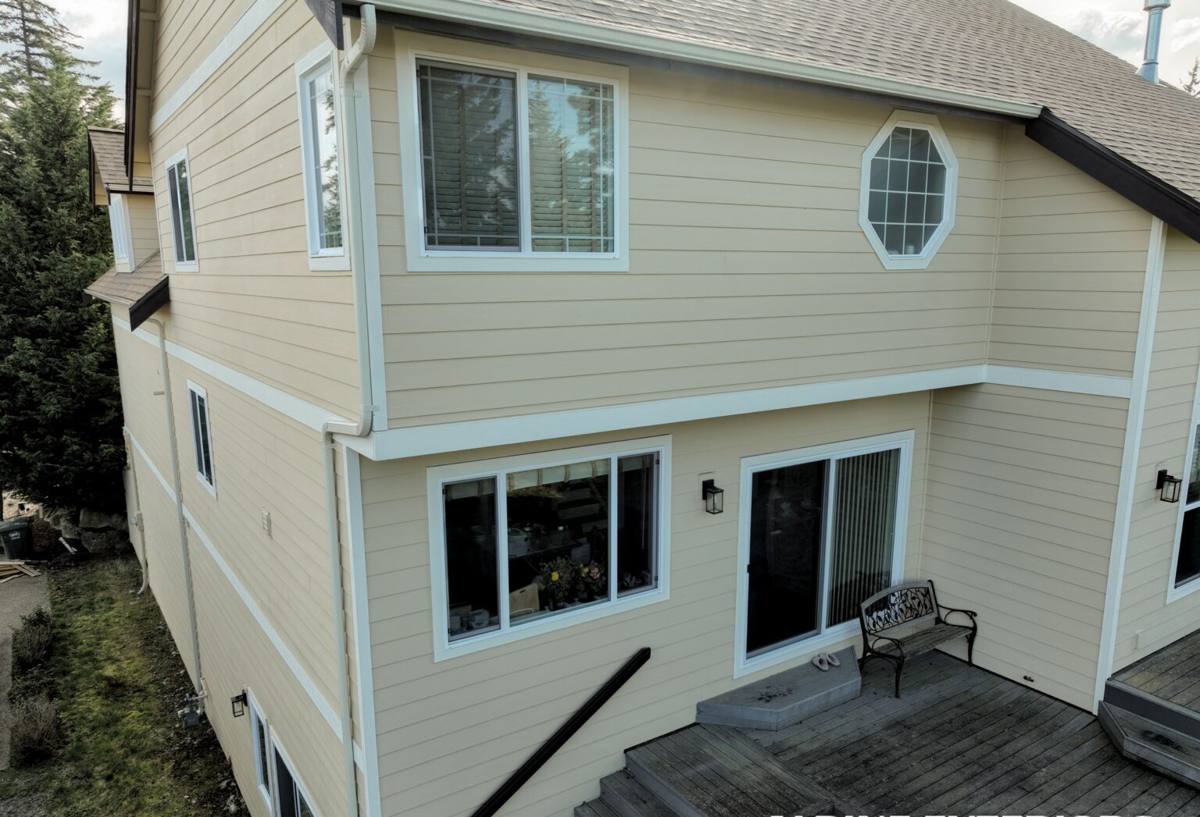
Why Sedro-Woolley's Climate Is Harder on Siding Than It Looks
Anacortes homes on the water deal with salt air first — it's corrosive to fasteners and hard on finishes right at the coast. Sedro-Woolley's problem is a different one. Sitting inland along the Skagit River with more forest canopy and less direct wind exposure, houses here hold onto moisture longer. Shaded north and east walls stay damp well after a storm has passed, and the long moss season that Skagit County is known for gets a head start on any surface that doesn't dry out quickly.
Board and batten makes this either better or worse than lap siding, depending on how it's built:
- More vertical seams than a horizontal profile — each seam is a potential path for water if the batten isn't sized and fastened correctly.
- Flat, wide faces — great for a clean look, but they hold standing moss and algae longer than a lapped, self-shedding surface if the material and finish can't handle it.
- Popular on shaded, tree-lined lots — exactly the Sedro-Woolley conditions where moss gets the most time to establish before a good drying week comes along.
None of that is a reason to avoid the style. It's a reason to be picky about the material behind it and the crew installing it.
Why We Only Install James Hardie for This Profile
Board and batten is often built with primed wood, engineered wood panels, or vinyl vertical panel systems, and each of those has a real weak point for this specific climate.
Primed spruce and engineered wood board and batten depend entirely on paint film and edge sealing to keep water out. In a valley town with long damp stretches and heavy moss growth, that paint film is under constant attack — algae and moss hold moisture against the surface, and once water gets past a compromised seam or a nick in the coating, wood-based panels swell, delaminate at the edges, or rot from the inside out before it's visible from the yard. Vinyl vertical siding doesn't rot, but it's thin, it flexes with temperature swings, and it doesn't take paint — so if a homeowner wants to update the color later, or if a panel fades unevenly on a shaded wall next to a sunnier one, there's no fix short of replacement.
James Hardie fiber cement board and batten is what we install instead, on every home, every time. It's non-combustible, it doesn't absorb water and swell the way wood-based panels do, and the ColorPlus factory finish is baked on under conditions no field-applied paint can match — which matters a lot on a profile with this many exposed edges and seams. It holds up to moss and algae cleaning without the coating failing, and it carries a strong transferable warranty backed by a manufacturer that engineers specific product lines for wet Pacific Northwest climates (their HZ5 line is built for exactly this kind of exposure). We don't install board and batten in anything else, and on a shaded Sedro-Woolley lot, that's not a style preference — it's the material that actually survives here.
What a Correct Board & Batten Install Actually Involves
The look of board and batten is simple. The assembly behind it is not, and this is where most of the failures we get called out to fix actually started.
Drainage plane and rainscreen
Vertical panels need a drainage gap behind them, not a flat nailed-tight install. We use furring strips or a purpose-built rainscreen product behind the panels so any water that does get past a seam has somewhere to go — down and out, instead of sitting against the wall sheathing. On shaded Sedro-Woolley walls that stay damp longer, this gap is the difference between a wall that dries out between rain events and one that never really does.
Batten spacing and fastening
Battens have to land over solid backing and be fastened per the manufacturer's spec — not just wherever looks even. Fastener spacing and placement affect how the panel expands and contracts with temperature and moisture, and getting this wrong is one of the most common causes of cracking and popped battens we see on other people's work.
Flashing at every horizontal transition
Window heads, water tables, roof-to-wall intersections, and the base of the wall all need proper flashing detail. Board and batten's vertical seams make this even more important than on lap siding, because there's no horizontal overlap doing extra work to shed water at these transitions.
Panel and batten sealing
Where caulking is required by the manufacturer's install instructions, it has to be a quality sealant applied correctly at the specified joints — not smeared everywhere as a catch-all. Over-reliance on caulk to make up for a bad flashing or gap detail is a shortcut that fails within a few years, especially with Skagit County's rain totals.
Cost Factors for Board & Batten in This Area
Every Sedro-Woolley home is different, so we don't quote sight unseen — but these are the factors that actually move the number on a board and batten job:
| Factor | Why It Matters Here |
|---|---|
| Wall prep and sheathing condition | Homes with existing moisture or rot damage from a prior siding failure need repair before new panels go up — common on older shaded-lot homes we've assessed. |
| Rainscreen/furring installation | Proper drainage gap adds labor but is non-negotiable for board and batten's long-term performance in this climate. |
| Home height and complexity | Two-story walls, gables, and dormers add scaffolding, cutting, and flashing detail time. |
| Panel size and batten spacing chosen | Wider reveals mean fewer seams and less material; narrower spacing gives a more traditional look but adds labor. |
| Trim and corner details | Board and batten's clean look depends on crisp corner and trim work, which takes more finish time than a basic lap job. |
| Access and site conditions | Tree cover, tight setbacks, and driveway access common on Sedro-Woolley lots can affect staging and equipment. |
Our Process for a Sedro-Woolley Board & Batten Project
We walk every job the same way, and we don't shortcut the parts that don't show up in the final photo.
- On-site assessment — we look at the existing wall assembly, check for hidden moisture or rot (especially on shaded, moss-prone faces), and talk through reveal width and batten spacing options.
- Written scope and estimate — a clear breakdown of what's included: prep, rainscreen, flashing, panels, battens, trim, and finish.
- Prep and repair — any damaged sheathing or framing gets addressed before a single panel goes up. Covering up a problem wall is not how we work.
- Rainscreen and flashing install — the unglamorous part that determines whether the job still looks good in fifteen years.
- Panel and batten installation to manufacturer spec — correct fastening, spacing, and sealing per James Hardie's published instructions, which is also what keeps the warranty intact.
- Final walkthrough — we go over the finished work with the homeowner before calling the job done.
Why a Local Crew Matters for This Specific Job
Board and batten is less forgiving of a rushed or inexperienced install than standard lap siding — the flashing details are more particular, and the consequences of getting the drainage plane wrong take longer to show up but are more expensive to fix once they do. A crew that already works Sedro-Woolley and the surrounding Skagit County valley knows what these lots do to a wall over a wet winter, has already seen how moss establishes on shaded board and batten faces, and builds the drainage and flashing detail with that in mind from the start — not as an afterthought after a callback.
Being Anacortes-based also means we're not driving in from out of the area for a warranty check or a question six months after the job. That matters on a siding style where the real test isn't how it looks on install day — it's how it performs through a few full Skagit County winters.
A Simple Pre-Project Checklist
- Confirm the current siding material and check for existing moisture damage before committing to a reveal/batten pattern
- Ask your contractor how they're handling the drainage plane behind the panels, not just the panels themselves
- Get the flashing plan for windows, water table, and roof intersections in writing
- Confirm which James Hardie board and batten product and color line is being quoted, and the actual manufacturer warranty terms
- Ask how shaded, moss-prone walls will be detailed differently from sun-exposed walls, if at all
- Get a full written scope — prep, rainscreen, flashing, install, and trim — before any work starts
Get a Straight Answer for Your Home
If you're weighing board and batten for a Sedro-Woolley home, we're happy to come take a look, walk the walls with you, and give you an honest read on what the job actually needs — no pressure, no inflated scope. Use the form below to request a free estimate.