 Anacortes Siding
 Building Decks for Sedro-Woolley's Skagit County Climate
Sedro-Woolley sits inland from Anacortes and the water, but it still lives inside the same wet Skagit County weather pattern — long stretches of driving rain from fall through spring, heavy shoulder-season humidity, and moist marine air that pushes in off the Sound and settles into the valley. A deck built here doesn't fail because of one dramatic storm. It fails slowly, from months of standing moisture, shaded framing that never fully dries, and a moss season that can run six months or longer in a bad year. The homes that hold up are the ones where the deck was built with that slow, grinding exposure in mind from day one — not just bolted together to look good for the first summer.
We build decks in Sedro-Woolley and the surrounding Anacortes area regularly, and the callbacks we see almost never trace back to bad weather. They trace back to a ledger board that wasn't flashed correctly, joists that were never sized or spaced for the wet load they'd carry, or decking material chosen for looks instead of how it behaves after its twentieth wet winter.
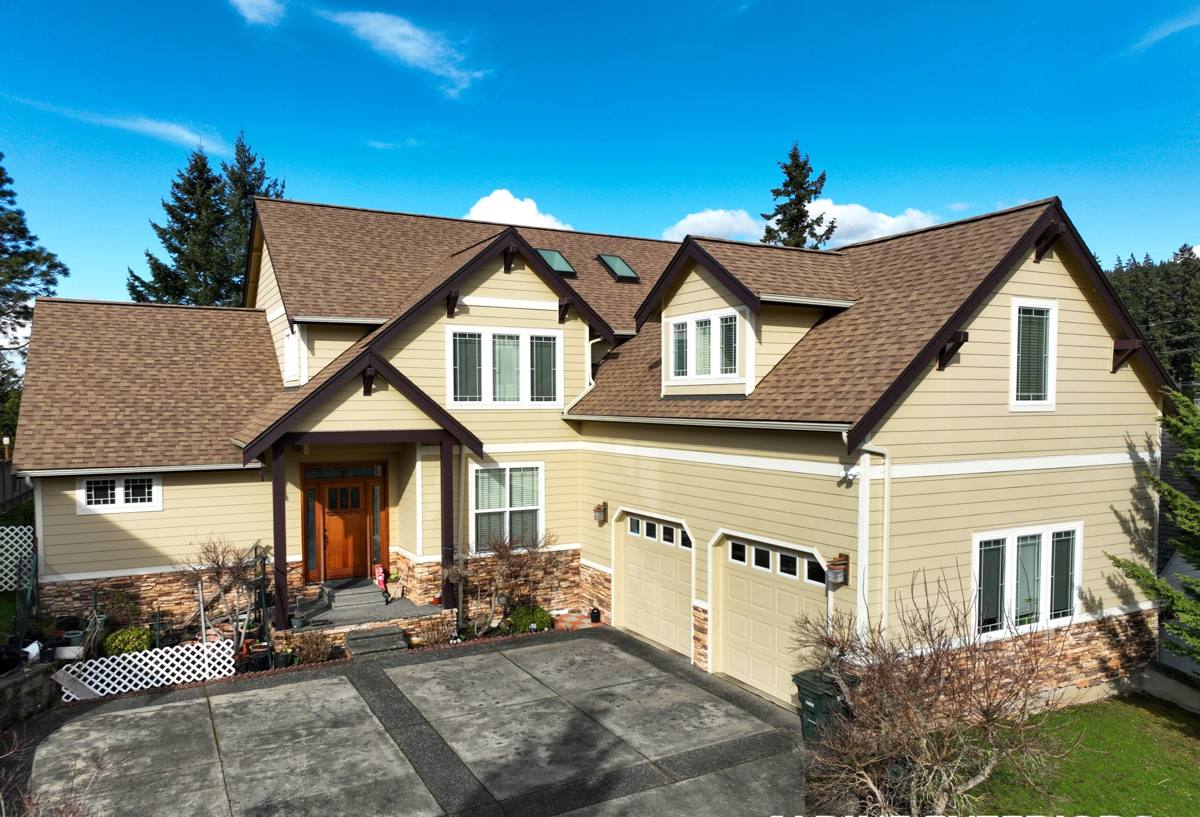
What Correct Deck Framing Looks Like Here
Footings and Frost Depth
Footings need to be sized and set to the depth required for this part of Skagit County, on soil that's actually been checked rather than assumed. Skagit County has areas of soft, poorly draining soil, and a footing that's undersized or set too shallow will move over a few wet-dry cycles — showing up later as a deck that feels slightly springy or a stair stringer that's pulled out of square.
Ledger Board Attachment and Flashing
The ledger board — where the deck attaches to the house — is the single most common point of failure on decks in this region. If it isn't flashed correctly to shed water away from the house band board, water works its way behind the ledger and sits there, out of sight, for years. By the time it shows on the interior or in a soft spot on the siding, the framing behind it is usually already compromised. This is not a place to save time or money.
Joist Spacing and Board Selection
Joist spacing has to match the decking material you're putting on top of it — composite and PVC boards generally need tighter spacing than solid wood to avoid flexing or waviness over time, especially once they've absorbed a normal winter's worth of moisture. Framing lumber should be rated for ground contact or exterior use where it's called for, not just whatever dimensional lumber happens to be on hand.
Choosing Decking Material for Long Wet Winters
There's no single "best" decking material — there's the right material for your budget, your maintenance appetite, and how much shade and moisture the deck will actually sit in. Here's how the common options compare for a climate like this one:
| Material | Moisture Behavior | Maintenance | Typical Lifespan Here |
|---|---|---|---|
| Pressure-treated wood | Absorbs and releases moisture; prone to cupping and checking if not sealed regularly | Annual cleaning and re-sealing recommended | 15-20 years with upkeep |
| Cedar | Naturally moisture- and rot-resistant, but still needs finish protection in this rainfall | Periodic cleaning and oiling to hold color and grain | 20-25 years with upkeep |
| Capped composite | Doesn't absorb water into the core; resists cupping and rot | Occasional washing; no sealing or staining | 25-30+ years |
| PVC decking | Fully synthetic, essentially impervious to moisture | Lowest maintenance of the group | 25-30+ years |
Composite and PVC boards cost more up front, and that's a real trade-off, not a marketing gimmick — you're paying for the moisture behavior, not just the warranty length. Wood costs less initially but asks for real, ongoing maintenance to get the lifespan numbers above; skip a couple of seasons of sealing and you'll shorten that considerably. We'll walk through the honest trade-offs for your specific deck rather than push one material across the board.
Moss, Algae, and Shade: The Long-Season Problem
Sedro-Woolley's tree cover and the region's extended damp season mean moss and algae aren't a cosmetic afterthought here — they're a structural consideration. A deck built under mature trees or on the north or shaded side of a house can stay wet for days after a rain event that a sunnier deck sheds off in hours. Moss holds moisture directly against the board surface, and on wood decking that translates to accelerated rot; on composite, it mostly means slick, dark surfaces that need regular cleaning.
Good design can reduce how bad this gets. Gapping between boards for airflow, keeping decking off grade level where possible, and thinking through where downspouts and roof runoff land relative to the deck all matter more here than they would in a drier climate. None of it eliminates the need for seasonal cleaning, but it cuts down how aggressively moss and algae take hold between cleanings.
Permits and Skagit County Requirements
Deck permitting depends on the size, height, and attachment method of the project, and requirements can differ slightly depending on whether the property falls under City of Sedro-Woolley jurisdiction or unincorporated Skagit County. Rather than guess at your specific situation, we handle the applicable permit and inspection process as part of the build — that includes making sure footings, framing, and guardrail height meet current code before the deck is signed off, not just built to "look right."
If your deck is attached to the house, expect an inspection of the ledger connection specifically — it's one of the most commonly flagged items in this region precisely because it's the most common failure point.
Our Deck Building Process
- On-site assessment. We look at drainage, sun/shade exposure, existing grade, and how the deck will tie into the house before recommending anything.
- Material and layout discussion. We go over wood versus composite versus PVC honestly, based on your budget and how much maintenance you actually want to do.
- Permitting. We pull the required permits and schedule inspections so the finished deck is code-compliant, not just built.
- Footings and framing. Footings set to proper depth, ledger flashed correctly, joists sized and spaced for the decking material chosen.
- Decking, railing, and stairs. Installed to manufacturer spec where composite or PVC is used, since improper fastening or spacing is what voids most material warranties.
- Final walkthrough. We go over basic care with you before we consider the job done.
Keeping a New Deck Sound for Years: Maintenance Checklist
A well-built deck still needs a little seasonal attention in this climate. This isn't a heavy list, but skipping it consistently is how a 25-year deck becomes a 15-year deck:
- Sweep leaves and debris off the surface regularly through fall — trapped organic matter is what feeds moss growth
- Clean the deck surface at least once a year, more often in shaded areas, to knock back algae and moss before it takes hold
- Check and clear the gaps between boards so water and debris aren't trapped
- Inspect the ledger board area and any flashing once a year for signs of staining or softness
- Re-seal or re-stain wood decking on the schedule the product actually requires, not "when it looks bad"
- Check railing and stair connections for looseness, especially after the first full winter
- Keep gutters and downspouts near the deck clear so runoff isn't dumping directly onto or under it
Why a Crew That Already Works Sedro-Woolley Matters
A deck detail that works fine in a dry climate can be the wrong call here, and a crew that mostly builds in different conditions won't necessarily know that. We work throughout the Anacortes area, including Sedro-Woolley, and the framing, flashing, and material choices we make are based on what actually holds up through repeated Skagit County winters — not on a generic build spec. That local pattern recognition is worth more than it sounds like on paper: it's the difference between catching a bad ledger detail before it's covered up and finding it three years later as a soft spot in the siding.
We're also around after the build. If a question comes up about maintenance, a warranty item, or how the deck is handling its first wet season, you're calling a crew that's still working in the area, not chasing down someone who did one job and left.
If you're planning a new deck or replacing one that didn't hold up to a Skagit County winter, we're happy to take a look and give you a straight, no-pressure estimate — just fill out the form below.