 Anacortes Siding
 Roofing Built for Sedro-Woolley's Weather, Not a Generic Climate
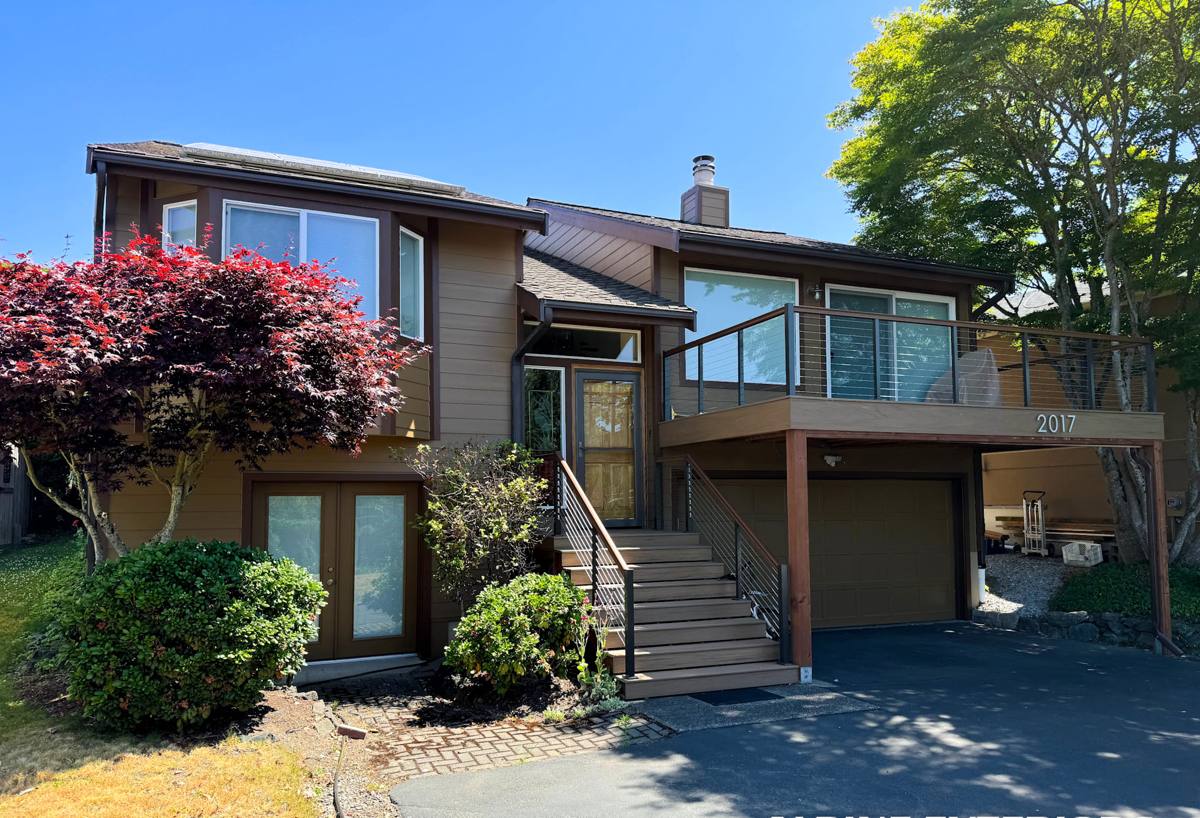
Sedro-Woolley sits inland along the Skagit River, tucked against the foothills of the Cascades, which gives it a slightly different weather profile than the shoreline towns closer to Anacortes. You get less direct salt exposure here than homes right on the water, but you make up for it with heavier tree cover, more shade, and rainfall that lingers on roof surfaces longer before it dries. That combination is exactly what drives moss growth, slow-draining valleys, and premature shingle wear on roofs that weren't detailed correctly the first time.
A roof that works well in a dry, sunny climate is not automatically the right roof for a property surrounded by evergreens and river-valley humidity. The materials might be identical, but how they're installed — ventilation, underlayment choices, flashing details, and roof pitch considerations — needs to account for the fact that a Sedro-Woolley roof spends a large part of the year wet or damp, not just rained on occasionally.
What Skagit County's Climate Actually Does to a Roof
Long Wet Seasons and Slow Drying Time
Western Washington's wet season isn't just about total rainfall — it's about duration. Roofs here can stay damp for days at a stretch, especially on shaded slopes or north-facing sections that don't get direct sun. That extended moisture exposure is harder on roofing materials and underlayment than a shorter, heavier storm would be, because it gives water more time to find any weak point in the flashing or seal.
Moss and Organic Growth
Between the tree cover common around Sedro-Woolley properties and the extended damp season, moss and algae growth is one of the most common issues we see on local roofs. Moss isn't just a cosmetic problem — as it establishes itself, it lifts shingle edges, holds moisture against the roof deck, and accelerates granule loss. A roof installed without moss-resistant considerations in a heavily shaded Sedro-Woolley yard will show growth years earlier than the same roof in an open, sunny location.
Temperature Swings and Occasional Snow Load
Skagit County doesn't get the coastal moderation that Anacortes proper enjoys quite as consistently, so inland communities like Sedro-Woolley can see colder snaps and occasional snow accumulation in winter. Roofing systems need underlayment and flashing that hold up under freeze-thaw cycling, not just steady rain.
Signs a Sedro-Woolley Home Needs a New Roof, Not Another Repair
Homeowners often ask us how to tell whether a problem is a patchable repair or a sign the whole roof is nearing the end of its service life. A few honest indicators:
- Shingles that are curling, cupping, or losing granules across large sections rather than one isolated spot
- Moss coverage that comes back within a year or two of cleaning, especially on shaded slopes
- Daylight visible through the roof deck from inside the attic, or damp insulation
- Repeated leaks in different spots each winter rather than the same single point
- Sagging rooflines or soft spots underfoot when walked (a sign of deck damage)
- A roof approaching or past the manufacturer's expected service life for its material and local exposure
- Rising energy bills tied to poor attic ventilation or insulation that a re-roof would let you correct
If only one or two of these apply and the roof is still relatively young, a repair may be the honest answer. We'll tell you that directly rather than push a full replacement that isn't needed yet.
What a Correctly Done Roof Installation Actually Involves
A new roof is more than laying shingles over an existing surface. For Sedro-Woolley's wet, shaded conditions, the details below matter as much as the material choice itself.
Full Tear-Off and Deck Inspection
We remove the existing roofing down to the deck rather than layering over it. That lets us actually see the plywood or OSB sheathing underneath, which is the only way to catch rot, soft spots, or water staining that a re-layer would simply hide. Any damaged decking gets replaced before anything new goes down — skipping this step is the single most common shortcut behind early roof failures.
Underlayment and Ice/Water Protection
Given how much time water spends sitting on a Skagit County roof, we don't treat underlayment as an afterthought. Self-adhered ice-and-water membrane goes in valleys, around penetrations, and along eaves where water is most likely to back up or pool — areas that take the brunt of a long, wet winter.
Flashing Detail Work
Chimneys, skylights, dormers, and wall-to-roof transitions are where the vast majority of roof leaks actually originate — not the open field of shingles. Correct step flashing, counter-flashing, and properly lapped valley metal are what keep water out of these transition points over the long run.
Ventilation That Matches the Roof
Balanced intake and exhaust ventilation keeps the attic dry and temperature-stable, which reduces condensation buildup, helps shingles last their full rated life, and can meet manufacturer requirements for a full warranty. A roof with poor ventilation traps moisture underneath it — the last thing a damp, tree-shaded property needs.
Fastening and Nailing Pattern
Manufacturer nailing patterns exist for a reason, and skipping or misplacing fasteners is a leading cause of blow-offs in wind and premature shingle failure. We follow the pattern specified for the product being installed, every time, not a shortcut version.
Roofing Material Options for Sedro-Woolley Properties
There's no single "best" roofing material — the right choice depends on your home's style, budget, roof pitch, and how much shade and tree debris the roof deals with. Here's an honest comparison of the options we install most often in this area.
| Material | Typical Lifespan | Moss/Debris Resistance | Best Fit |
|---|---|---|---|
| Architectural asphalt shingle | 25–30 years | Good with proper detailing; algae-resistant granule options available | Most homes — balances cost, appearance, and performance |
| 3-tab asphalt shingle | 15–20 years | Fair; thinner profile sheds less debris | Budget-driven projects, secondary structures |
| Standing seam metal | 40–60 years | Excellent; smooth surface discourages moss | Homes prioritizing longevity and steep-slope water shedding |
| Composite/synthetic shake | 30–50 years | Good | Homes wanting a traditional look with lower upkeep than wood |
We're upfront that we generally steer clients away from cedar shake and wood shingle roofing for this region. It's not that wood shakes are a bad product everywhere — it's that in a shaded, damp, tree-heavy environment like Sedro-Woolley, wood roofing demands a maintenance schedule most homeowners don't want to keep up with, and moisture retention shortens its real-world lifespan well below what a dry climate would give it. That's a maintenance and moisture-behavior trade-off, not a knock on the material itself.
Cost Factors Homeowners Should Actually Weigh
Rather than quote a flat number that doesn't mean much without context, here's what actually drives the cost of a new roof in this area:
| Factor | Why It Matters |
|---|---|
| Roof size and number of facets | More valleys, hips, and dormers mean more flashing labor and material waste |
| Existing layers to remove | Tear-off of multiple old layers takes more time and disposal cost than a single layer |
| Deck condition | Rotted or soft sheathing found during tear-off requires replacement before install |
| Material choice | Metal and composite products cost more upfront but shift the lifetime cost curve |
| Roof pitch and access | Steep or hard-to-access roofs require more safety setup and labor time |
| Ventilation upgrades | Adding or correcting intake/exhaust venting is worth doing during a re-roof, not after |
We walk every one of these through with you on-site before writing an estimate, so the number you get reflects your actual roof, not a generic square-footage guess.
How Our Installation Process Works
- On-site inspection and honest assessment — we look at the current roof, attic ventilation, and any visible problem areas before recommending replacement over repair.
- Written estimate — material options, scope of work, and pricing laid out clearly, no vague allowances.
- Scheduling around weather windows — in a region with a long wet season, timing matters. We plan installations to avoid leaving a deck exposed during an incoming rain system.
- Tear-off and deck inspection — full removal of old roofing, with any deck damage addressed and documented before covering it back up.
- Underlayment, flashing, and material installation — done to manufacturer specification, not a shortcut version.
- Final walkthrough — we go over the completed roof, ventilation, and cleanup with you directly.
Permits, Code, and Local Considerations
Roof replacements in Skagit County typically require a building permit, and inspections confirm the work meets current code — including ventilation and, where applicable, snow load requirements for the area. We handle the permitting process as part of the job rather than leaving it to the homeowner to sort out. This isn't paperwork for its own sake; it protects you if there's ever a warranty question or a future home sale where the buyer's inspector asks for permit history.
Why Hiring a Crew That Already Works in Sedro-Woolley Matters
A roofing crew that regularly works Sedro-Woolley and the surrounding Skagit County communities already understands which slopes hold moss the longest, which older neighborhoods tend to have specific decking or flashing quirks, and how to schedule tear-offs around this region's rain patterns instead of getting caught mid-project. That local pattern recognition is hard to replace with a crew that only occasionally travels into the area — it shows up in fewer surprises during tear-off and fewer callbacks after the job is done.
Protecting Your New Roof After Installation
A correctly installed roof still benefits from basic upkeep, especially in a shaded, damp climate. A short list worth following:
- Keep gutters clear of needles and leaf debris so water isn't backing up under the roof edge
- Trim back overhanging branches that keep sections of the roof shaded and slow to dry
- Have moss growth addressed early rather than letting it establish for a full season
- Schedule a simple visual inspection after major windstorms
- Confirm attic ventilation stays unobstructed by insulation or stored items
None of this requires a maintenance contract or a big time commitment — it's the same handful of habits that keep any roof in this climate performing the way it's supposed to.
If your Sedro-Woolley roof is showing its age, or you just want a straight answer on whether repair or replacement makes more sense, we're glad to take a look. Fill out the form below for a free, no-pressure estimate — we'll walk the roof, explain what we find, and give you options instead of a sales pitch.