 Anacortes Siding
 Board & Batten in a Waterfront Neighborhood
Ship Harbor sits at the water's edge of Anacortes, close enough to the strait that the weather off the water is a daily fact of life, not an occasional event. Board and batten siding — with its narrow vertical boards and raised battens covering the seams — has always suited this kind of Pacific Northwest waterfront look. It reads as clean, tailored, and a little more custom than lap siding, and it works on everything from a modest rambler to a larger view home. But the same style choices that make board and batten attractive also create more seams, more shadow lines, and more places for water to find a way in if the installation isn't done with this specific climate in mind.
This page is about that one detail: what board and batten siding needs to hold up in Ship Harbor specifically, not siding in general.
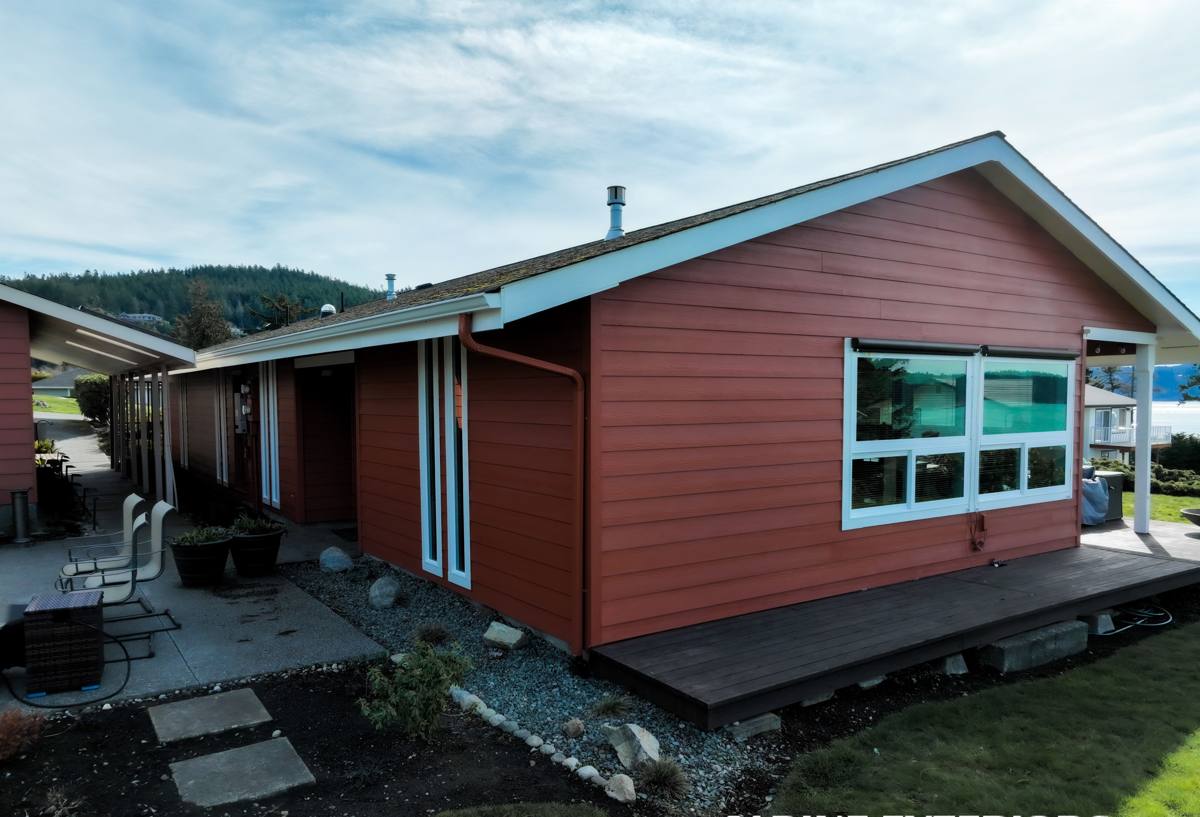
What Ship Harbor's Climate Actually Does to Siding
Salt Air
Being this close to Rosario Strait means airborne salt is a constant, low-level presence on anything exposed to the outdoors. Salt air accelerates corrosion on fasteners, staples, and any exposed metal trim. On a board and batten wall, the battens are fastened through the boards below, which means there are more penetration points per square foot than on standard lap siding — and every one of those fasteners is a spot where corrosion can eventually telegraph through the finish if the wrong hardware was used.
Driving, Wind-Driven Rain
Anacortes gets plenty of rain that falls straight down, but the exposures that face the water regularly see rain driven sideways by wind off the strait. Vertical board and batten has more butt joints and more vertical seams than horizontal lap siding, and each one is a potential entry point for wind-driven moisture if flashing and caulking details aren't handled correctly at installation.
A Long Moss Season
Shaded, north-facing walls and anything tucked under tree cover stay damp for long stretches of the year in this part of Skagit County. Moss and algae need that sustained moisture to establish, and once they get a foothold on a porous or poorly finished siding surface, they hold water against the wall even longer — which is exactly the wrong thing to have happen behind a batten seam.
Why the Material Choice Matters More Here Than in a Drier Climate
Board and batten is available in several materials, and in a mild, dry climate the differences between them show up slowly. On the water in Ship Harbor, they show up fast. Here's how the common options actually compare under this specific set of conditions.
| Material | Salt Air Behavior | Moisture Behavior | Long-Term Upkeep |
|---|---|---|---|
| James Hardie fiber cement (HardiePanel + battens) | Non-combustible, dimensionally stable, factory ColorPlus finish resists salt-driven fading and chalking | Engineered to handle Pacific Northwest moisture cycles; won't rot | Occasional rinse; no repainting on the ColorPlus finish for years |
| Cedar board and batten | Natural oils help some, but fasteners and finish still take the brunt | Absorbs and releases moisture; prone to cupping and checking near the water | Refinishing on a recurring cycle, more often near salt air |
| Engineered wood (LP-type) board and batten | Requires an intact factory coating; edges are the weak point | Vulnerable to swelling if moisture reaches the wood core through a cut edge or seam | Regular inspection of seams and cut edges required |
| Vinyl board and batten | Doesn't corrode, but can become brittle and fade with UV and salt exposure | Not a water barrier itself — relies entirely on what's behind it | Low upkeep, but panels can warp or crack over time and are hard to color-match if replaced later |
We install James Hardie fiber cement exclusively. It's not the only board and batten material on the market, but it's the one we're willing to warranty and stand behind on a wall that faces this kind of weather.
What a Correct Board & Batten Installation Requires
Board and batten looks simple from the curb, but it has more failure points than lap siding if any of the following gets skipped. This is the checklist we hold every job to:
- A continuous water-resistive barrier behind the siding, lapped correctly at every seam and penetration
- A rainscreen gap (furring strips or an equivalent drainage space) so any moisture that does get behind the boards can drain and dry instead of sitting against the wall
- Corrosion-resistant fasteners rated for coastal exposure, sized and spaced to Hardie's published fastening schedule
- Proper board spacing and batten placement so the assembly can expand and contract without stressing the joints
- Correct flashing at every window, door, and roof-to-wall transition — the places board and batten most often fails
- Factory-finished ColorPlus panels wherever possible, so cut edges and field-painted touch-ups are minimized
- Sealed and primed cut ends on any field cuts, per manufacturer spec, before they go on the wall
Our Process for Ship Harbor Homes
Because we work this end of Anacortes regularly, our process starts with the exposure, not the product catalog.
1. Exposure Assessment
We walk the home and note which elevations face the water and prevailing wind, which stay shaded and damp longer, and where the existing siding shows the earliest wear — that tells us where extra attention to flashing and drainage detail matters most.
2. Tear-Off and Sheathing Check
Old siding comes off and we inspect the sheathing underneath for any moisture damage before anything new goes up. Covering a hidden problem with new siding just hides it longer.
3. Water-Resistive Barrier and Rainscreen
We install a continuous drainage plane and rainscreen gap before a single board goes on. This is the single biggest factor in whether board and batten holds up on a waterfront wall.
4. Hardie Panel and Batten Installation
Boards and battens go on to Hardie's fastening and spacing specifications, with corrosion-resistant fasteners throughout and careful attention to every seam, corner, and trim transition.
5. Flashing and Sealant Details
Windows, doors, and roof lines get flashed and sealed before trim closes them in — not caulked over afterward as a shortcut.
6. Final Walkthrough
We check every elevation together with the homeowner before calling the job done.
Common Mistakes We See With Board & Batten in This Area
Most of the board and batten problems we get called out to inspect on the water side of Anacortes trace back to a handful of repeatable mistakes: no rainscreen gap, so trapped moisture has nowhere to go; standard fasteners that corrode and streak the finish within a few seasons; battens face-nailed without accounting for expansion, leading to cracked boards; and flashing skipped or minimized at window heads to save time. None of these show up on the day of installation — they show up two or three winters later, which is exactly why the installation details matter more than the finished look on day one.
Maintenance in a Salt-Air, Moss-Prone Environment
A correctly installed James Hardie board and batten system is low-maintenance, not no-maintenance. In Ship Harbor, that means a periodic soft rinse to clear salt residue and organic buildup before moss or algae can establish, keeping gutters and downspouts clear so runoff isn't sheeting down the wall face, and a visual check of caulked joints and trim after the wettest stretch of winter. None of this is heavy work, but skipping it on a waterfront exposure shortens the life of even a well-installed wall.
Why Hiring a Crew That Knows Ship Harbor Matters
Board and batten installed to a generic inland spec will often look fine for the first year or two anywhere, including here. The difference shows up later, on the elevations that face the wind and the ones that stay shaded and damp. A crew that already works this stretch of Skagit County knows which walls need the extra flashing attention, which fastener spec actually holds up against salt air over time, and where moss takes hold first — because they've already seen it happen on other homes nearby. That's not a marketing claim, it's just the practical advantage of local, repeat experience with the same weather every job on this coastline has to deal with.
If you're considering board and batten siding for a home in Ship Harbor or elsewhere in Anacortes, we're happy to walk your exterior with you and talk through what your specific exposures need. Use the form below to request a free, no-pressure estimate.