 Anacortes Siding
 Building a Deck That Actually Holds Up in Ship Harbor
Ship Harbor sits close to open water on Fidalgo Island, and that location shapes everything about how a deck should be built there. Homes in this part of Anacortes get more direct exposure to salt-laden wind, driving rain off the strait, and the shaded, damp conditions that keep moss and algae active nearly year-round. A deck built to a generic spec sheet might look fine for a season or two, but the combination of salt, moisture, and shade in this area finds every weak point in the wood, the fasteners, and the framing underneath. This page covers what we've learned building and repairing decks in this specific environment, and what a correctly built deck in Ship Harbor actually requires.
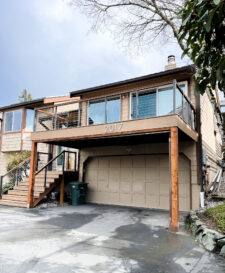
What Salt Air, Rain, and Moss Do to an Outdoor Deck
Salt Air and Corrosion
Airborne salt from Rosario Strait and the surrounding waterways doesn't just affect boats and metal railings near the shoreline — it travels on the wind and settles on any exposed surface, including decks set back from the water. Salt accelerates corrosion in fasteners, joist hangers, and any hardware that isn't rated for coastal exposure. Once a fastener starts to corrode, it weakens from the inside before you ever see rust on the surface, which is why hardware selection matters as much as the decking material itself.
Driving Rain and Moisture Intrusion
Skagit County gets sustained periods of wind-driven rain, and in Ship Harbor that rain often comes in at an angle off the water rather than falling straight down. That matters for how decking boards, ledger connections, and railing posts are flashed and sealed. Water that gets trapped between a deck board and a joist, or behind a poorly flashed ledger board, doesn't dry out quickly in our climate — it sits, and that's where rot starts.
Moss, Algae, and Surface Buildup
Many lots in this area have mature trees and partial shade, which keeps deck surfaces damp longer after a storm. That combination of shade and moisture is exactly what moss and algae need to take hold. Beyond looking bad, a mossy deck surface is a real slip hazard, and moss that's allowed to grow into board seams holds moisture against the wood and speeds up decay.
Choosing Decking Material for a Marine-Exposed Site
There's no single "best" decking material — the right choice depends on your budget, how much upkeep you want to do, and how close your lot is to direct wind and salt exposure. Here's how the common options compare for a site like Ship Harbor:
| Material | Salt/Moisture Resistance | Maintenance | Typical Lifespan |
|---|---|---|---|
| Pressure-treated wood | Good if sealed and re-sealed regularly | Annual cleaning and re-sealing | 10-15 years with upkeep |
| Cedar | Naturally decay-resistant, but surface still needs protection from salt spray | Periodic cleaning and oil/stain | 15-20 years with upkeep |
| Composite decking | Very good — doesn't absorb moisture or rot | Occasional washing to prevent algae film | 25-30 years, manufacturer-warrantied |
| PVC/capped polymer decking | Excellent — fully sealed surface, no wood fibers to hold moisture | Low; occasional washing | 25-30+ years, manufacturer-warrantied |
For lots with heavier wind and salt exposure, we generally steer homeowners toward composite or capped polymer boards, simply because they don't rely on an intact surface seal the way wood does. A scratch or worn spot on a sealed wood deck becomes an entry point for moisture; a capped composite board is far more forgiving. That said, plenty of homeowners still want the look and feel of real wood, and we'll build that correctly too — it just means being upfront that the maintenance schedule needs to be kept, not skipped.
What's Underneath Matters More Than What's on Top
The decking boards get all the attention, but the framing underneath is what actually determines how long a deck lasts. In a damp, shaded, salt-exposed environment, we pay close attention to a few things that are easy to overlook:
- Ledger board flashing where the deck attaches to the house — this is the single most common source of hidden rot on older decks in our area
- Joist tape or a moisture barrier on top of framing lumber, so water sheds off instead of soaking into the top of each joist
- Proper spacing and airflow underneath the deck so the substructure can actually dry out between rain events
- Post bases set above grade and away from standing water, not buried in soil or mulch
A deck can have premium composite boards on top and still fail early if the framing underneath was rushed. We build the substructure to the same standard as the surface, because that's the part you won't see again once it's finished.
Fasteners, Railings, and Hardware for a Marine Environment
Hardware grade is one of the least glamorous decisions in a deck build, and one of the most important in a location like Ship Harbor. Standard galvanized fasteners are fine in a lot of the country, but they corrode faster in salt-air conditions than most homeowners expect.
| Hardware Type | Standard Grade | Recommended for Ship Harbor |
|---|---|---|
| Deck screws | Coated carbon steel | Stainless steel or marine-grade coated fasteners |
| Joist hangers & structural connectors | G90 galvanized | Heavier galvanized coating or stainless in high-exposure spots |
| Railing hardware | Standard powder-coated | Stainless steel or marine-rated powder coat |
We also think about railing material the same way. Wood and metal railings both work in this climate, but metal railing components need a coating rated for coastal exposure, and any welds or joints should be checked during our process, not assumed to be fine because the product came with a warranty sticker.
Design Considerations Specific to Ship Harbor Lots
Beyond materials, the shape of the lot and its exposure to wind and water view drive real design decisions. Many properties in this part of Anacortes have some slope, partial water exposure, or mature trees that create a mix of sun and deep shade across the same deck footprint. A few things we factor into design here:
Wind Exposure
Decks oriented toward open water can see stronger, more consistent wind than a deck tucked closer to the house or behind a windbreak. That affects railing design, furniture anchoring recommendations, and sometimes whether a partial wind screen makes sense.
Drainage and Grading
On sloped lots, where the water goes after it leaves the deck surface matters as much as how it's shed off the boards. We plan grading and drainage away from the foundation and away from any low spots that would otherwise turn into standing water under the deck.
Shade and Sun Mix
A deck that's half in tree shade and half in open sun ages unevenly — the shaded half stays damp longer and is more prone to moss, while the sunny half sees more UV wear. We take that into account when recommending material and maintenance schedules for different zones of the same deck.
Permits and Code Requirements in Anacortes and Skagit County
Most new decks and significant deck rebuilds in Anacortes require a building permit, particularly once you're above a certain height off grade or attaching structurally to the house. Permit requirements also touch on railing height, guard spacing, and footing depth, which matters here because frost depth and soil conditions affect how footings need to be set. We handle the permit process as part of the job — pulling the right permit, meeting inspection points, and building to current code — rather than leaving it to the homeowner to sort out separately.
Our Deck-Building Process
Every deck we build in Ship Harbor follows the same general sequence, adjusted for your specific lot and design:
- On-site assessment of the lot, existing structure (if any), grading, sun/shade exposure, and wind exposure
- Design and material discussion, including honest trade-offs between wood, composite, and capped polymer options for your specific location
- Permit application and structural planning, including ledger attachment and footing layout
- Framing and substructure work, with moisture barriers, flashing, and corrosion-resistant hardware built in from the start
- Decking installation, railing installation, and any stairs or lighting
- Final walkthrough covering how to care for your specific decking material going forward
We don't skip steps to save time, and we won't quote a job without seeing the site first — too much of what a deck needs here depends on the specific conditions of that lot.
Keeping Your Deck in Shape Season After Season
Even the right materials installed the right way still need some seasonal attention in this climate. A simple maintenance routine goes a long way toward hitting the lifespans in the table above:
- Sweep and rinse the deck surface regularly to keep salt residue and organic debris from building up
- Clean moss and algae off promptly, especially in shaded sections, rather than letting it establish in board seams
- Check and re-seal wood decking on the manufacturer's recommended schedule — don't wait until it looks dry and gray
- Inspect railing posts, hardware, and ledger flashing once a year for early signs of corrosion or gaps
- Keep gutters and downspouts near the deck clear so runoff isn't dumping extra water onto or under the structure
- Trim back vegetation that's keeping sections of the deck shaded and damp longer than necessary
Why a Local Ship Harbor Crew Makes the Difference
A lot of deck problems we get called out to repair weren't caused by bad workmanship in general — they were caused by building to a spec that works fine in a drier or less exposed part of the country but wasn't matched to this specific environment. Working regularly in Anacortes and around Skagit County means we're not guessing at how salt air, driving rain, and moss season affect a deck here — we're accounting for it in the material choices, the hardware, and the framing details before the first board goes down. That's the difference between a deck that needs major work in eight years and one that's still solid in twenty-five.
If you're planning a new deck or replacing an aging one in Ship Harbor, we're happy to take a look at your property and talk through honest options for your budget and your site. Reach out for a free, no-pressure estimate using the form below.