 Anacortes Siding
 Building Decks That Actually Hold Up in Ship Harbor
Ship Harbor sits on the western edge of Fidalgo Island, close enough to open water that homes here take a different kind of weather than properties further inland in Skagit County. Wind off the Strait, salt-laden air, heavy fall and winter rain, and a long stretch of shaded, damp months add up to conditions that punish a poorly built deck fast. We've worked on enough decks in this neighborhood to know which shortcuts show up as rot, rust, and soft boards within a few seasons, and which details actually matter.
This page covers what a deck built for Ship Harbor's specific conditions needs to get right — from the ground up, not just the decking surface. If you're planning a new deck, replacing an old one, or trying to figure out why your current deck feels spongy or stained, this is the honest version of what's involved.
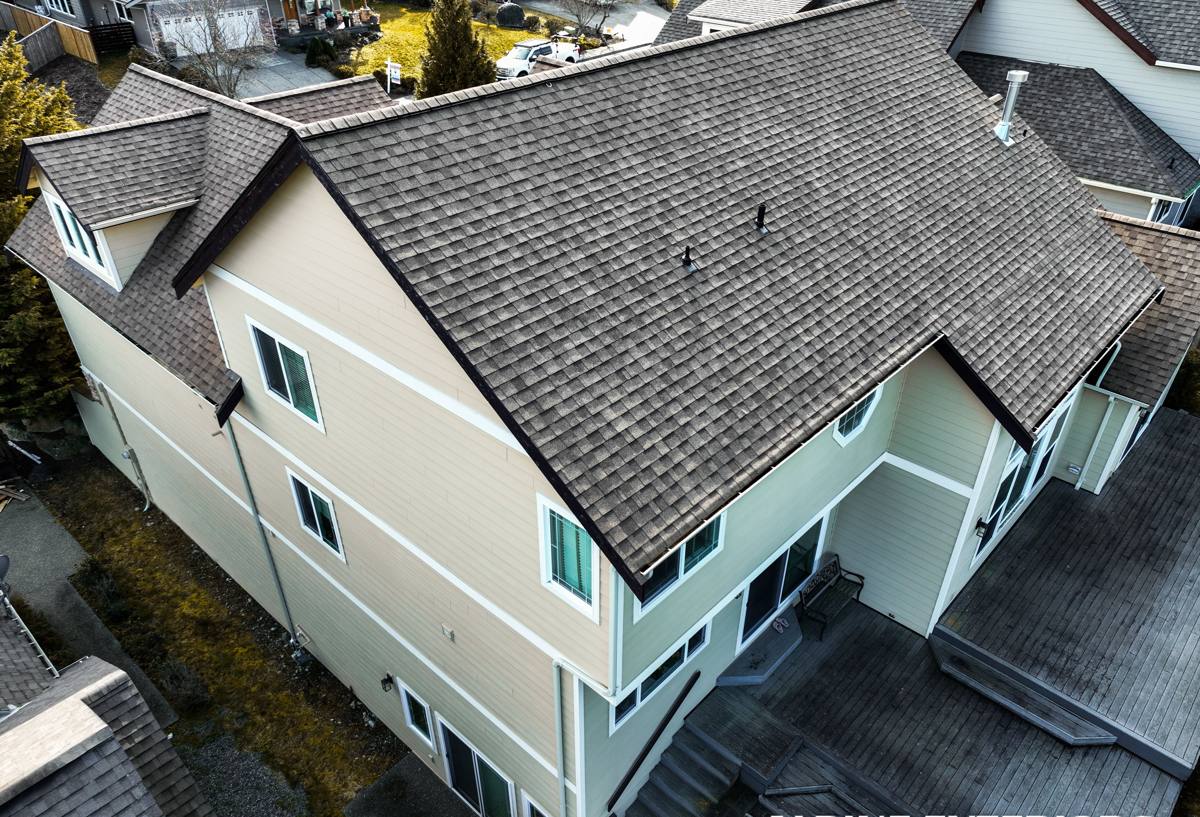
What Ship Harbor's Setting Means for a Deck
A handful of local conditions show up again and again on decks in this part of Anacortes:
- Salt-influenced air. Proximity to the water accelerates corrosion on anything metal — fasteners, joist hangers, railing hardware — faster than you'd see on a deck built the same way twenty minutes inland.
- Wooded, often sloped lots. Many Ship Harbor properties sit on tree-covered or uneven ground, which means footing depth and beam spans have to be engineered for the actual site, not guessed at.
- Heavy shade in places. Tree canopy keeps decking surfaces damp longer after rain, which speeds up moss and algae growth on wood and even on some composite products if drainage isn't handled well.
- Driving rain and wind-driven moisture. Rain here doesn't just fall straight down — it gets pushed sideways against ledger boards, railing posts, and any horizontal surface that isn't properly flashed or sloped.
None of these conditions are unusual for the Pacific Northwest, but they're more pronounced this close to the water, and a deck built without accounting for them will show problems years before it should.
Choosing the Right Decking Material
There's no single "best" decking material — the right choice depends on how much upkeep you're willing to do, your budget, and how exposed the deck is to sun, shade, and moisture. Here's how the common options actually compare for a Ship Harbor property:
| Material | Moisture & Moss Resistance | Maintenance | Typical Lifespan |
|---|---|---|---|
| Pressure-treated lumber | Fair — needs sealing to perform well | Annual cleaning and re-sealing recommended | 10–15 years with upkeep |
| Cedar | Good natural rot resistance, still needs finish | Periodic staining/sealing to hold color and repel moisture | 15–20 years with upkeep |
| Composite decking | Very good — won't rot or splinter | Occasional washing; no sealing or staining | 25+ years |
| PVC decking | Excellent — fully moisture-resistant | Lowest maintenance of the group | 25–30+ years |
In a climate with this much rain and shade, we lean toward composite or PVC decking for surfaces that stay damp for long stretches, simply because they don't give moss and mildew the organic material to take hold of the way untreated or lightly sealed wood does. That said, plenty of homeowners still want the look and feel of real wood, and a well-built cedar deck with a realistic maintenance routine can perform fine here — it just asks more of you over time. We'll walk through the honest trade-offs for your specific site rather than pushing one product line.
Framing Lumber Matters Too
The decking surface gets all the attention, but the framing underneath — joists, beams, and posts — is what actually determines how long a deck lasts. We frame with pressure-treated lumber rated for ground contact where it's called for, and we don't mix uncoated fasteners with treated lumber; the chemicals in modern treated wood are corrosive to standard galvanized hardware, which is a fast track to failure in a salt-air environment.
The Structural Work Nobody Sees
A deck that looks good but was framed wrong is a problem waiting to happen. The parts that matter most are the parts you'll never look at once the decking is down:
Footings
Footings need to be sized and set to the correct depth for the soil and load they're carrying, and on the sloped or uneven lots common in Ship Harbor, that often means adjusting footing placement and depth to the actual grade rather than using a one-size-fits-all layout. Undersized or shallow footings are one of the most common causes of a deck that starts to sag, twist, or pull away from the house over time.
Ledger Board Attachment and Flashing
If your deck attaches to the house, the ledger board connection is the single most important structural and moisture detail on the entire project. It has to be bolted correctly to transfer the deck's load into the house framing, and it has to be flashed so that wind-driven rain can't work its way behind the ledger and into your wall framing or rim joist. We see more rot damage originate at a poorly flashed ledger than almost anywhere else on a deck.
Joist Hangers and Structural Hardware
Every joist-to-beam and joist-to-ledger connection should use hardware rated for the lumber and load, installed with the fasteners the hardware manufacturer specifies — not whatever screws happen to be on the truck. In a salt-influenced environment, we use corrosion-resistant coated or stainless hardware throughout, because standard hardware can start showing rust streaks and losing strength well before the wood around it fails.
Managing Moisture and Moss
Given how much of the year Skagit County spends under cloud cover and rain, drainage is not an optional detail — it's what determines whether your deck stays solid or starts holding water where it shouldn't.
- Decking boards are spaced to let water drain through rather than pool on the surface.
- Ledger flashing is installed to shed water away from the house, not toward it.
- Where a deck sits low to the ground or over a patio, we grade and vent the space underneath so air can move and moisture doesn't just sit.
- Posts and structural wood in ground contact use rated lumber and, where needed, post bases that keep the wood off the soil and off standing water.
- Shaded sections of decking are noted during design so material choice and maintenance expectations account for the extra moss and algae exposure.
None of this eliminates the need for some seasonal upkeep — no deck is maintenance-free forever — but it dramatically reduces how much moss, staining, and slow rot you'll deal with compared to a deck built without these details in mind.
Railings, Hardware, and Fasteners for a Marine Climate
Railings take a lot of abuse near the water — hands on the top rail, weather on every surface, and constant exposure if the deck faces open air or wind off the Strait. We build railing systems to current code height and spacing requirements, and we pay close attention to the metal components: brackets, screws, and any cable or metal baluster hardware are chosen for corrosion resistance, not just cost. Standard zinc-plated hardware can start showing surface rust within a couple of seasons this close to salt air, which is a cosmetic problem at first and a structural one eventually.
Permits and Code Requirements
Most decks above a certain height or attached to the house require a permit through the City of Anacortes, and code sets minimum standards for things like guardrail height, baluster spacing, stair rise and run, and footing depth. If your property is near a shoreline or steep slope, there may be additional review involved depending on the specifics of the lot. We handle the permit process as part of the job — pulling the permit, meeting inspection requirements, and building to the code that applies to your property — so you're not left guessing whether the work will pass inspection or hold up if you sell the house later.
| Deck Factor | Why It's Checked |
|---|---|
| Height above grade | Determines guardrail requirements and permit threshold |
| Attachment to structure | Ledger connection and flashing detail get closer inspection |
| Proximity to slopes or shoreline | May trigger additional site review depending on location |
| Stair and railing dimensions | Must meet rise/run and guardrail code minimums |
How Our Process Works
We keep the process straightforward and specific to your property rather than running every job through the same template:
- Site visit and assessment. We look at the grade, sun and shade exposure, tree cover, and how the deck will attach to your home before talking materials.
- Design and material selection. We go over the honest trade-offs between wood, composite, and PVC decking for your specific site, along with layout, railing style, and any stairs.
- Permitting. We handle the permit application and any required documentation with the City of Anacortes.
- Footings and framing. Footings are set to the depth and spacing the design calls for, and the frame is built with corrosion-resistant hardware throughout.
- Decking, railings, and finish work. Surface material goes down last, followed by railings, stairs, and any trim or skirting.
- Final walkthrough. We go over the finished deck with you, including what maintenance it will and won't need going forward.
Living With Your Deck: Maintenance in a Moss-Prone Climate
Even a well-built deck needs some seasonal attention in this climate. What that looks like depends heavily on the material you chose:
- Sweep leaves and debris off the surface regularly, especially in fall — trapped organic material is what feeds moss and algae growth.
- Rinse or wash the decking surface a couple of times a year to clear pollen, dirt, and early moss growth before it gets established.
- For wood decks, plan on inspecting the finish annually and re-sealing or staining every few years depending on sun and shade exposure.
- Check railings and stair connections periodically for looseness — freeze-thaw cycles and constant damp-dry swings can work fasteners loose over time.
- Keep gutters and downspouts near the deck clear so runoff isn't dumping extra water onto or under the structure.
- For composite or PVC decking, a simple soap-and-water wash is usually enough to keep moss from getting a foothold in shaded areas.
Why Hiring Local Experience Matters in Ship Harbor
A deck built to a generic spec sheet can work fine in a dry climate or an exposed, sunny lot. Ship Harbor is neither — it's shaded in places, close to salt air, and subject to the kind of driving rain that finds every weak point in a flashing detail or fastener choice. Crews that haven't worked this specific stretch of Fidalgo Island tend to learn these lessons on your project instead of before it. We've built and repaired enough decks in and around Anacortes to know which details are worth the extra time and cost, and which are genuinely optional — so you're not paying for over-engineering, but you're also not left with a deck that needs to be rebuilt in eight years.
If you're planning a new deck or want an honest look at what a current one needs, we're happy to walk the property with you and put together a free, no-pressure estimate. There's no obligation — just a clear picture of what the job actually involves, using the form below.