 Anacortes Siding
 Ship Harbor's Exposure Is Different From the Rest of Anacortes
Ship Harbor sits close to the water on the west side of Fidalgo Island, near the ferry terminal, which means homes here take a different kind of weather than a house a mile inland in Skagit County. Wind comes straight off Rosario Strait with almost nothing to slow it down, carrying salt spray and driving rain against siding for months at a stretch. Add in the long gray stretch from late fall through spring when surfaces rarely get a chance to fully dry, and you have a recipe for exactly the kind of siding failures we get called out to fix: swollen butt joints, blown-out caulk lines, and moss creeping up from the ground on the shaded, wind-sheltered walls.
None of this is unusual for Anacortes as a whole, but Ship Harbor's direct waterfront exposure pushes it further than most neighborhoods in town. Siding that would hold up fine on a protected lot ten minutes away can start showing wear here years earlier if it wasn't chosen or installed with this exposure in mind.
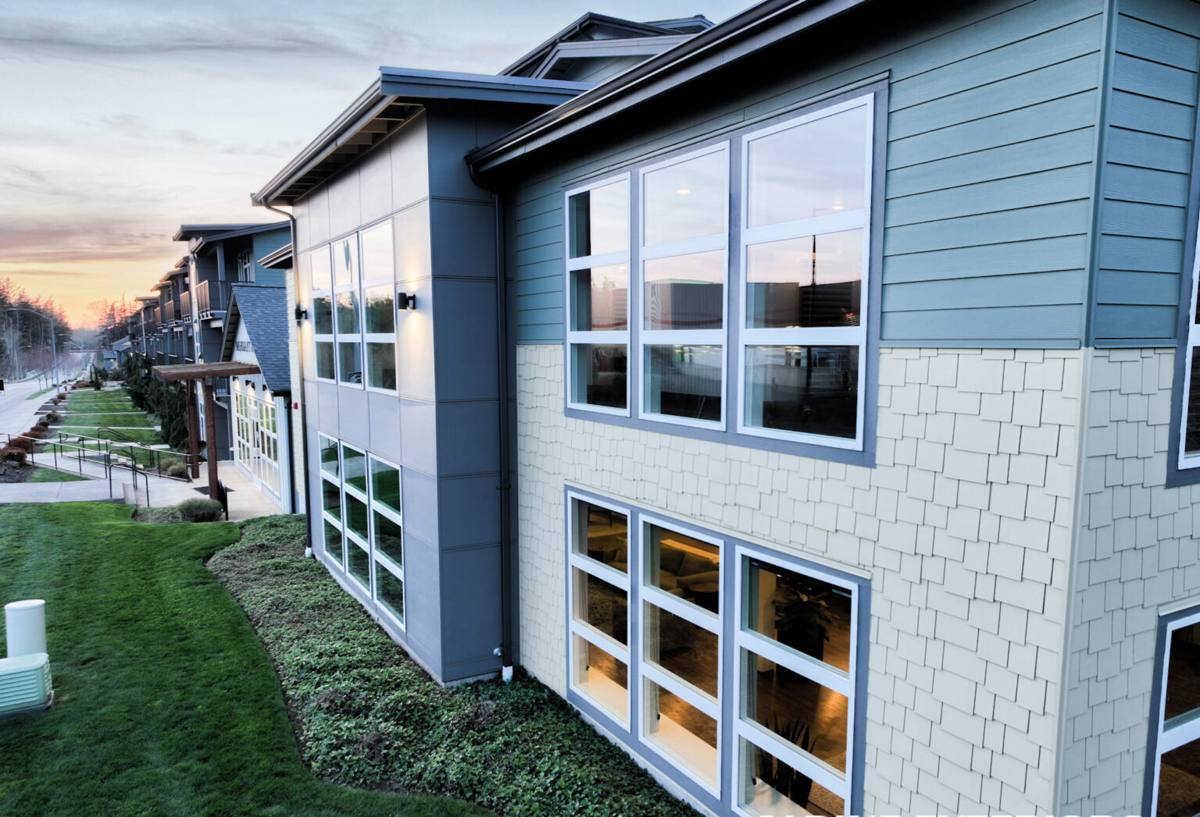
What Ship Harbor Homes Actually Need From Their Siding
Three things matter more here than almost anywhere else in the area:
- Moisture stability — a material that doesn't swell, cup, or delaminate when it stays damp for days at a time.
- Salt and wind tolerance — a factory finish that resists chalking and fading under constant salt-laden air and UV, rather than a field-applied coating that starts breaking down early.
- Moss and mildew resistance — a surface and installation detail set that sheds water instead of holding it against the wall, especially on north- and west-facing walls that stay shaded and damp longest.
This is the exact list we run through before recommending anything to a Ship Harbor homeowner, and it's a big part of why we don't install every product on the market here.
Why We Only Install James Hardie in This Neighborhood
We get asked fairly often why we don't offer vinyl, LP SmartSide, cedar, or primed spruce as options. The honest answer is that we've weighed the trade-offs for a marine-exposed climate like this and standardized on one product because it's the one we're comfortable standing behind for the long haul.
Vinyl can crack in cold snaps and warp under direct heat and reflected sunlight, and its seams give wind-driven rain an easier path inward. Wood-based products like LP SmartSide and untreated cedar or primed spruce depend on an intact factory or field coating to keep moisture out — any gap in that coating, and the wood substrate underneath is vulnerable to swelling and rot, which is a bigger risk on a lot that rarely fully dries out. James Hardie fiber cement doesn't have an organic substrate to rot, won't support combustion, and comes from the factory with a baked-on finish engineered for exactly this kind of exposure. That's the trade-off we made, and it's why every job we take in Ship Harbor is Hardie, start to finish.
The James Hardie Lines That Make Sense for This Exposure
Hardie makes several siding profiles and finish tiers, and not all of them are equally suited to a direct waterfront lot. Here's how the main options compare for a Ship Harbor application:
| Product | Best Use Here | Why It Fits Ship Harbor |
|---|---|---|
| HardiePlank Lap Siding (HZ5) | Primary wall cladding | Engineered moisture and freeze-thaw performance for the Pacific Northwest climate zone |
| HardiePanel Vertical Siding | Accent walls, gables | Fewer horizontal joints for water to work into on exposed upper stories |
| HardieTrim Boards | Corners, window and door trim | Matches the cladding's moisture resistance so trim doesn't become the weak point |
| ColorPlus Technology finish | All exposed faces | Factory-cured finish holds color and resists salt-air chalking better than field-applied paint |
The HZ5 engineering matters more here than the brochure makes it sound. It's Hardie's formulation built for wetter, harsher climate zones, and it's what we spec on every Ship Harbor job rather than a general-purpose version of the product.
What a Correct Installation Involves Here
Fiber cement siding is only as good as the install behind it, and the details that matter most shift depending on exposure. On Ship Harbor jobs, we pay particular attention to:
Water management behind the siding
A drainable house wrap and rainscreen gap behind the cladding give any moisture that does get past the siding a way out instead of a place to pool. On a lot that takes wind-driven rain as often as this one does, that gap is not optional.
Flashing at every penetration
Windows, doors, hose bibs, and vent penetrations are where most siding failures actually start. Each one gets properly integrated flashing and housewrap detailing, not just a bead of caulk over the gap.
Fastening and clearances to spec
Hardie's warranty depends on installation matching their published fastening pattern, joint spacing, and ground clearance requirements. We hold to those specs exactly, including the minimum clearance from grade, decks, and roof lines that keeps splashback and standing moisture away from the bottom courses.
Caulk and sealant selection
Not every exterior sealant holds up to constant salt air and UV. We use products rated for the exposure, and we minimize how much of the weatherproofing job rests on caulk in the first place — flashing and lap details should be doing most of that work.
Our Process on a Ship Harbor Job
- On-site assessment — we walk the exterior, check the existing siding and sheathing for hidden moisture damage, and note which walls take the worst of the wind and rain.
- Scope and product plan — we specify HZ5 assemblies, trim, and finish colors based on that assessment, not a one-size-fits-all package.
- Tear-off and substrate check — old siding comes off and we inspect sheathing before anything new goes up; any soft or water-damaged sheathing gets addressed before re-siding, not covered over.
- Weather barrier and rainscreen installation — the drainage plane goes in correctly before a single piece of Hardie is hung.
- Siding, trim, and flashing installation — installed to Hardie's published specifications for fastening, spacing, and clearances.
- Final walkthrough — we go over the finished job with the homeowner and point out any maintenance items specific to their lot's exposure.
What We Commonly Find on Existing Ship Harbor Homes
When we're called out to look at siding that's failing in this neighborhood, a few patterns show up again and again:
- Moss and algae buildup on shaded, wind-sheltered walls that never fully dry between rain events
- Swollen or delaminating panels at butt joints where water worked into an unprotected seam
- Cracked or chalky field-applied paint that's lost its ability to shed water
- Caulk that's shrunk, cracked, or pulled away at trim and window edges after repeated freeze and salt exposure
- Fastener corrosion or staining where the wrong fastener type was used for a coastal environment
Most of these trace back to either the wrong product for this exposure or an installation that skipped a moisture-management step that matters more here than it would on a more sheltered lot.
Living With Marine-Climate Siding: Realistic Maintenance
Even the right product needs some upkeep in this environment. For Ship Harbor homeowners, we recommend:
- Rinsing salt residue off exterior walls once or twice a year, especially on wind-facing sides
- Keeping gutters clear so runoff doesn't sheet down the siding face
- Trimming back vegetation and clearing debris from shaded walls to cut down on moss growth
- Checking caulk lines at trim and penetrations annually and touching up before gaps widen
- Washing down siding to remove moss and mildew before it stains the ColorPlus finish long-term
None of this is heavy labor, but skipping it is how a good installation turns into an early repair job.
Cost Factors for a Ship Harbor Siding Job
Every home is different, but the same handful of factors drive most of the price variation we see on jobs in this neighborhood:
| Factor | Why It Affects Cost |
|---|---|
| Existing sheathing condition | Rot or moisture damage found during tear-off requires repair before new siding goes on |
| Wall complexity | Dormers, gables, and multiple stories take more trim, cuts, and labor time |
| Rainscreen and drainage plane scope | Full rainscreen assemblies add material and labor but pay off in exposure like this |
| Siding profile mix | Combining lap siding with panel accents or extra trim detail adds material cost |
| Access and site conditions | Steep lots, limited staging area, or tight waterfront setbacks affect labor time |
We'll walk your specific home and give you a real number tied to what we actually find, not a generic square-footage estimate.
Why Hiring a Crew That Already Works This Neighborhood Matters
Ship Harbor's exposure isn't a guessing game for us. A crew that's worked this stretch of Anacortes already knows which walls need the most flashing attention, how much rainscreen gap makes sense for the wind here, and which fastener and sealant choices hold up against salt air over years, not just through the warranty inspection. That local track record is the difference between a siding job that looks right on installation day and one that still looks right in year ten.
If you're weighing a siding replacement in Ship Harbor, we're happy to walk the property, look at what your current siding is telling us, and give you a straightforward, no-pressure estimate for a James Hardie system built for this exposure. There's a form below — reach out and we'll get a look scheduled.