 Anacortes Siding
 Ship Harbor Sits Right in the Path of the Weather Anacortes Siding Has to Survive
Ship Harbor sits close to the water on Fidalgo Island, which means homes here take a different kind of beating than a house tucked a few miles inland. Wind off Rosario Strait carries salt spray onto siding, driving rain gets pushed sideways into seams and trim by exposed gusts, and the shaded, damp stretches of fall through spring keep moss and algae established longer than most of Skagit County sees. None of that is unusual for this stretch of Washington — but it does mean siding repair here has to account for conditions that a generic patch job from an out-of-area crew won't necessarily plan for.
A repair that looks fine the day it's finished can fail again in a year if it doesn't address why the siding failed in the first place. That's the difference between a cosmetic fix and a correct one, and it's the standard we hold every Ship Harbor repair to.
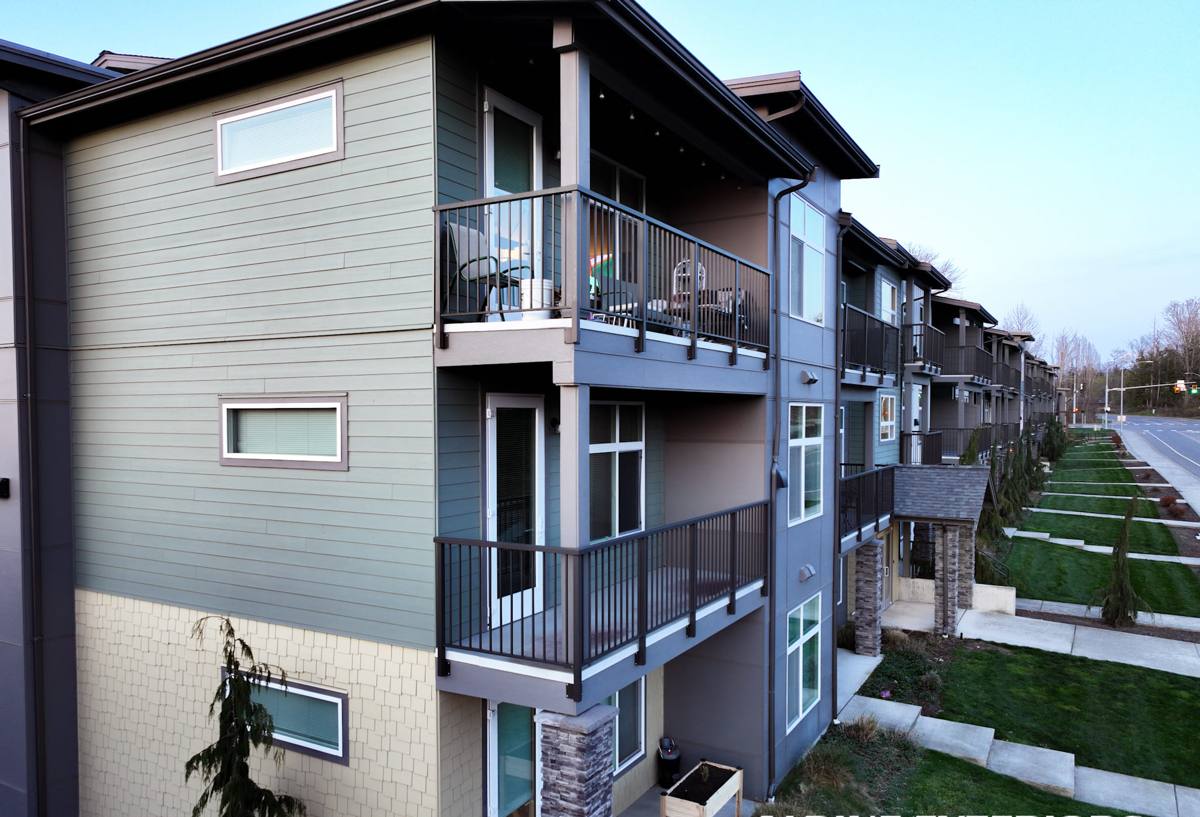
What Salt Air, Rain, and Moss Actually Do to Siding Over Time
Salt Air
Airborne salt is corrosive to exposed metal fasteners, flashing, and trim, and it accelerates the breakdown of caulking and paint film faster than an inland home would experience. Once a fastener starts to corrode, the hole around it enlarges, and that's a direct path for water to get behind the siding.
Driving Rain
Wind-driven rain doesn't fall straight down — it gets forced sideways and upward, which means it finds gaps at butt joints, around window and door trim, and at any point where flashing was installed short or skipped. Siding that was installed to a "calm weather" standard often shows its weak points first in a waterfront neighborhood like this one.
Moss and Algae
Moss holds moisture directly against the siding surface for extended stretches, which keeps wood and wood-based products wet longer than they're designed to tolerate. Over time this softens the substrate underneath paint or coating, even when the surface still looks intact from a distance.
Signs Your Siding Needs a Repair — Not Just a Cleaning
Some damage is obvious. Some isn't, and that's the kind that costs the most if it's ignored through another wet Skagit County winter.
- Soft or spongy spots when you press on the siding, especially near the bottom courses or below windows
- Visible gaps, cracks, or separation at butt joints and corners
- Paint that's bubbling, peeling, or failing in a localized area rather than evenly across the wall
- Staining or dark streaks running down from a specific seam, trim piece, or fastener
- Persistent moss or algae growth that returns quickly after cleaning
- Warping, bowing, or a wavy appearance in one section of wall
- Interior signs — a musty smell, a soft spot on interior drywall, or a slow-growing stain on an exterior-facing wall
Any one of these can be a contained, inexpensive fix if it's caught early. Left alone through another wet season, most of them turn into sheathing and framing repairs, which cost significantly more.
What a Correct Siding Repair Actually Involves
A repair that just replaces the damaged board and calls it done is treating the symptom, not the cause. A correct repair in a location like Ship Harbor addresses the water path, not just the visible damage.
1. Find the Real Source
Damaged siding is often a downstream symptom — the actual entry point might be a failed piece of flashing, a gap at a penetration (vent, light fixture, hose bib), or caulking that gave out at a trim joint well above where the damage shows.
2. Check What's Behind the Siding
Once the damaged panels are off, we look at the water-resistive barrier and the sheathing underneath. If there's rot or persistent moisture damage to the structure, that gets addressed before any new siding goes back on — patching over compromised sheathing just hides the problem for another season.
3. Repair or Re-Flash as Needed
Any flashing detail that contributed to the failure gets corrected, not just re-covered. This is often the step a rushed repair skips, and it's usually why the same spot fails again within a year or two.
4. Match the Material Correctly
New siding pieces need to match the existing profile, reveal, and finish closely enough that the repair doesn't stand out — and they need to be installed with the same fastening and clearance standards as a full installation, not shortcuts because it's "just a patch."
Repair or Replace? How We Help You Make That Call
Not every damaged section means the whole house needs new siding, and not every house is a good candidate for another round of patches. The right call depends on how widespread the damage is and how old the existing siding already is.
| Factor | Favors Repair | Favors Full Replacement |
|---|---|---|
| Extent of damage | Isolated to one or two areas | Recurring across multiple walls |
| Age of existing siding | Still well within its expected service life | Nearing or past the end of its practical lifespan |
| Underlying sheathing condition | Sound, dry, no rot found | Rot or moisture damage found in multiple spots |
| Material match availability | Close match achievable | Discontinued profile or faded finish, mismatch unavoidable |
| Original installation quality | Generally sound with a few failure points | Systemic flashing or clearance issues throughout |
We'll walk the exterior with you, explain what we find, and give you a straight answer — including when a repair is genuinely the smarter move and full replacement isn't necessary yet.
Why the Material You Repair With Matters
We only install James Hardie fiber cement siding on full jobs, and it's also what we recommend when a repair calls for new material rather than reused original stock. Fiber cement doesn't absorb water the way wood-based products do, and it holds up to salt-laden air and constant damp exposure better over the long run — which matters directly in a spot like Ship Harbor where the siding rarely gets a long dry stretch to recover in.
If your home currently has vinyl, LP SmartSide, cedar, or another wood-based product, we'll be upfront with you: a like-for-like patch is often the fastest, least expensive fix for a small area, and we can talk through that option honestly. But if you're dealing with recurring failures in the same material, or you're already weighing whether it's time to re-side, that's the point where we'll explain why we standardized on Hardie — non-combustible, engineered for wet climates, backed by a strong factory finish and a transferable warranty — rather than reach for the same product that's already showing its limits.
Our Process for a Ship Harbor Siding Repair
- On-site assessment — we inspect the damaged area and the surrounding siding, not just the spot you called about
- Explain what we find — including anything hidden behind the surface, in plain language, before any work starts
- Written scope and estimate — what's being repaired, what material is going in, and why
- Correct the cause — flashing, moisture barrier, or fastening issues get fixed, not just covered
- Match and install — new material installed to the same clearance and fastening standards as a full job
- Final walkthrough — we show you the completed repair and what to watch for going forward
Why It Matters to Hire a Crew That Already Works in Ship Harbor
A repair crew that mostly works drier inland areas can miss the details that matter on a shoreline-exposed home — how much clearance a piece of trim actually needs here, which flashing details fail first in wind-driven rain, or how aggressively moss needs to be managed on a shaded north wall near the water. Crews that regularly work Anacortes and the surrounding Skagit County waterfront know these patterns because they see them repeatedly, not because they read about them once.
There's also a practical side: local crews know the permitting expectations for exterior work in the area, understand typical HOA or covenant requirements that come up in some Ship Harbor communities, and aren't guessing at drive times when scheduling a follow-up visit if something needs a second look.
Before You Hire — A Quick Checklist
- Ask what caused the damage, not just what it will cost to fix
- Ask whether they'll check behind the damaged siding, not just replace what's visible
- Ask what material they're repairing with and why
- Ask for a written scope before work starts, not a verbal estimate only
- Ask how they handle a mismatch if the exact original material isn't available
- Ask whether they carry proper licensing and insurance for exterior work in Washington
Keeping Repaired Siding in Good Shape Through Moss Season
Once a repair is done right, a little seasonal attention keeps it that way. Rinse siding periodically to clear off salt residue and organic buildup before it takes hold, especially on shaded walls that stay damp longest. Keep gutters clear so runoff isn't sheeting down the siding face, and trim back vegetation that's holding moisture against the wall. None of this replaces a correct repair — but it buys you more years out of it.
If you're seeing damage, staining, or recurring moss on your siding in Ship Harbor, we're happy to take a look and give you a straight answer on what it needs. Reach out for a free, no-pressure estimate — use the form below to get started.