 Anacortes Siding
 Siding Replacement in Mount Vernon: What Local Homes Are Up Against
Mount Vernon sits in the Skagit Valley, close enough to the water and the marine weather patterns that move through Anacortes and the rest of Skagit County that homes here take on the same punishment: salt-laden air, long stretches of driving rain, and a moss and mildew season that can run most of the year in shaded, north-facing spots. Add in the valley's fog and humidity, and you get siding conditions that are tougher on a home's exterior than what you'd see further inland. Wood-based products absorb moisture and swell. Paint fails early. Caulk joints open up. Moss gets a foothold in anything with texture or a rough surface and doesn't let go.
None of that is unique to any one street or subdivision in Mount Vernon — it's a valley-wide, county-wide reality. What matters is that siding replacement here has to be planned around it, not just around the home's age or appearance. A correct job accounts for how water moves off the wall, how the assembly dries out between storms, and what the material does over ten or twenty years of that cycle repeating.
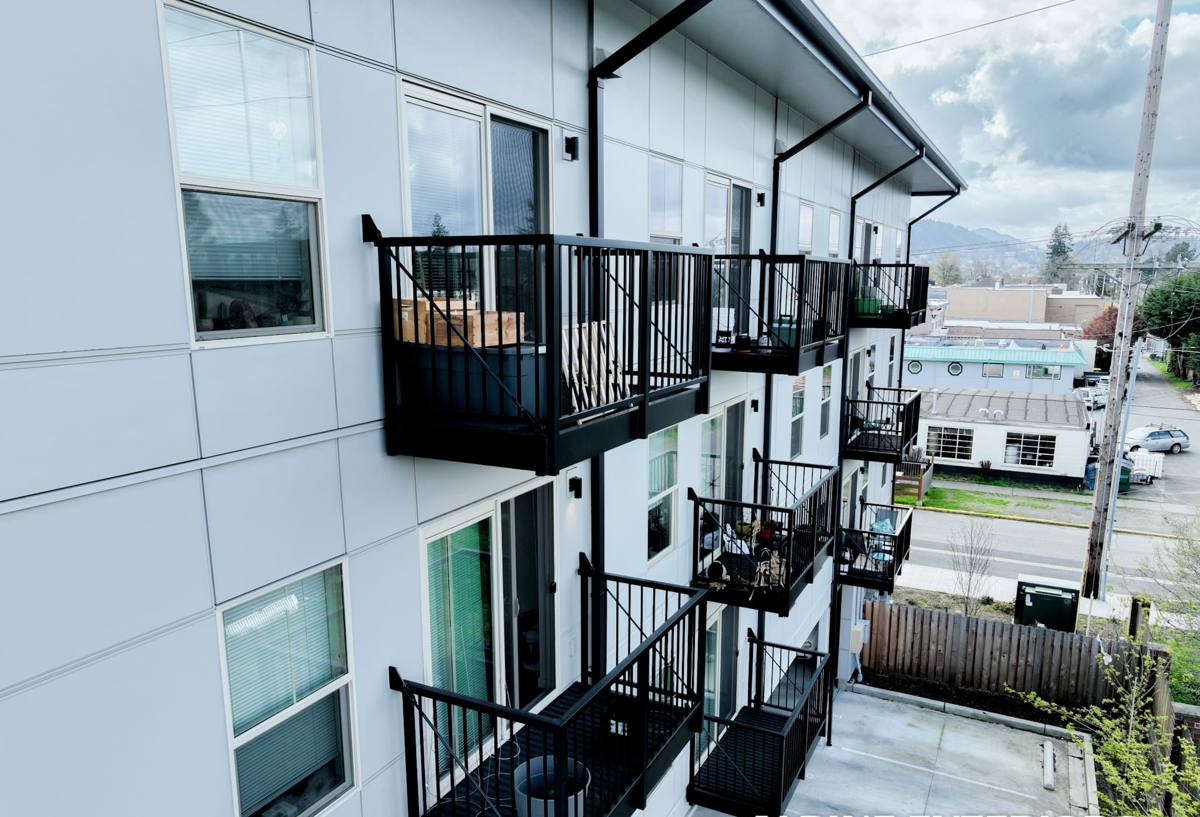
Signs Your Mount Vernon Home Needs New Siding
Most homeowners don't wake up one day and decide to replace their siding — they notice a problem, patch it, and eventually realize the patching isn't keeping up. Here's what we look for, and what you should look for too:
- Soft or spongy spots when you press on the siding, especially near the bottom courses and around windows
- Paint that's peeling, bubbling, or needing a fresh coat every two to three years instead of holding for longer
- Visible warping, cupping, or boards separating at the seams
- Persistent moss or algae staining that comes back within a season of cleaning
- Cracked or crumbling caulk at joints, corners, and trim
- Rising energy bills that suggest the wall assembly isn't insulating or sealing the way it should
- Visible rot at the bottom edge of boards, around hose bibs, or near roof-to-wall intersections
Any one of these can sometimes be spot-repaired. Several of them together, especially on a home more than 15-20 years old with the original siding, usually means the material has reached the end of its useful life and full replacement is the more honest recommendation than another round of patching.
Why We Only Install James Hardie Fiber Cement
We standardized on James Hardie fiber cement siding for every home we side, including here in Mount Vernon, and we don't install vinyl, LP SmartSide, cedar, primed spruce, or other fiber cement brands. That's not a marketing position — it's a decision built around what holds up in this climate over decades, not just the first few years.
Fiber cement is non-combustible, doesn't absorb moisture the way wood-based products do, and doesn't expand and contract with humidity swings the way vinyl does. James Hardie's ColorPlus factory finish is baked on under controlled conditions rather than field-painted, which means better adhesion and color retention through repeated wet-dry cycles than a job-site paint job can match. The company also engineers regional HZ5 product formulations specifically for climates like ours, and backs the material with a strong, transferable limited warranty. When we tell a homeowner why we won't install a particular product, it's because we've weighed those long-term trade-offs against what we're willing to put our name behind — not because the alternative products are without merit.
What This Means for Your Project
Every Mount Vernon siding replacement we quote is a Hardie system: lap siding, panel siding, trim, and where appropriate shingle-style accents, all from the same product family, engineered to work together rather than mixed-and-matched from different manufacturers.
What a Correct Siding Replacement Actually Involves
Siding replacement is easy to oversimplify as "take the old stuff off, put new stuff on." The steps that actually determine whether the job lasts happen underneath what you can see once it's finished.
Tear-Off and Sheathing Inspection
Once the old siding is off, we inspect the sheathing underneath for soft spots, rot, or prior water damage — problems that are invisible from the outside and that new siding will only hide, not fix, if they're skipped over. Any compromised sheathing gets replaced before anything new goes up.
Weather-Resistive Barrier and Flashing
This is the layer that does the real work of keeping bulk water out of the wall assembly, and it's also the layer most likely to be rushed on a lower-quality job. A correctly installed water-resistive barrier, properly lapped and taped, combined with correct flashing at every window, door, and roof-to-wall intersection, is what actually keeps driving rain from Skagit County storms out of the wall cavity. Siding is the visible layer; the barrier behind it is the layer that matters most in weather like ours.
Installation to Manufacturer Spec
James Hardie publishes specific installation requirements — fastener spacing and type, minimum clearances from grade, decks, and roof lines, proper gapping and caulking at joints — and those specs exist because deviating from them is one of the most common causes of premature siding failure, regardless of how good the product itself is. We install to that spec on every job, which is also what keeps the manufacturer's warranty intact.
Trim, Caulking, and Finish Details
The last stage is where a job either looks sharp for twenty years or starts showing seams within two. Corner boards, window and door trim, and caulk joints all get finished to shed water rather than trap it, and final touch-up paint is matched and applied cleanly at every cut edge.
Choosing the Right Hardie Product Line
James Hardie makes several siding profiles, and the right mix for a given home depends on its architecture, exposure, and your preferences. Here's how the main options compare for a typical Mount Vernon home:
| Product | Best For | Look |
|---|---|---|
| HardiePlank lap siding | Most homes; the standard choice for full replacements | Traditional horizontal lap, smooth or cedar-textured |
| HardiePanel vertical siding | Accent walls, gables, modern or farmhouse-style exteriors | Clean vertical lines, often paired with battens |
| HardieShingle siding | Accent areas, dormers, or homes wanting a shingle-style look without wood's maintenance | Staggered or straight-edge shingle profile |
| HardieTrim boards | Corners, window and door surrounds, fascia | Smooth, paint-ready trim that pairs with any of the above |
Most Mount Vernon replacements use HardiePlank as the primary field material, with HardiePanel or HardieShingle brought in for accents where the architecture calls for it. We'll walk through which combination fits your home during the estimate rather than defaulting to one look for every project.
Cost Factors for Siding Replacement
Every home is different, so we won't quote a number without seeing the project, but the factors that drive cost up or down are consistent from job to job:
| Factor | How It Affects Cost |
|---|---|
| Home size and wall area | More square footage means more material and labor |
| Sheathing condition | Rot or water damage discovered during tear-off adds repair work |
| Number of stories and roof lines | Multi-story homes and complex rooflines require more staging and cutting |
| Profile mix | Combining lap, panel, and shingle accents costs more than a single uniform profile |
| Trim and detail work | Elaborate corner boards, window surrounds, and accent trim add labor |
| Access and site conditions | Tight lots, landscaping, or difficult staging can add time |
The only way to get an accurate number is a walk-through, which is why our estimates are free and come with no pressure to commit on the spot.
Our Process, Start to Finish
- Free on-site estimate: we walk the exterior with you, look at current siding condition, and talk through product and profile options
- Written proposal: a clear scope of work and price, so you know exactly what's included before you sign anything
- Scheduling: we plan around Skagit County weather windows to keep the home protected during tear-off
- Tear-off and sheathing check: old siding removed, substrate inspected and repaired as needed
- Barrier, flashing, and installation: water-resistive barrier, flashing, and Hardie siding installed to manufacturer spec
- Trim, caulk, and paint touch-up: finish details completed and cleaned up
- Final walkthrough: we review the completed work with you before calling the job done
Why Local Experience in Mount Vernon Matters
A crew that regularly works Skagit County homes already understands how the valley's fog, rain patterns, and moss growth behave against a wall assembly over time, which shows up in small but real decisions — how flashing is detailed around a north-facing window, how much clearance to leave at grade given local drainage patterns, which product finishes hold up best against the salt air that reaches inland from the Sound. A crew that's new to the region is learning those lessons on your house. We'd rather you benefit from lessons we've already learned elsewhere in the county.
Local presence also matters for the parts of the job that happen after the crew leaves: warranty support, a call back if something needs a look, and a company that's still around and known in the area years down the line.
Caring for Your Siding After Replacement
James Hardie fiber cement is low-maintenance compared to wood or vinyl, but "low-maintenance" isn't "no-maintenance." A yearly rinse to knock down moss and grime, prompt attention to any caulk that starts to crack, and keeping sprinklers and landscaping from spraying the lower courses directly will keep the finish looking right for the long haul. We'll walk you through the specifics for your home at the final walkthrough.
If your Mount Vernon home is showing signs of aging siding, or you're just planning ahead, we're happy to come take a look. The estimate is free, there's no pressure to commit, and you'll get a straight answer about what your home actually needs — use the form below to get started.