 Anacortes Siding
 Siding Built for Ship Harbor's Waterfront Exposure
Ship Harbor sits on the water side of Fidalgo Island, close enough to Rosario Strait and the ferry terminal that homes here take a harder hit from the marine environment than houses just a few miles inland in Anacortes. Salt-laden air, wind-driven rain coming straight off the water, and a moss season that can stretch from October through May all put real, measurable stress on exterior siding. A siding replacement in this neighborhood isn't just a cosmetic upgrade — it's a decision about what material and installation method will actually hold up against conditions that are noticeably tougher than the regional average for Skagit County.
We've replaced siding on homes across Anacortes and the surrounding waterfront communities, and Ship Harbor properties consistently show wear patterns that inland homes don't: pitting and chalking on softer materials, moss colonies on north- and west-facing walls, and paint failure around butt joints and trim where moisture keeps finding a way in. This page focuses specifically on what siding replacement looks like when it's done right for this exposure — not generic advice, but what we've learned putting siding on homes that face the water.
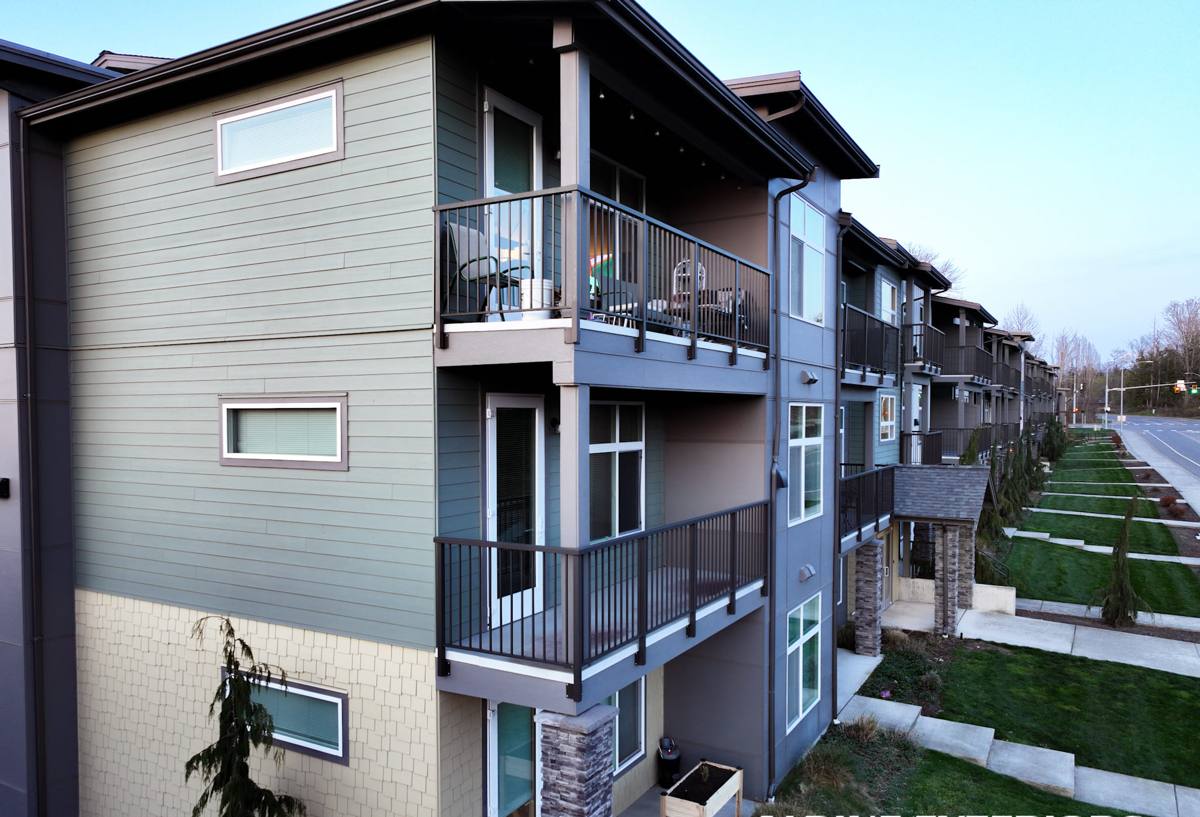
What the Ship Harbor Climate Actually Does to Siding
Salt Air and Corrosion
Airborne salt from the strait settles on exterior surfaces and accelerates corrosion of fasteners, flashing, and any exposed metal trim. On siding materials that rely on paint film integrity to stay protected, salt exposure speeds up the breakdown of that film, which opens the door to moisture intrusion at seams, nail heads, and cut edges. This is a slow, cumulative process — it's rarely dramatic in year one or two, but by year eight or ten on a lower-grade product, it shows.
Driving Rain and Wind
Ship Harbor's proximity to open water means wind-driven rain hits siding at an angle, not just straight down. That matters because it pushes water into laps, seams, and butt joints that would stay dry in a calmer, more sheltered location. Siding systems that aren't detailed with this in mind — inadequate lap overlap, missing or undersized flashing, caulk used as a primary water barrier instead of a backup — fail faster here than they would on a protected inland lot.
Moss, Mildew, and Prolonged Dampness
Western Washington's wet season is long everywhere, but shaded, north-facing walls in Ship Harbor — especially where mature trees or neighboring structures block sun and airflow — stay damp longer than average. That's the environment moss and mildew need to establish. Once moss gets a foothold on siding, it holds moisture against the surface continuously, which is a much worse problem than intermittent rain exposure.
Temperature Swings and Material Movement
Anacortes doesn't see extreme heat, but daily and seasonal temperature swings still cause siding materials to expand and contract. Materials that move a lot with temperature and humidity changes put ongoing stress on caulk joints and fastener holes, which is one more reason dimensional stability matters more here than it might in a milder, more consistent climate.
Signs Your Ship Harbor Home Needs Siding Replacement, Not Just Repair
Not every siding problem calls for a full replacement. But there's a point where patching individual boards or repainting stops being cost-effective and starts being a way to delay an inevitable bigger job. Signs we look for during an assessment:
- Soft, spongy, or crumbling siding when pressed — usually a sign moisture has gotten behind the material
- Persistent moss or mildew that returns within months of cleaning
- Paint that's peeling or bubbling in patches rather than just fading evenly
- Visible gaps, warping, or cupping at board edges and butt joints
- Rot or staining at the bottom edge of siding near grade or below windows
- Multiple past repairs on the same wall section — a sign the underlying water management is failing, not just the siding
- Rising energy bills alongside drafts near exterior walls, which can point to a compromised weather barrier
What a Correct Siding Replacement Involves
Siding replacement done right is a water management project first and a cosmetic upgrade second. In a Ship Harbor exposure, the details underneath the visible siding matter as much as the siding itself.
Tear-Off and Sheathing Inspection
Full removal of the old siding lets us see the sheathing underneath, which is the only real way to know if there's hidden rot or moisture damage. On waterfront-adjacent homes, we pay close attention to areas around windows, doors, and lower wall sections where past water intrusion is most likely to have caused damage that isn't visible from outside.
Water-Resistive Barrier
A correctly installed weather-resistive barrier (WRB) is the layer that protects your wall assembly if any water does get past the siding — and in a wind-driven-rain environment like Ship Harbor, some water getting past the outer layer is a normal design assumption, not a failure. We install and lap the WRB properly, shingle-style, so water is always directed outward and down, never trapped behind the barrier.
Flashing at Every Penetration
Windows, doors, hose bibs, vents, and light fixtures are all penetrations through the WRB, and each one needs proper flashing to stay watertight. This is one of the most common places we find shortcuts on past installations — caulk substituted for flashing, which fails much faster in a high-wind, high-moisture environment.
Rainscreen Gap
Where appropriate for the home's construction, a rainscreen gap between the WRB and the siding allows any moisture that does get behind the siding to drain and the wall assembly to dry out through airflow, rather than staying trapped against the sheathing. This is especially valuable on shaded or north-facing walls, where drying time is already limited.
Fastening and Fastener Selection
Given the salt air exposure, fastener corrosion resistance isn't optional. We use fasteners rated for the exposure and follow manufacturer fastening patterns exactly — over-driven or under-driven nails are a common, avoidable cause of premature siding failure.
Trim, Caulking, and Paint
Caulk is a backup layer, not a primary defense against water. We detail trim and joints so that the assembly sheds water on its own, then use caulk and factory or field-applied finish as the final seal, not the first line of defense.
Why We Install Only James Hardie Fiber Cement
We've made a deliberate decision to install only James Hardie fiber cement siding, and in an exposure like Ship Harbor's, that decision matters more than it would in a sheltered inland location. We don't install vinyl, LP SmartSide, Cemplank, Allura, or unprimed wood species like cedar or spruce — not because those products have no merit anywhere, but because we've weighed how each performs against salt air, driving rain, and prolonged dampness, and Hardie is what we're willing to stand behind on homes in this environment.
| Material | How it handles Ship Harbor's exposure |
|---|---|
| James Hardie fiber cement | Non-combustible, dimensionally stable, engineered HZ product lines for this climate zone, factory ColorPlus finish resists fading and chipping better than field-applied paint |
| Vinyl siding | Can warp or become brittle with temperature swings; seams and panels can allow wind-driven rain intrusion; limited color life in UV and salt exposure |
| LP SmartSide (engineered wood) | Wood-based core is more moisture-sensitive at cut edges and fastener points; requires diligent maintenance to prevent swelling in a wet, salty environment |
| Cedar or primed spruce | Attractive but high-maintenance; natural wood is more vulnerable to rot, moss colonization, and repainting cycles in prolonged damp conditions |
Hardie's fiber cement composition doesn't absorb moisture the way wood-based products do, and it won't corrode, rust, or become brittle from salt exposure the way some other materials can over time. The factory-applied ColorPlus finish is baked on under controlled conditions, which gives it better adhesion and fade resistance than paint applied on site — a real advantage in an environment where UV and salt both work against paint film over the years. Hardie also backs its products with a strong transferable warranty, which matters to homeowners who may sell in the years after installation.
Our Siding Replacement Process
- On-site assessment — we walk the exterior, check for hidden moisture damage, and evaluate what's driving the need for replacement
- Written estimate — a clear scope of work and pricing, no pressure tactics or same-day-signature discounts
- Tear-off and sheathing check — old siding removed, sheathing inspected and repaired or replaced as needed before anything new goes up
- WRB and flashing installation — the weatherproofing layer goes in correctly before any visible siding is installed
- Hardie siding installation — installed to manufacturer specification for fastening, clearances, and lap
- Trim, caulk, and final finish — detailing completed and touch-up work done to manufacturer standard
- Final walkthrough — we review the completed work with you before calling the job done
Cost Factors for Ship Harbor Siding Replacement
Every home is different, and we don't publish blanket pricing because it would be misleading. But these are the factors that most influence cost on a Ship Harbor project specifically:
| Factor | Why it affects cost |
|---|---|
| Extent of hidden sheathing damage | Waterfront exposure increases the odds of moisture damage behind old siding, which may require sheathing repair or replacement |
| Home size and wall complexity | More corners, gables, and penetrations mean more flashing and trim detail work |
| Siding profile and finish selection | Hardie offers multiple plank widths, textures, and ColorPlus finish options at different price points |
| Rainscreen and drainage detailing | Adding a rainscreen gap on exposed or shaded walls adds labor but improves long-term drying performance |
| Access and site conditions | Waterfront lots with slopes, limited access, or mature landscaping can add labor time |
Maintaining Your New Siding in Ship Harbor's Climate
Hardie siding is low-maintenance compared to wood or vinyl, but "low-maintenance" doesn't mean "no maintenance," especially this close to the water. A simple annual routine goes a long way:
- Rinse siding annually to remove salt residue and airborne debris, especially on walls facing the water
- Check and clear gutters and downspouts before the fall rains so water isn't overflowing onto siding
- Trim back vegetation and tree cover on shaded walls to improve airflow and reduce moss growth
- Inspect caulk joints at trim and penetrations yearly and touch up as needed
- Address any moss growth early with a gentle wash rather than letting it establish and spread
Why Hiring a Crew That Already Works Ship Harbor Matters
Siding installation isn't identical everywhere — the correct approach depends on local exposure, and Ship Harbor's combination of salt air, wind-driven rain off the strait, and long stretches of shaded dampness is a specific set of conditions. A crew that already works this neighborhood knows which walls tend to hold moisture, how much flashing detail a given exposure actually needs, and what past installations in this area commonly get wrong. That local knowledge shows up in fewer callbacks and siding that performs the way it's supposed to for decades, not just the first few years.
We're an Anacortes-based crew that installs exclusively James Hardie fiber cement siding across Skagit County, and Ship Harbor is a neighborhood we know well. If your home is showing signs of siding failure, or you're simply planning ahead for a replacement, we'd be glad to take a look and give you a straightforward, no-pressure estimate — no obligation, just an honest read on what your home needs.